Newsletter Subscribe
Enter your email address below and subscribe to our newsletter

 ByDiana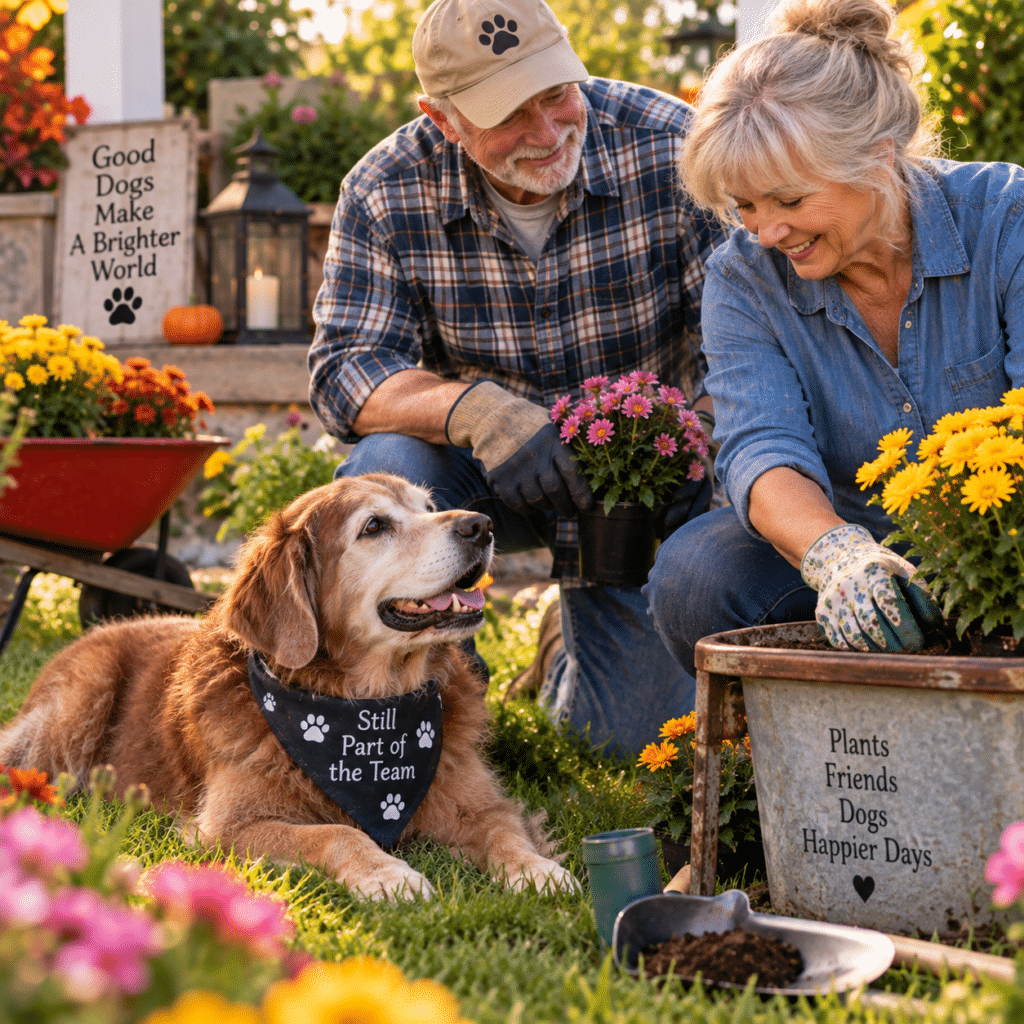
Your dog may not race to the door quite as quickly anymore.
Maybe getting onto the couch takes a little more effort. Walks are shorter. Naps are longer. And that dog who once seemed capable of running all afternoon now looks perfectly happy sleeping through most of it.
But there’s something that often doesn’t change nearly as much as their body does.
They still want to be with you.
Senior dogs may slow down, but that doesn’t necessarily mean they want to stop participating in family life. They still notice when you head toward the kitchen. They still know when you’re getting ready to go somewhere. They still enjoy sitting outside, riding in the car, watching what’s happening around the house, and being included in the routines they’ve known for years.
They may simply need to participate differently now.
It’s easy to look at an older dog sleeping peacefully and assume they’d rather be left alone.
Sometimes that’s exactly what they want.
Senior dogs certainly appreciate their naps.
But watch what happens when everyone moves into another room.
That sleepy old dog may slowly get up, stretch, and come looking for the family.
They aren’t necessarily looking for exercise or excitement.
They just don’t want to miss anything.
Dogs spend years learning our routines. They know where everyone sits. They know what happens around dinner time. They recognize the sound of car keys and can somehow distinguish opening the refrigerator from opening practically anything else in the kitchen.
Growing older doesn’t erase all of that.
The body may slow down while the desire to belong remains very much the same.
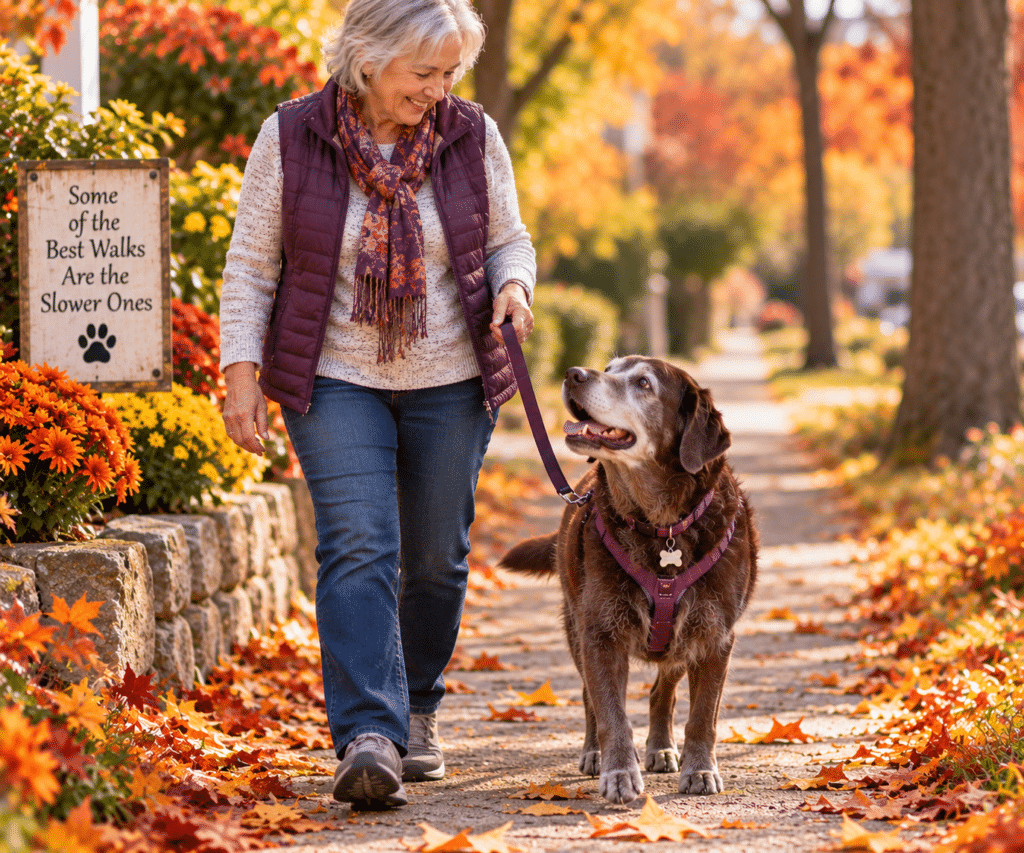
A young dog may think a walk means covering as much ground as possible.
An older dog may have a completely different idea.
There might be more stopping.
More sniffing.
More standing quietly while apparently studying one particular blade of grass for an unreasonable amount of time.
That’s okay.
The purpose of a senior dog’s walk doesn’t have to be distance.
Sometimes the pleasure is simply being outside.
Feeling the breeze. Smelling who’s been through the neighborhood. Watching people pass. Spending time with you.
If your dog is comfortable and your veterinarian hasn’t advised otherwise, a shorter, slower outing may still be one of the best parts of their day.
You may not travel as far together anymore.
That doesn’t make the walk less important.
Senior dogs can become so settled into home life that it’s easy to assume they’d rather stay behind every time.
Sometimes staying home really is the best choice, especially when an outing would be tiring, stressful, too hot, too cold, or physically difficult.
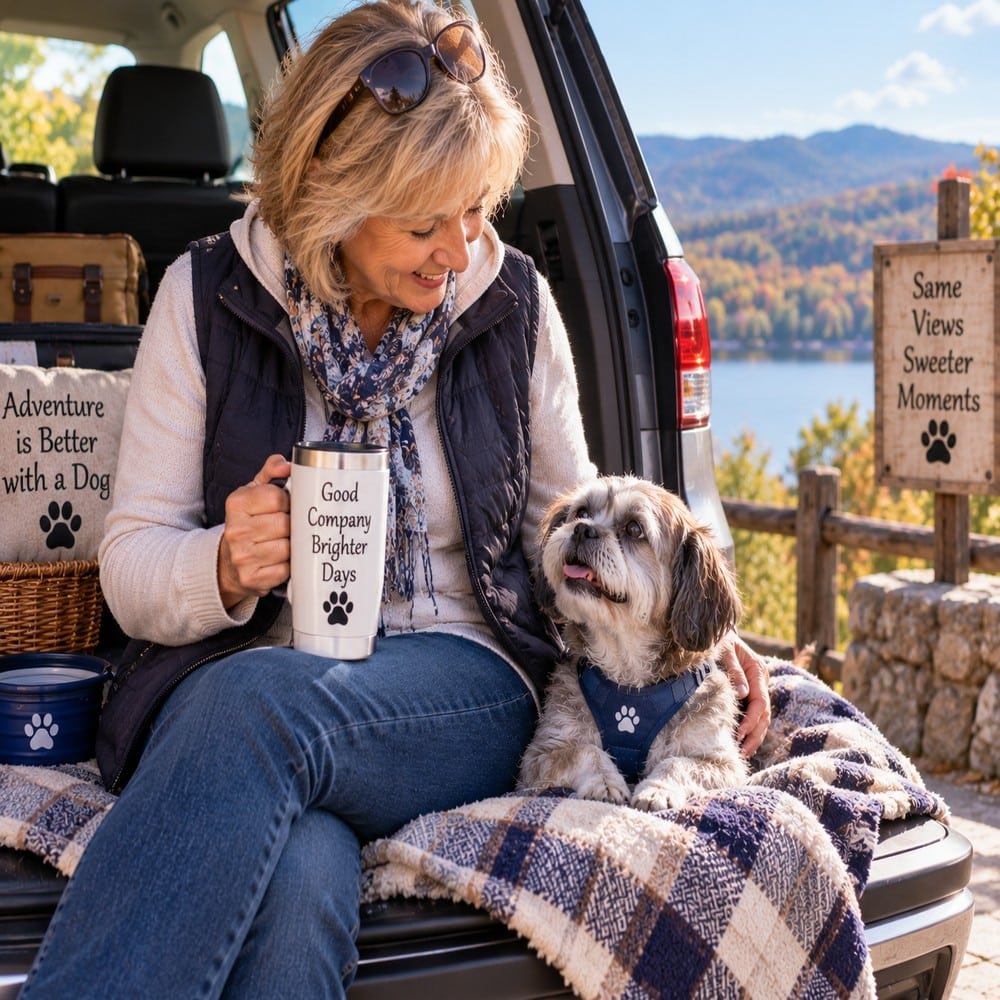
But there may still be outings they can enjoy.
A short car ride.
A visit to a family member.
Sitting somewhere peaceful outside.
Even riding along while you do something simple can make an ordinary day more interesting.
The adventure doesn’t have to be big.
To a dog who has spent years going places with you, sometimes being invited is the important part.
We tend to think dogs need activities.
Sometimes they just need access to the activity that’s already happening.
If you’re working in the yard, your senior dog might be perfectly content lying somewhere comfortable nearby.
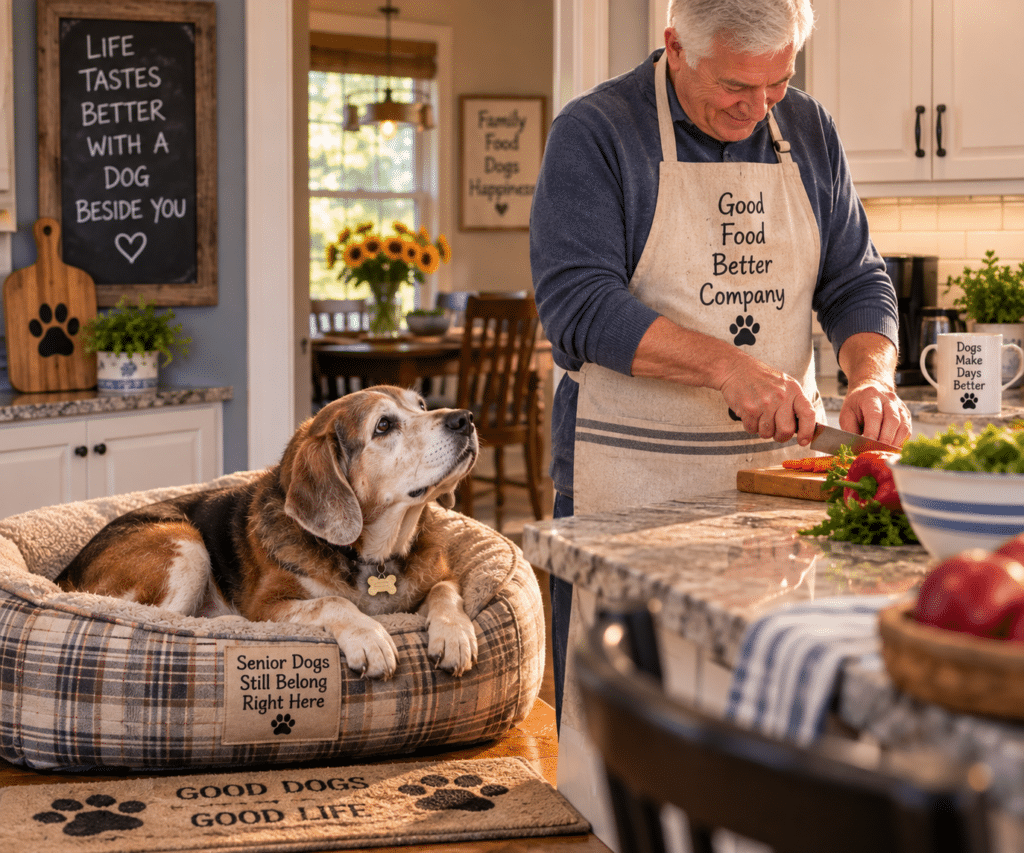
If you’re cooking, they may assume their position in the kitchen and supervise.
If you’re watching television, they’ll probably find their usual spot.
If you’re sitting on the porch, make room for them too.
They don’t have to be doing what you’re doing.
They just want to be part of it.
That’s one of the wonderful things about older dogs.
Companionship becomes simpler.
They don’t always need you to throw the ball.
Sometimes being beside you is enough.
As dogs get older, some of the places they’ve always enjoyed may become harder to reach.
The couch might suddenly seem higher.
Slippery floors can become more difficult.
Getting into the car may require more effort.
Stairs that were once taken at full speed might deserve a little more consideration.
A few simple changes can sometimes make a big difference.
A rug across a slippery floor can provide better footing. A ramp or pet steps may make a favorite resting place easier to reach when appropriate for the dog. A comfortable bed placed near where the family spends time can give an older dog a place to rest without having to retreat to another room.
And sometimes the solution is simply waiting.
An older dog may still be coming when you call.
They’re just coming at senior-dog speed.
Older dogs still have preferences.
The dog who loved car rides may still perk up when the keys jingle.
The dog who spent years watching squirrels may still enjoy lying near the window.
The dog who loved being brushed may still lean into the brush.
The dog who always sat beside you outside may still be waiting for an invitation.
We naturally focus more on what senior dogs can no longer do.
But it’s worth paying just as much attention to what they still enjoy.
Those familiar pleasures can become even more important as their world gets a little smaller.
Maybe your dog once walked two miles and now enjoys going around the block.
Then around the block is the adventure.
Maybe they once chased a ball across the yard and now prefer gently carrying a favorite toy.
That’s still play.
Maybe they once jumped onto the couch before you could sit down and now need some assistance or a comfortable bed beside you.
They’re still spending the evening with you.
We don’t have to make older dogs behave like younger dogs to give them a good life.
In fact, one of the kindest things we can do is stop expecting them to.
Let the day move at their speed sometimes.
Of course, there’s a difference between normal slowing down and a dog who is uncomfortable.
A major change in mobility, appetite, sleep, behavior, breathing, bathroom habits, or interest in things they normally enjoy deserves attention.
Dogs can’t tell us exactly what hurts or what feels different, so changes shouldn’t automatically be dismissed as “just getting old.”
Your veterinarian can help determine whether something is part of normal aging or needs treatment.
Keeping a senior dog involved should always mean choosing activities they can comfortably enjoy—not asking them to push through pain or exhaustion.
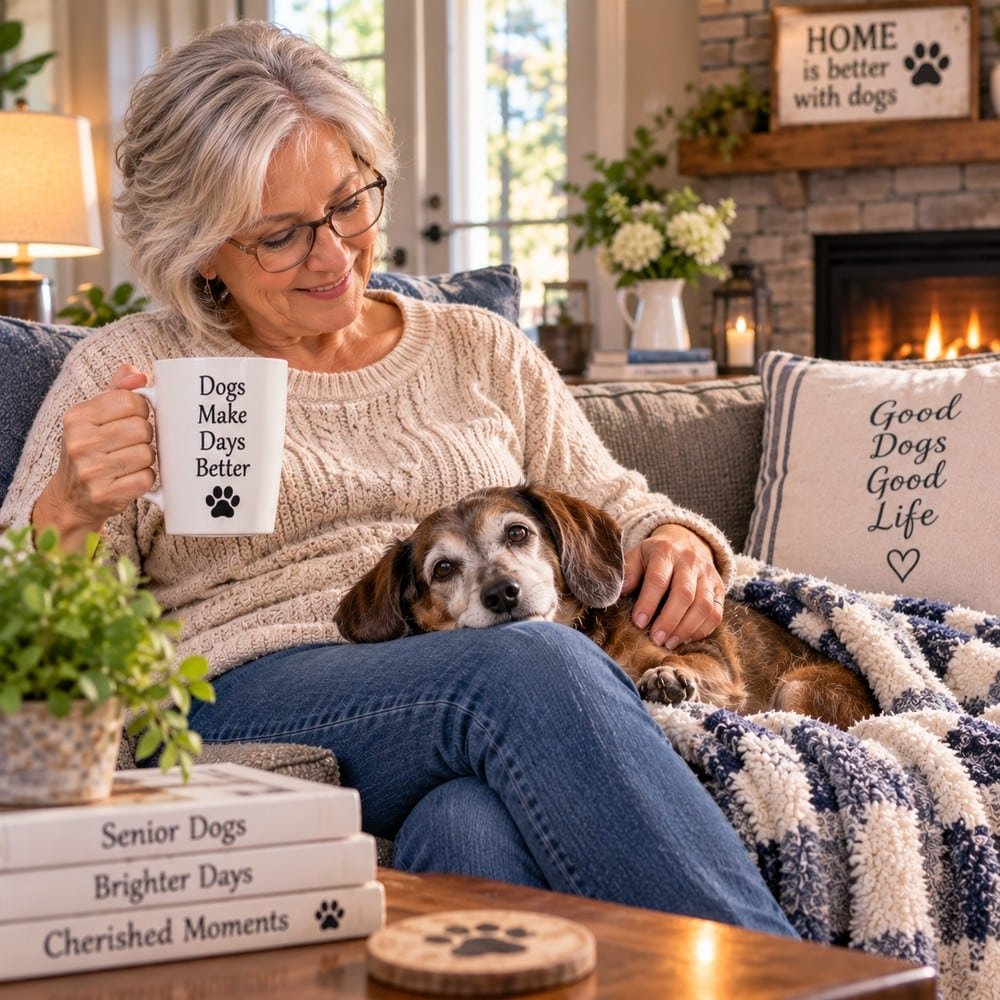
Life with a young dog can be wonderfully chaotic.
There are zoomies.
Chewed-up things.
Endless energy.
Balls that apparently must be thrown again immediately even though you just threw one.
Senior dogs bring something different.
There’s history.
Your dog knows your routines because they’ve lived them beside you.
They know which chair is yours.
They know when dinner happens.
They know the sound of your car.
They know where you keep the treats.
And somehow, after all those years, they still choose to follow you from one room to another when they could have stayed comfortably asleep.
Maybe a little more slowly now.
But they come.
One of the easiest mistakes we can make with an aging dog is assuming that because they can do less, they need less from life.
Often they simply need something different.
Shorter walks.
Softer beds.
Slower mornings.
A little help getting where they want to go.
More time to rest between activities.
And plenty of opportunities to remain part of the family they’ve spent their life loving.
So pull their bed a little closer.
Wait while they make their way to the door.
Let them supervise dinner.
Sit outside together.
Take the slow walk.
Invite them along when the outing is something they can comfortably enjoy.
Your senior dog may not be able to do everything they once did.
But chances are, they still want to be part of everything that matters.
And most of the time, what matters most to them is simply being with you.