Newsletter Subscribe
Enter your email address below and subscribe to our newsletter

 ByDiana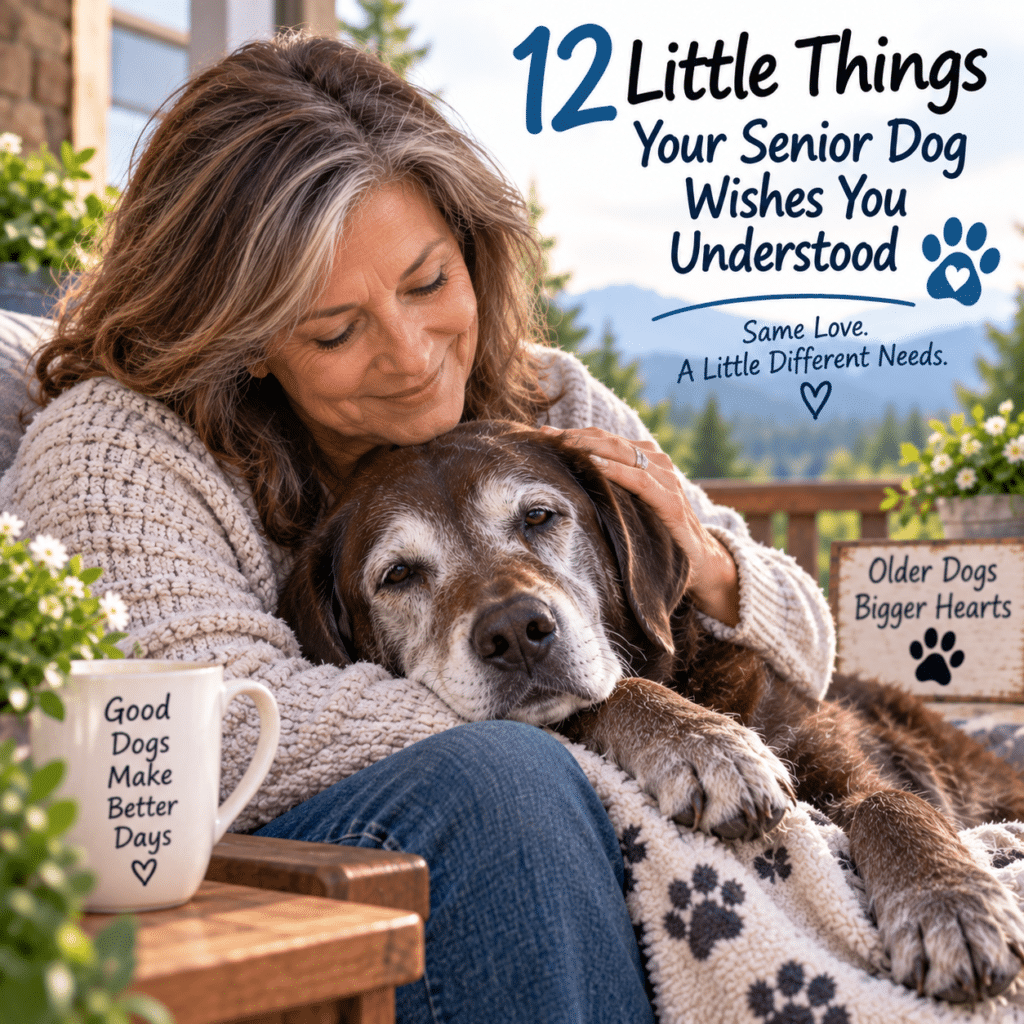
There comes a point when you look at your dog and realize something has changed.
Maybe there’s a little more gray around the face.
Maybe getting up from a nap takes an extra few seconds.
Maybe the dog who once raced you to the door now takes the scenic route.
It can happen so gradually that you barely notice it at first.
Your dog is getting older.
But here’s the part that’s easy to forget: underneath all those little changes is still the dog you’ve always known.
They still want to be near you. They still enjoy their favorite things. They still have opinions about dinner, interesting smells and whether you should be allowed to go to the bathroom alone.
They may just need you to understand them a little differently now.
Here are 12 things your senior dog might tell you if they could.
Affiliate Disclosure: This article contains affiliate links. If you make a purchase through one of these links, Dogs Make Days Better may earn a small commission at no additional cost to you. We only feature products we believe may be useful to dog owners.
Remember when your dog could go from sound asleep to racing toward the door in approximately two seconds?
Those days may be changing.
Older dogs can become stiffer and slower, especially after they’ve been resting for a while.
So when your senior dog takes a few extra seconds to stand up, give them those seconds.
Don’t rush them.
Don’t assume they’re being stubborn because they don’t immediately follow you.
Their body may simply need a little more time to catch up with their enthusiasm.
And if you notice a significant change in mobility, stiffness, limping or reluctance to move, mention it to your veterinarian. Pain shouldn’t automatically be dismissed as “just getting old.”
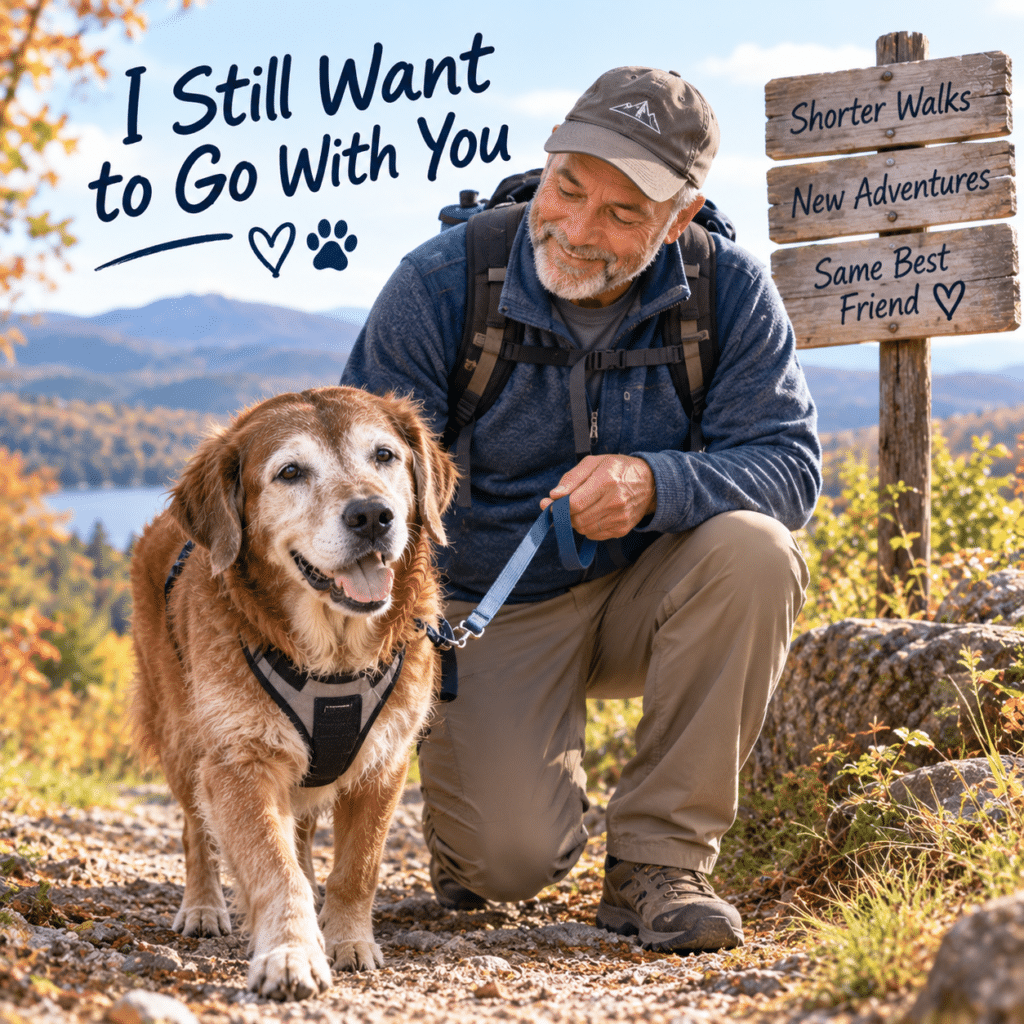
Your senior dog may no longer be interested in a five-mile hike.
That doesn’t mean they want to stay home while everybody else has fun.
Sometimes we become so protective of older dogs that we accidentally start leaving them out.
Look for ways to adjust the adventure instead.
Take a shorter walk.
Drive to a favorite park and explore one small area.
Sit together on a bench.
Bring a stroller or wagon for a little dog who tires easily.
Spend twenty minutes sniffing instead of an hour hiking.
Your senior dog doesn’t care how many miles you cover.
They care that they got to come.
Dogs love routine at almost any age, but predictability can become especially comforting as they get older.
They know where the water bowl is.
They know where their bed is.
They know which door leads outside.
They know the path from the bedroom to the kitchen.
For a senior dog experiencing changes in vision, hearing or cognitive function, suddenly rearranging the house can make familiar surroundings harder to navigate.
You don’t have to preserve your living room like a museum.
Just remember that those ordinary landmarks may mean more to your older dog than you realize.

Senior dogs can become world-class nappers.
Morning nap.
Late-morning nap.
Post-lunch nap.
A quick nap to recover from the previous nap.
Then bedtime.
It’s easy to worry that your dog is sleeping their life away, but older dogs often need more rest than they did when they were younger.
Let them sleep somewhere comfortable and peaceful.
At the same time, pay attention to sudden changes. If your normally social dog abruptly becomes extremely lethargic, difficult to wake or uninterested in normal activities, that’s worth discussing with your veterinarian.
There’s a difference between enjoying a good senior-dog nap and simply not feeling well.
A shiny hardwood or tile floor may not look dangerous to us.
To an older dog with weaker muscles, sore joints or less confidence in their footing, it can feel like an ice-skating rink.
You may notice your dog hesitating before crossing certain areas or spreading their legs wider to keep from slipping.
A few strategically placed rugs or nonslip runners can make an enormous difference.
Pay particular attention to the routes your dog uses most:
From the bed to the door.
From the living room to the kitchen.
Around food and water bowls.
Near stairs.
Sometimes one inexpensive rug can give an older dog back a surprising amount of confidence.
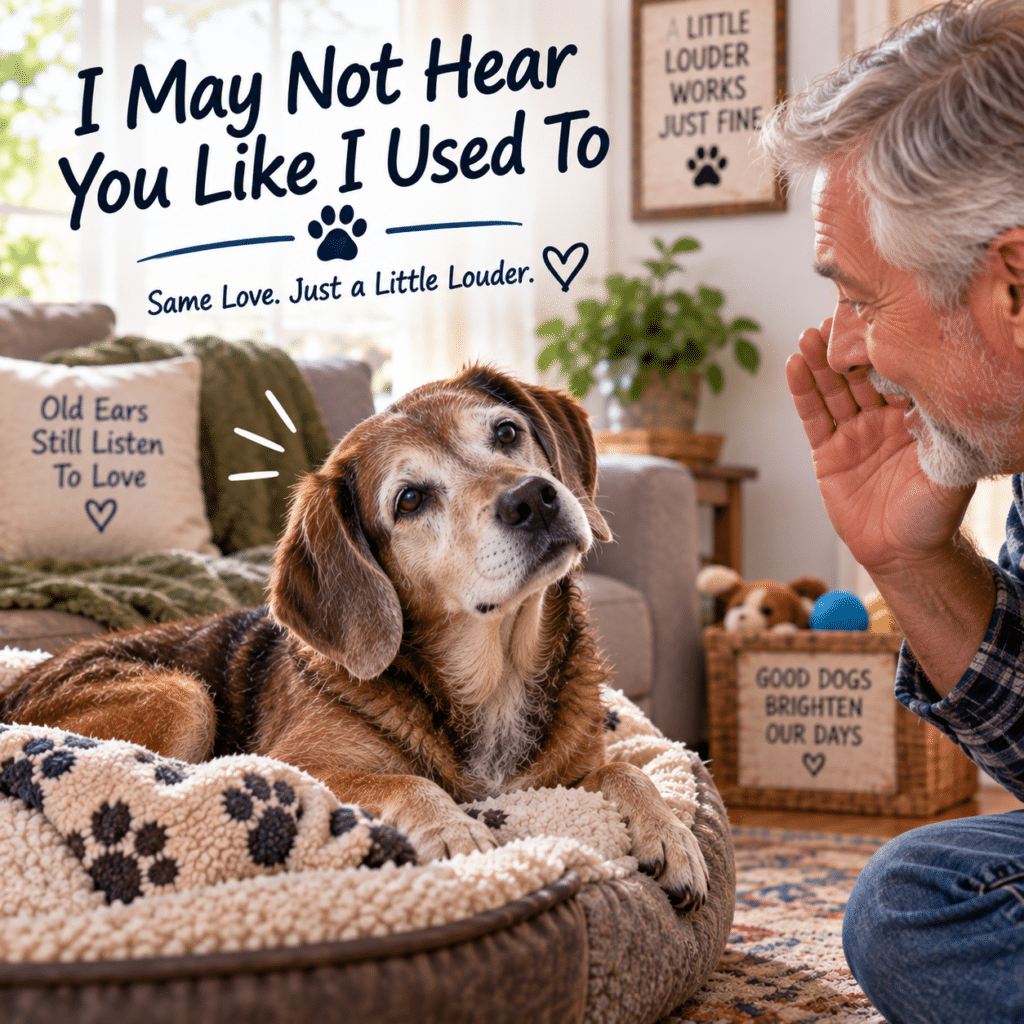
You call your dog’s name.
Nothing.
You call again.
Still nothing.
Then you walk into the room and discover your dog peacefully asleep, completely unaware that you’ve been holding a one-sided conversation from the kitchen.
Hearing loss can creep up gradually.
A dog who doesn’t respond may not be ignoring you.
Try approaching where they can see you rather than startling them from behind.
You may also begin communicating more through hand signals, gestures and routines.
And here’s one unexpectedly sweet thing about older dogs with hearing loss:
They may not hear every word you say anymore.
But they still seem to know exactly what a gentle hand on their back means.
The temperature that feels perfectly comfortable to you may not feel quite as comfortable to an aging dog.
Some senior dogs seek warm blankets, sunny windows and the softest bed in the house.
Others struggle more in hot weather and tire quickly during warm walks.
Pay attention to what your dog chooses.
If they’re constantly searching for warmth, give them a cozy place away from drafts.
During hot weather, keep outings shorter, provide plenty of fresh water and avoid the hottest part of the day.
Older dogs aren’t always as adaptable to temperature extremes as they once were.
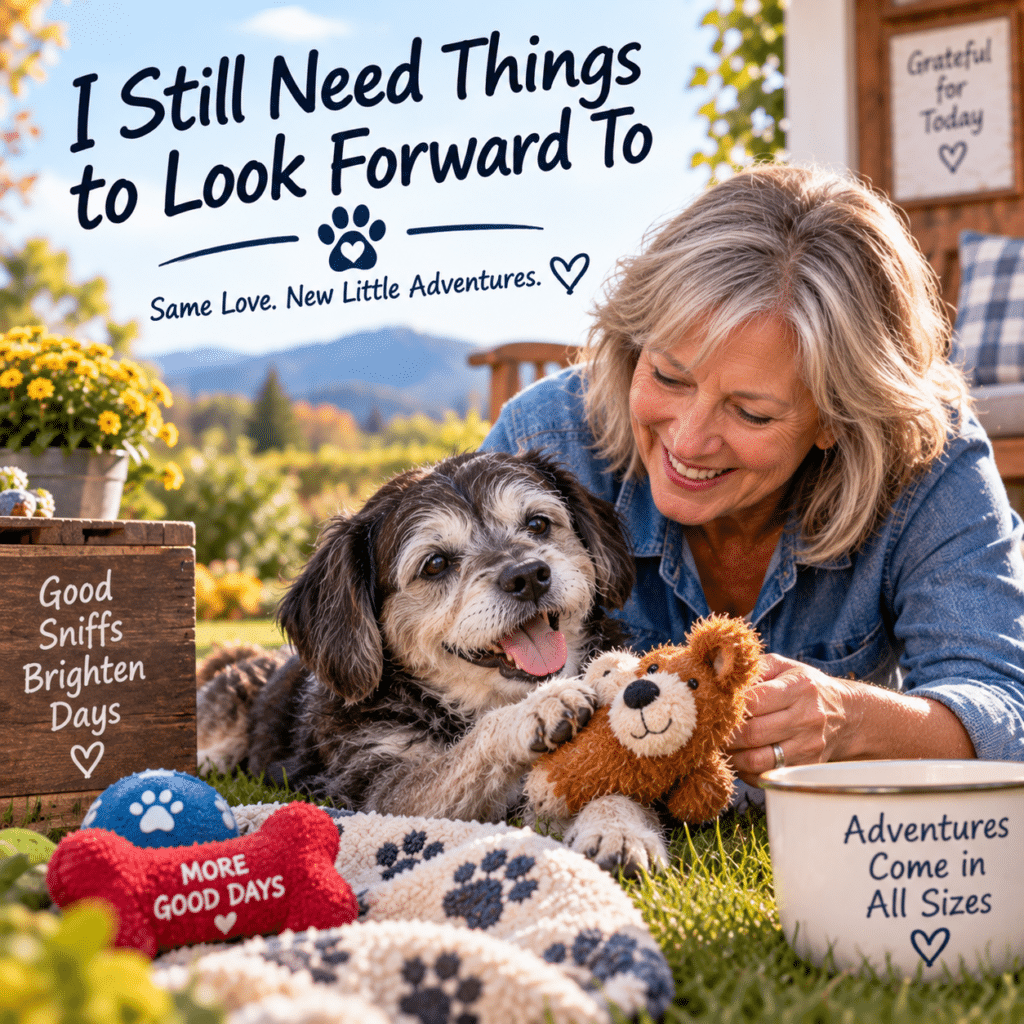
Getting older shouldn’t mean every day becomes exactly the same.
Senior dogs still enjoy novelty.
It may just look different.
Hide a few treats for them to find.
Take them somewhere with interesting smells.
Give them a new toy that’s easy to carry.
Let them sniff the grocery bags when you come home.
Sit outside together and watch the neighborhood.
Take a leisurely car ride if they enjoy traveling.
Your dog doesn’t need an elaborate enrichment schedule.
Sometimes the highlight of an older dog’s afternoon is simply discovering that someone dropped a tiny piece of chicken near the refrigerator.
Joy doesn’t retire when dogs get old.
Dogs can be remarkably determined.
Your senior dog may stare at the couch they’re no longer quite able to jump onto as though sheer willpower should solve the problem.
This is where a little help can preserve their independence.
A ramp or sturdy pet steps can make favorite furniture easier to reach.
A supportive harness can help some dogs navigate stairs or get into the car.
Raised or repositioned bowls may be more comfortable for certain dogs.
An orthopedic bed can make resting easier on aging joints.
The goal isn’t to do everything for your senior dog.
It’s to make it easier for them to keep doing as much as they comfortably can.
If your senior dog is starting to struggle with the couch, bed, stairs or getting into the car, a simple ramp or set of pet steps can make everyday life a little easier.
You can browse ramps and steps for older dogs at Chewy here. Sometimes a small change around the house can help an aging dog stay involved in all the places they still want to be.
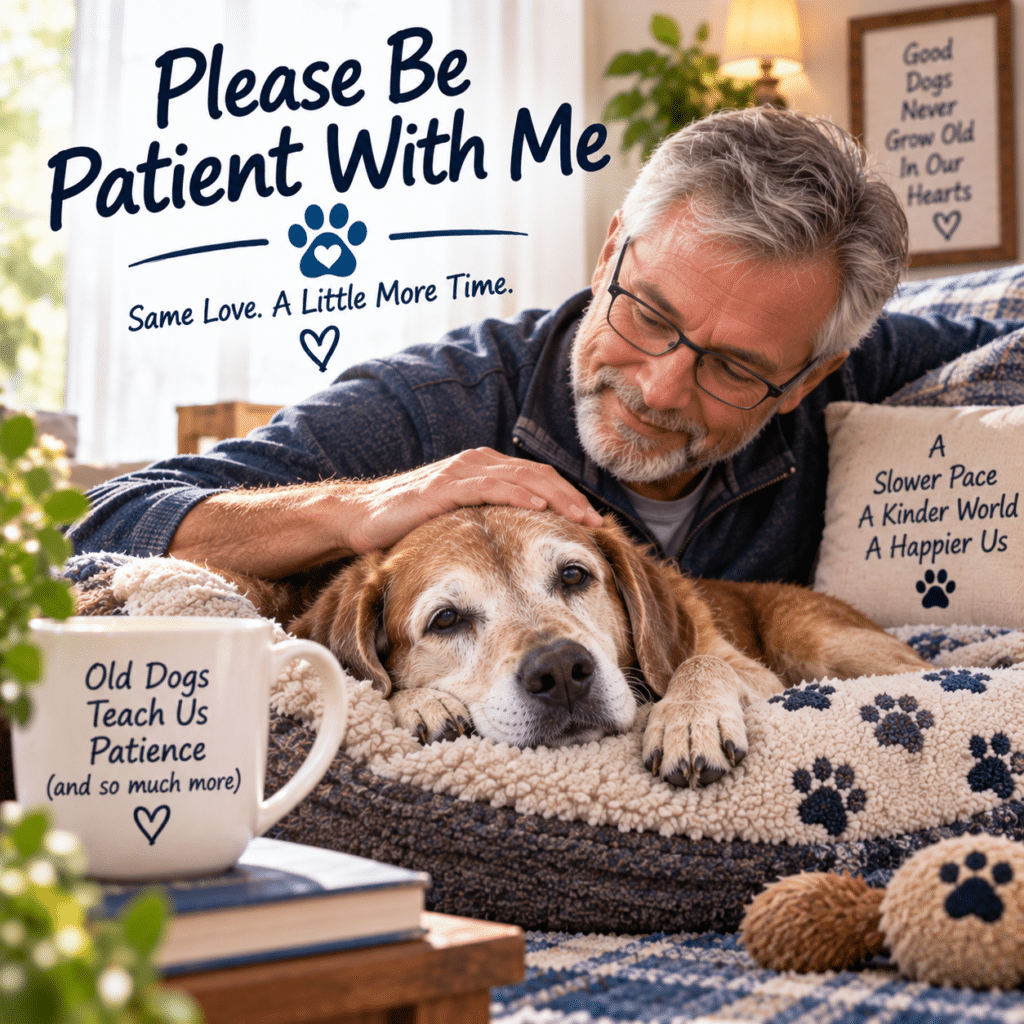
Maybe your dog has started having occasional accidents.
Maybe they stand at the wrong side of the door.
Maybe they wake you during the night.
Maybe a familiar command suddenly seems confusing.
Aging can bring changes that are frustrating for both dogs and the people who love them.
Before assuming it’s bad behavior, consider whether something physical or cognitive may be going on.
New house-soiling, confusion, nighttime restlessness, anxiety or noticeable personality changes deserve a conversation with your veterinarian.
And in the meantime, patience matters.
Your dog spent years learning the rules of your household.
If those rules suddenly become harder to remember or follow, they’re probably not enjoying the situation either.
You see your dog every day, which makes you one of the best people to notice when something isn’t quite right.
Watch for changes in:
Appetite.
Thirst.
Weight.
Breathing.
Mobility.
Bathroom habits.
Sleep.
Behavior.
Interest in favorite activities.
You don’t need to become obsessed with every little variation.
Dogs have off days just like we do.
But don’t automatically explain persistent changes with, “Well, they’re old.”
Sometimes a change that looks like ordinary aging has a treatable cause.
Keeping up with veterinary visits becomes especially important during the senior years because dogs can’t tell us exactly what hurts or feels different.
We have to notice for them.
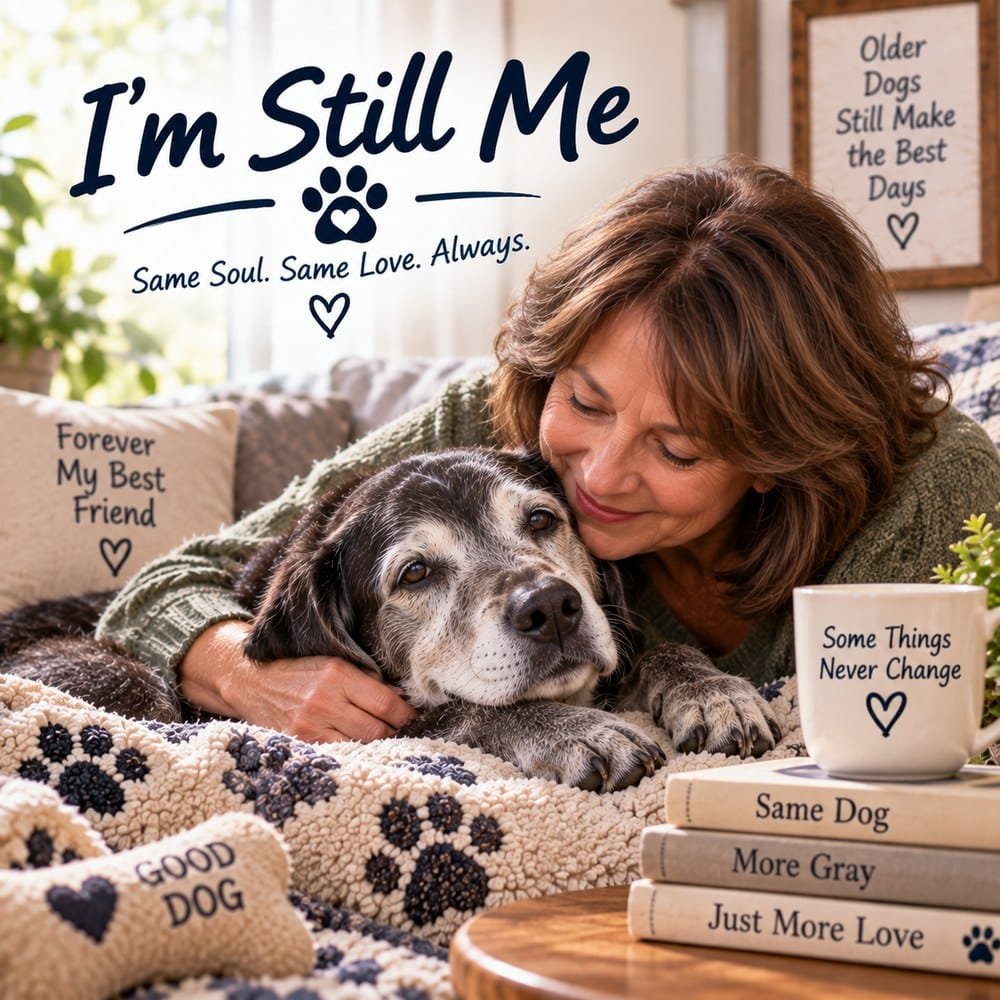
This might be the one your senior dog most wants you to understand.
They aren’t just an “old dog.”
They’re your dog.
The one who greeted you at the door.
The one who stole your spot on the couch.
The one who knew exactly where you kept the treats.
The one who followed you through the house for no particular reason other than you were going somewhere and apparently they were going too.
Maybe the eyes are cloudier now.
Maybe the face is gray.
Maybe walks are shorter and naps are longer.
But look closely.
That familiar personality is still there.
The stubborn little habit.
The hopeful dinner stare.
The favorite sleeping position.
The way they lean into your hand when you scratch exactly the right spot.
Getting older changes a dog’s body.
It doesn’t erase the years you’ve spent becoming each other’s family.

It’s hard to watch a dog grow older because we know something they don’t.
We know their lives aren’t long enough.
That knowledge can make us start grieving them while they’re still sitting right beside us.
Try not to let tomorrow steal too much from today.
Your senior dog isn’t thinking about how many years are behind them.
They’re thinking about breakfast.
They’re wondering whether you’re going for a walk.
They’re hoping you’ll share whatever you’re eating.
They’re looking for the warmest spot in the house.
They’re waiting for you to sit down so they can be near you.
There may be accommodations to make now.
More veterinary visits.
More patience.
More rugs on slippery floors.
Shorter walks.
Softer beds.
A helping hand getting into the car.
But there can also be something incredibly special about this stage of life.
You’ve known each other a long time.
You understand their little habits.
They understand yours.
There isn’t much left to prove.
So take the slow walk.
Let them sniff as long as they want.
Help them onto the couch.
Sit outside together.
Take too many pictures.
And when your senior dog falls asleep beside you for the third time that afternoon, don’t worry that you’re doing nothing.
To them, being safe, comfortable and beside the person they love may be everything they wanted to do that day.