Newsletter Subscribe
Enter your email address below and subscribe to our newsletter

 ByDiana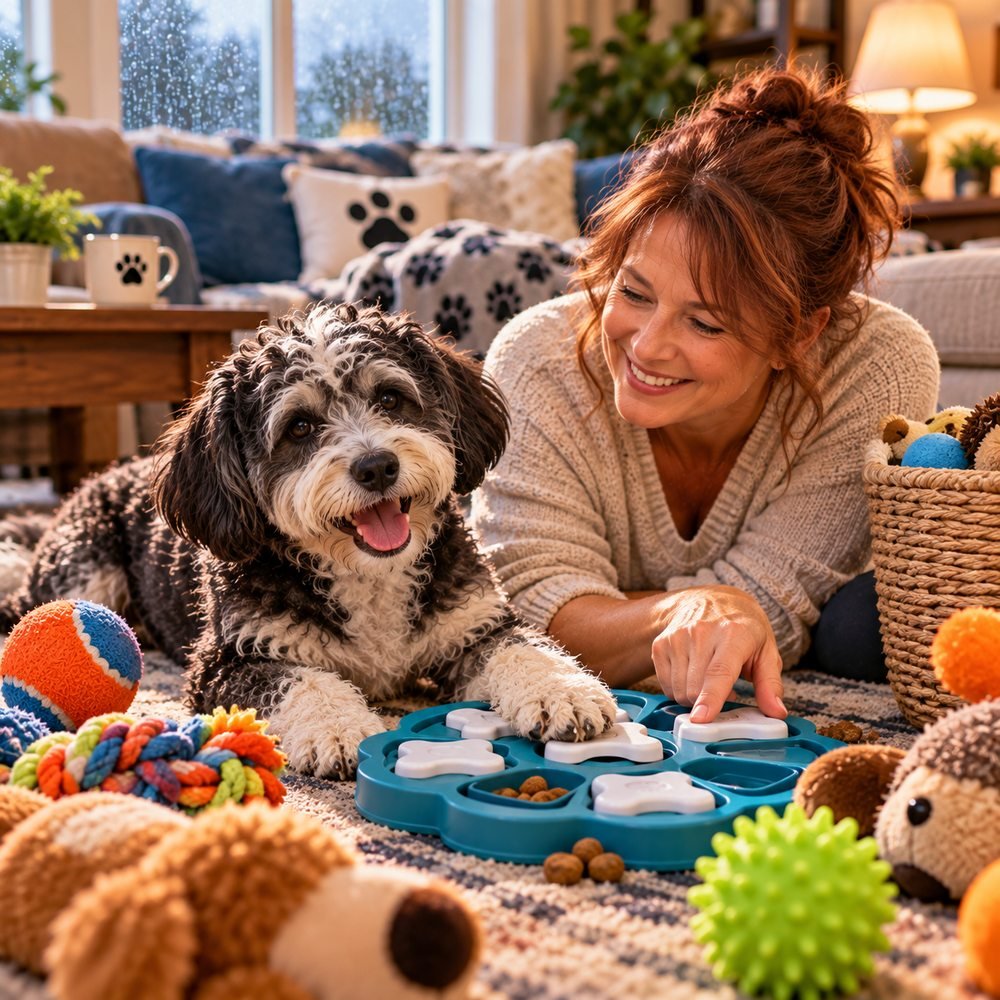
It’s raining. The backyard is muddy. The weather forecast isn’t looking any better.
And your dog has already checked the window six times.
Some dogs are perfectly happy spending a gloomy afternoon snoozing on the couch. Others seem to believe that being stuck inside is a personal injustice that you should immediately correct.
Fortunately, you don’t need a big house, expensive equipment or endless energy to keep your dog entertained indoors.
A few simple activities can give them something interesting to do, provide mental stimulation and help break up an otherwise uneventful day.
Here are 12 easy ways to keep your dog busy when going outside isn’t much of an option.
Affiliate Disclosure: This article contains affiliate links. If you purchase through these links, we may earn a small commission at no additional cost to you. We only recommend products we believe may be helpful to dogs and their people.
Instead of serving every meal in the same old bowl, try making your dog work their nose a little.
Take a portion of their regular kibble and hide small amounts around one room.
Start with easy places: beside a chair leg, near their bed or along the edge of a rug.
Then tell your dog to find it.
Once they understand the game, you can make the hiding places slightly more challenging.
For dogs who have never played scent games, keep the first few rounds simple enough that they experience success quickly.
You might be surprised how much enjoyment they get from finding the very same food they would normally finish in two minutes.
Just remember to count the food toward their regular daily portion.
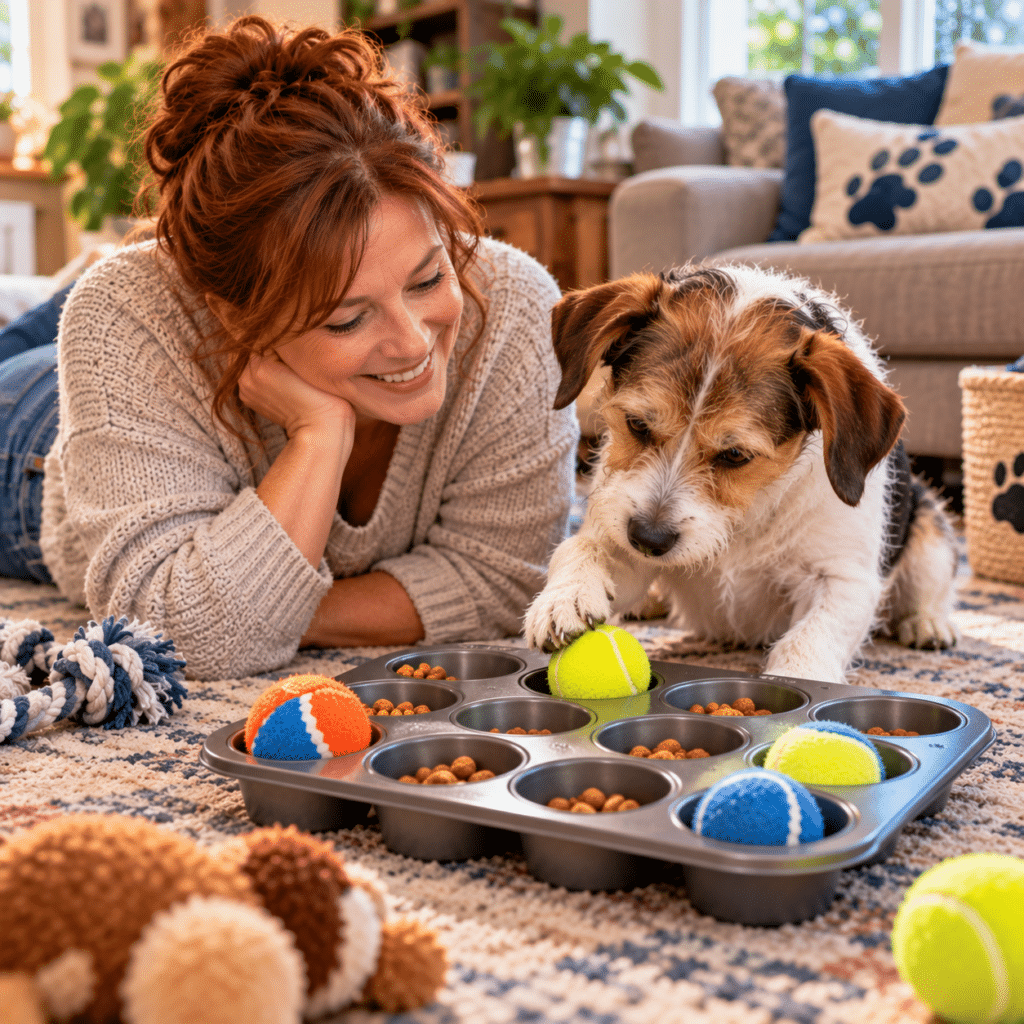
You probably already have everything you need for this activity in your kitchen.
Grab a muffin tin, a few appropriately sized dog-safe balls and several pieces of kibble.
Place food in a few of the muffin cups, then cover some of them with the balls.
Let your dog investigate how to reach the treats.
For beginners, leave several cups uncovered so the game doesn’t become frustrating.
Use balls too large to swallow, supervise closely and put the equipment away afterward.
You can also skip the balls entirely and simply let your dog search the muffin cups.
Sometimes the simplest version is the most enjoyable.
A snuffle mat is one of those wonderfully simple inventions that makes an ordinary handful of kibble more interesting.
The fabric strips create little hiding places where you can tuck food for your dog to sniff out.
Instead of gulping everything down, they get to investigate and search.
This can be particularly helpful for dogs who enjoy using their noses but aren’t interested in physically demanding games.
Start by scattering a few pieces of food on top. Once your dog understands the activity, tuck them farther into the fabric.
Always supervise, especially if your dog likes chewing fabric.
Helpful find: Chewy carries snuffle mats in different sizes and styles. A washable design with a nonslip bottom is worth considering.
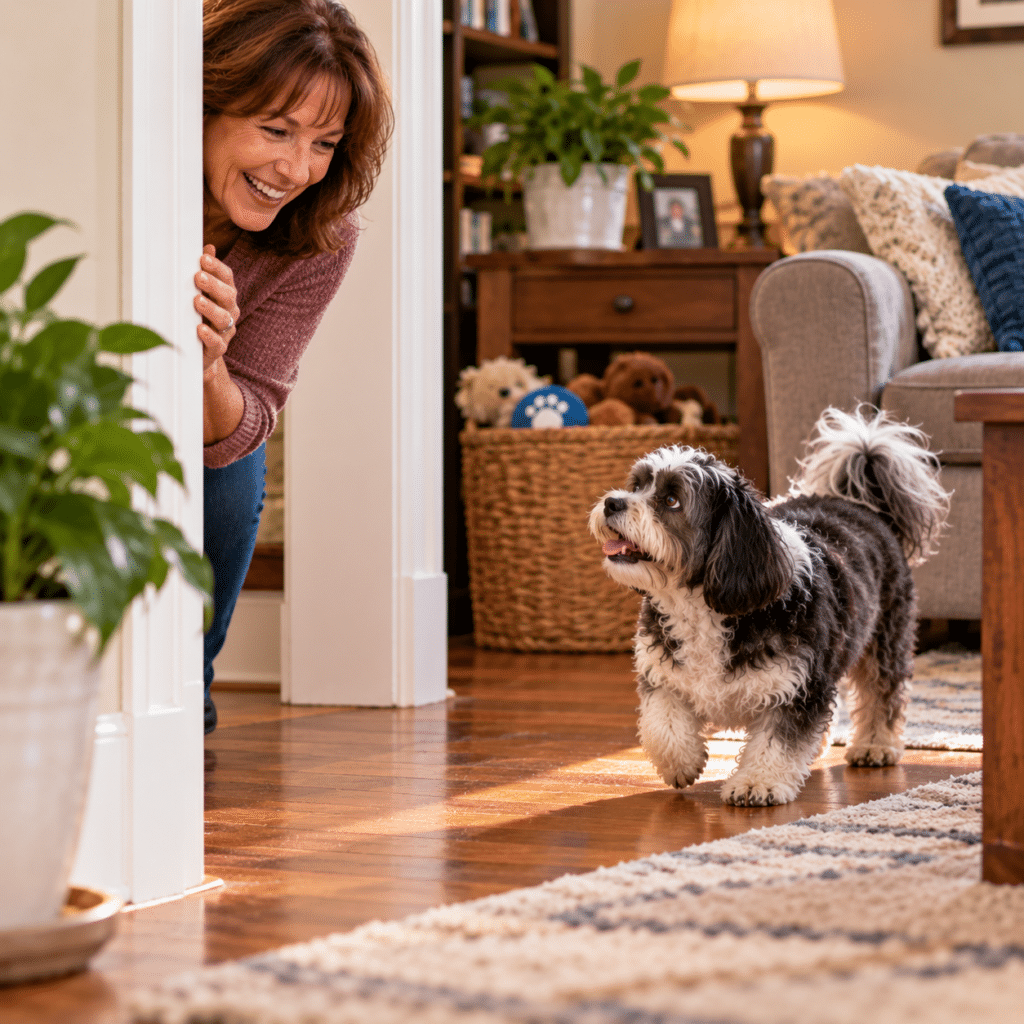
This game can be surprisingly entertaining, especially when your dog realizes that finding you is the whole point.
Ask your dog to stay with another family member while you hide somewhere nearby.
Then call their name.
Start with an easy hiding place, such as standing behind a doorway.
When they find you, make a big fuss over them.
Once they understand the game, you can try hiding behind furniture or in another room.
If your dog doesn’t know how to stay, have someone gently distract them while you find your hiding spot.
And if you live with multiple dogs, prepare for the possibility that everyone will come looking for you at once.
That tends to make the game even funnier.
Dogs can get bored seeing the same toys scattered across the living room every day.
Instead of leaving everything available all the time, put a few toys away and bring them back several days later.
An old squeaky toy might suddenly become interesting again.
Try offering different types of toys throughout the week: something soft, something to carry, a suitable chew toy or a food-dispensing toy.
Of course, some dogs have one particular toy that must remain available at all times.
You know the one.
The slightly battered favorite that they carry everywhere and would absolutely notice if you tried to put it away.
Let them keep that one.
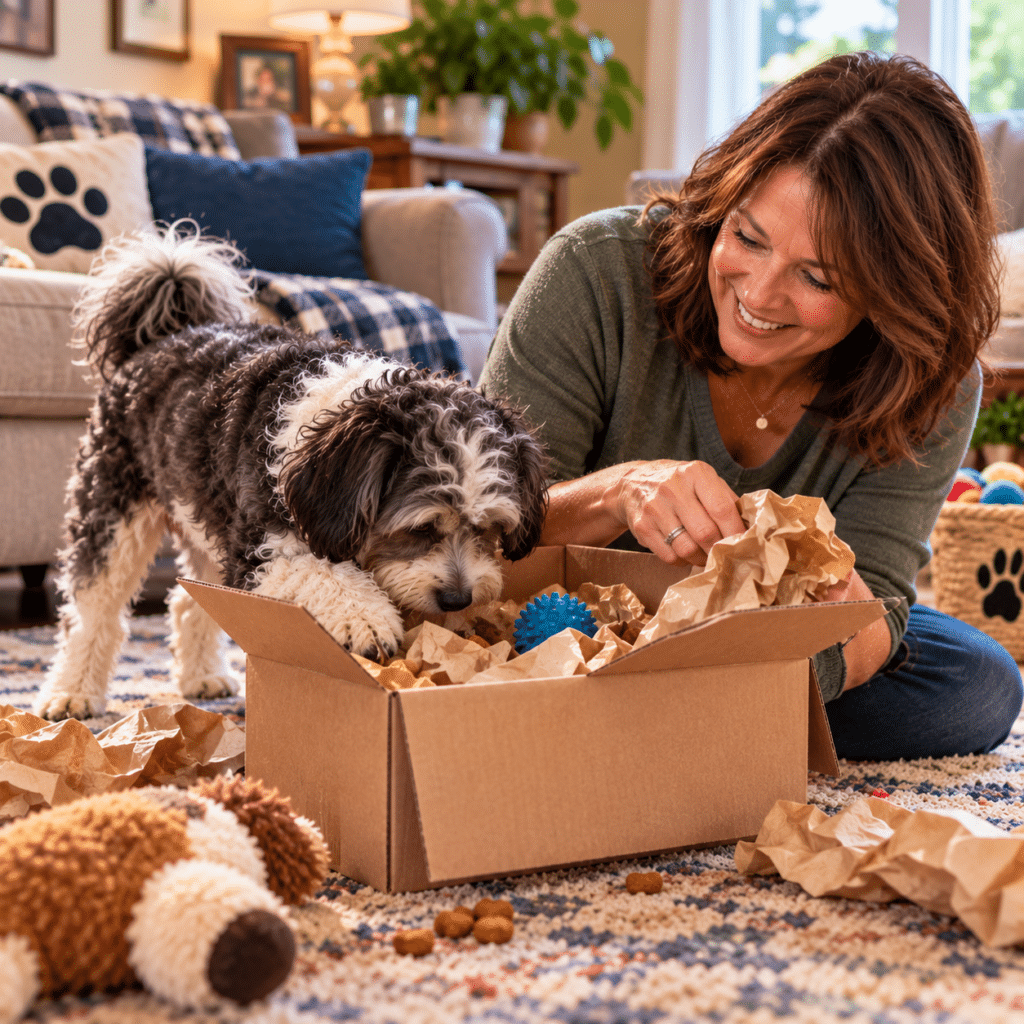
Before recycling your next delivery box, consider giving it one more job.
Place a few pieces of kibble or a favorite toy inside a clean cardboard box and let your dog investigate.
You can add loosely crumpled plain paper to make the search more interesting.
Start with an open box so your dog can easily see and smell what’s inside.
Avoid staples, tape, plastic packaging, sharp edges or anything your dog might swallow.
Supervise the activity and remove the box if your dog starts eating the cardboard rather than searching through it.
For a dog who enjoys investigating things, a simple box can provide a surprising amount of entertainment.
And for once, the package really is for them.
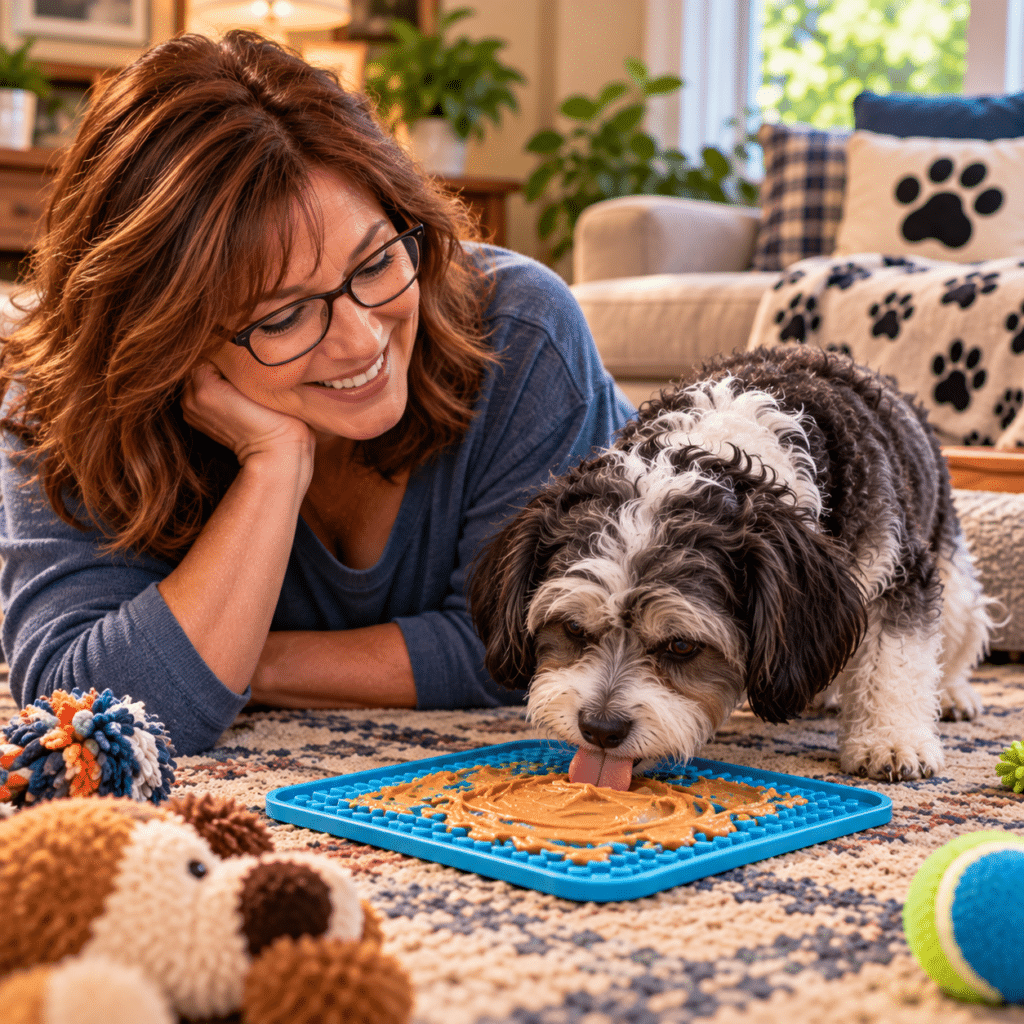
Some dogs love an activity that involves concentrating on something delicious.
A lick mat has a textured surface that holds a thin layer of soft food, encouraging your dog to lick rather than gulp.
You can spread a small amount of plain pumpkin, suitable wet dog food or another veterinarian-approved, dog-safe food across the surface.
Choose ingredients that agree with your dog’s stomach and fit their usual diet.
For dogs who enjoy licking, this can be a pleasant way to occupy part of a quiet afternoon.
Make sure the mat is designed for dogs, supervise its use and remove it if your dog begins chewing the material.
An indoor afternoon is a perfect opportunity for a little training.
And it doesn’t have to be anything complicated.
Try teaching your dog to touch your hand with their nose, give a gentle paw, find a named toy or put a toy into a basket.
Keep sessions short, positive and enjoyable.
A few minutes at a time is enough, especially for puppies and older dogs.
If your dog has mobility problems, choose something that doesn’t require jumping, spinning or repeated changes in position.
And don’t worry if your dog never masters the trick.
Sometimes the funniest part is watching them offer every behavior they already know while trying to figure out what you want.
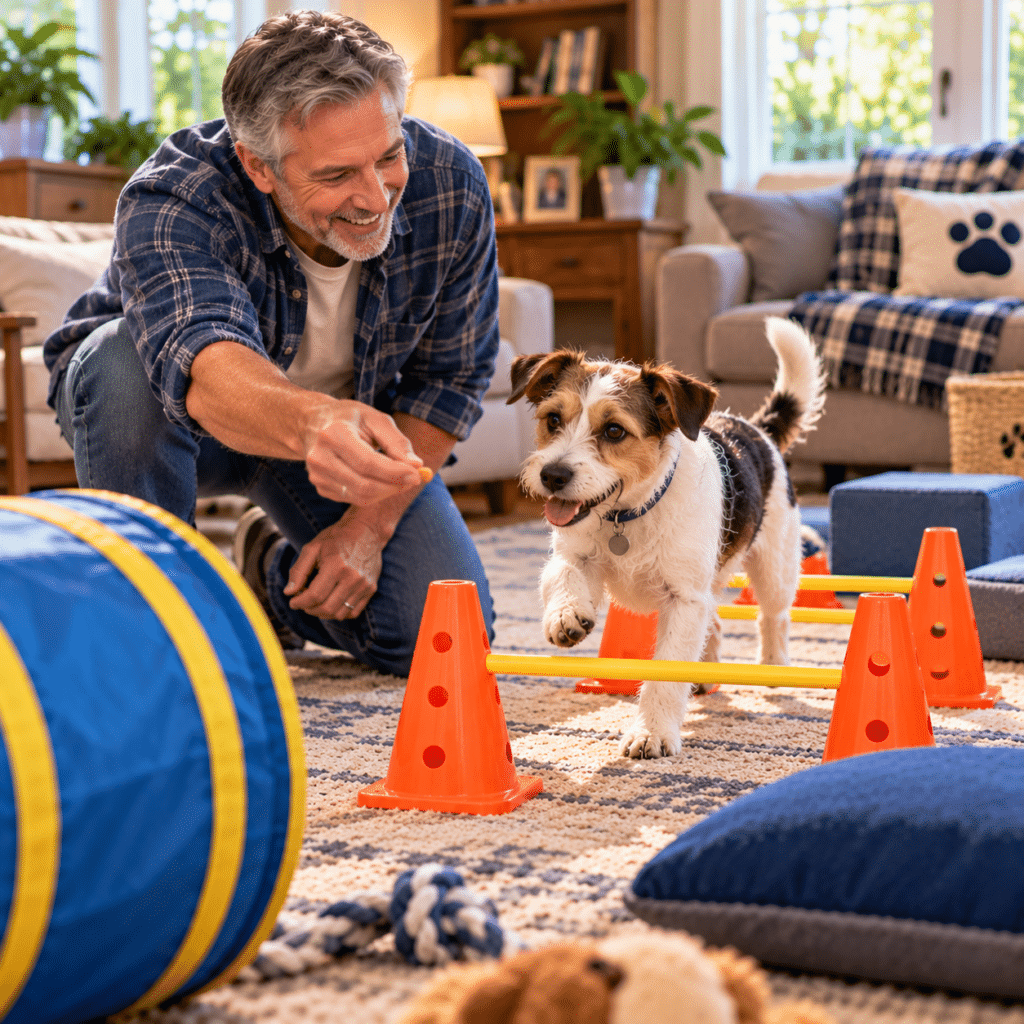
You don’t need professional agility equipment to make a small indoor adventure.
Arrange a few safe household objects and encourage your dog to move around them.
You might create a winding path between chairs, place a towel on the floor as a stopping point or encourage your dog to walk around a cushion.
Keep everything low, stable and nonslip.
Avoid jumps, slippery floors, unstable tunnels or anything that could cause an injury.
This activity should be adjusted to your dog’s size, age and physical abilities.
For senior dogs, simply following a gentle path around a few objects may be plenty.
Remember, the goal is to make the afternoon interesting, not to prepare for the Olympics.
Some dogs still want a little physical play, even when the weather keeps them inside.
If you have enough clear space, try gently rolling a soft toy along the floor for your dog to retrieve.
Avoid throwing hard objects near furniture, stairs or breakable items.
A short game of tug with an appropriately sized toy can also be enjoyable for dogs who like interactive play.
Keep movements gentle, let your dog take breaks and stop if they become overly excited or uncomfortable.
For smaller homes, rolling a toy a few feet across the room may be all you need.
The important part isn’t how far the toy travels.
It’s that you’re playing together.
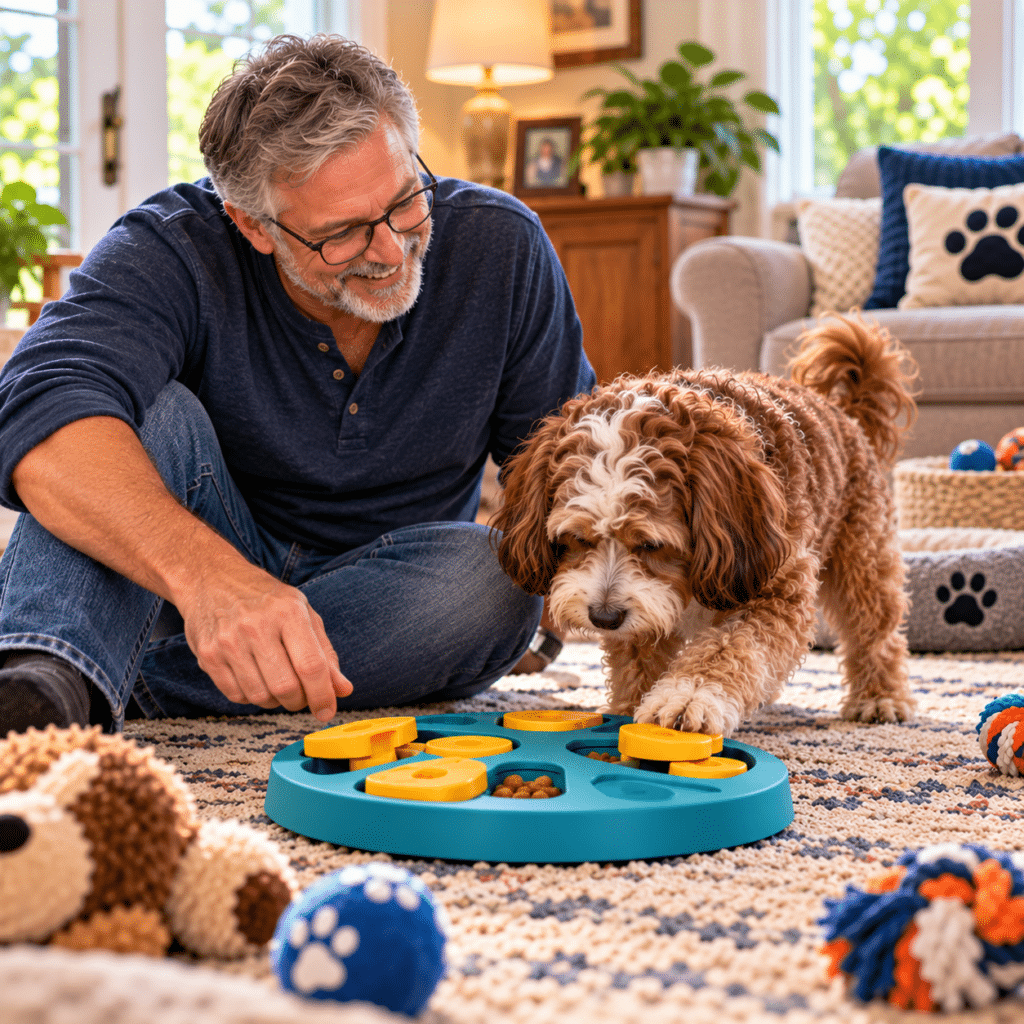
Some dogs enjoy having a problem to solve.
A beginner-friendly food puzzle or treat-dispensing toy can turn a few pieces of kibble into an activity that lasts longer than an ordinary snack.
Choose something appropriate for your dog’s size, chewing habits and experience level.
Start with an easy setting so they understand how to get the food out.
If they become frustrated, help them.
There’s no prize for making a dog struggle with a puzzle they don’t understand.
And if you have multiple dogs, consider giving them separate spaces for food-based enrichment to prevent competition.
Helpful find: Chewy offers beginner-level puzzle feeders and food-dispensing toys. I’d recommend starting with an easy-to-clean option rather than an elaborate puzzle with lots of tiny pieces.
Not every indoor activity needs a toy, treat or training session.
Sometimes what your dog really wants is a little uninterrupted time with you.
Sit on the floor and give them a gentle brushing if they enjoy it.
Invite them onto the couch for some quiet attention.
Talk to them while you fold laundry.
Or settle into your favorite chair and let them curl up nearby.
Dogs don’t need constant entertainment, and rest is an important part of a healthy daily routine.
For older dogs especially, simply being included in whatever you’re doing can be more enjoyable than a complicated activity.
And if your dog falls asleep halfway through your quality time?
Apparently, you did a pretty good job.
Before turning your living room into dog entertainment headquarters, keep a few things in mind.
If your dog has dietary restrictions, arthritis or another medical condition, choose activities that suit their individual needs.
And remember that mental enrichment doesn’t replace appropriate daily exercise, bathroom breaks or outdoor time when conditions are safe.
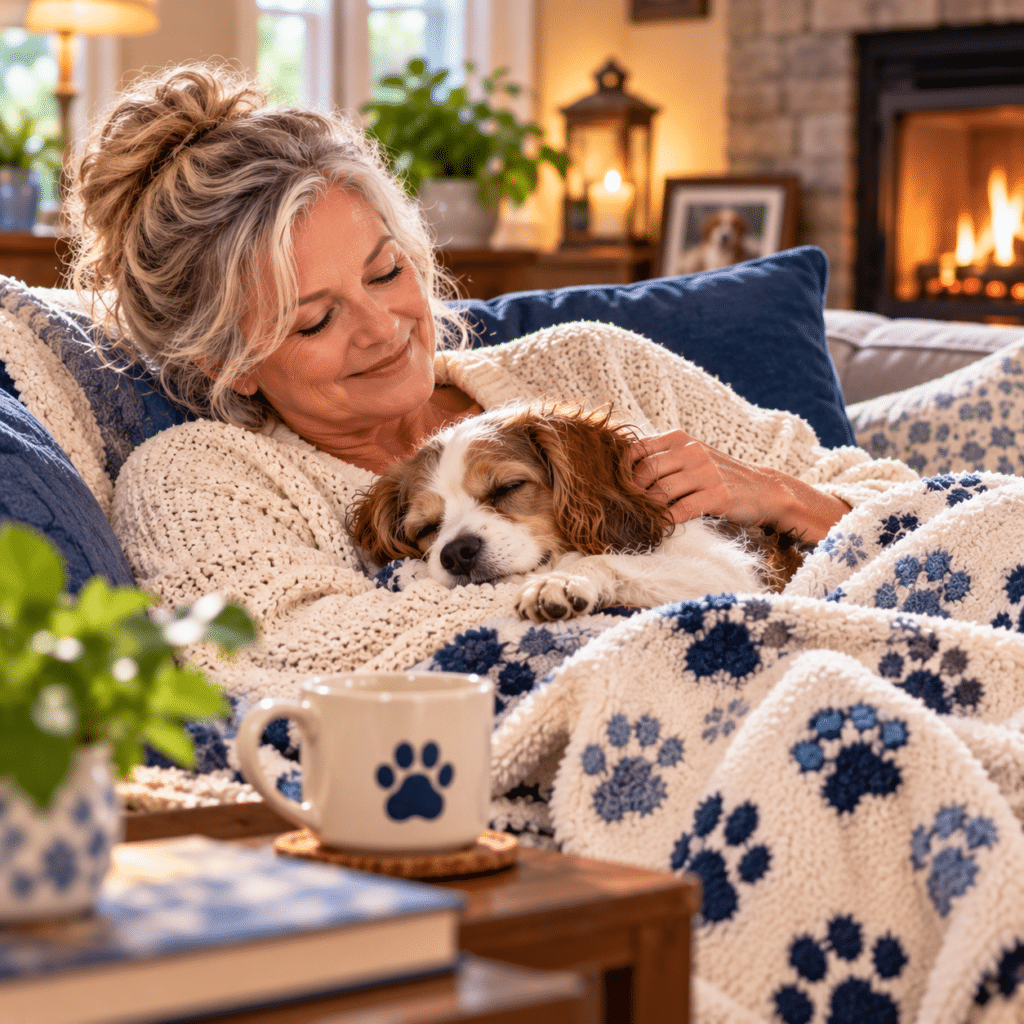
A rainy day doesn’t have to mean a boring day for your dog.
A few hidden treats, an old toy brought out of retirement or five minutes of learning something new can make an ordinary afternoon more interesting.
You don’t need to do all 12 activities.
Pick one or two that suit your dog and see what they enjoy.
Some dogs will become enthusiastic treasure hunters. Others will decide the best indoor activity is supervising you from the couch.
And some will happily participate in every game, then immediately fall asleep as though they’ve worked a full eight-hour shift.
That’s part of the fun of living with dogs.
Even when the weather keeps everyone indoors, they still manage to make the day a little brighter.