Newsletter Subscribe
Enter your email address below and subscribe to our newsletter

 ByDiana
There’s something about a Golden Retriever that makes the world feel a little friendlier.
Maybe it’s that happy face, the constantly wagging tail, or the way they greet you as though you’ve been gone for three years when you only stepped outside to check the mail.
Golden Retrievers have earned a reputation as some of the most affectionate, playful, and devoted family dogs around. But behind those beautiful golden coats and cheerful personalities, there’s much more to this beloved breed than you might expect.
They’re intelligent working dogs, enthusiastic adventurers, sometimes spectacularly messy companions, and experts at turning ordinary moments into something memorable.
Whether you’re thinking about welcoming a Golden Retriever into your family or you’ve already fallen in love with one, here are 15 things that make these wonderful dogs so special.

It’s easy to picture a Golden Retriever carrying a favorite stuffed animal around the house.
But their love of carrying things has a fascinating history.
Golden Retrievers were developed in Scotland during the 19th century to retrieve birds for hunters, including from water and difficult terrain.
They needed to be athletic, intelligent, cooperative, and gentle enough to carry game without damaging it.
Those qualities helped shape the friendly, eager-to-work dogs we know today.
Many Golden Retrievers still love carrying toys, retrieving balls, and splashing through water.
And if yours proudly delivers a sock, a shoe, or the television remote, you may be seeing a little of that retrieving instinct in action.
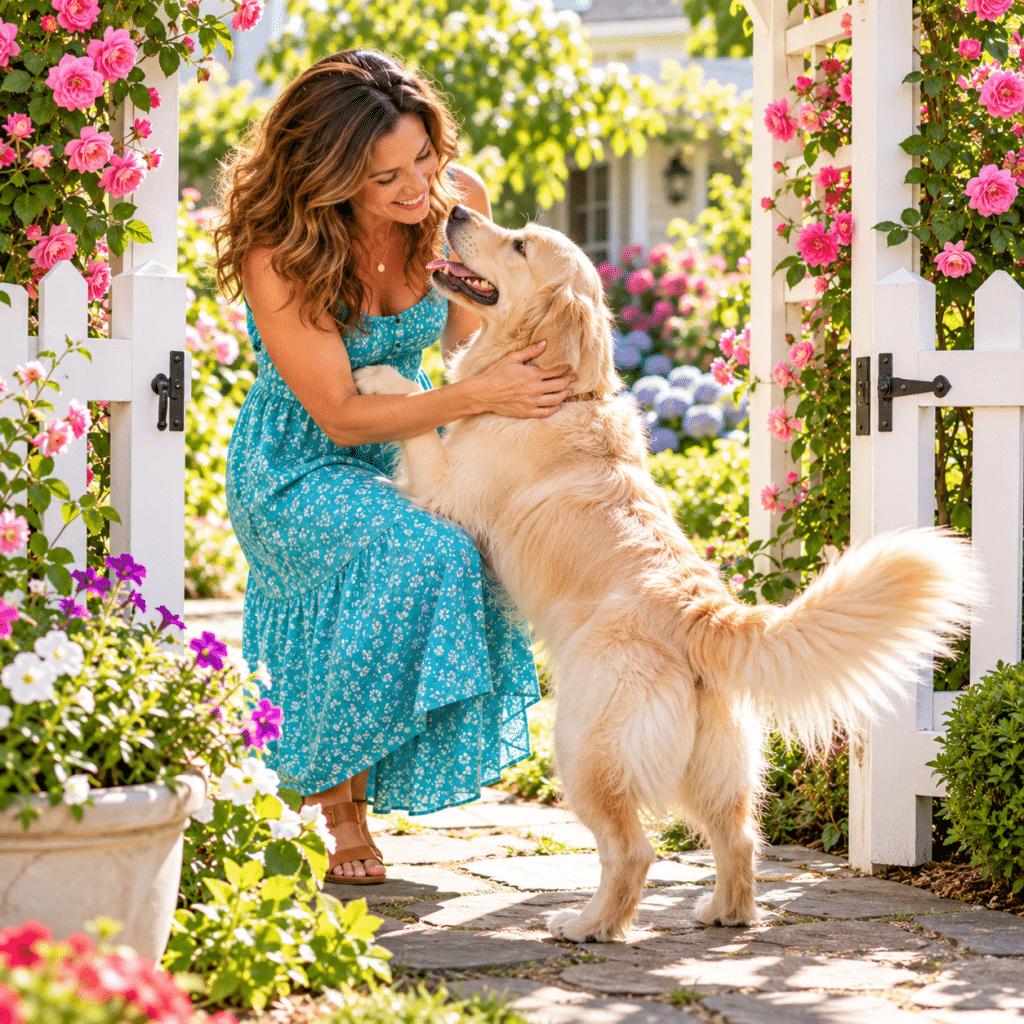
Golden Retrievers are widely loved for their affectionate and outgoing nature.
Many enjoy meeting new people, spending time with family, and making friends wherever they go.
Of course, every Golden Retriever has an individual personality. Some are naturally outgoing, while others may be more cautious or reserved.
Early socialization and positive experiences help puppies develop confidence as they grow.
Their friendly reputation also means they’re not usually the best choice for someone seeking a traditional guard dog.
A Golden Retriever might bark when a visitor arrives, but there’s a reasonable chance they’ll also be hoping that visitor brought treats.

Despite their name, Golden Retrievers don’t all have exactly the same coat color.
Their coats can range from pale cream to rich, deep golden shades.
Some have a beautiful reddish-gold appearance, while others are much lighter.
You may hear people refer to lighter dogs as English Cream Golden Retrievers or darker dogs as Red Golden Retrievers.
These are descriptive terms, not separate officially recognized breeds.
Coat shade doesn’t reliably determine personality, intelligence, or health.
And while Golden Retrievers can have very pale coats, a solid black dog isn’t a purebred Golden Retriever under the breed standard.
Whether light cream or deep gold, every shade has its own beautiful charm.

Few things are quite as irresistible as a fluffy Golden Retriever puppy.
Those oversized paws, soft ears, and innocent expressions can make it difficult to believe they’re capable of mischief.
But Golden Retriever puppies are curious, energetic, and eager to explore the world with their mouths.
Shoes, slippers, towels, and anything left within reach may become fascinating discoveries.
Puppies need consistent training, appropriate chew toys, plenty of rest, and safe opportunities to explore.
They’re also growing rapidly, so exercise should be appropriate for their age rather than overly strenuous.
The puppy stage can be messy and exhausting, but it can also be wonderfully entertaining.
Especially when your little angel proudly brings you something they absolutely weren’t supposed to have.
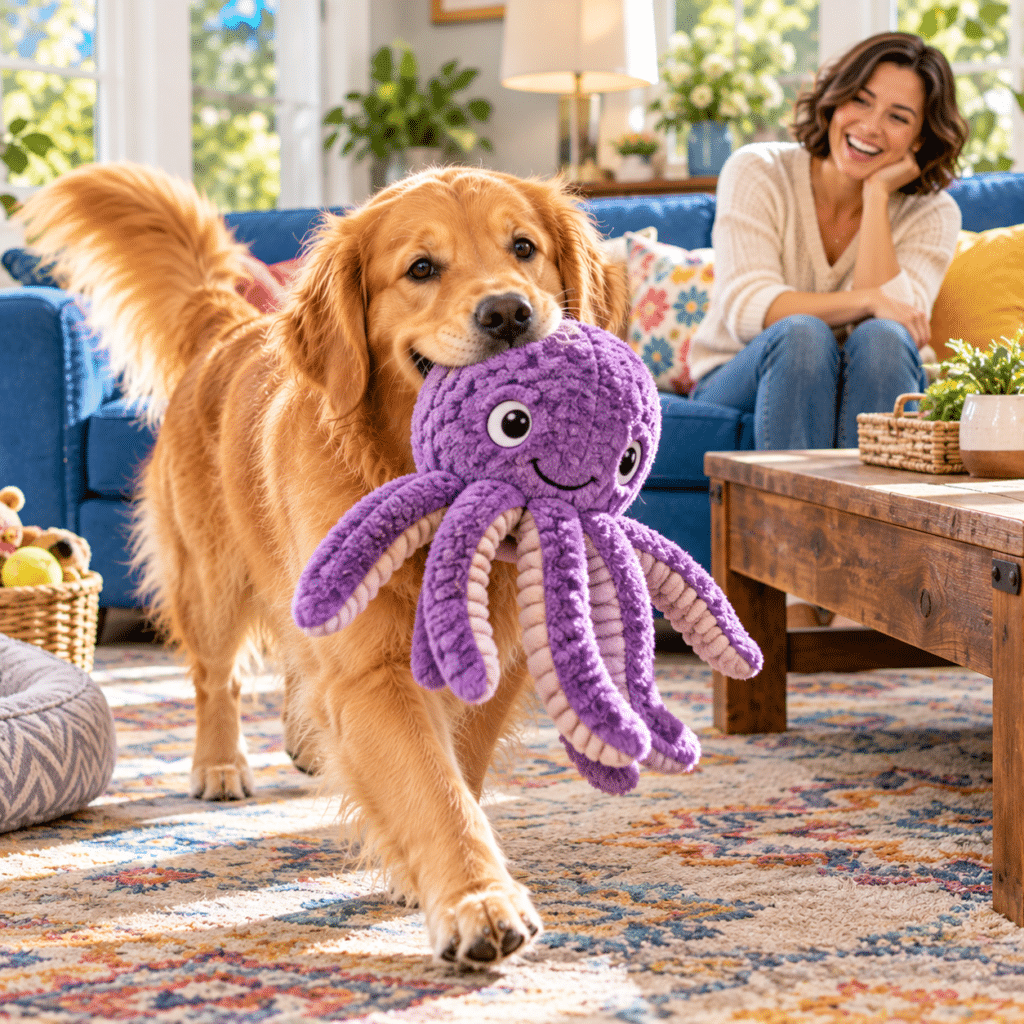
Some Golden Retrievers seem happiest when they have something in their mouths.
A tennis ball, a stuffed toy, a slipper, or even an empty food bowl may become their prized possession.
This behavior is closely connected to their retrieving heritage.
Many enjoy carrying objects simply because it feels rewarding.
You can encourage appropriate retrieving by teaching games such as fetch, bringing named toys, or carrying safe items on walks.
Just make sure objects are large enough not to become choking hazards and are suitable for your dog’s chewing habits.
For some Golden Retrievers, walking across the room without carrying something apparently feels like a missed opportunity.

Golden Retrievers are often happiest when they’re included in everyday family life.
They may follow you from room to room, settle beside your chair, or quietly keep you company while you’re working.
Some are enthusiastic cuddlers. Others prefer lying nearby where they can keep an eye on everything.
Because they’re social dogs, many don’t enjoy being left alone for very long periods without companionship or enrichment.
Teaching puppies to feel comfortable with short, gradual periods of independence can help prevent problems later.
A Golden Retriever doesn’t necessarily need constant attention, but most appreciate feeling like part of the family.
And if you suddenly realize you haven’t been alone in the bathroom for years, your Golden Retriever may have something to do with it.
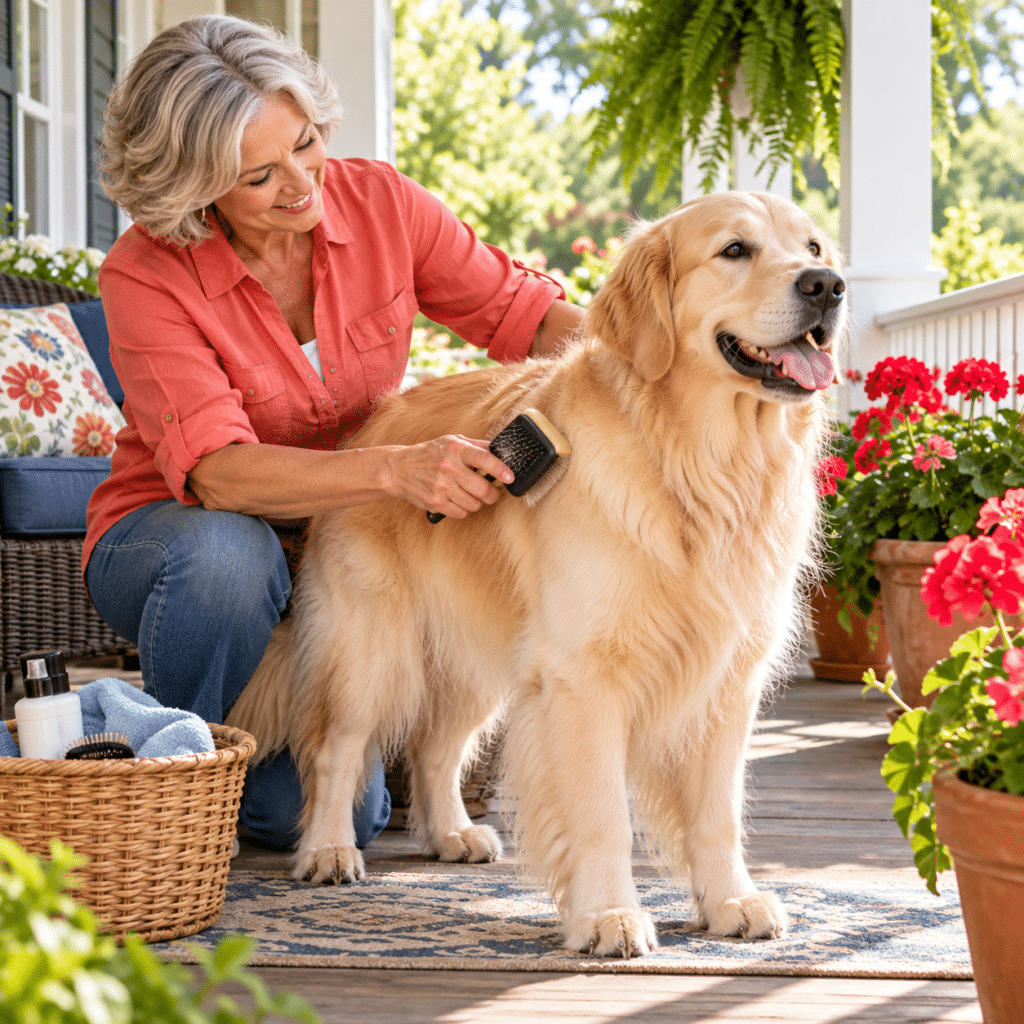
Golden Retrievers have a dense, water-resistant double coat.
Their soft undercoat helps provide insulation, while the outer coat offers protection from the elements.
That beautiful fur also means shedding.
Lots of shedding.
Regular brushing helps remove loose hair, prevent tangles, and keep the coat in good condition.
Many Golden Retrievers benefit from brushing several times a week, with more frequent attention during heavier seasonal shedding.
Pay particular attention to feathering around the ears, legs, chest, and tail, where tangles can develop.
Their nails, ears, teeth, and skin also need routine care.
Golden Retrievers generally shouldn’t have their double coats shaved for ordinary grooming, because the coat serves important protective functions.
And yes, you’ll probably find golden fur on your clothes, furniture, and occasionally in places that seem completely impossible.

Golden Retrievers are known for being trainable, cooperative dogs.
Their intelligence and willingness to work with people have made them successful in many roles, including assistance work, search and rescue, and other specialized activities.
At home, those qualities can make training especially rewarding.
Many respond well to positive reinforcement using treats, toys, praise, and play.
Start with useful everyday skills such as coming when called, walking politely on a leash, waiting at doors, and leaving inappropriate objects alone.
Training should remain consistent throughout their lives, not just during puppyhood.
A Golden Retriever who learns that good behavior earns attention and rewards is often delighted to participate.
Especially if the lesson involves snacks.

A lake, a pond, a swimming pool, or even a suspiciously large puddle can be irresistible to some Golden Retrievers.
Their retrieving history includes working in water, and many are enthusiastic swimmers.
Swimming can provide enjoyable exercise for healthy dogs, particularly when introduced gradually and safely.
However, not every Golden Retriever naturally enjoys water or knows how to swim confidently.
Always supervise swimming, choose safe locations, and consider a properly fitted canine life jacket when appropriate.
Avoid strong currents, dangerous water conditions, and contaminated ponds.
After swimming, dry your dog’s ears and coat as needed.
And be prepared: a wet Golden Retriever shaking beside you can turn an ordinary afternoon into an unexpected shower.
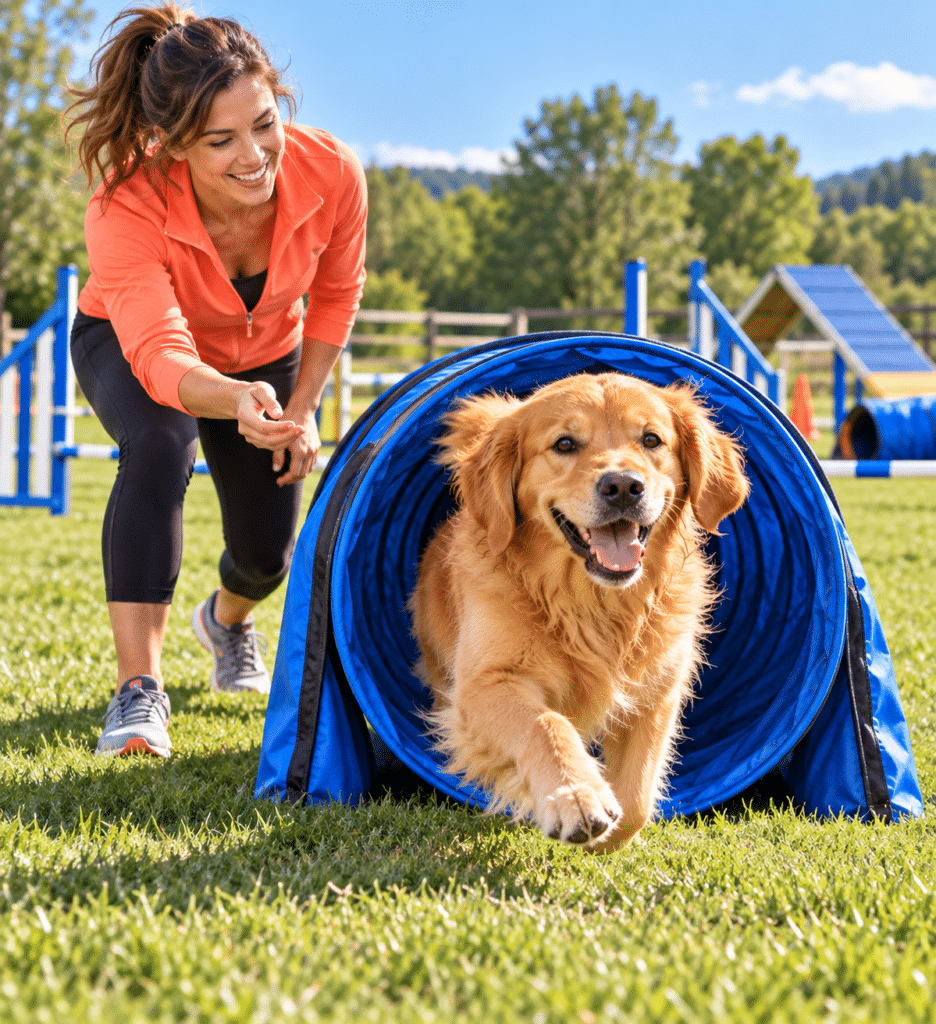
Golden Retrievers may look wonderfully relaxed when they’re sleeping on the couch, but they’re active sporting dogs.
Most healthy adults need regular physical activity and opportunities to use their minds.
Walks, retrieving games, swimming, scent activities, and training sessions can all help keep them engaged.
Exercise requirements vary depending on age, health, and individual energy levels.
Young puppies shouldn’t be pushed into prolonged strenuous exercise, while senior dogs may need gentler activities.
Mental stimulation matters just as much as physical activity.
Puzzle feeders, hide-and-seek games, and learning new skills can help prevent boredom.
A Golden Retriever with nothing interesting to do may decide to invent an activity.
Unfortunately, that activity might involve rearranging your shoes.
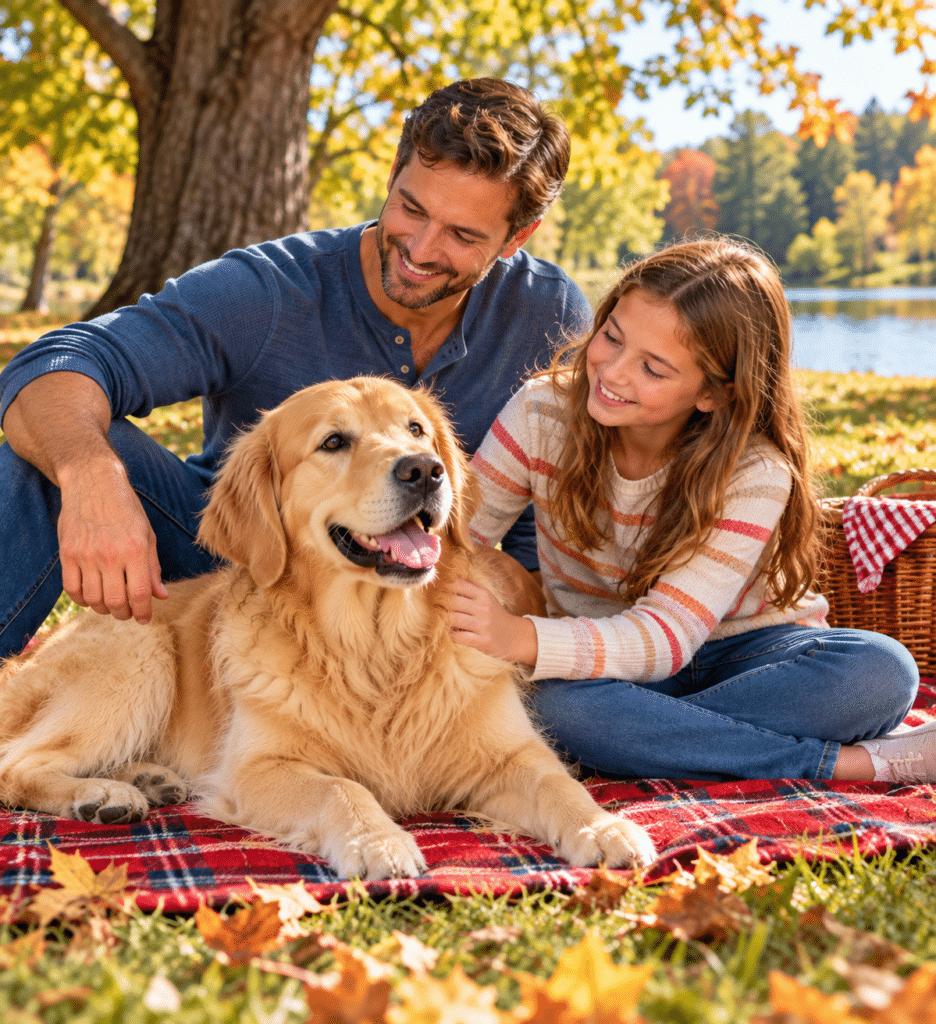
Golden Retrievers are often excellent companions for families who can meet their needs.
Many are affectionate, playful, and patient, which helps explain their popularity with households of different ages.
However, even the friendliest dog needs training, boundaries, and respectful handling.
Young Golden Retrievers can be enthusiastic jumpers, and their size may accidentally knock over small children.
Children should be taught how to interact gently with dogs, and young children should always be supervised.
It’s also important to give dogs a quiet place where they can rest undisturbed.
With appropriate socialization, training, and supervision, Golden Retrievers can become deeply loved family members.

Like all dog breeds, Golden Retrievers can be affected by certain inherited and acquired health conditions.
These include hip and elbow dysplasia, some heart and eye disorders, and a notable risk of several types of cancer.
Their floppy ears can also be prone to problems, particularly when moisture remains trapped after swimming or bathing.
Responsible breeders use appropriate health screening and share relevant information about the dogs in their breeding programs.
Regular veterinary examinations, maintaining a healthy weight, dental care, and prompt attention to unusual symptoms are important throughout a Golden Retriever’s life.
If you’re considering a puppy, ask the breeder about documented hip, elbow, heart, and eye evaluations.
No screening program can guarantee perfect health, but thoughtful breeding practices can help reduce some risks.
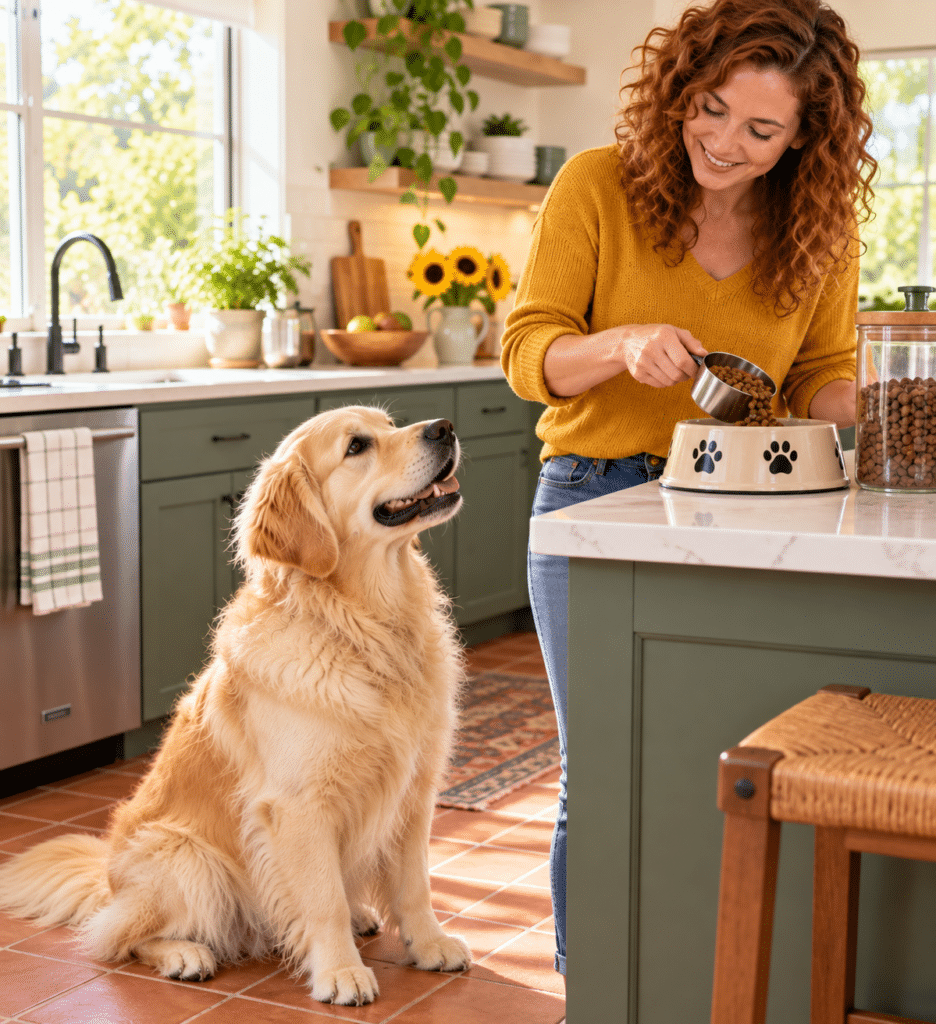
Many Golden Retrievers are extremely enthusiastic about food.
That can make treats a wonderful training tool.
Unfortunately, it can also make them talented kitchen supervisors.
Some quickly learn exactly where treats are stored and which family member is most likely to share a snack.
Because Golden Retrievers can gain excess weight, portion control and appropriate exercise are important.
Use measured meals, account for training treats, and ask your veterinarian about an appropriate body condition and feeding plan.
You can also use part of your dog’s regular meal allowance during training.
A healthy weight supports overall well-being and helps reduce unnecessary strain on joints.
And remember, a Golden Retriever looking desperately hungry five minutes after breakfast isn’t necessarily experiencing a nutritional emergency.
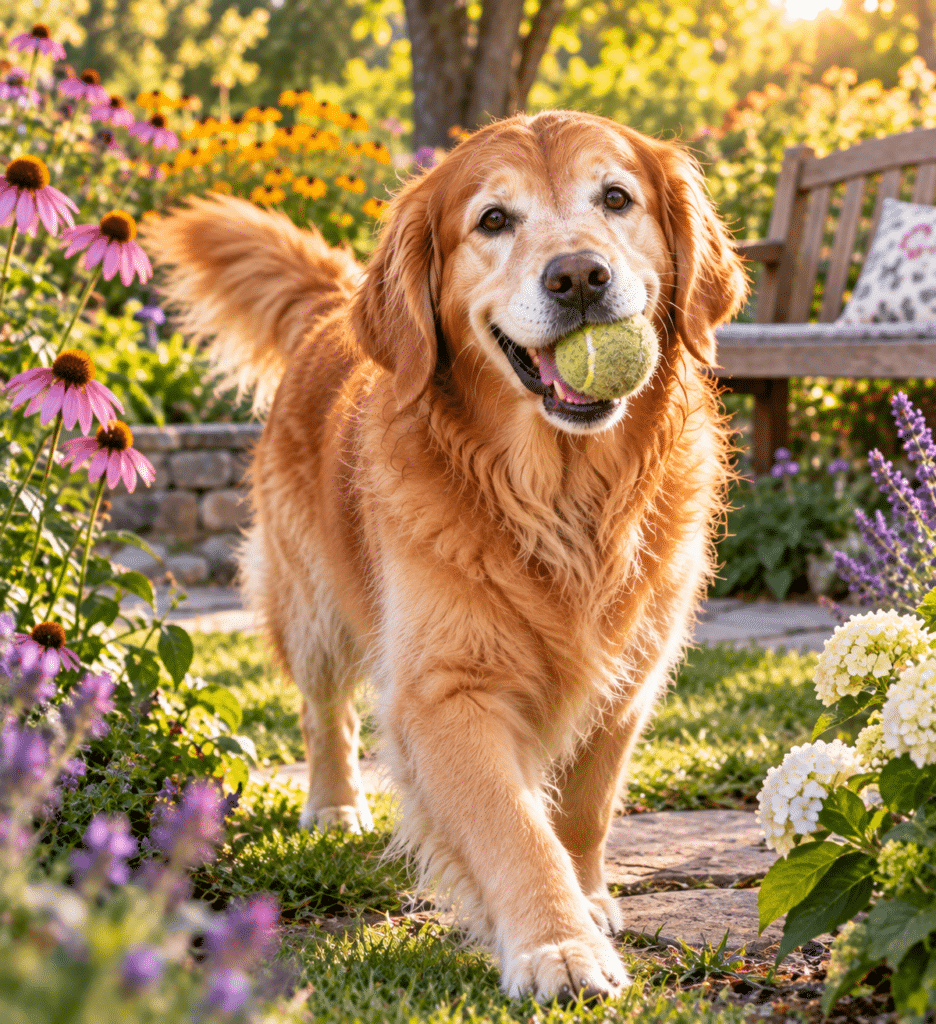
One of the sweetest things about Golden Retrievers is that many retain their playful spirit well into adulthood.
A mature Golden may still become ridiculously excited about a favorite ball, a car ride, or a familiar visitor.
Their typical lifespan is approximately 10 to 12 years, although some live longer.
As they age, they may slow down, develop arthritis, or need adjustments to their daily routines.
Comfortable bedding, regular veterinary care, appropriate exercise, and attention to mobility can help support their senior years.
Older Golden Retrievers may no longer race around the yard quite as enthusiastically, but they often still enjoy gentle games and spending time with their favorite people.
And there’s something especially touching about the gray face of a Golden Retriever who has shared years of ordinary, wonderful moments with a family.

Ask someone who shares their home with a Golden Retriever what makes the breed special, and you’re likely to hear a collection of stories.
Maybe it’s about the dog who brings a stuffed animal to greet every visitor.
Or the one who insists on joining every family photograph.
Perhaps it’s the Golden Retriever who somehow manages to cover the entire house in fur while still looking completely innocent.
They can be goofy, affectionate, energetic, messy, and endlessly entertaining.
But they’re also devoted companions who often seem happiest simply being near the people they love.
A Golden Retriever may not keep your floors spotless or your furniture free of dog hair.
What they can bring is companionship, laughter, and the kind of everyday happiness that’s difficult to measure.
And for many families, that’s worth every single golden hair.
Golden Retrievers can be wonderful companions, but they’re not the right choice for every household.
They need regular exercise, mental stimulation, consistent training, grooming, and plenty of human interaction.
Their shedding, size, enthusiasm, and potential health expenses are all important considerations.
They’re often best suited to people who enjoy including their dogs in everyday activities and can provide the attention and care an active, social breed requires.
If that sounds like your lifestyle, a Golden Retriever might be a wonderful addition to your family.
Do you have a Golden Retriever? We’d love to hear about your dog’s funniest habit, favorite toy, or the little thing they do that makes you smile every day!