Newsletter Subscribe
Enter your email address below and subscribe to our newsletter

 ByDiana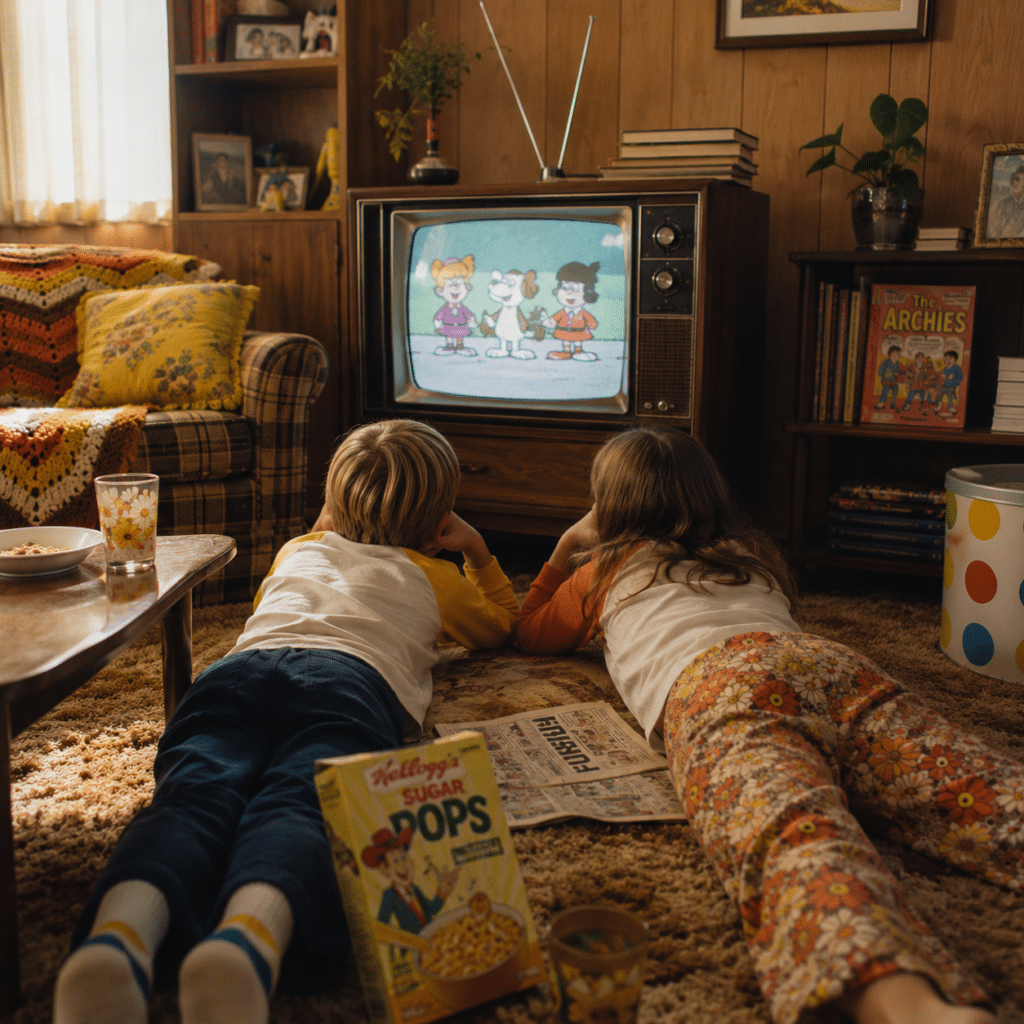
Long before we could watch almost anything whenever we wanted, cartoons required a little patience.
You waited for Saturday morning.
You hurried home after school.
You sat in front of the television with a bowl of cereal and hoped nobody changed the channel.
And somewhere among all those cartoons were dogs we never forgot.
Some were brave. Some were incredibly smart. Others were lovable troublemakers who seemed to make every situation worse.
A few didn’t even behave much like dogs.
Yet decades later, mention names like Snoopy, Scooby-Doo, or Astro and suddenly those old cartoons don’t seem quite so far away.
Here are 15 cartoon dogs that became part of childhood for generations of viewers.
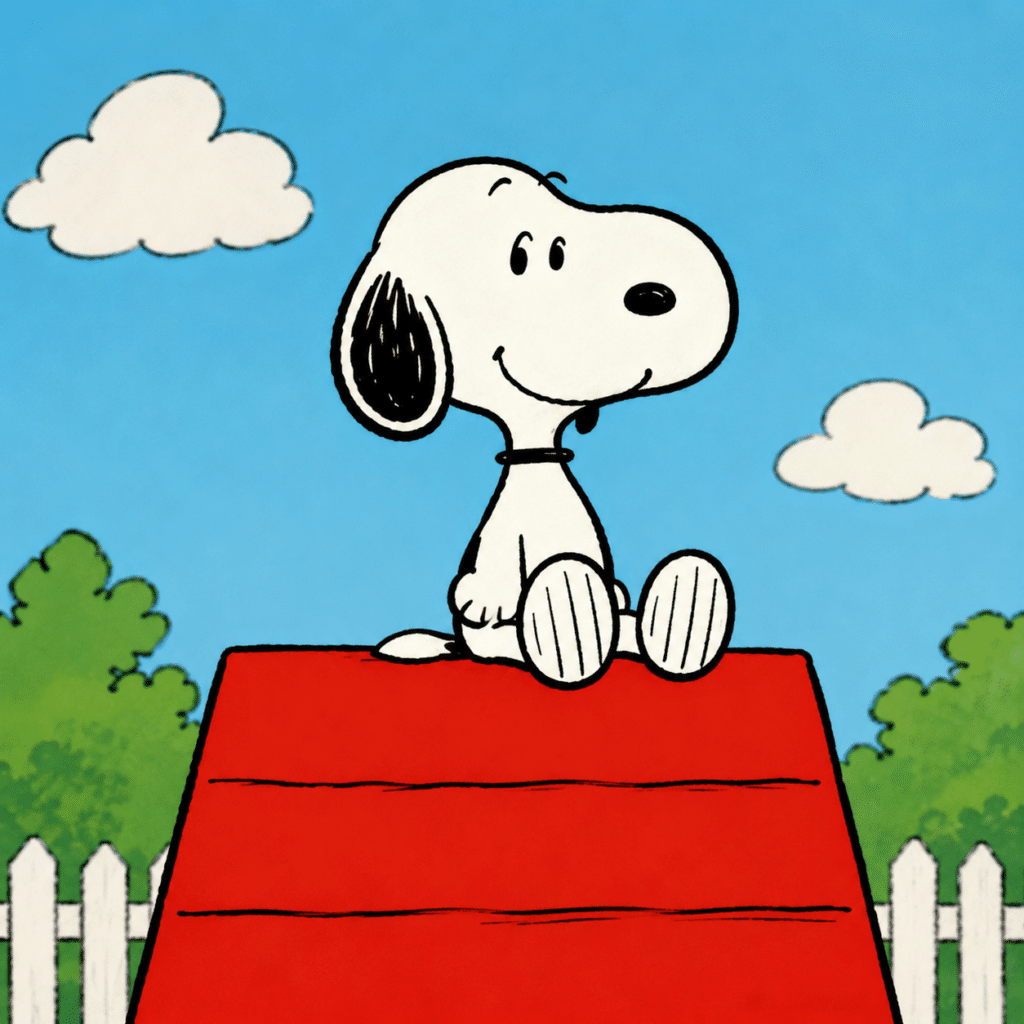
Few cartoon dogs have ever become as recognizable as Snoopy.
Charlie Brown’s imaginative beagle first appeared in the Peanuts comic strip before becoming a familiar face in animated television specials.
But Snoopy was never content simply being someone’s pet.
In his imagination, he could be the World War I Flying Ace battling the Red Baron, a novelist sitting behind a typewriter, or Joe Cool casually leaning against a wall.
Then he’d return to his doghouse and somehow make sleeping on the roof look perfectly normal.
For generations of kids, Snoopy wasn’t simply Charlie Brown’s dog.
He was a star all by himself.
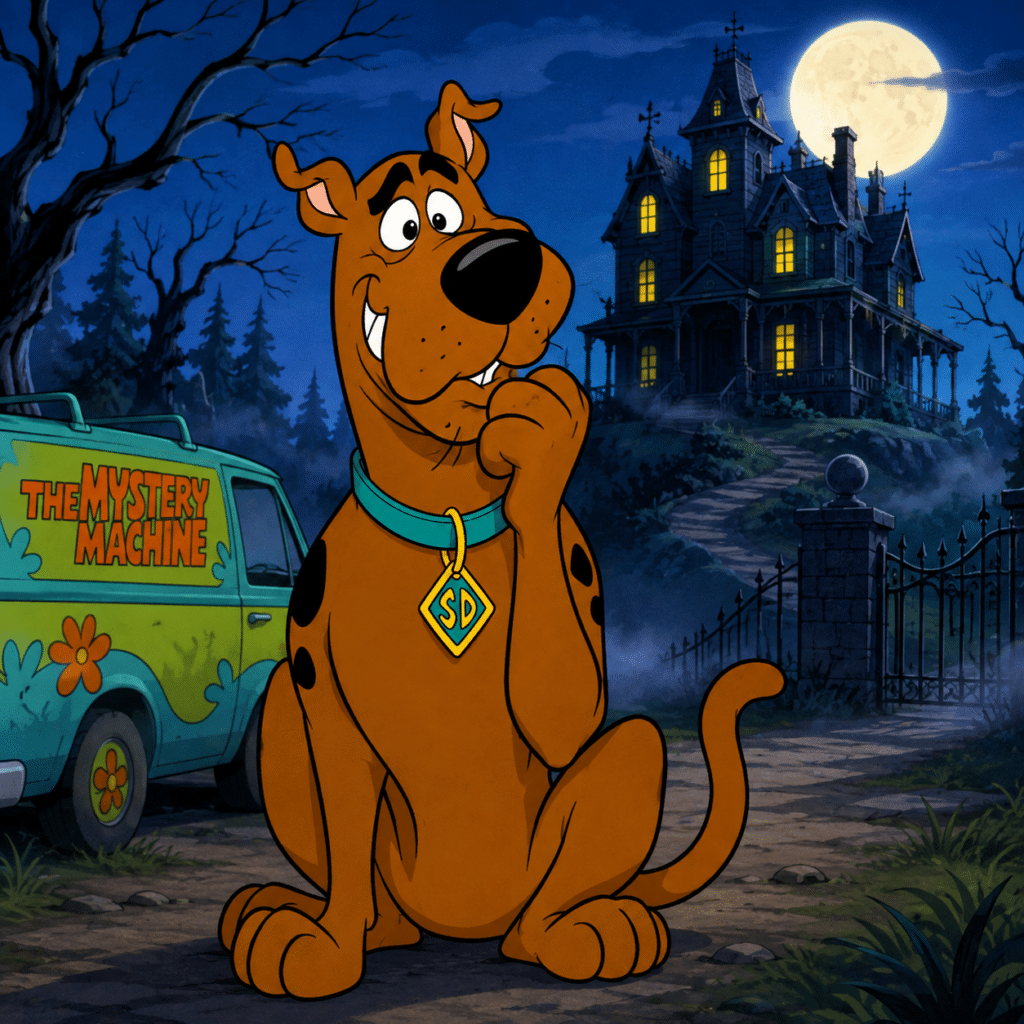
Scooby-Doo wasn’t exactly the dog you’d choose to guard the house.
A strange noise could send him running.
A ghost could make him leap into Shaggy’s arms.
And a mysterious monster usually required a generous supply of Scooby Snacks before he was willing to investigate.
Yet Scooby and Shaggy somehow kept ending up in the middle of every mystery.
That was part of the fun.
No matter how frightening the haunted house or creepy amusement park seemed, we eventually learned that the monster was probably a person wearing a costume.
And they would have gotten away with it too…
Well, you remember.
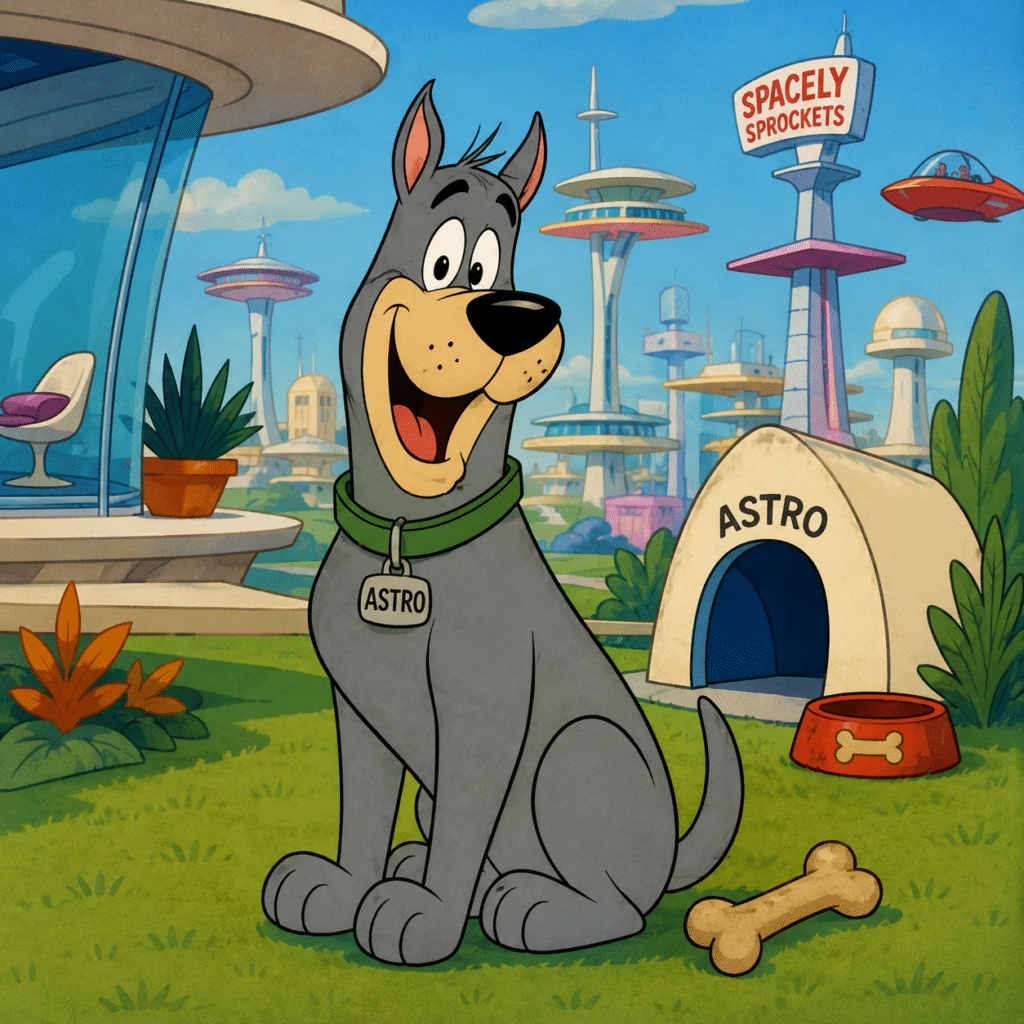
“Ruh-roh!”
Sound familiar?
Before Scooby-Doo became famous for a similar style of speech, another Great Dane-like cartoon dog was already talking that way.
Astro was the Jetson family’s dog in a future filled with flying cars, robot maids, moving sidewalks, and homes high above the ground.
Yet despite all that futuristic technology, one thing apparently hadn’t changed.
Families still wanted dogs.
Astro loved George Jetson and frequently greeted him with tremendous enthusiasm.
Apparently even in the future, there’s no escaping a dog who is very happy you’ve come home.
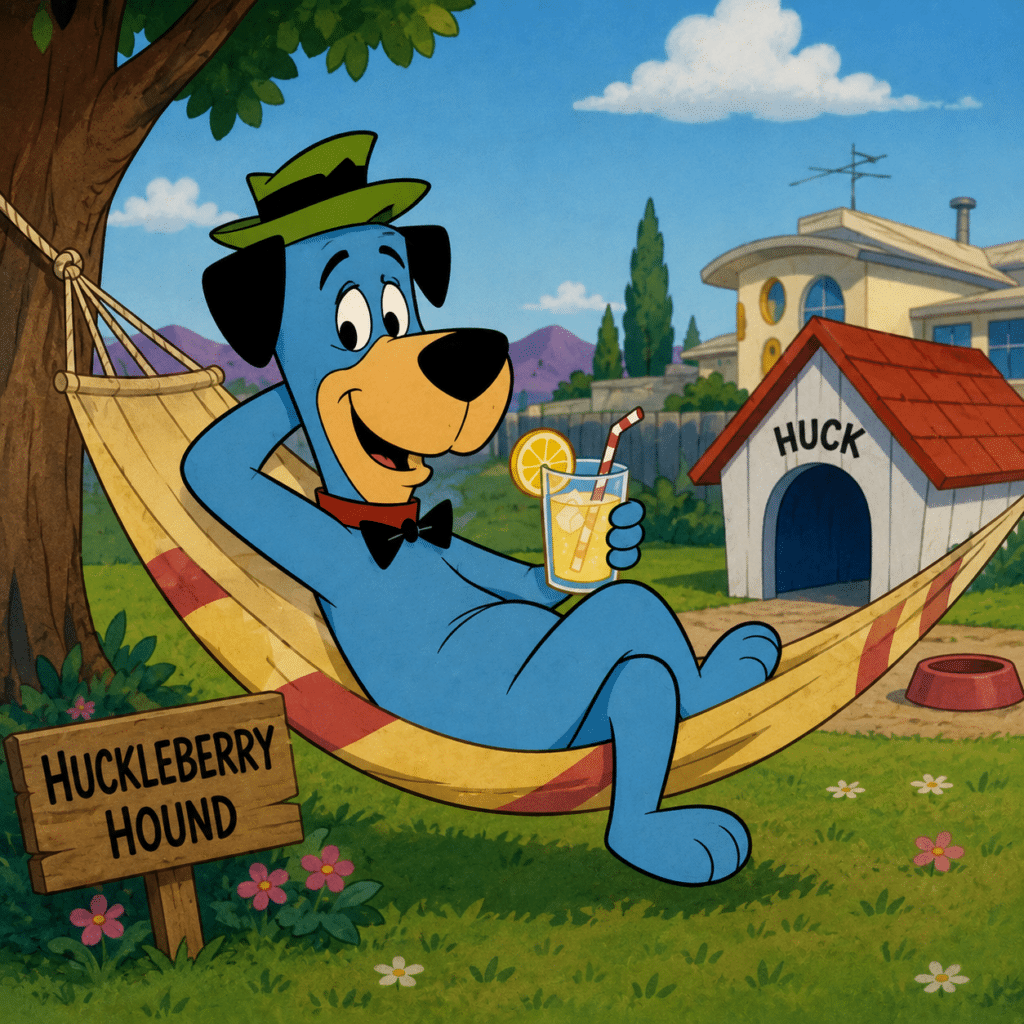
Blue fur.
A Southern drawl.
And an easygoing personality that seemed almost impossible to rattle.
Huckleberry Hound was one of Hanna-Barbera’s early television cartoon stars.
No matter what occupation or adventure Huck found himself in, he approached things with the same calm attitude.
And then there was his memorable version of “Oh My Darling, Clementine.”
For viewers who grew up watching early Hanna-Barbera cartoons, Huckleberry Hound can bring back memories almost instantly.
Sometimes all it takes is seeing that familiar blue face.
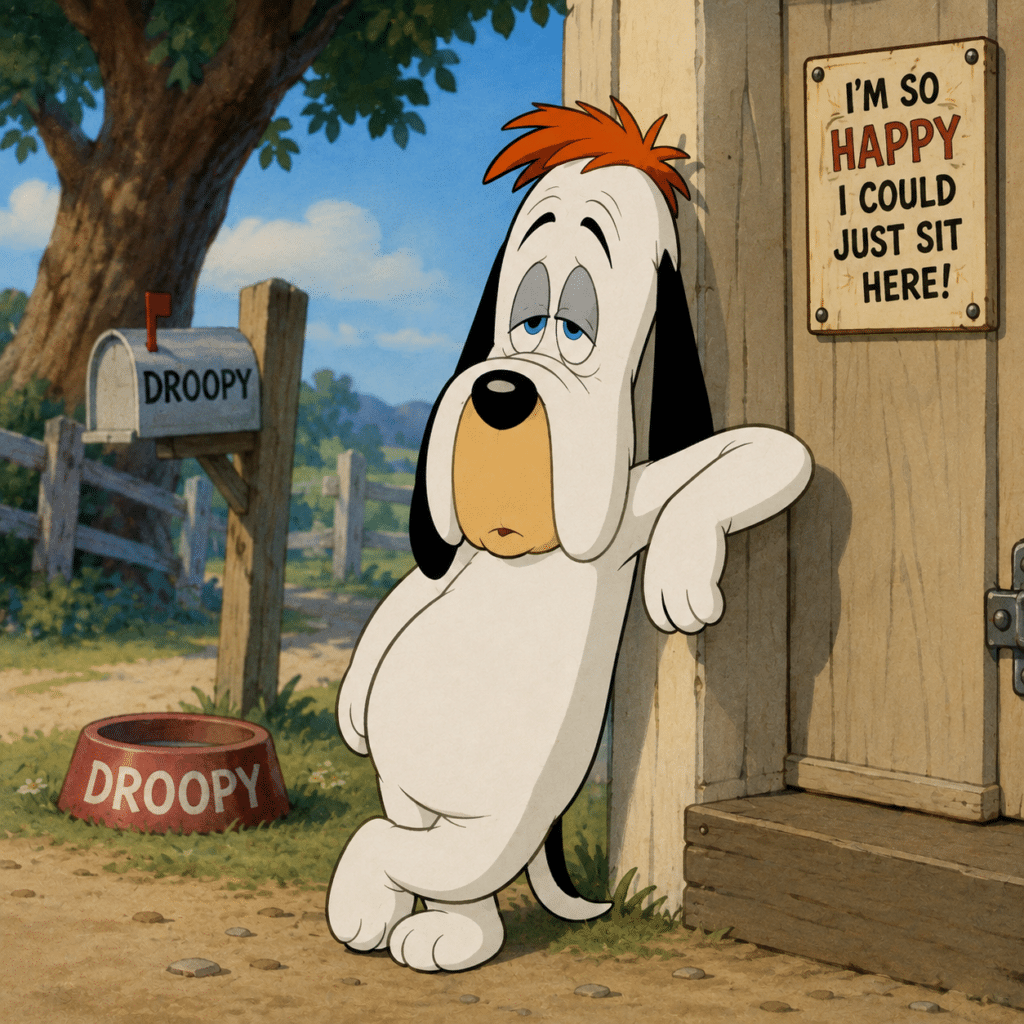
Droopy didn’t look like a hero.
He rarely sounded excited.
In fact, he often seemed as though waking up that morning had already required most of his available energy.
But underestimating Droopy was usually a mistake.
The slow-talking little Basset Hound had a habit of appearing exactly where his opponent least expected him.
Someone would run miles away.
There was Droopy.
They’d hide somewhere impossible.
There was Droopy.
His calm delivery made everything even funnier.
While other cartoon characters screamed and raced around, Droopy barely needed to raise his voice.
He simply got the job done.
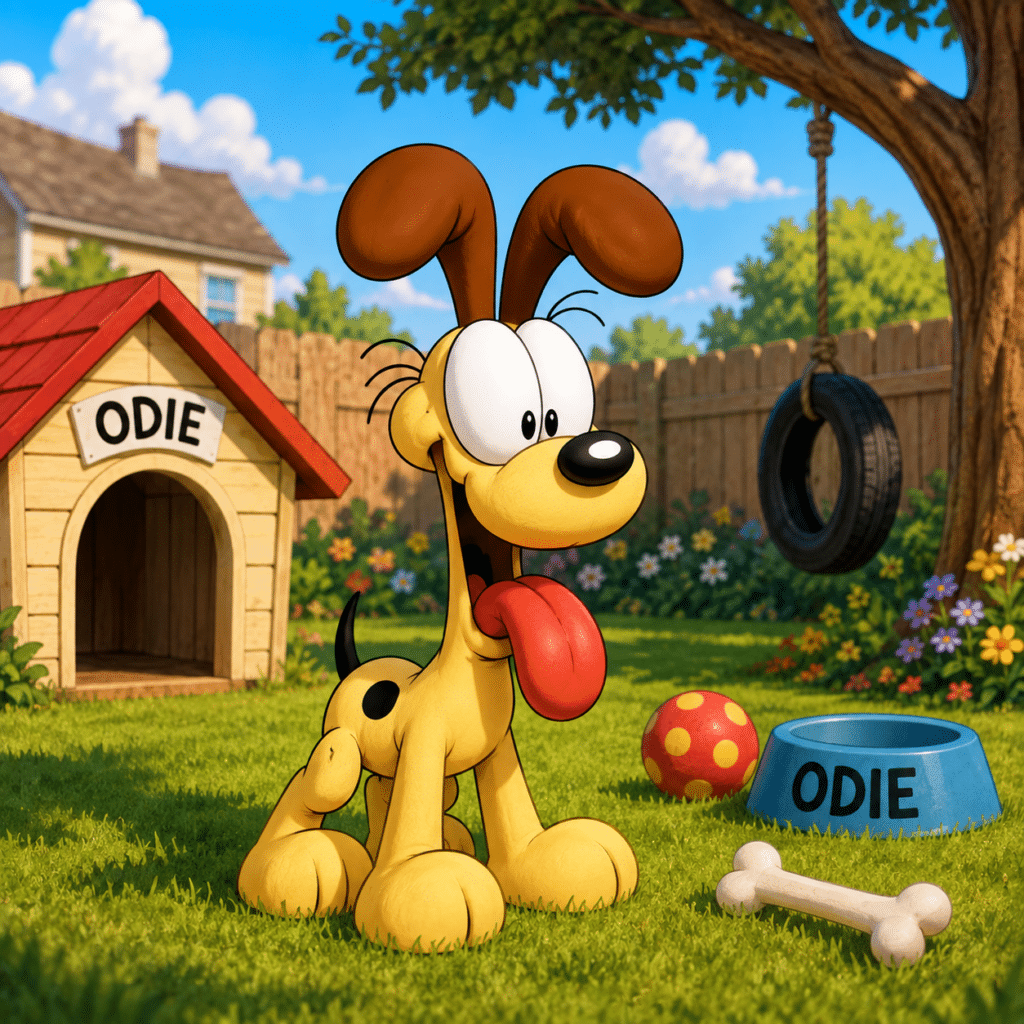
Garfield may have thought he was the star of the household.
Odie didn’t seem particularly concerned.
The floppy-eared yellow dog was cheerful, energetic, and frequently on the receiving end of Garfield’s tricks.
Garfield might send him flying off the edge of a table or roll his eyes at Odie’s enthusiasm, but Odie always seemed to bounce right back.
His enormous tongue and happy expression became instantly recognizable.
And despite Garfield’s complaints, you always suspected the cat would miss Odie if he weren’t around.
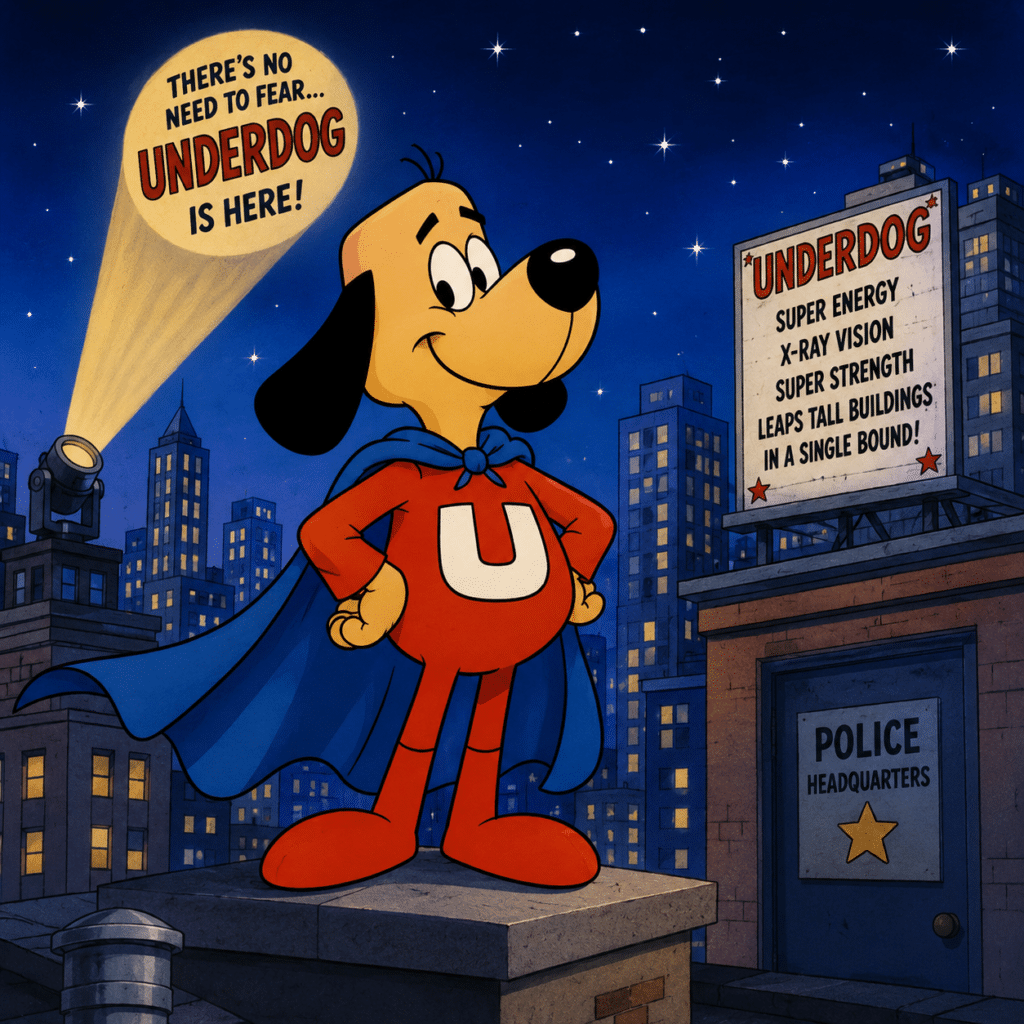
“There’s no need to fear…”
If you watched Underdog, you probably know what comes next.
Mild-mannered Shoeshine Boy could transform into the superhero Underdog whenever trouble appeared.
And trouble usually involved his beloved Sweet Polly Purebred.
Underdog flew through the air, battled villains, and often spoke in rhyme.
He was part superhero parody and part genuine childhood hero.
For kids watching television in the 1960s and beyond through reruns, Underdog proved that even the most unlikely character could save the day.
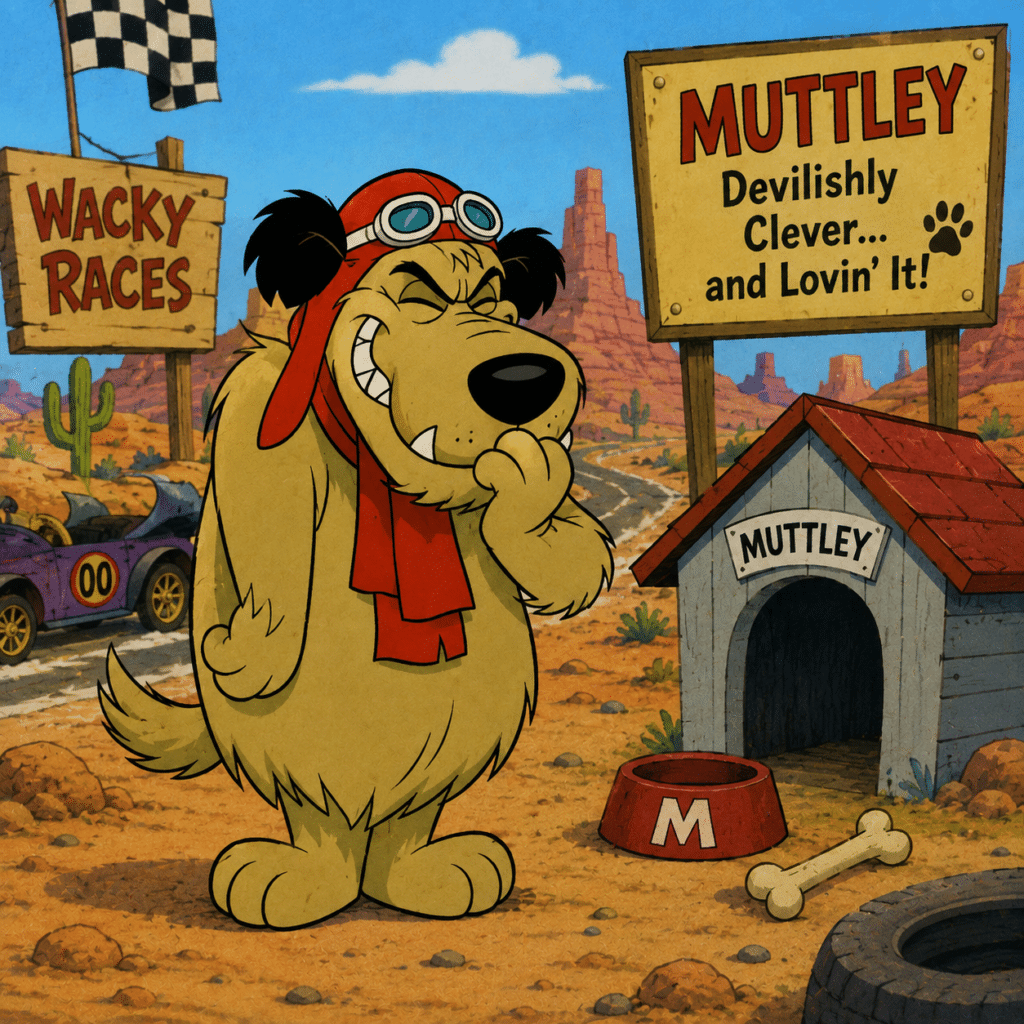
Some cartoon characters are remembered for how they looked.
Muttley may be remembered just as much for how he sounded.
That wheezing, snickering laugh was unmistakable.
Muttley appeared alongside the villainous Dick Dastardly in Wacky Races and later Dastardly and Muttley in Their Flying Machines.
He wasn’t exactly a model of heroic dog behavior.
In fact, he often seemed to enjoy watching Dastardly’s plans fall apart.
And who could blame him?
Sometimes the sidekick knows the boss deserves exactly what’s coming.
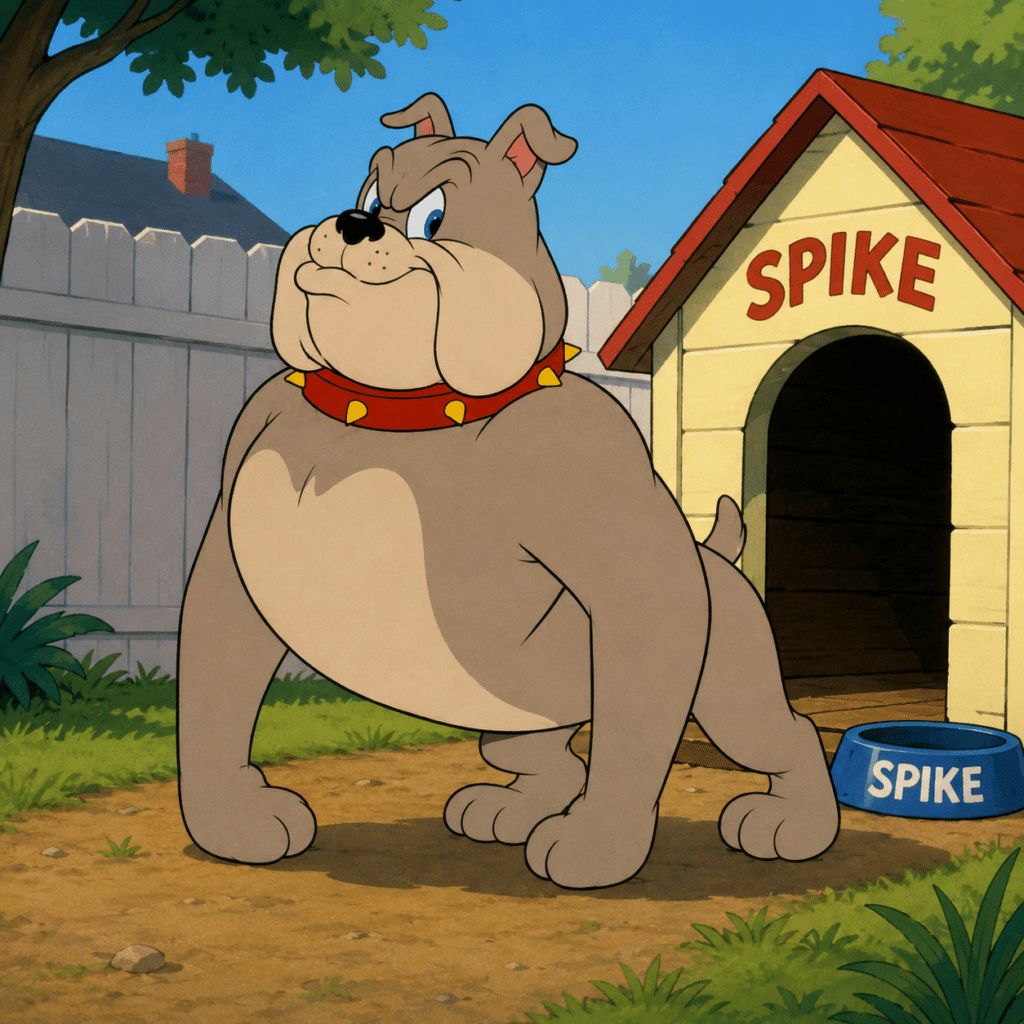
Tom had Jerry to worry about.
But sometimes there was an even bigger problem.
Spike.
The muscular bulldog had little patience for Tom’s nonsense, particularly when it disturbed Spike or threatened his son, Tyke.
Tom might be confidently chasing Jerry one second and desperately trying to escape Spike the next.
Jerry, naturally, was smart enough to use this to his advantage.
Spike wasn’t always the center of the cartoon.
He didn’t need to be.
When he appeared, you knew Tom’s day was probably about to get considerably worse.
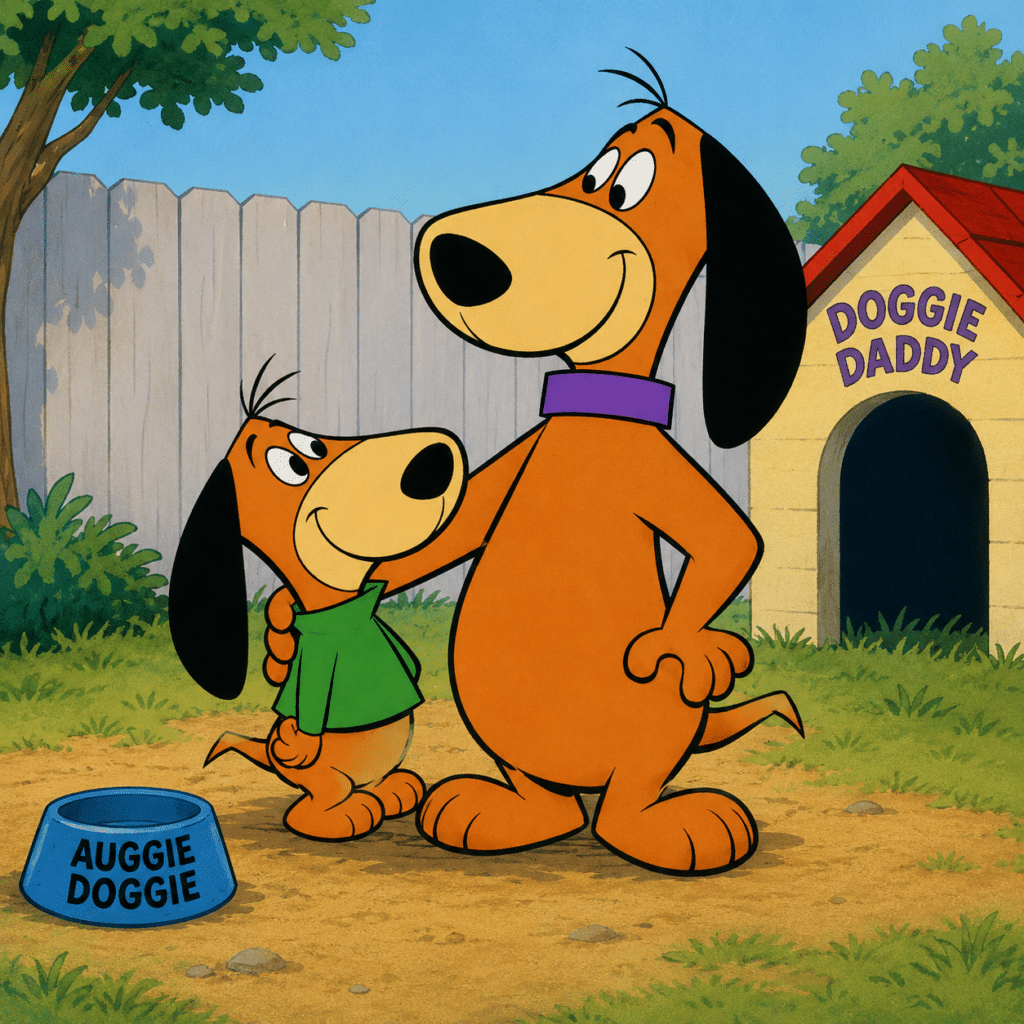
Augie Doggie and his father, Doggie Daddy, offered something a little different from many cartoon dogs.
Their stories centered on the relationship between father and son.
Augie was enthusiastic and incredibly proud of his dad.
Doggie Daddy frequently found himself trying to live up to that admiration while dealing with whatever situation Augie had gotten them into.
Older viewers may remember Doggie Daddy’s familiar:
“That’s my boy who said that!”
For anyone who grew up during Hanna-Barbera’s early television years, these two may bring back some wonderfully old memories.
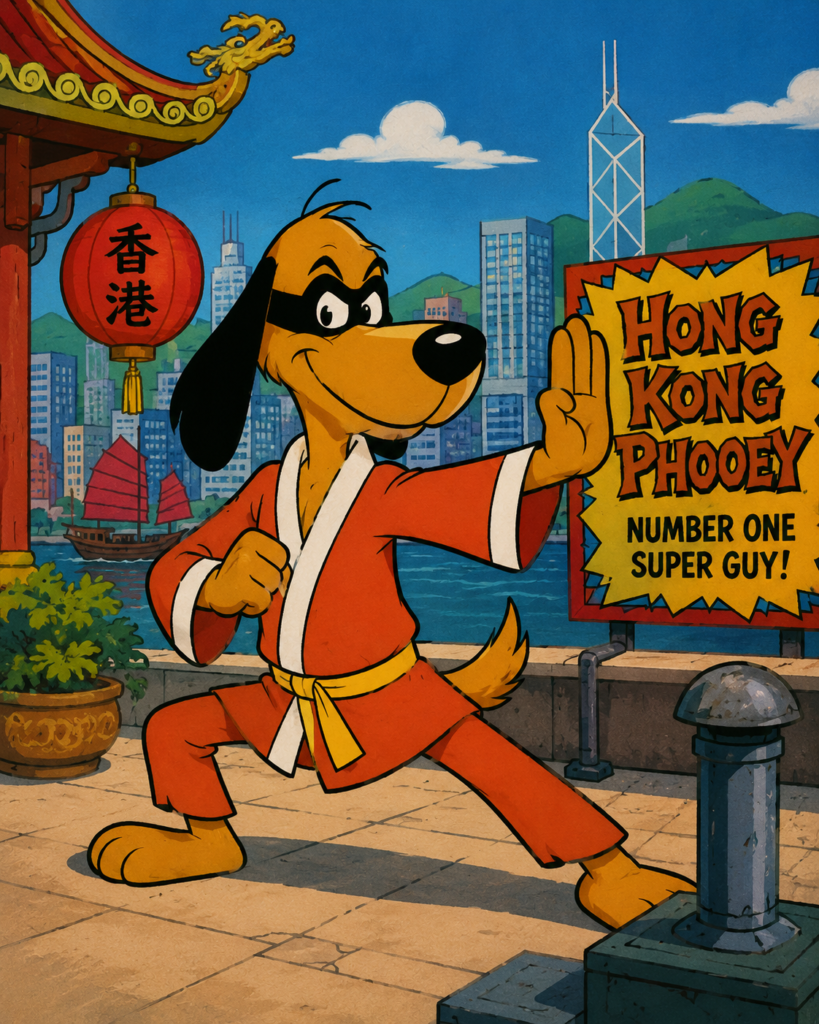
By day, Penry worked as a mild-mannered janitor at a police station.
But when trouble called, he transformed into Hong Kong Phooey.
At least, that was the idea.
Hong Kong Phooey believed himself to be an impressive martial arts crime fighter.
Unfortunately, things didn’t always go according to plan.
His cat, Spot, frequently ended up doing much of the real work.
That never seemed to hurt Hong Kong Phooey’s confidence.
With his bright costume, memorable theme song, and wonderfully silly adventures, he became one of the most recognizable cartoon dogs of the 1970s.
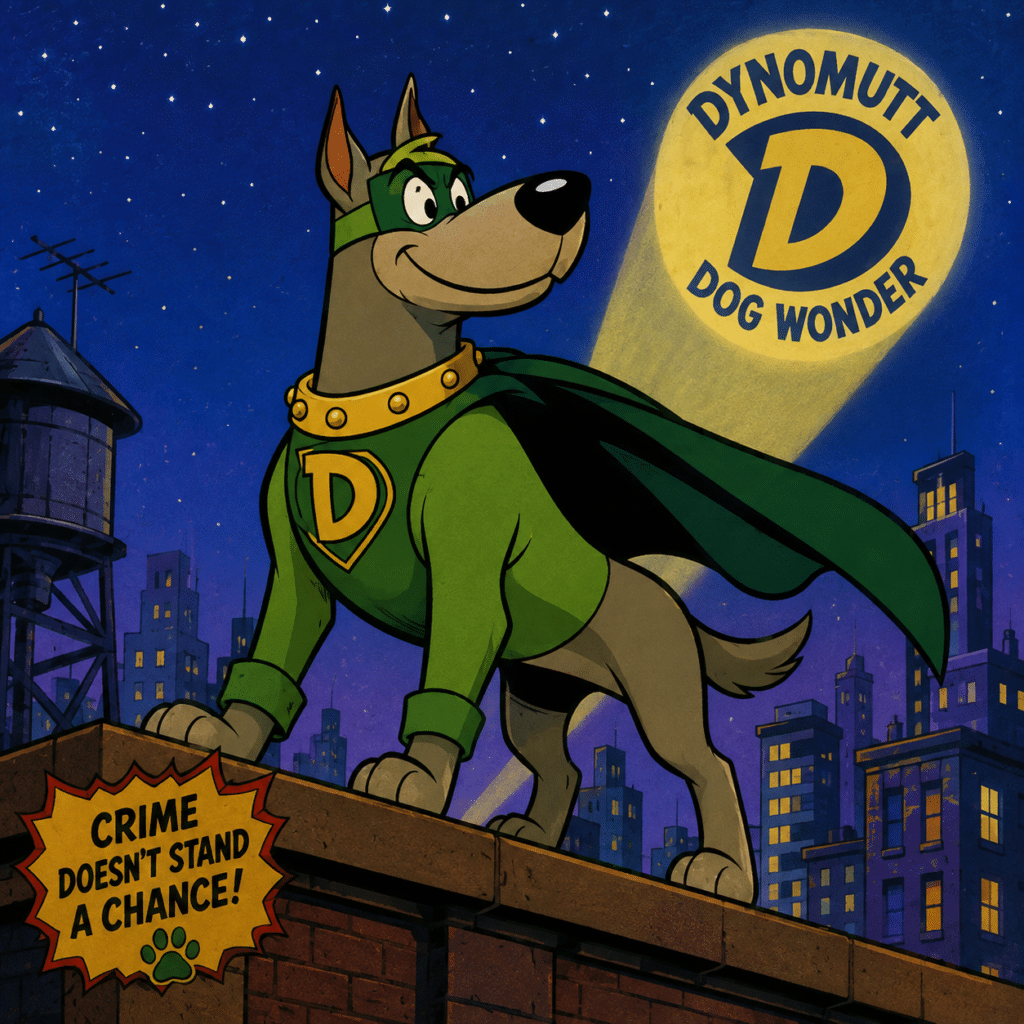
What happens when you combine a dog, a robot, and a superhero sidekick?
You get Dynomutt.
Dynomutt worked alongside the superhero Blue Falcon, but his mechanical gadgets didn’t always cooperate.
Extendable limbs, strange devices, and various robotic abilities frequently caused as many problems as they solved.
That was part of his charm.
Blue Falcon tried to maintain the dignity of a traditional superhero.
Dynomutt made that extremely difficult.
For children growing up in the 1970s and later watching reruns, the pair became an unforgettable Saturday-morning team.
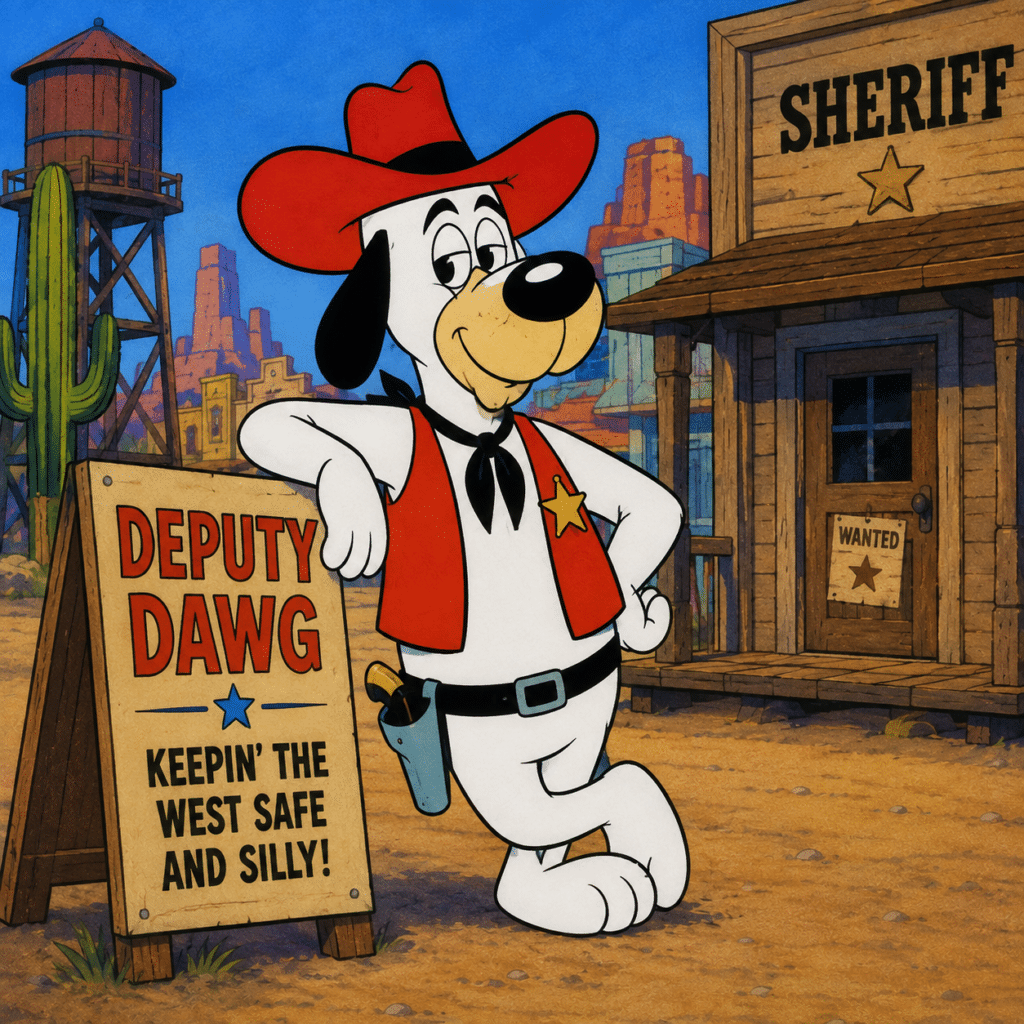
Deputy Dawg takes us even further back into television cartoon history.
The Southern lawman spent his time trying to keep order while dealing with characters who frequently tested his patience.
The humor was simple, the voices were memorable, and the rural setting gave the cartoon a personality all its own.
Younger generations may not immediately recognize Deputy Dawg today.
But mention the name to someone who watched cartoons during the 1960s and you may get an immediate smile.
Sometimes the cartoons we remember most aren’t the ones that remained famous.
They’re the ones that remind us exactly what it felt like to be a kid.
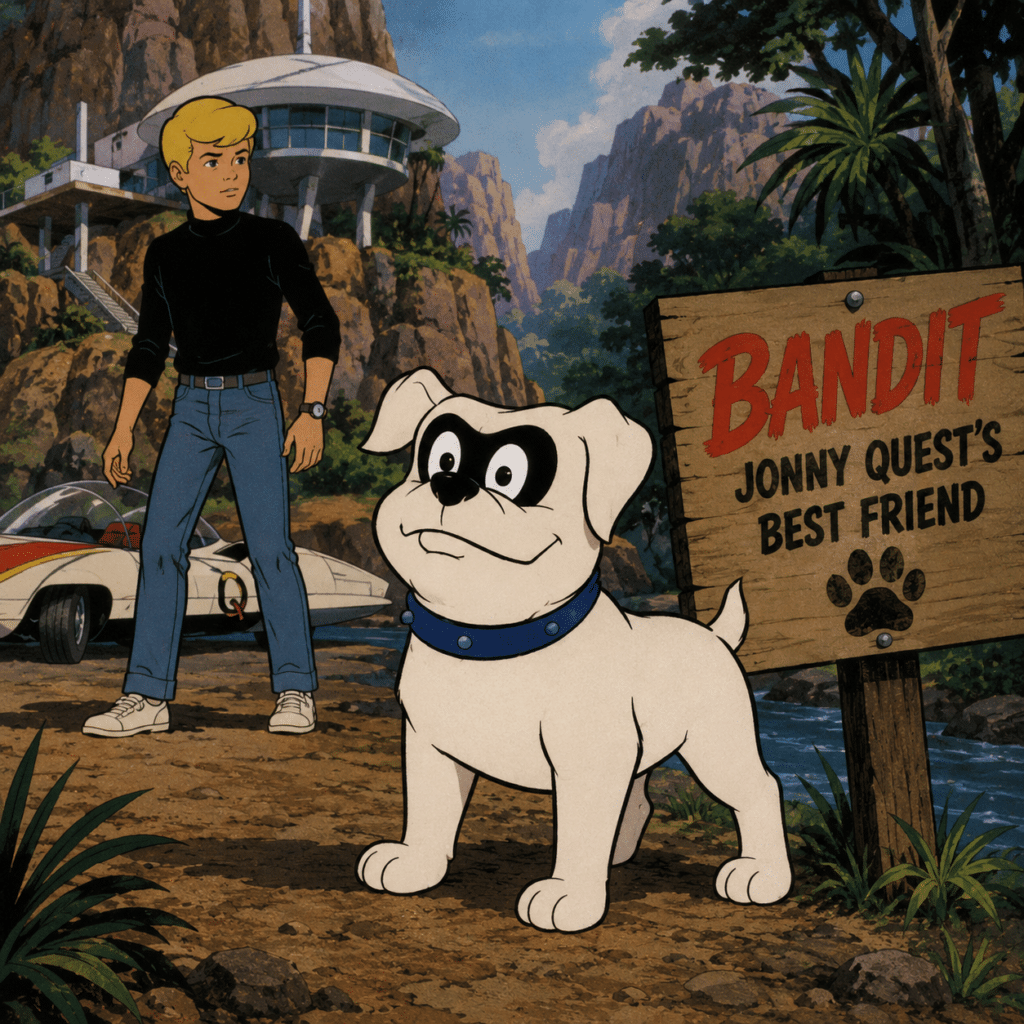
With his white fur, black mask-like markings, and endless curiosity, Bandit was an unforgettable part of the Jonny Quest adventures.
He belonged to Jonny and seemed to have a remarkable talent for finding himself right in the middle of whatever trouble was happening.
And there was plenty of trouble.
While Jonny Quest, Hadji, Race Bannon, and Dr. Benton Quest traveled around the world encountering mysteries, dangerous villains, strange creatures, and seemingly impossible situations, Bandit was usually somewhere nearby.
He wasn’t a talking dog or a superhero.
He was simply Jonny’s loyal little companion—and that made him especially easy for kids to love.
Bandit also brought some humor and warmth to a show that could occasionally feel surprisingly serious and suspenseful for a children’s cartoon.
For anyone who grew up watching Jonny Quest in the 1960s or caught the adventures through years of reruns, that little dog with the black markings around his eyes can bring back memories almost immediately.
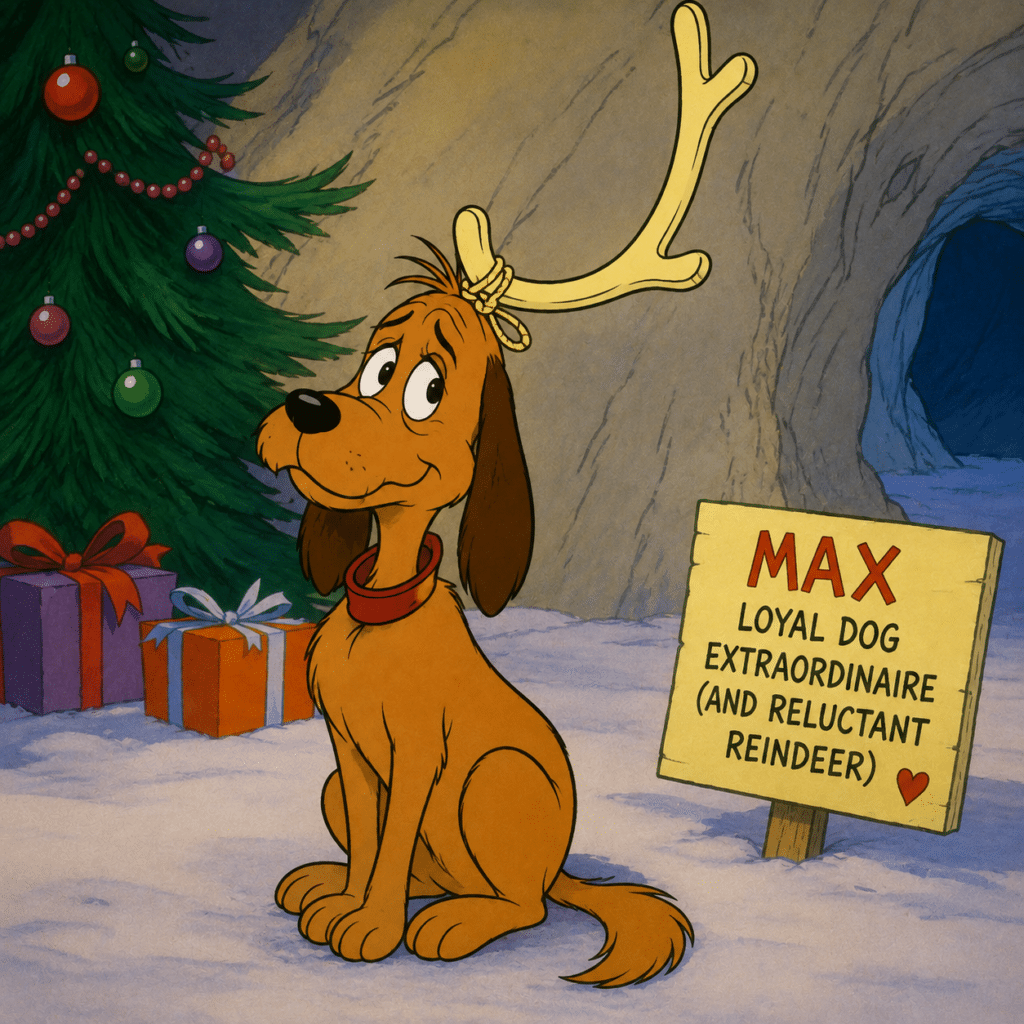
Max may have belonged to the Grinch, but he was easily one of the sweetest characters in the entire Christmas special. This lovable little dog put up with everything from pulling an overloaded sleigh to wearing a single antler tied to his head as the Grinch attempted to turn him into a reindeer.
First appearing in the classic 1966 animated television special, Max won viewers over without needing to say a word. His expressions told us exactly what he was thinking, especially when one of the Grinch’s ridiculous plans wasn’t going quite as expected.
What made Max so memorable was his loyalty. No matter how grumpy or demanding his owner became, Max stayed by his side through the entire Christmas Eve adventure. And when the Grinch’s heart finally changed, Max was right there to share in the happier ending.
For generations of families who grew up watching the special every December, that little dog with the wobbly antler became almost as much a part of Christmas as the Grinch himself.
There was something special about cartoons when you couldn’t simply watch them whenever you wanted.
You waited.
Saturday morning meant getting up early, grabbing something to eat, and settling in front of the television.
Sometimes you had only a few channels to choose from.
There was no pause button.
No streaming.
And if you missed an episode, you couldn’t immediately pull it up again.
You just hoped you’d catch it another time.
Maybe that’s one reason those characters became so memorable.
We didn’t have thousands of choices competing for our attention.
We spent years seeing many of the same familiar faces.
And quite a few of those faces belonged to dogs.
For one person, it might be Snoopy.
Someone else immediately remembers Scooby and Shaggy running from another “ghost.”
An older reader might hear the name Huckleberry Hound and suddenly remember sitting in a childhood living room they haven’t seen in 50 years.
That’s what makes these old cartoon characters special.
They’re attached to more than television shows.
They’re attached to places.
People.
Saturday mornings.
After-school afternoons.
Bowls of cereal.
Living-room floors.
And times in our lives that seemed completely ordinary while we were living them.
Years pass.
Televisions change.
The cartoons change.
We change too.
But somehow Snoopy is still lying on top of his doghouse, Scooby is still searching for another snack, and Astro is still waiting for George Jetson to come home.
Sometimes all it takes is one familiar cartoon dog to make you feel like a kid again.