Newsletter Subscribe
Enter your email address below and subscribe to our newsletter

 ByDiana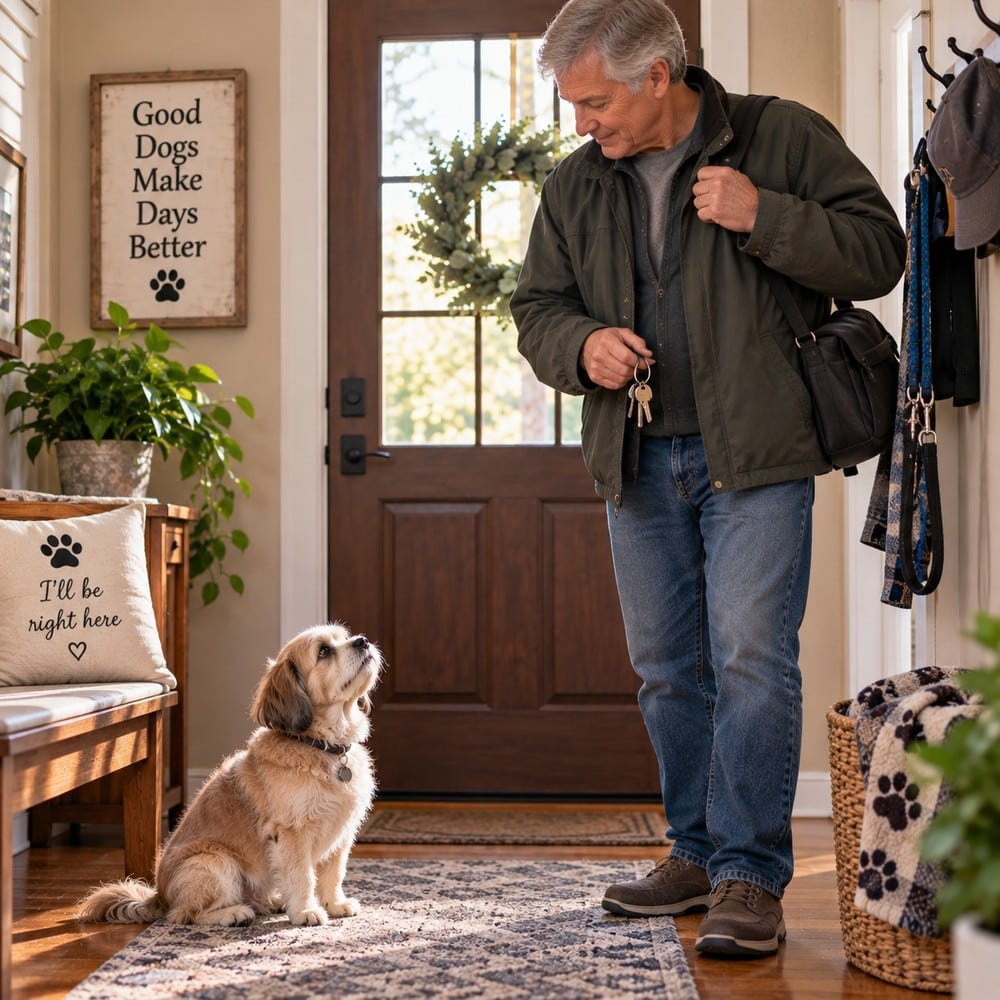
You haven’t picked up your keys yet.
You haven’t opened the door.
You haven’t even said goodbye.
But your dog is already watching you.
Maybe they’re following you from room to room. Maybe they’ve planted themselves beside the front door. Maybe you’re getting the suspicious stare from across the living room.
Or perhaps your dog has already disappeared onto the couch with that unmistakable expression that says, Fine. Go. See if I care.
Somehow, they know.
It can feel as though dogs have a sixth sense about these things. But the real explanation may be even more interesting.
Your dog has spent an enormous amount of time watching you.
And they’ve learned far more about your routine than you probably realize.
We tend to think we’re the ones studying our dogs.
We learn what they want when they stand beside the door.
We know the look that means dinner is late.
We recognize the little dance that happens when the leash comes out.
Meanwhile, our dogs have been studying us too.
Think about how predictable an ordinary morning can be.
You get out of bed.
Make coffee.
Get dressed.
Brush your teeth.
Put on shoes.
Pick up your phone.
Grab your keys.
Leave.
Do that often enough and your dog doesn’t need to wait until the final step.
They learn what comes before it.
The coffee doesn’t necessarily mean you’re leaving.
Neither does brushing your teeth.
But coffee followed by getting dressed, brushing your teeth, putting on those particular shoes and picking up your bag?
Now your dog is paying attention.
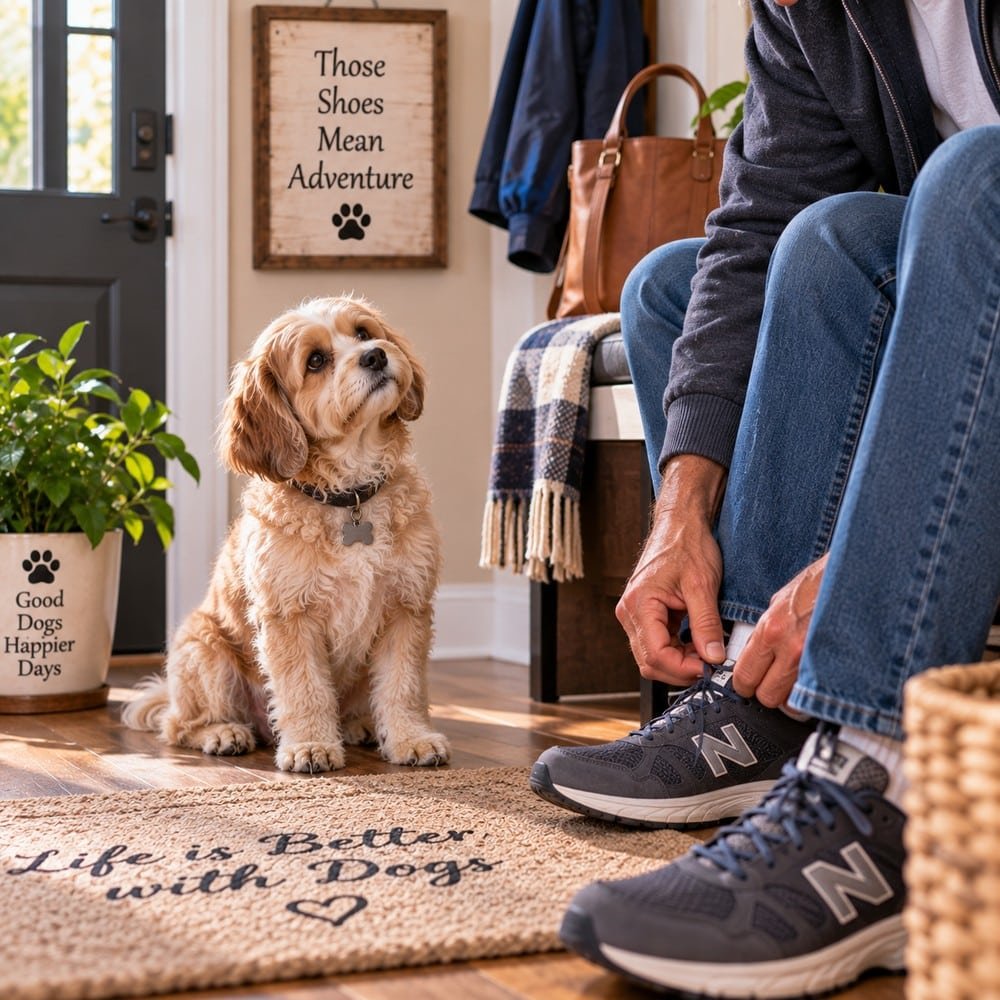
Dogs can become amazingly specific about the clues they notice.
You may own six pairs of shoes.
Five mean absolutely nothing.
But put on those shoes and suddenly your dog appears.
Why?
Because those are the shoes you usually wear when you go somewhere.
The same thing can happen with clothing.
Work clothes may mean you’ll be gone for several hours.
Walking shoes may mean something wonderful is about to happen.
Pajamas mean everyone is staying put.
A jacket can mean outside.
And if you put on a coat, grab the leash and say, “Want to go?”
Well, there’s no mystery left at that point.
The dog may be at the door before you’ve finished the sentence.
Keys get blamed for everything.
And yes, many dogs absolutely recognize the sound of them.
But you’ve probably given yourself away long before the keys start jingling.
Your dog might notice you:
pick up a purse or wallet.
turn off lights.
close a laptop.
change clothes.
fill a travel mug.
check the weather.
put on makeup.
move toward the garage.
pick up a particular bag.
Even the order in which you do things can matter.
One clue by itself may mean nothing.
Several familiar clues together can tell your dog exactly where this morning is headed.
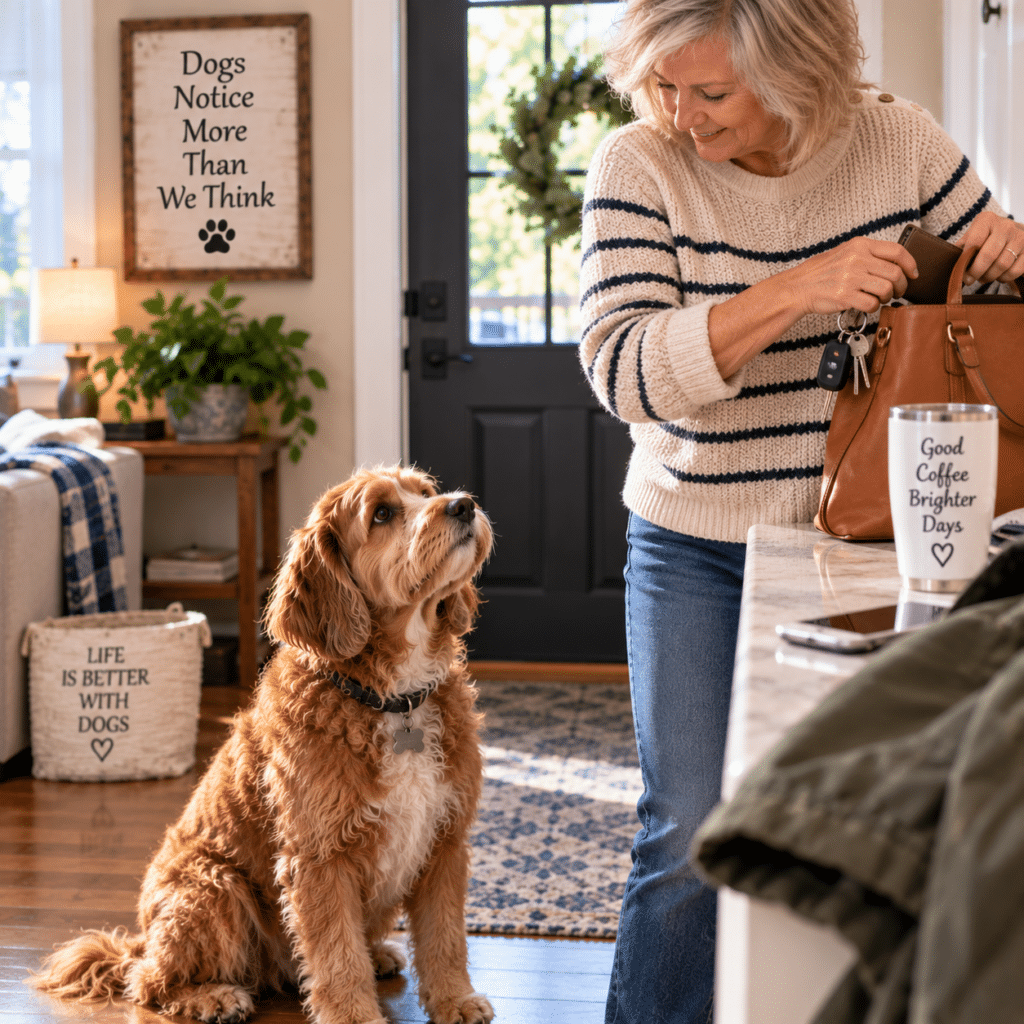
Humans communicate heavily through words.
Dogs pay enormous attention to everything else.
Our movements.
Our posture.
Our facial expressions.
Where we’re looking.
What we’re touching.
How quickly we’re moving around the house.
You may not think you’re acting differently when you’re getting ready to leave, but you probably are.
Imagine an ordinary Saturday morning when you have nowhere to go.
You wander into the kitchen.
Pour another cup of coffee.
Sit down.
Check your phone.
Move slowly.
Now compare that with a morning when you’re running ten minutes late.
You’re moving quickly.
Opening drawers.
Closing cabinets.
Walking back and forth.
Checking the time.
Looking for your keys even though you put them in the same place yesterday.
Your dog doesn’t need a clock to realize something is happening.
You’re practically broadcasting it.
Dogs don’t read clocks the way we do, but many become very good at anticipating recurring parts of the day.
Breakfast.
Walks.
Dinner.
Bedtime.
And yes, departures and arrivals.
Environmental cues can contribute too.
The amount of daylight changes.
Household sounds change.
Family members move through familiar routines.
If you leave for work at roughly the same time every weekday, your dog has plenty of opportunities to learn the pattern.
That’s also why they can sometimes seem confused when the routine changes.
You may know it’s a holiday.
Your dog just knows it’s 8:15 and you’re still sitting there.
Something has clearly gone wrong with management.
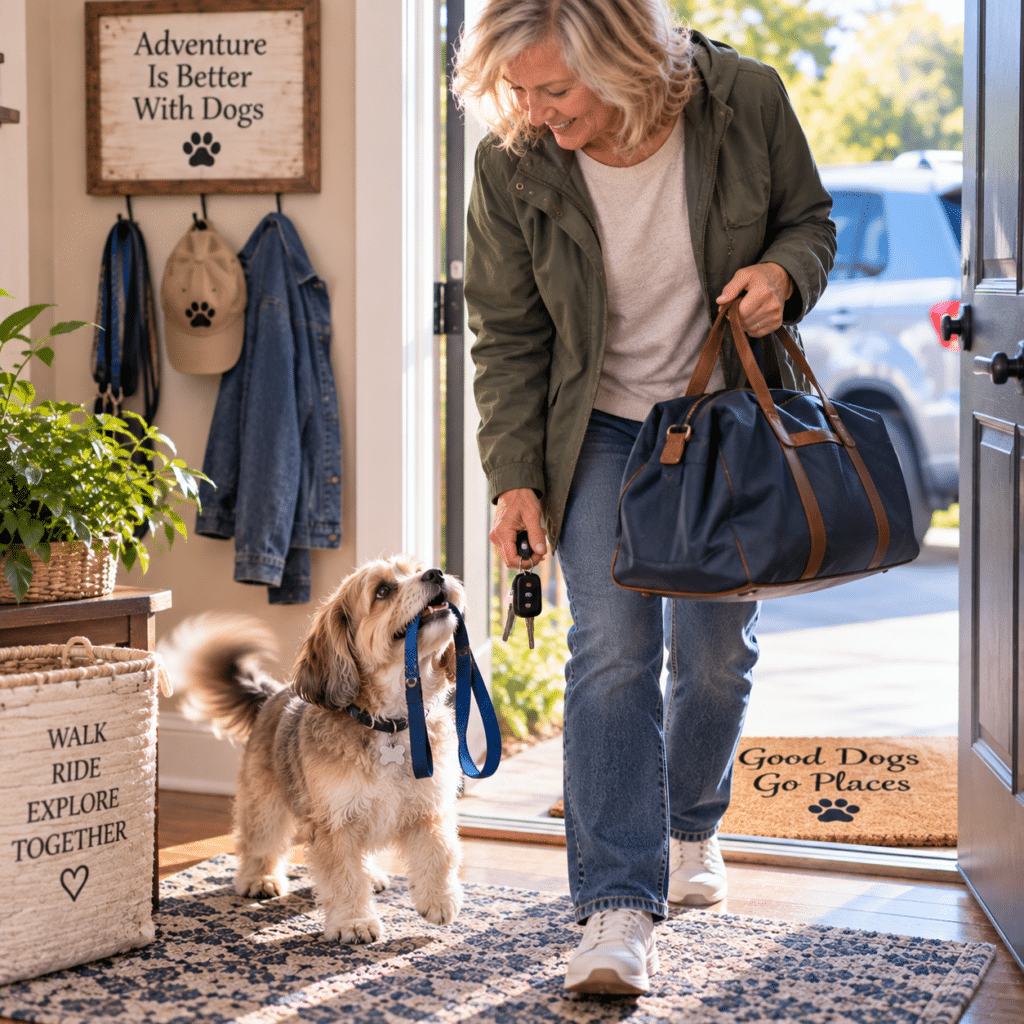
This might be one of the funniest parts.
Dogs don’t simply learn that you’re leaving.
Some learn whether they’re invited.
Pick up your car keys and nothing happens.
Put on your walking shoes and ears go up.
Grab a particular bag and a tail starts wagging.
Reach for the leash and all remaining self-control disappears.
How they distinguish one trip from another depends on the dog and household, but repeated routines give them plenty of clues.
The sequence that ends with your dog getting into the car looks different from the sequence that ends with:
“Be good. I’ll be back soon.”
And they know it.
Once a dog realizes you’re preparing to leave, their reaction can vary tremendously.
One dog may follow you around hoping this is a car-ride situation.
Another may sit at the door.
Another may climb into their bed.
Another may stare at you as though you’ve committed a personal betrayal.
And some dogs barely react at all.
Those differences can reflect personality, experience, routine and what the dog has learned usually happens next.
A dog who is comfortable being alone may simply recognize the routine and settle down.
But another dog may become worried.
That’s an important distinction.
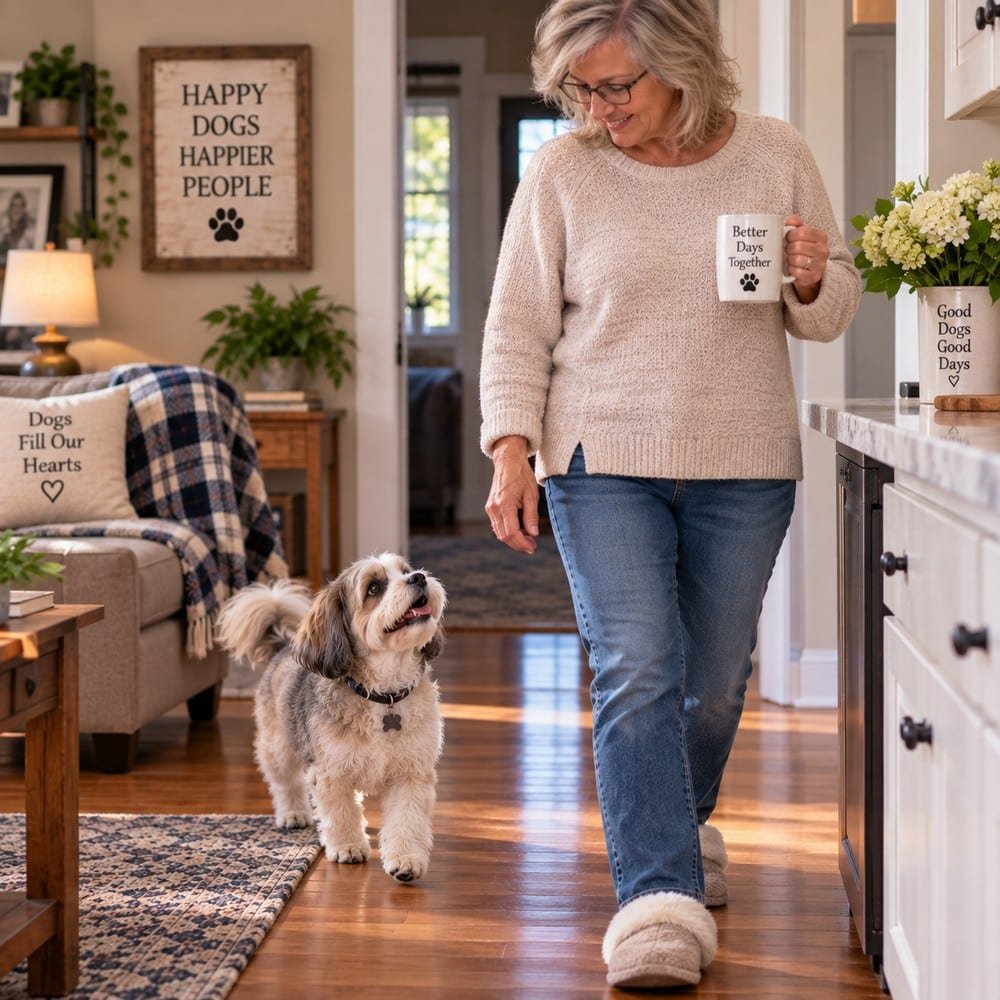
A dog noticing that you’re leaving isn’t necessarily experiencing separation anxiety.
Many dogs simply follow their people because they’re social, curious, hoping to be included, or have learned that following occasionally results in something interesting.
But significant distress around departures is different.
Signs that deserve attention can include behaviors such as persistent barking or howling, destructive behavior focused around exits, frantic attempts to escape, excessive drooling or panting, pacing, or house-soiling associated with being left alone.
Those behaviors shouldn’t be dismissed as a dog being “mad” that you left.
If your dog appears genuinely distressed when alone, talk with your veterinarian. Depending on the situation, a qualified behavior professional may also be helpful.
Separation-related problems can often be addressed, but the approach is different from dealing with a dog who simply gives you a dramatic look when the purse comes out.
Humans can make departures pretty dramatic too.
We gather our belongings.
Call goodbye across the house.
Come back because we forgot something.
Tell the dog we’ll be back soon.
Give another hug.
Walk toward the door.
Come back for the phone.
Tell the dog again that we’ll be back.
By then, even a dog who wasn’t paying attention has received the announcement.
There’s nothing wrong with saying goodbye to your dog.
But if departures make your dog anxious, a calmer, more predictable routine may be helpful rather than turning every exit into a major event.
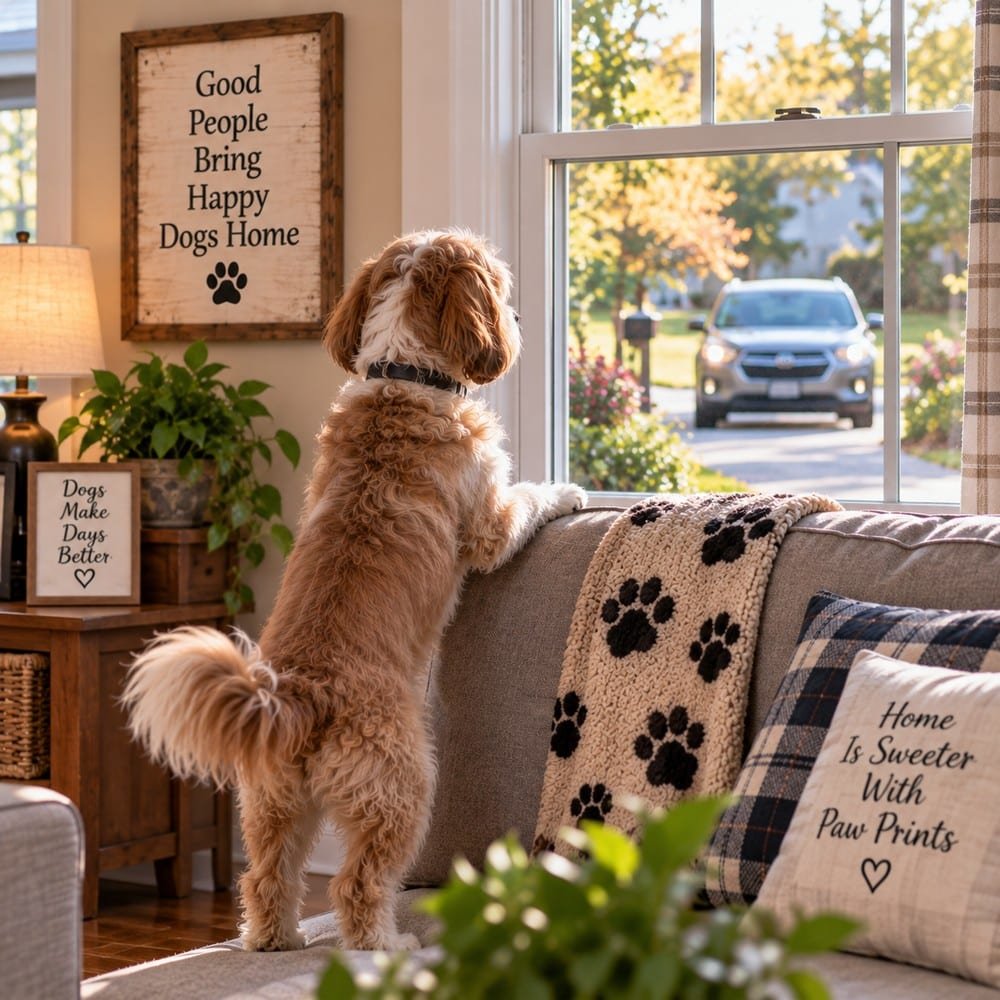
This can seem even more mysterious.
You pull into the driveway and someone inside says:
“He knew you were coming.”
Maybe your dog recognizes the sound of your vehicle.
Maybe your arrival usually happens around the same time.
Maybe they hear the garage door.
Maybe another family member starts behaving differently because they know you’re due home.
Dogs have excellent hearing and an incredible ability to learn familiar sounds and routines.
What looks like magic may actually be years of paying attention.
Although when your dog is waiting at the window before you even turn onto the street, you’re certainly allowed to wonder.
That’s really what’s happening.
Every ordinary day has been a lesson.
You never sat your dog down and explained:
“When I put on these shoes, grab this bag and fill this coffee cup, I’m leaving for a while.”
You didn’t have to.
They figured it out.
Dogs live beside us while thousands of tiny routines repeat.
They watch.
They listen.
They remember what happens next.
And eventually they become so good at reading the clues that they seem to know what we’re doing before we do.
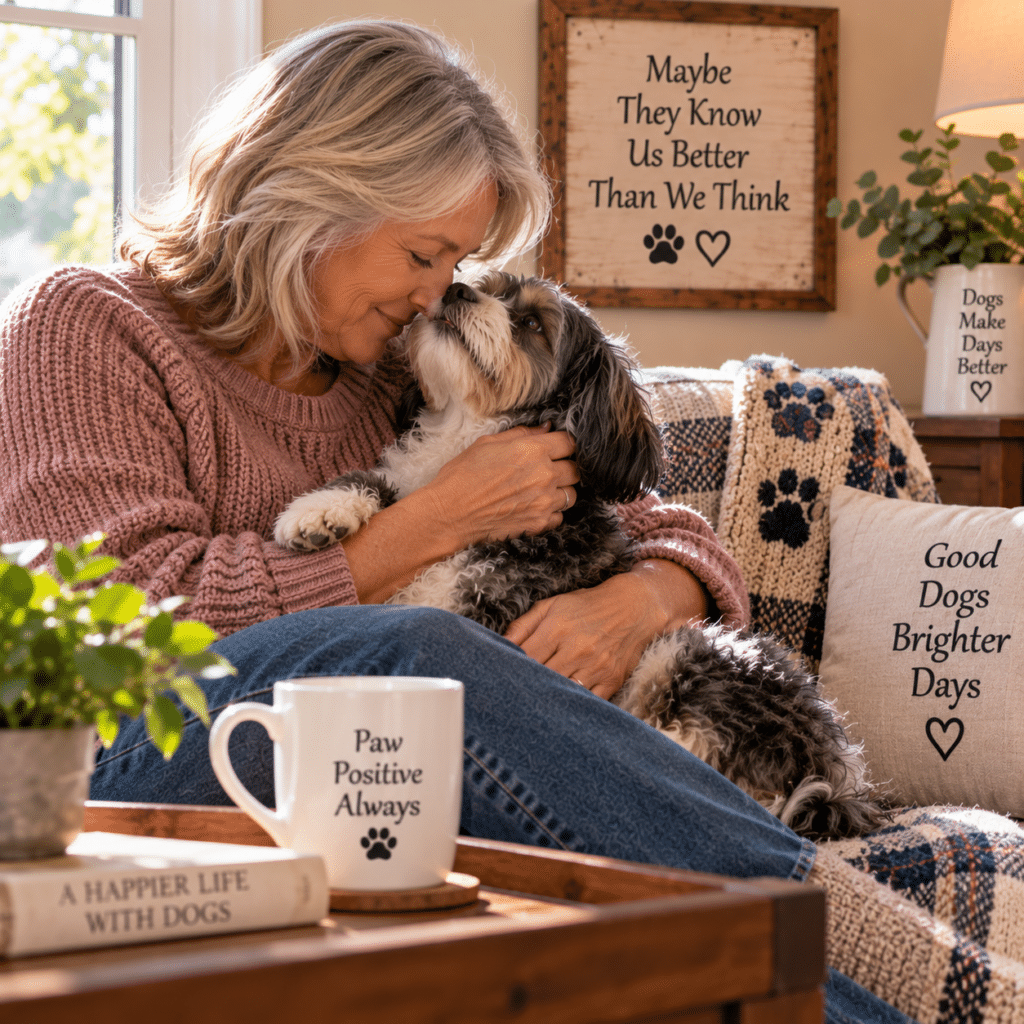
We spend years learning our dogs.
We know which bark means someone is outside.
We know the expression that means they want something.
We know when they’re tired, excited, suspicious or hoping a piece of dinner accidentally falls onto the floor.
But that relationship goes both ways.
Your dog knows things about you too.
They know your morning routine.
They know your favorite chair.
They know which cabinet contains the treats.
They know what you look like when you’re getting ready for bed.
And apparently they know the difference between the shoes that mean we’re staying home and the shoes that mean you’re leaving without me.
So the next time you’re quietly trying to sneak out and turn around to discover your dog already standing behind you, don’t be too surprised.
You weren’t nearly as sneaky as you thought.
Your dog has been studying you for years.