Newsletter Subscribe
Enter your email address below and subscribe to our newsletter

 ByDiana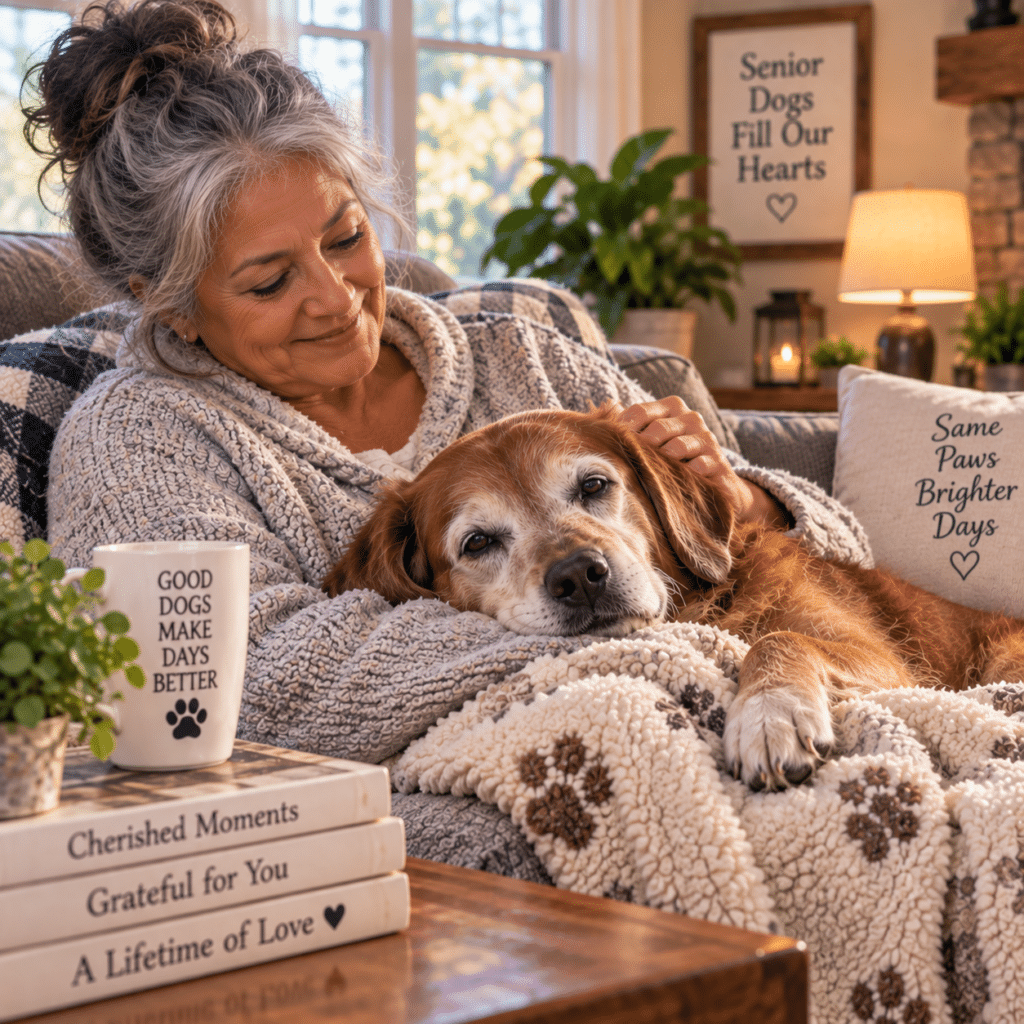
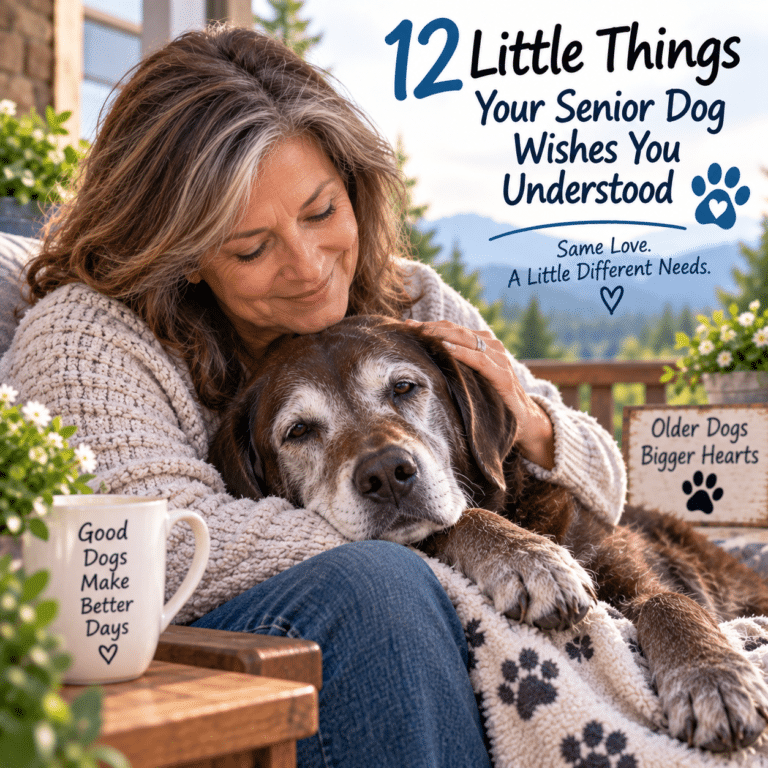
When dogs are young, comfort doesn’t always seem very high on their list of priorities.
They’ll sleep on the floor even though there’s a perfectly good bed three feet away. They’ll race across slippery floors, leap onto furniture, and somehow fall asleep in positions that make your own back hurt just looking at them.
Then the years start adding up.
The couch seems a little higher. Cold mornings aren’t quite as inviting. A hard floor isn’t the first choice for an afternoon nap anymore.
And the little comforts we barely thought about when our dogs were younger can suddenly make a big difference.
A softer bed.
A rug across a slippery floor.
A warm blanket.
An easier way to get outside.
A little patience while they stand at the bottom of the stairs deciding whether the trip is worth it.
Senior dogs don’t necessarily need an entirely different life.
Sometimes they simply need us to make the life they already love a little easier.
Affiliate Disclosure: This article contains affiliate links. If you make a purchase through one of these links, Dogs Make Days Better may earn a small commission at no additional cost to you. We only feature products we believe may be useful to dog owners.
Young dogs can sleep almost anywhere.
Senior dogs often become a little more selective.
A supportive bed can give an older dog a comfortable place to rest without putting as much pressure on aging joints and bony areas.
If your dog’s current bed has flattened over the years, this may be a good time to consider an orthopedic bed with more cushioning and support.
Chewy carries orthopedic dog beds in a wide range of sizes and prices, making it easy to compare options for your dog’s size, sleeping style, and your budget.
Shop Orthopedic Dog Beds at Chewy →
But where you put that bed matters too.
Your dog may have the most expensive orthopedic bed ever made and still ignore it if you’ve placed it in a room where nobody spends time.
Many older dogs still want to be near their people.
Try putting a comfortable resting spot in the room where your family spends the most time.
For some dogs, that means the living room.
For others, it might be the kitchen because apparently supervising meal preparation remains an important senior-dog responsibility.
Comfort is wonderful.
Comfort near you may be even better.
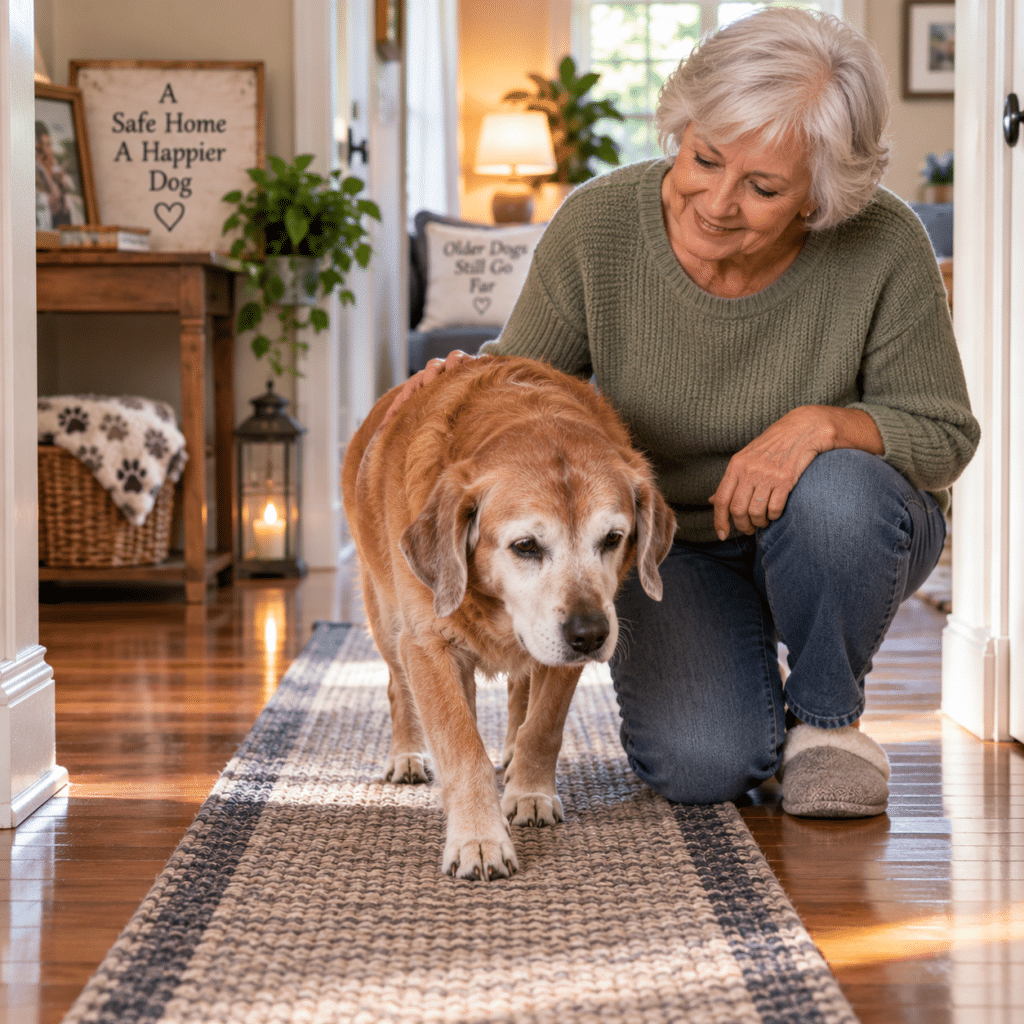
A hardwood or tile floor your dog crossed without hesitation for years may eventually become more difficult.
You might notice your dog walking more cautiously.
Their legs may spread slightly for balance. They might hesitate before crossing a particularly slick area or choose a longer route that keeps them on carpet.
A few strategically placed rugs or nonslip runners can make everyday movement easier.
You don’t necessarily need to cover every inch of your house.
Think about your dog’s most frequently traveled routes.
Their bed to the back door.
The living room to the kitchen.
The hallway leading to the bedroom.
Sometimes creating a few secure little pathways can give an older dog more confidence moving around the house.
Dogs notice familiar things.
They know their beds.
They know their toys.
They know exactly which chair you’re about to sit in and may occasionally reach it before you do.
And many dogs seem to have favorite blankets.
There’s something comforting about familiar smells and textures, particularly for an older dog who spends more time resting.
If your dog has claimed a particular blanket, you may as well accept reality.
It’s theirs now.
Wash it regularly, keep it somewhere accessible, and perhaps have another comfortable blanket available while the favorite is in the laundry.
On cooler days, that familiar little nest can become one of the best spots in the house.
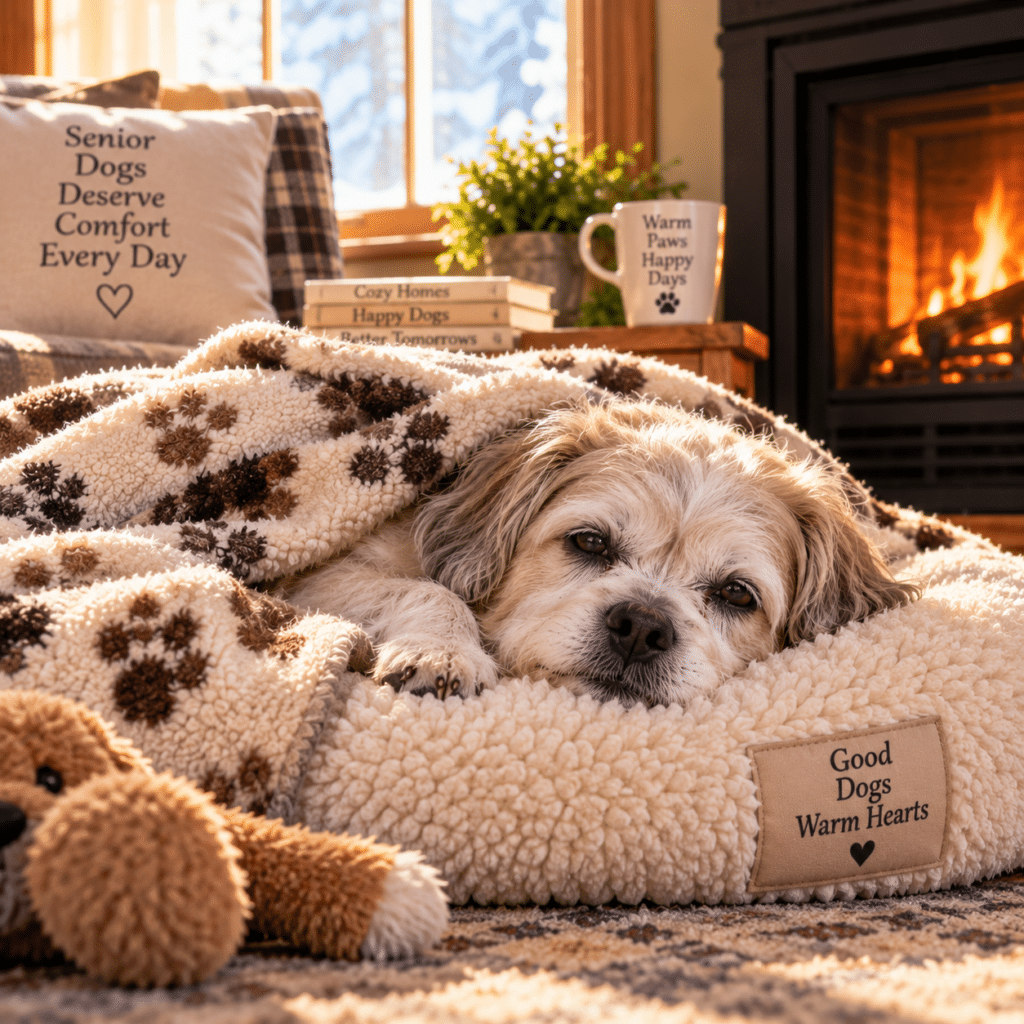
Some senior dogs seem to seek warmth more as they age.
They may stretch out in a sunny patch on the floor.
Curl up near a heating vent.
Burrow underneath a blanket.
Or somehow locate the warmest spot in the entire house with remarkable accuracy.
A cozy sleeping area away from cold drafts can make resting more comfortable, particularly for dogs with thin coats or older dogs who don’t tolerate temperature changes as well as they once did.
Just be careful with heating devices.
Heating pads and heated beds should be designed for pets and used according to safety instructions, particularly with dogs who may have limited mobility or reduced ability to move away if they become too warm.
Sometimes the safest comfort is also the simplest:
A soft blanket and a warm room.
Food is one pleasure many dogs take very seriously at every age.
But even mealtime can change.
An older dog may prefer eating somewhere quieter, particularly in a multi-dog household where younger dogs have decided every bowl is potentially their bowl.
Some dogs may find certain eating positions less comfortable than they once did.
Others may need changes in diet or feeding routines because of health conditions.
The important thing isn’t to make changes simply because your dog has reached a certain birthday.
It’s to notice whether something that used to be easy has become difficult.
If your dog suddenly struggles to eat, drops food, loses interest in meals, has difficulty chewing, gains or loses weight unexpectedly, or shows other changes around eating, talk with your veterinarian rather than assuming it’s simply old age.
Sometimes a small change in routine helps.
Sometimes the dog needs medical or dental attention.
Knowing the difference matters.
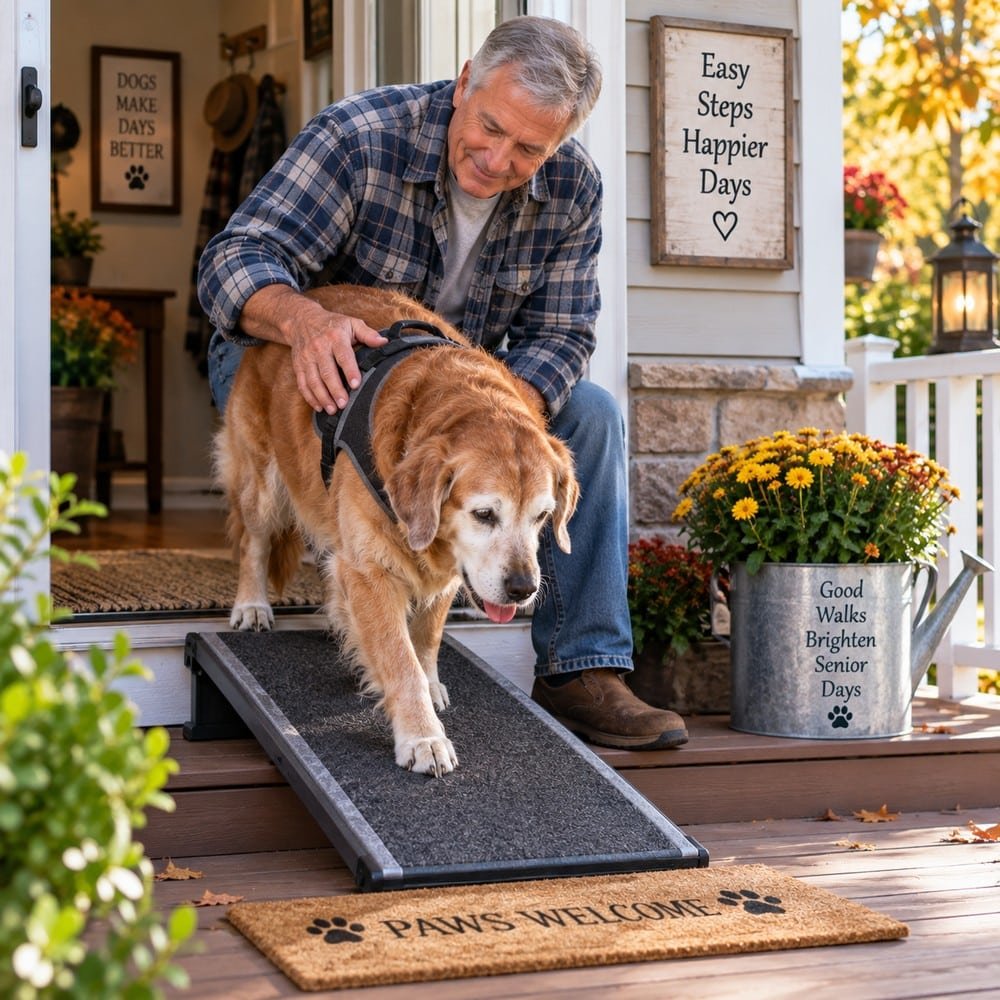
Think about how many times your dog has gone through the same door over the years.
When they’re younger, you barely notice it.
Door opens.
Dog flies through.
Senior years can make that simple trip more complicated.
Maybe there are steps.
Maybe the porch becomes slippery when wet.
Maybe the dog can’t wait quite as long once they’ve decided they need to go outside.
Making that everyday route easier can be a surprisingly meaningful comfort.
Keep walkways clear.
Consider nonslip surfaces where appropriate.
Make sure outdoor areas are well lit at night.
And give your dog time.
They may not shoot through the doorway anymore.
That doesn’t mean they aren’t coming.
Older dogs often sleep more.
Sometimes they appreciate having somewhere peaceful to retreat when the house gets noisy.
That’s especially helpful during gatherings, visits from energetic children, thunderstorms, fireworks, or simply those moments when the household becomes a little too busy.
But don’t assume that because your dog needs more rest, they always want isolation.
There’s a difference between having the option to retreat and being separated from everyone.
A comfortable bed in a quiet corner of the living room can sometimes provide both.
Your dog can sleep while still hearing familiar voices and knowing where everyone is.
Senior dogs have spent years being part of the household.
Many still want to know what’s going on—even if they’re going to sleep through most of it.
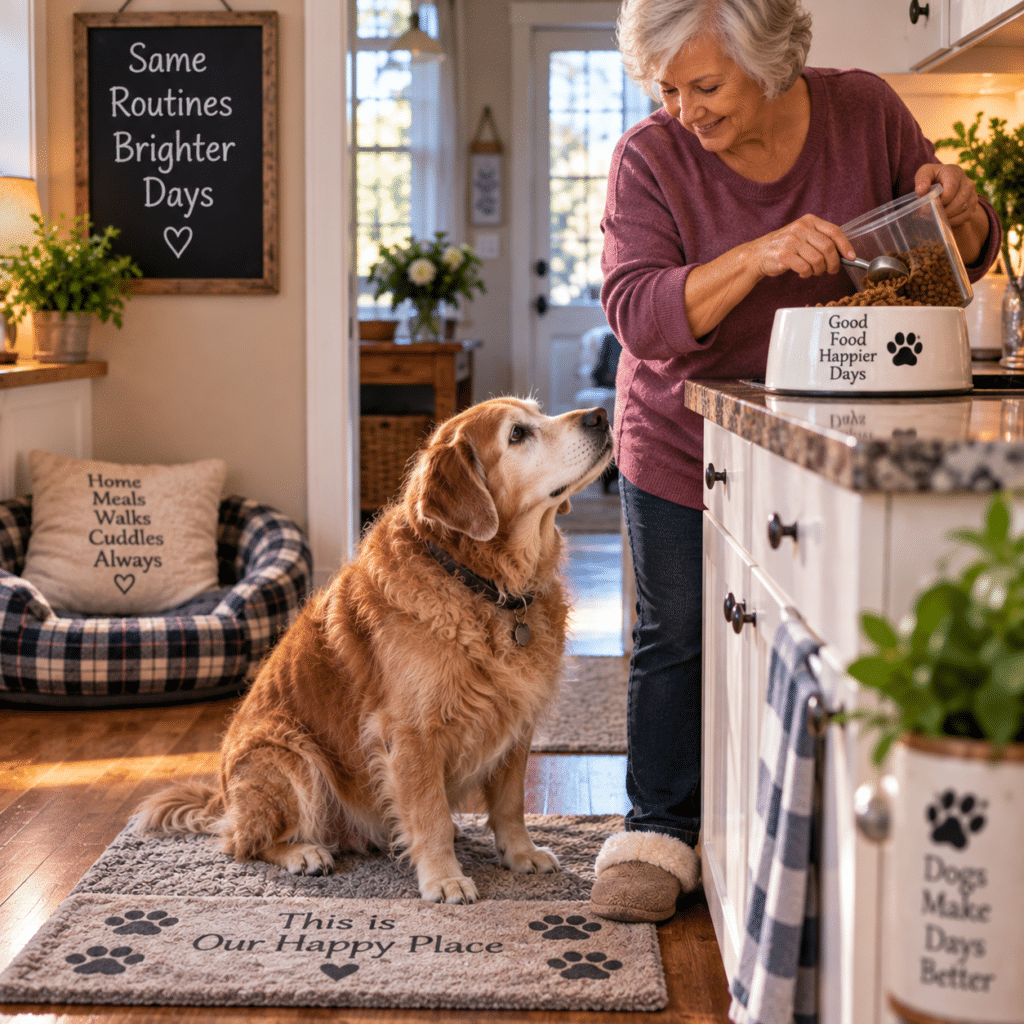
Comfort isn’t always something you can buy.
Sometimes it’s knowing what happens next.
Breakfast at roughly the same time.
A familiar morning trip outside.
An afternoon nap.
Dinner.
The evening couch routine.
The final trip outside before bed.
Dogs tend to notice patterns, and older dogs have had many years to learn yours.
You don’t have to run your household according to a stopwatch.
But predictable routines can make everyday life feel familiar.
And there’s something sweet about an old dog who wakes from a deep sleep at 4:57 because dinner has occurred at 5:00 for the last decade.
The hearing may not be what it once was.
Apparently the dinner clock works perfectly.
One of the harder adjustments can be realizing that something your dog has always done independently now requires assistance.
Maybe they can’t jump into the car.
Maybe the couch is difficult.
Maybe stairs have become challenging.
Maybe getting up after a long nap takes a few extra seconds.
It’s tempting to do everything for them.
But there’s a balance.
The goal isn’t necessarily to stop an older dog from doing things they’re still comfortably capable of doing. Maintaining appropriate activity and independence can be important.
Instead, pay attention.
Help when help is needed.
A ramp, steps, supportive harness, strategically placed rug, or simply your steady hand may make some activities easier, depending on your dog’s individual needs.
If jumping into the car or reaching a favorite spot has become more difficult, a pet ramp can provide another way for your dog to get where they want to go.
Chewy carries dog ramps in different lengths, styles, and price ranges, so you can compare options based on your dog’s size and where you plan to use it.
If mobility has changed significantly, your veterinarian can help determine what’s safe and whether pain, arthritis, injury, or another condition may be involved.
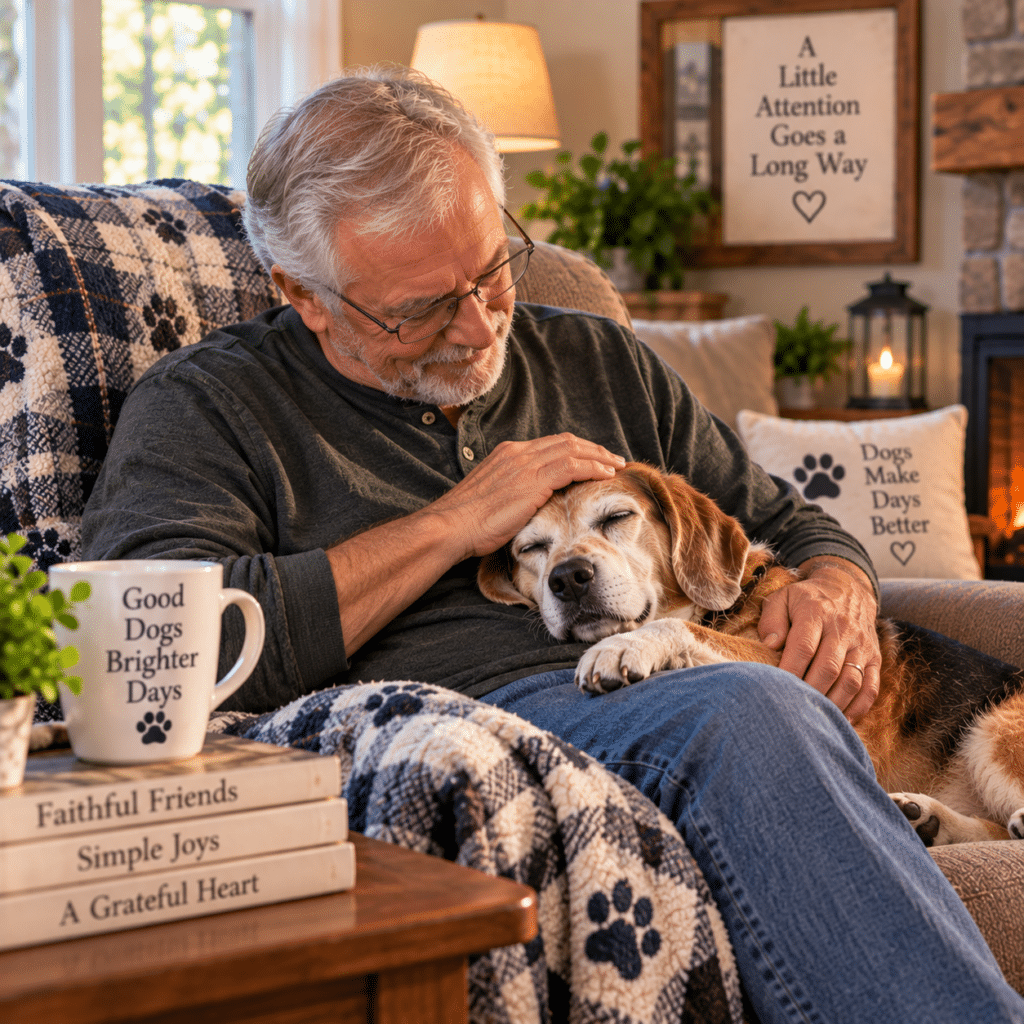
We can buy beds.
We can buy blankets.
We can put rugs on the floor and ramps beside furniture.
But one of the things dogs seem to value most doesn’t come from a pet store.
Us.
Your senior dog may not bring you a ball as often.
They may not have the energy for an hour of play.
But they may still lean against your leg.
Rest their head on your lap.
Follow you slowly into another room.
Or simply settle down once they know you’re nearby.
Those quiet moments can become some of the sweetest parts of living with an older dog.
You don’t always need to entertain them.
Sometimes sitting together is enough.
There is one important thing to remember about aging dogs.
Not every change should automatically be blamed on age.
If your dog suddenly can’t get comfortable, begins pacing at night, cries when getting up, avoids being touched, stops using stairs they handled recently, loses interest in food, changes sleeping habits dramatically, or simply doesn’t seem like themselves, it’s worth talking with your veterinarian.
Dogs are often very good at adapting.
That can make discomfort surprisingly easy to overlook.
You know your dog’s habits better than anyone.
If something feels different, paying attention is part of caring for them.
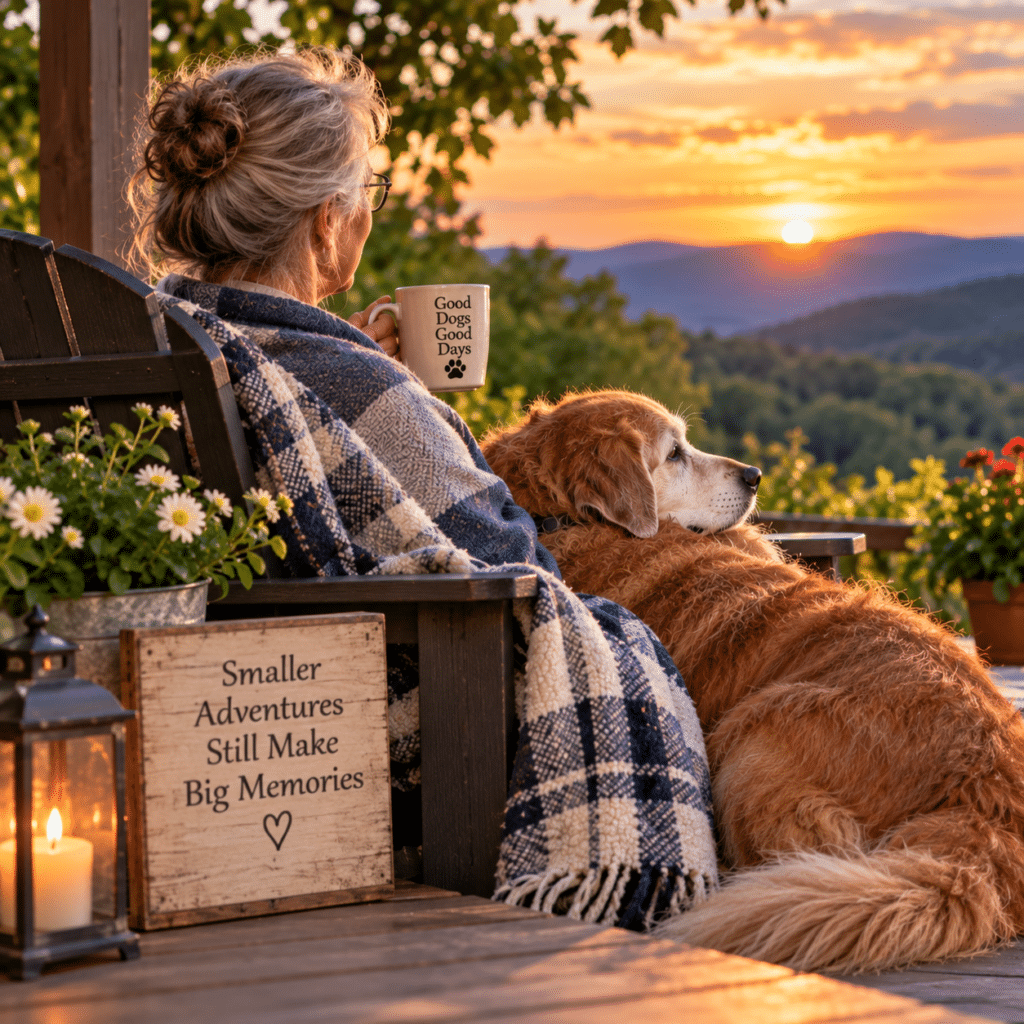
As dogs get older, life sometimes becomes simpler.
The long walk becomes a short stroll.
The wild game of fetch becomes carrying a favorite toy around the house.
The big adventure becomes sitting outside in the sunshine.
The dog who once raced through every room may now prefer a comfortable bed where they can keep an eye on everyone.
None of that means life has stopped being good.
It simply means the things that make it good have changed.
A soft place to sleep.
A floor that feels secure beneath their feet.
A warm blanket.
An easy path outside.
A familiar routine.
A sunny spot.
And their favorite person sitting close enough to touch.
They’re little things.
But when you’ve loved a dog long enough to watch their muzzle turn gray, you begin to understand something.
Sometimes the little comforts aren’t little at all.