Newsletter Subscribe
Enter your email address below and subscribe to our newsletter

 ByDiana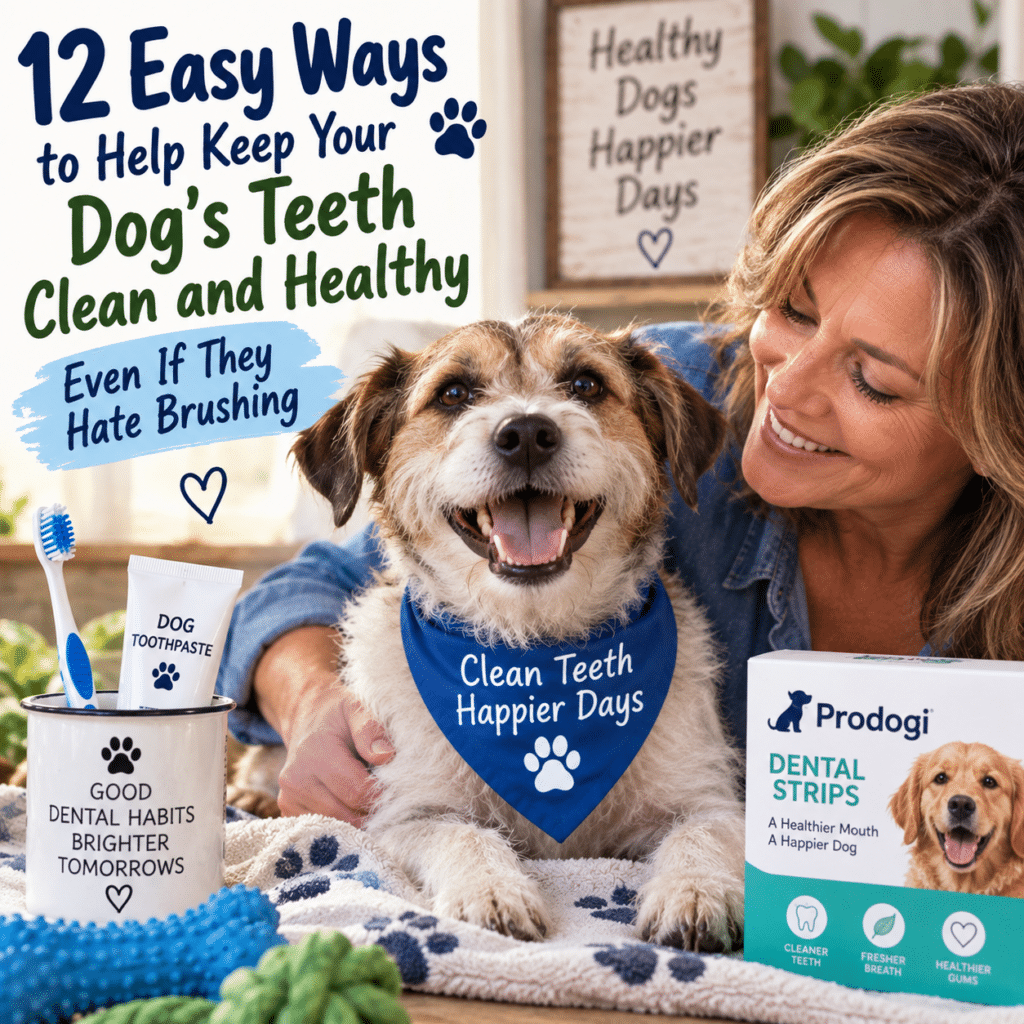
If you’ve ever tried to brush a dog’s teeth and ended up wrestling with a furry little alligator, you’re definitely not the only one.
Some dogs tolerate toothbrushing beautifully.
Others clamp their mouths shut, turn their heads, lick the toothpaste off the brush, back away or suddenly develop the strength of a dog three times their size.
Unfortunately, ignoring their teeth isn’t a great option either.
Plaque can build up on a dog’s teeth and eventually harden into tartar. Problems below the gum line aren’t always obvious just by looking, either, which is one reason regular veterinary dental exams are important.
The good news is that dental care doesn’t have to be an all-or-nothing battle.
Brushing remains one of the best things you can do at home, but there are several ways to make caring for your dog’s mouth easier—and even a few options for dogs who want absolutely nothing to do with a toothbrush.
Here are 12 simple ways to help.

You don’t need to perform a home dental examination.
Just get into the habit of occasionally lifting your dog’s lip and taking a look.
Healthy-looking gums are generally pink rather than angry red or noticeably swollen. Check for obvious tartar buildup, broken or loose teeth, bleeding, unusual lumps or anything else that looks different from normal.
This is especially useful with older dogs because gradual changes can be easy to miss when you see your dog every day.
And don’t forget the breath.
Dog breath isn’t expected to smell like peppermint, but a particularly strong or worsening odor deserves attention—especially when it’s accompanied by other changes.
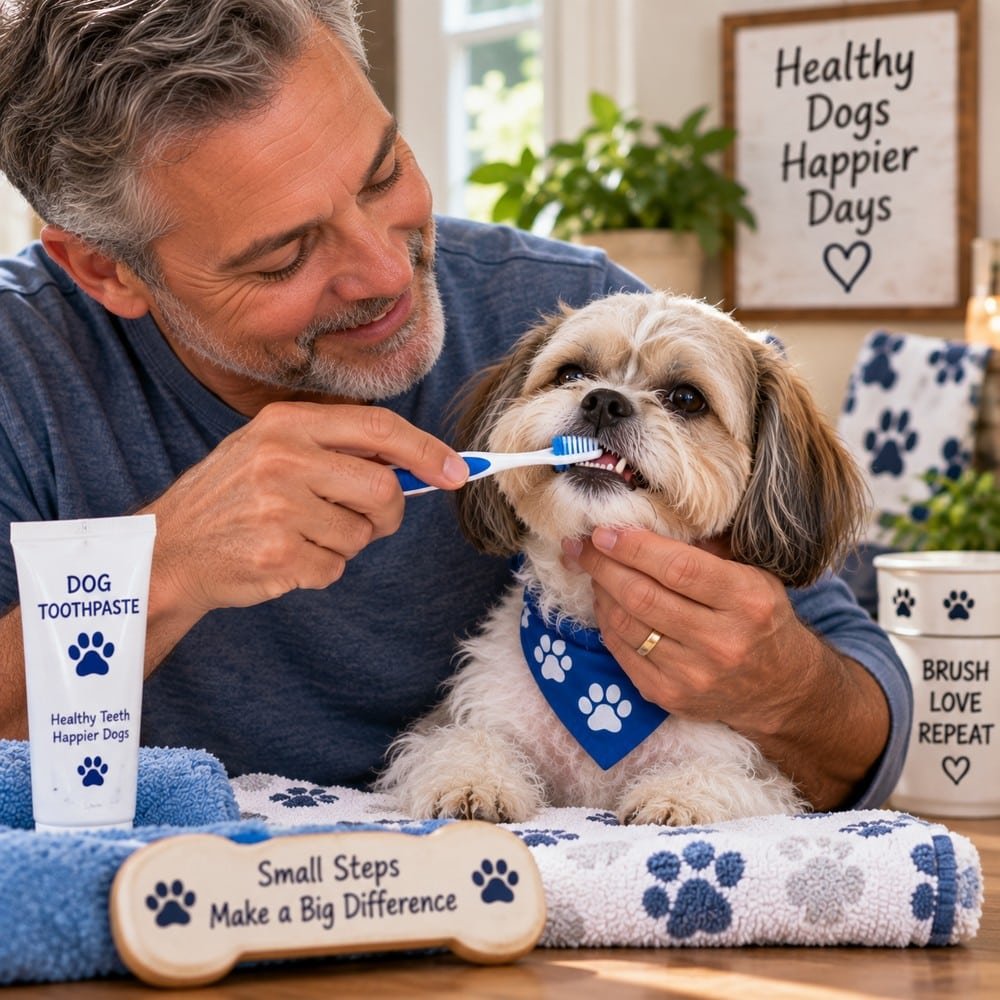
There’s a reason veterinarians continue recommending brushing.
Regular brushing physically removes plaque before it has a chance to become a bigger problem.
Ideally, toothbrushing should become a daily habit. But don’t decide there’s no point simply because you can’t manage a perfect brushing session every single day.
If your dog allows only a short brushing session at first, that’s still progress.
Concentrate especially on the outside surfaces of the upper teeth near the cheek, where plaque and tartar tend to accumulate quickly.
The goal isn’t perfection.
It’s consistency.

Your toothpaste belongs in your bathroom.
Your dog’s toothpaste belongs in theirs.
Human toothpaste isn’t intended to be swallowed by dogs, and some human dental products may contain ingredients that aren’t safe for them.
Choose a toothpaste specifically formulated for dogs and follow its directions.
Dog toothpaste also tends to come in flavors that make much more sense to dogs than they do to us.
Chicken-flavored toothpaste before breakfast?
Your dog may think you’ve finally started making sensible decisions.
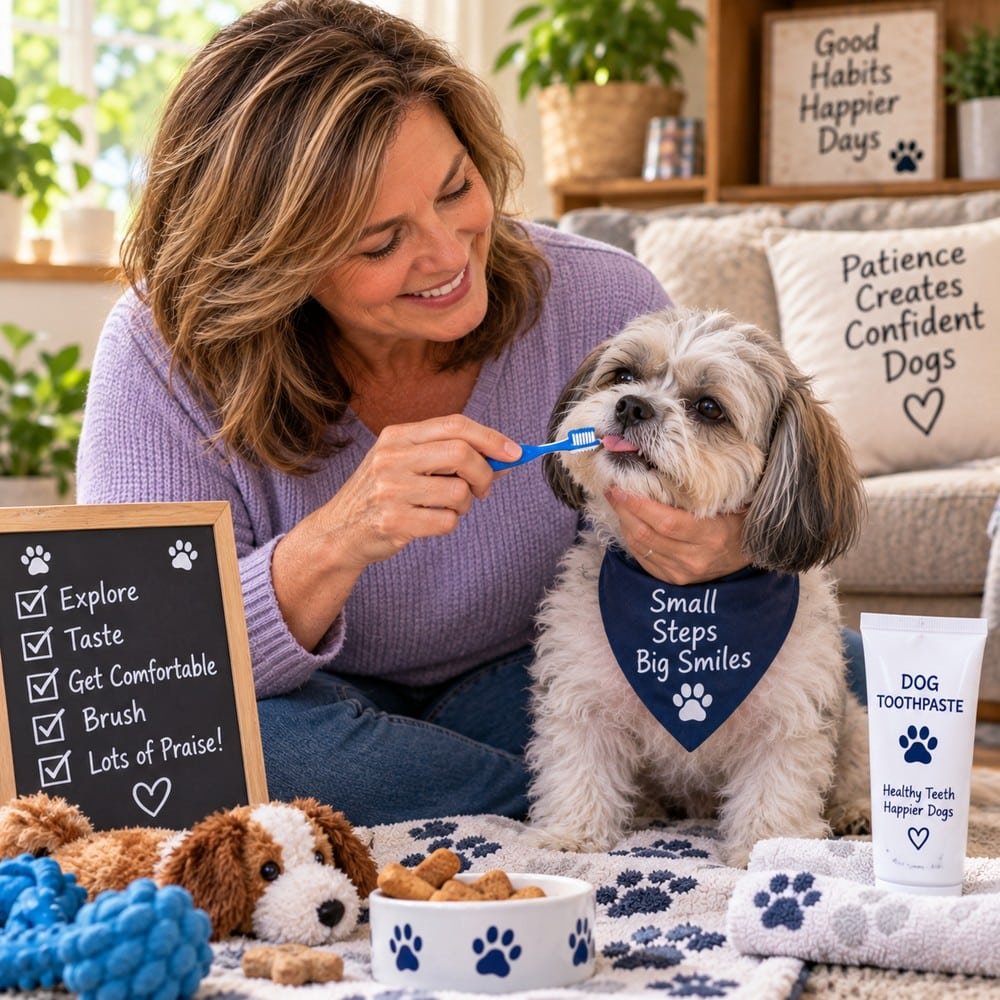
If the toothbrush appears only when you’re preparing to hold your dog’s head still and scrub away, they’re probably going to learn to disappear when they see it.
Instead, introduce dental care gradually.
Let your dog investigate the toothbrush. Let them taste a tiny amount of their dog toothpaste. Touch around the lips and gums gently and reward calm behavior.
Keep early sessions short.
You may spend several days simply getting your dog comfortable with having their mouth handled before you ever attempt a proper brushing.
That’s okay.
A dog who willingly gives you 30 seconds of brushing is much easier to care for than one who sees the toothbrush and heads under the bed.
And then there are the dogs who have considered your toothbrushing proposal and voted no.
Repeatedly.
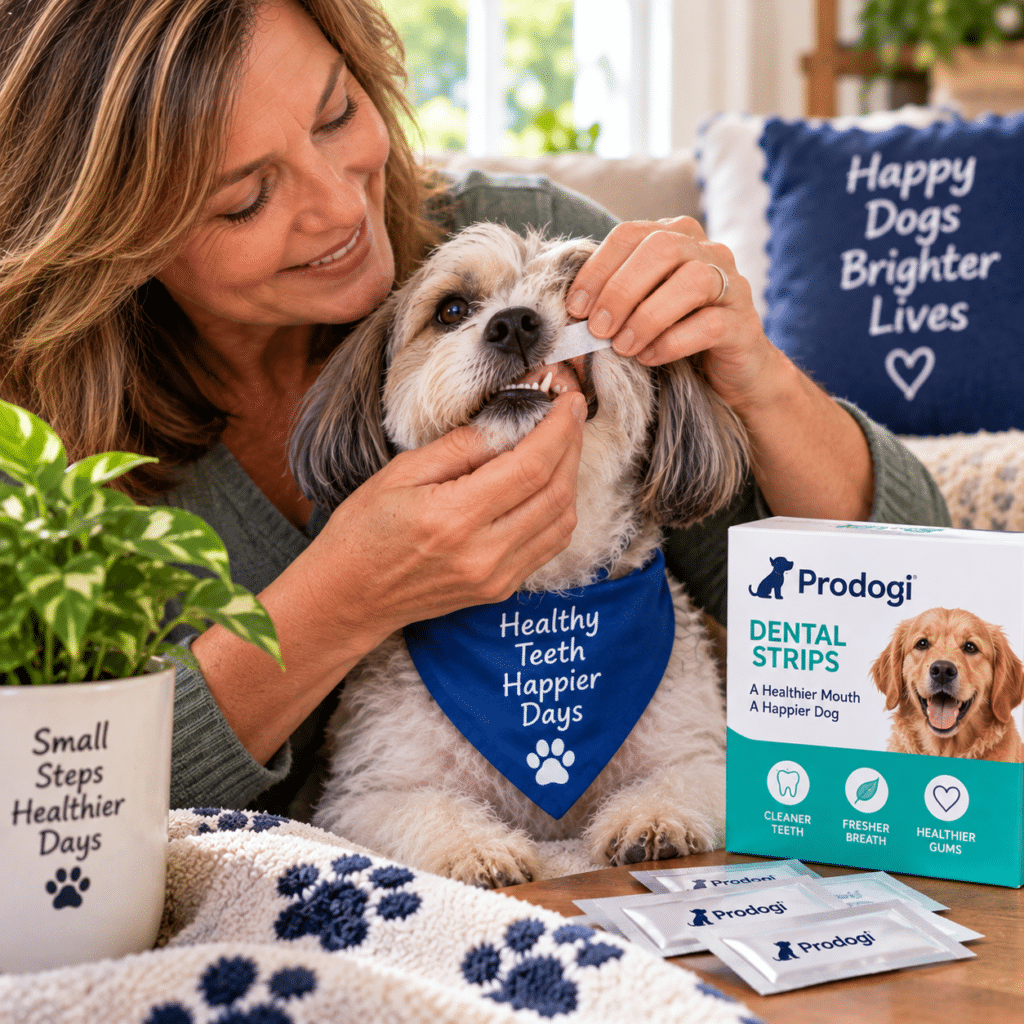
For dogs who really dislike brushing, I’ve been looking at another option called Prodogi Dental Strips.
Instead of brushing, you gently lift your dog’s upper lip and press a thin strip along the upper gum line. The strip adheres and gradually dissolves in the mouth, allowing the ingredients to mix with saliva and spread around more of the mouth.
Prodogi says the strips were developed under the direction of veterinarian Steve Mehler, DVM, DACVS, and are designed for once-daily use. They’re intended for dogs 12 weeks and older.
What I particularly like about the idea is how simple the routine is.
There’s no toothbrush to chase your dog around the house with, and there’s no need for your dog to spend several minutes cooperating while you try to reach the back teeth.
Affiliate note: If you decide to try Prodogi Dental Strips through our link, Dogs Make Days Better may receive a commission from your purchase at no additional cost to you. I only want to recommend products that make sense for the topic and may genuinely make everyday life with dogs a little easier.
[CHECK OUT PRODOGI DENTAL STRIPS]
Prodogi is intended to support a dog’s daily oral-care routine. It should not be considered a replacement for veterinary dental examinations, treatment or professional cleanings when they’re needed.

Dental chews can be another useful part of a dog’s dental routine, particularly for dogs who enjoy chewing.
But don’t assume every package with the word “dental” on the front has been shown to do the same thing.
One helpful place to look is the Veterinary Oral Health Council (VOHC). Products that earn its Seal of Acceptance have submitted data that meets VOHC requirements for controlling plaque, tartar or both.
You also want a chew that’s appropriate for your dog’s size.
And supervise your dog while they’re chewing.
If your dog tries to swallow large pieces instead of actually chewing them, a particular dental chew may not be a good choice for them.

It sounds logical:
Hard chew = cleaner teeth.
Unfortunately, something can be hard enough to damage a tooth.
Dogs can fracture teeth while chewing objects that are simply too hard.
Be thoughtful about bones, antlers and extremely hard chews rather than assuming they’re automatically good for dental health because they scrape against the teeth.
Your dog’s enthusiasm for chewing something isn’t proof that it’s safe.
This is one of those areas where asking your veterinarian what they recommend for your particular dog can save you trouble later.
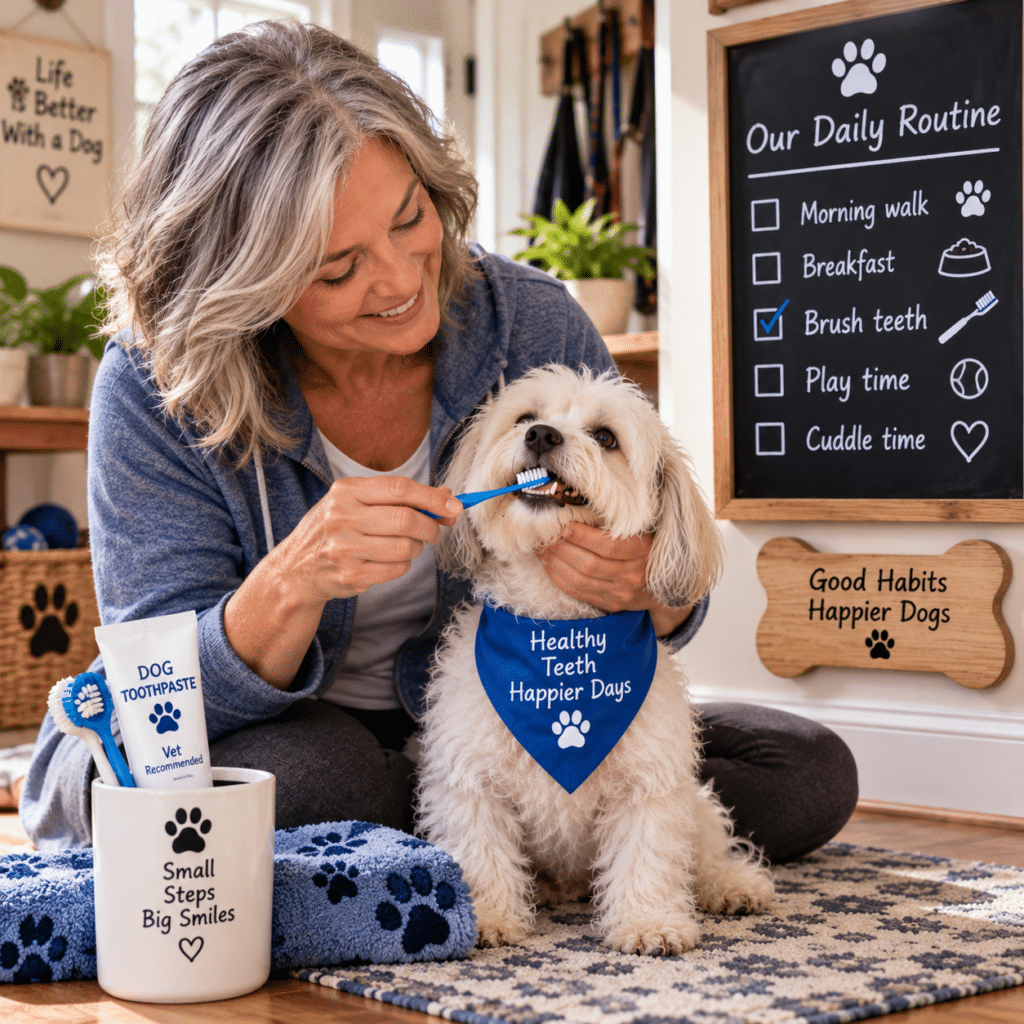
The easiest habits are often the ones attached to something you’re already doing.
Maybe dental care happens after breakfast.
Or after the last trip outside at night.
Or while you’re sitting on the couch watching television.
Pick something that happens every day and connect your dog’s dental routine to it.
Once it becomes automatic, you’re much less likely to suddenly realize you haven’t thought about your dog’s teeth in three weeks.
And dogs are remarkably good at learning routines.
Especially routines that end with praise or something tasty.
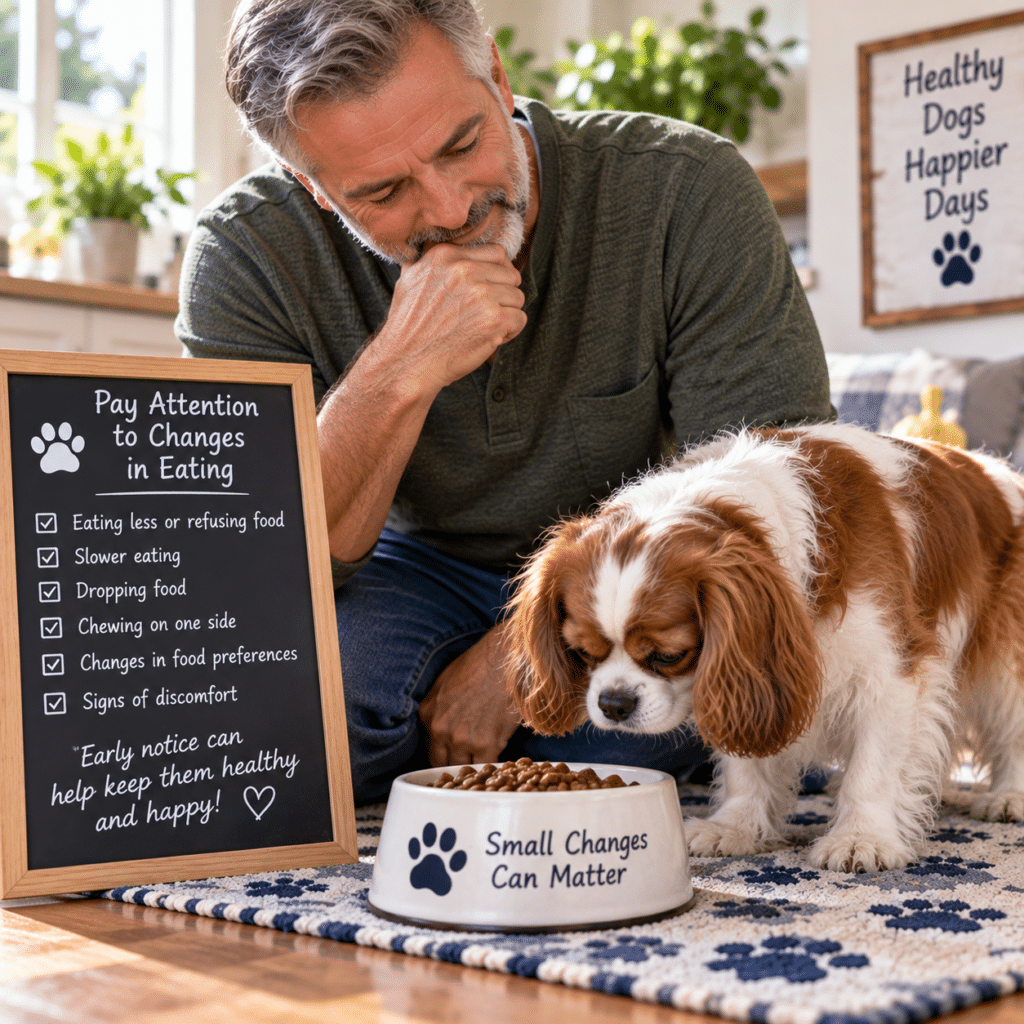
Dogs don’t always announce that their mouth hurts.
Instead, you may notice something subtle.
Your dog may chew on one side, drop food, hesitate before eating something hard, suddenly prefer softer food or seem interested in dinner but reluctant to actually eat it.
You might also notice increased drooling or pawing at the mouth.
Those aren’t changes I’d try to solve with another dental chew or a new toothbrush.
A noticeable change in the way your dog eats deserves a call to your veterinarian.
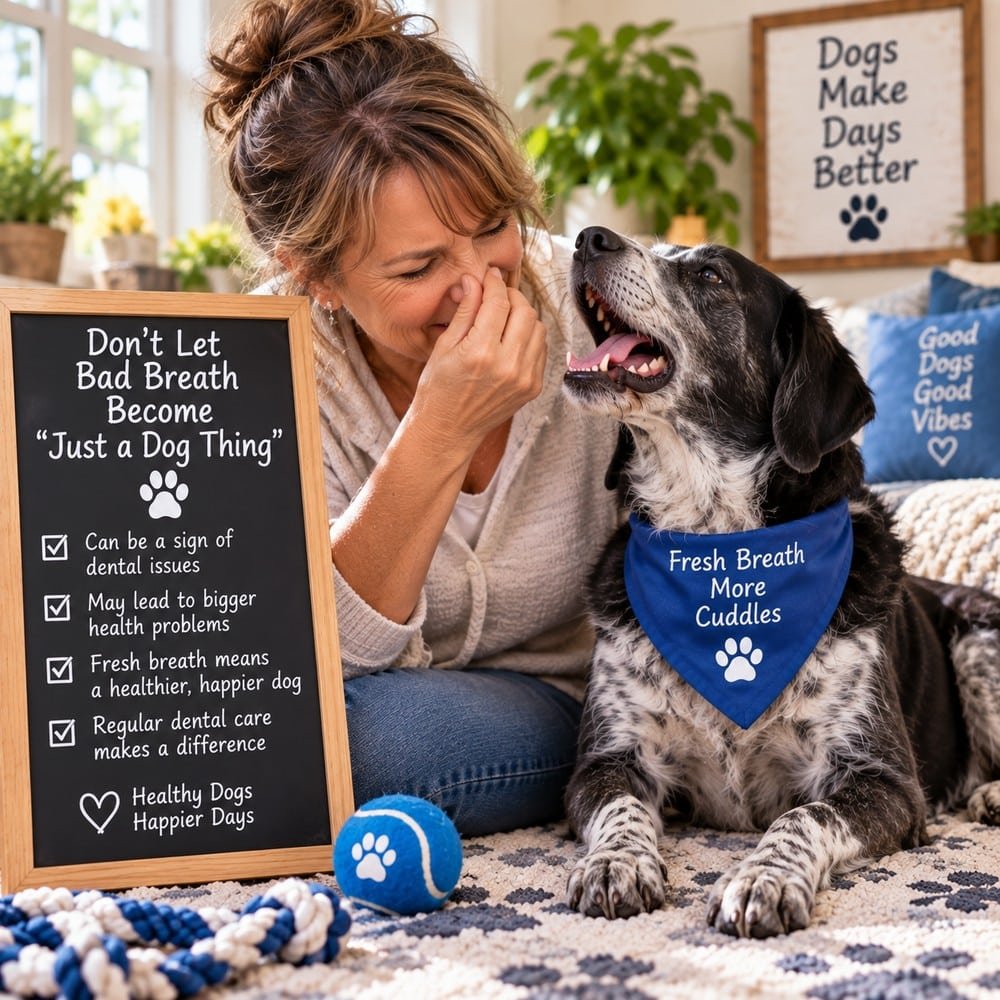
We’ve probably all experienced dog breath we’d rather not experience again.
But there’s a difference between ordinary dog breath and an odor that makes you wonder what died in there.
Persistent or worsening bad breath can be associated with dental problems and shouldn’t automatically be dismissed as normal.
If you’re keeping up with your dog’s oral care and their breath still becomes noticeably worse—or you see red gums, bleeding, swelling or other changes—have your veterinarian take a look.
Freshening the breath is nice.
Finding out why the breath changed is more important.
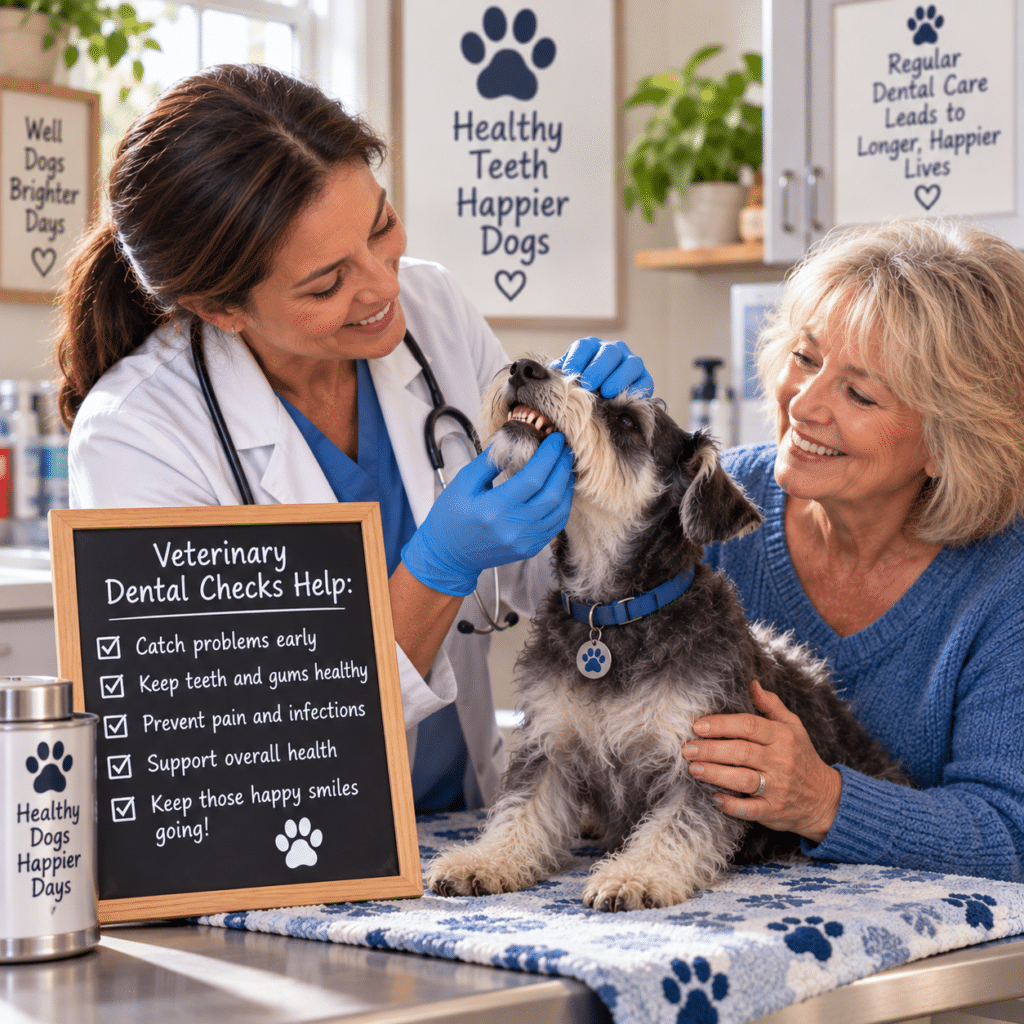
Even if you’re doing a wonderful job with home dental care, you can only see part of what’s happening in your dog’s mouth.
Your veterinarian can examine the teeth and gums and let you know when something needs more attention.
Some dogs will eventually need professional dental cleaning even with good home care.
That becomes particularly important as dogs get older.
Think of home dental care and veterinary dental care as partners rather than alternatives.
What you do at home helps maintain the mouth between veterinary visits.
Your veterinarian handles the things you can’t safely diagnose or treat yourself.
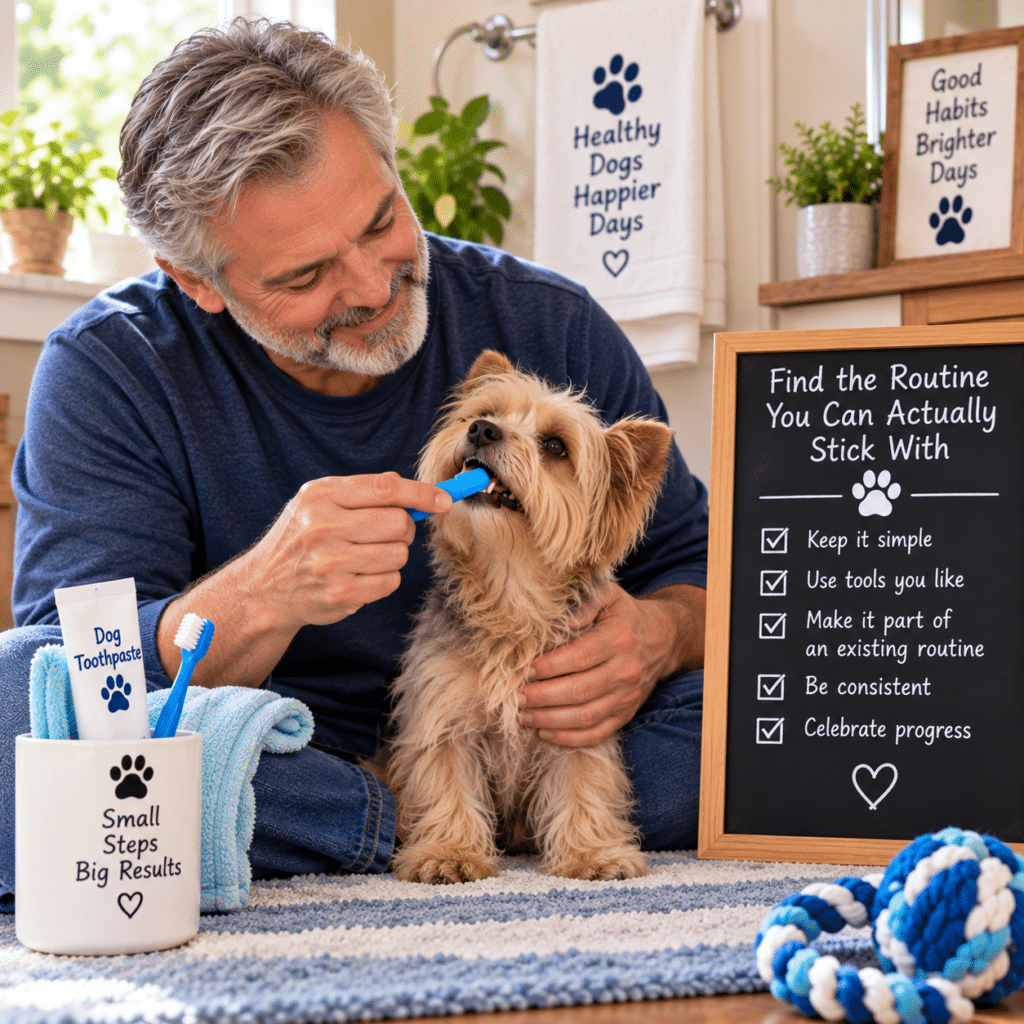
This may be the most important tip of all.
The “perfect” dental routine isn’t very useful if it happens twice and then gets abandoned.
Maybe your dog happily lets you brush every night.
Wonderful.
Maybe they’ll tolerate a quick brushing several times a week but not every day.
Work with that and ask your veterinarian how to strengthen the rest of their dental routine.
Maybe brushing is nearly impossible and you need to discuss other options, such as appropriate dental products, with your vet.
The important thing is not to give up on your dog’s teeth simply because one method doesn’t work.
There are more options than there used to be.
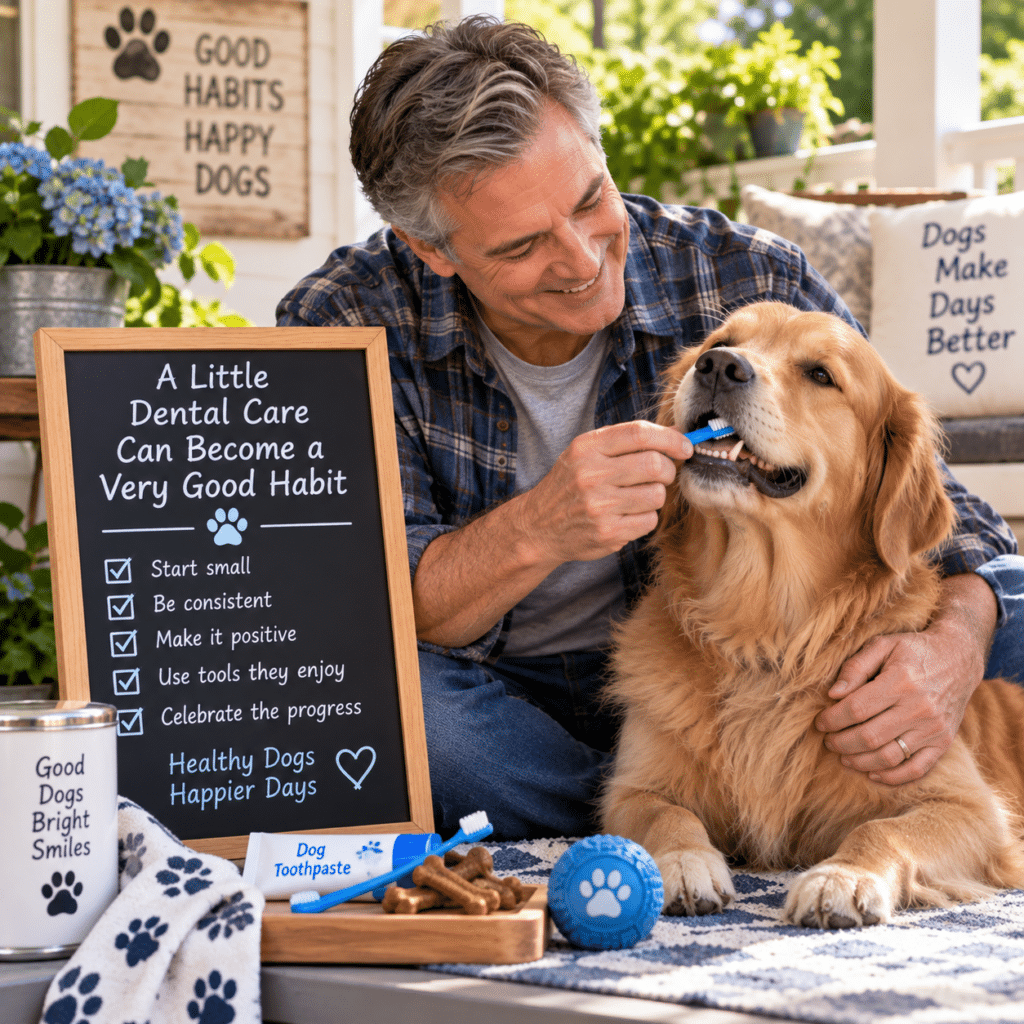
Dogs depend on us for so many small things they can’t do for themselves.
Fresh water.
Healthy food.
Nail trims.
Ear checks.
And yes, taking care of those teeth.
Dental care isn’t particularly exciting, and your dog probably won’t consider a toothbrush the highlight of their day.
But once you find a routine that works for both of you, it becomes just another little part of loving and caring for them.
Take a quick look at their mouth.
Pay attention when something changes.
Brush when you can.
Find sensible alternatives when brushing isn’t working.
And let your veterinarian handle the problems that need professional care.
Your dog may never thank you for brushing their teeth.
But they’ll probably forgive you.
Especially if there’s a belly rub afterward.