Newsletter Subscribe
Enter your email address below and subscribe to our newsletter

 ByDiana
Walk into almost any pet store—or spend a few minutes shopping for dog products online—and there’s a good chance you’ll come across CBD oils, chews, or other hemp-derived products made specifically for dogs.
And if you’re like a lot of dog owners, you may have wondered whether CBD is something worth considering for your own dog.
The problem is that sorting through all the claims can be confusing. Some CBD products are marketed with impressive promises, while others provide very little information about what’s actually inside the bottle.
Before giving CBD to your dog, it helps to understand what it is, what we actually know about it, and how to evaluate a product carefully.
Affiliate Disclosure: This article contains affiliate links. If you make a purchase through one of these links, Dogs Make Days Better may earn a small commission at no additional cost to you. We only feature products we believe may be useful to dog owners. This article is for informational purposes only and is not a substitute for veterinary advice
CBD stands for cannabidiol, one of the naturally occurring compounds found in the cannabis plant.
CBD is not the same thing as THC (tetrahydrocannabinol), the compound most associated with marijuana’s intoxicating effects.
That’s an especially important distinction when we’re talking about dogs.
THC can be toxic to pets, so a CBD product intended for a dog should never simply be treated as interchangeable with cannabis products made for people.
Pet CBD products are generally made using hemp-derived extracts and come in several forms, including oils, soft chews, treats, and topical products.
Pet owners consider CBD products for many different reasons.
You may see CBD marketed in connection with things such as mobility, relaxation, aging, discomfort, or general wellness.
There has also been growing scientific interest in CBD for dogs. Veterinary researchers have studied it in areas including osteoarthritis, seizures, and skin conditions. Some studies have reported promising findings, but research is still developing and there are important unanswered questions about long-term use, appropriate dosing, safety, and interactions with medications.
That’s why it’s important not to look at CBD as a proven cure or replacement for veterinary treatment.
The FDA currently has not approved CBD for use in animals and says it cannot assure the safety or effectiveness of CBD products marketed for pets. The agency recommends talking with your veterinarian about appropriate treatment options for your dog.
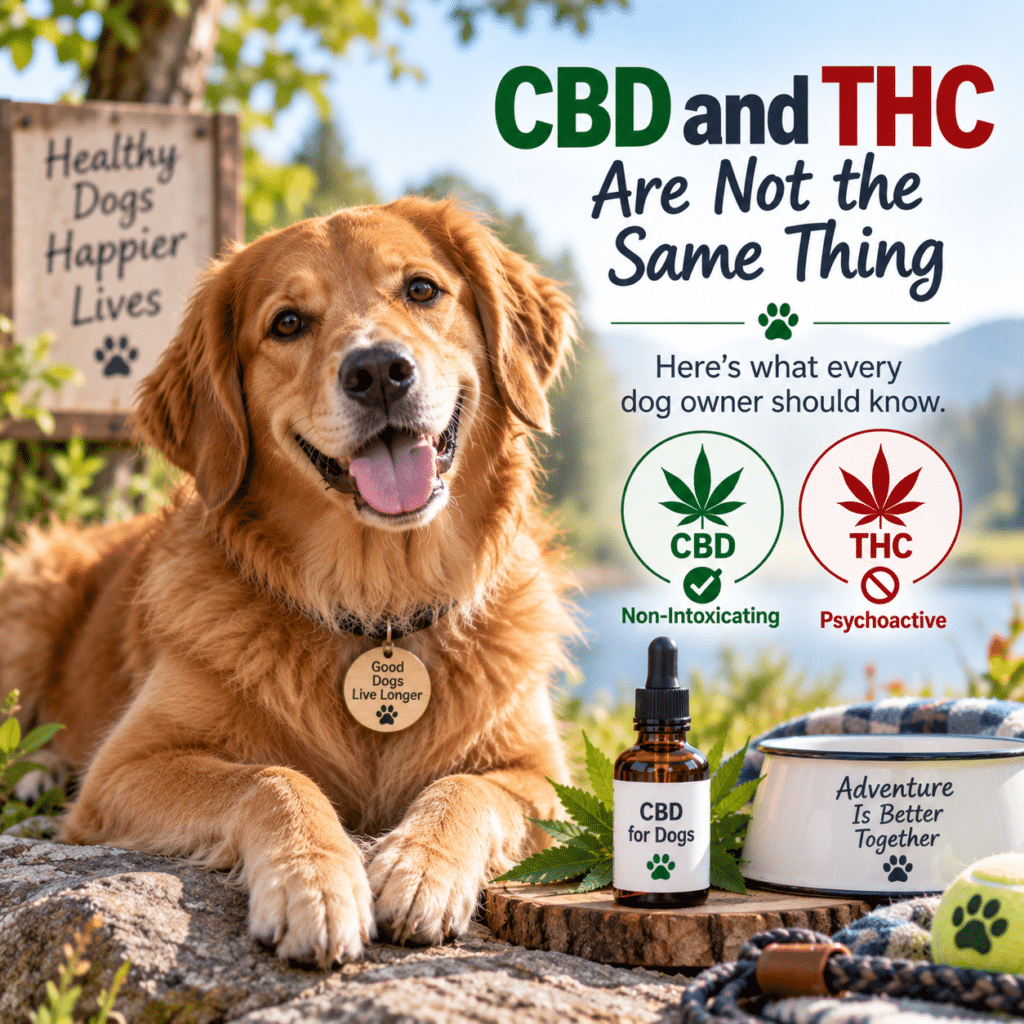
One of the first things dog owners should understand when shopping for CBD is the difference between CBD and THC.
CBD itself does not produce the intoxicating effect associated with THC.
But that doesn’t mean every bottle labeled “CBD” is automatically appropriate for your dog.
Product quality and cannabinoid content can vary. The FDA has previously found CBD products that did not contain the amount of CBD claimed on their labels, and it has raised concerns about possible contaminants including THC, pesticides, and heavy metals.
That makes knowing exactly what’s in a product particularly important.
And this brings us to something every dog owner shopping for CBD should learn about.
A reputable pet CBD company should make it possible for you to verify what’s actually in the product.
One way companies do this is through independent laboratory testing.
The resulting document is often called a Certificate of Analysis, or COA.
Rather than simply taking the manufacturer’s word for what’s inside the bottle, a COA gives you laboratory information about that particular product or batch.
Depending on the testing performed, a COA may show the amount of CBD and other cannabinoids detected and provide screening information for substances such as THC and potential contaminants.
If a company makes its lab reports difficult—or impossible—to find, that’s something worth considering before purchasing its products.
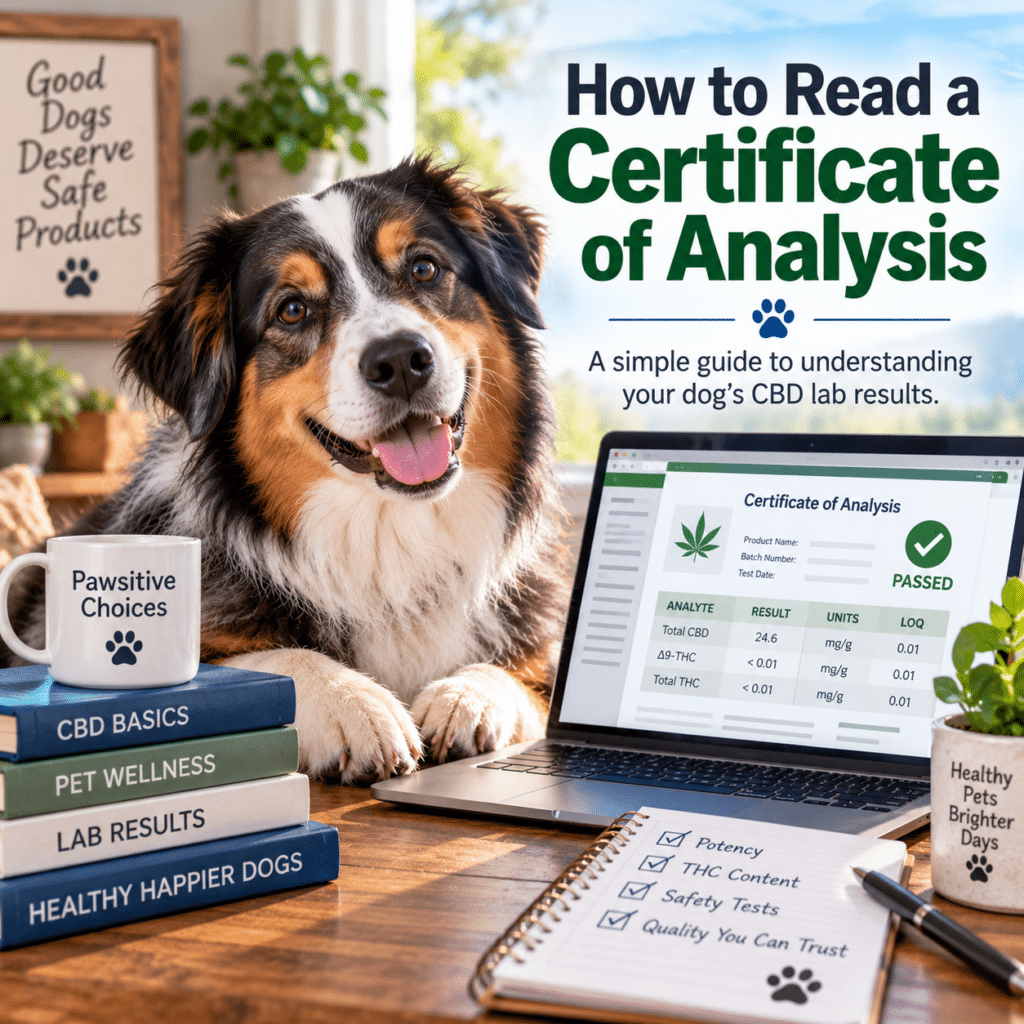
Don’t worry if a lab report looks intimidating at first. You don’t need to be a chemist to check a few important things.
Start with the batch or lot number. Ideally, the report should correspond to the product you’re actually buying rather than being an old generic laboratory report used for everything the company sells.
Next, look at the cannabinoid results.
Does the laboratory’s reported CBD content reasonably correspond with what’s advertised on the product?
Check the THC results as well.
Then look for any available contaminant testing. Depending on the laboratory and type of analysis, this can include screening for pesticides, heavy metals, solvents, or microorganisms.
Finally, check the date of the test.
A transparent company should make current testing reasonably easy for customers to locate and understand.
Two bottles of CBD oil can look almost identical while containing very different amounts of CBD.
That’s why you shouldn’t judge a product by the size of the bottle alone.
Look for the actual amount of CBD listed on the label and pay attention to how much CBD is delivered per serving.
This becomes particularly important when dogs of very different sizes are involved. What might be an appropriate amount for a large dog could be far too much for a tiny dog.
CBD also shouldn’t be treated as a “more is better” product.
Your veterinarian can help you decide whether CBD is appropriate for your dog and discuss an amount based on your dog’s size, health history, medications, and individual circumstances.

This may be the most important step of all.
CBD isn’t automatically harmless simply because it comes from hemp or is sold without a prescription.
Research has found that CBD can affect liver enzymes involved in metabolizing medications, creating the possibility of drug interactions. Sedation and increased appetite have also been reported among dogs in CBD research.
That conversation with your veterinarian becomes especially important if your dog:
Your veterinarian knows your dog’s medical history in a way that a product label or online review never can.
If you and your veterinarian decide CBD is something you want to consider, don’t simply grab the first product that appears in an online search.
Look for a company that clearly tells you what’s in its products and provides information that you can verify.
Some useful things to look for include:
Transparency matters with any product you’re giving your dog.
It matters even more in a category where regulation and research are still evolving.
One company dog owners may encounter while researching pet CBD is Bailey’s CBD.
Bailey’s focuses on CBD products for pets and offers products including CBD oils and chews. The company also maintains a public lab-results section where customers can look up testing associated with different products, strengths, and batches.
For example, its lab-results page currently lists individual batch test information for several strengths of its Original CBD Oil for Dogs as well as other canine products. That kind of batch-specific information gives shoppers something concrete to examine rather than relying solely on marketing claims.
That doesn’t mean any CBD product is automatically right for every dog. It means Bailey’s provides some of the transparency we would want to look for when evaluating products in this category.
And that’s an important distinction.
We’re not looking for a company that promises CBD can cure everything. We’re looking for information that helps us make a more informed decision with our veterinarian.
Learn more about Bailey’s CBD pet products

CBD testimonials can be compelling.
When someone says a particular product dramatically changed their dog’s life, it’s natural to pay attention—especially if your own dog is struggling.
But a customer’s experience isn’t the same thing as scientific evidence.
The FDA has specifically expressed concern about CBD products marketed with unproven medical claims. It also notes that unapproved products haven’t gone through the FDA review used to determine effectiveness, appropriate dosage, drug interactions, and other safety considerations.
That’s why it’s better to approach CBD with realistic expectations.
Research is happening. Some findings are encouraging. But there is still a lot we don’t know.
Most of us would do just about anything to help our dogs feel their best, particularly as they get older.
But loving our dogs also means asking questions before giving them something new.
If you’re considering CBD, take a few minutes to read the label. Find the Certificate of Analysis. Check the CBD strength. Look at the ingredients. Make sure you understand what you’re buying.
And most importantly, have the conversation with your veterinarian.
CBD may eventually have a clearer place in veterinary care as researchers learn more about it. For now, the smartest approach isn’t to assume CBD is either a miracle product or something that should automatically be dismissed.
It’s to stay informed, choose carefully, and make the decision based on the dog sitting right in front of you.
This article is for general educational purposes only and is not veterinary advice. CBD has not been approved by the FDA for use in animals. Always consult your veterinarian before giving your dog CBD or making changes to your dog’s medications or treatment plan.