Newsletter Subscribe
Enter your email address below and subscribe to our newsletter

 ByDiana
Choosing dog food can feel surprisingly complicated.
Walk down the pet food aisle—or start browsing online—and suddenly you’re surrounded by bags promising everything from better digestion to shinier coats and happier tummies.
Most of us simply want the same thing: a nutritious food that works well for our dog.
The problem is that the front of a dog food bag is designed to get our attention. The information that really helps us compare foods is usually on the back.
You don’t have to become a canine nutrition expert to make a more informed choice. Here are seven things worth looking at before putting a new food in your dog’s bowl.
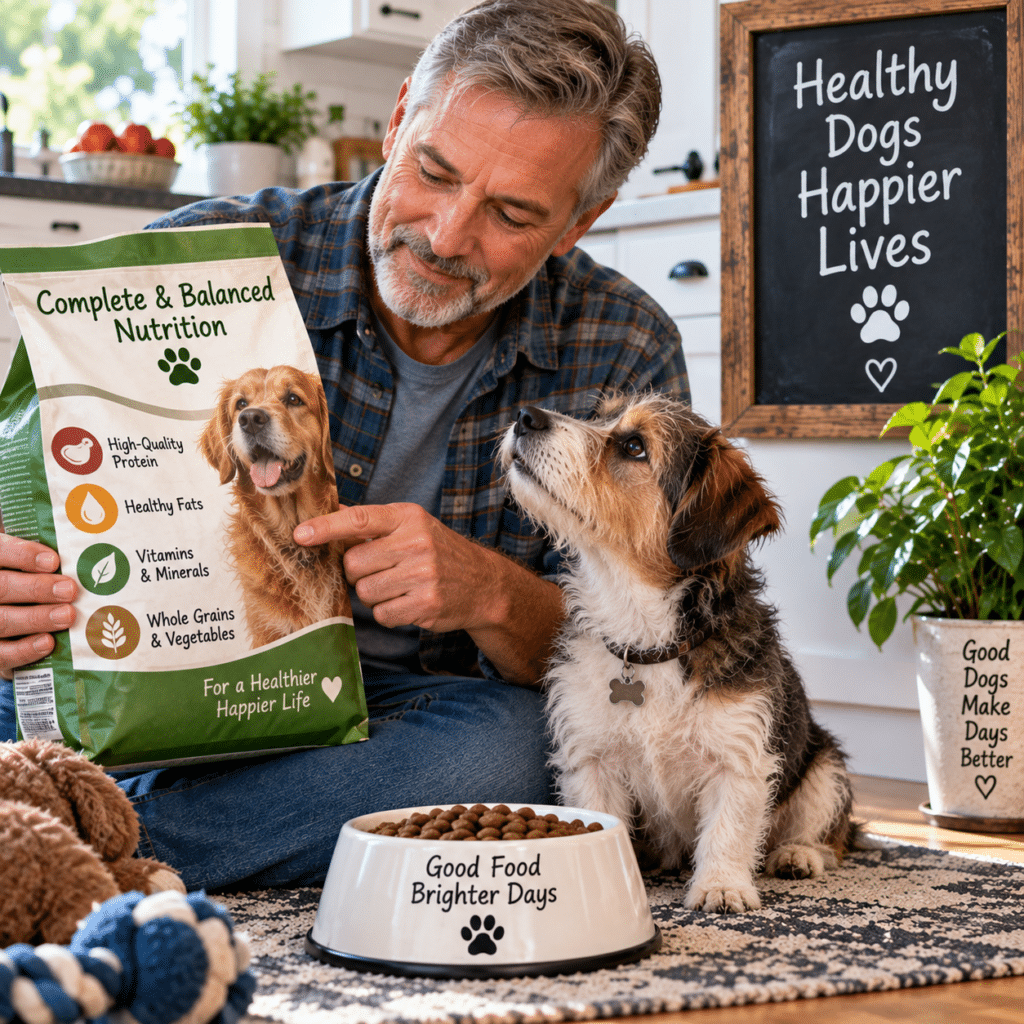
One of the first things to check is whether the food is intended to provide complete and balanced nutrition for your dog’s life stage.
Don’t assume that words such as premium, natural or wholesome on the front of the package tell you that.
Look for the nutritional adequacy statement on the label. It tells you whether the food is formulated to meet established nutritional levels and for which life stage it is intended.
This is especially important if the food will make up most or all of your dog’s daily diet rather than being used as an occasional treat or topper.
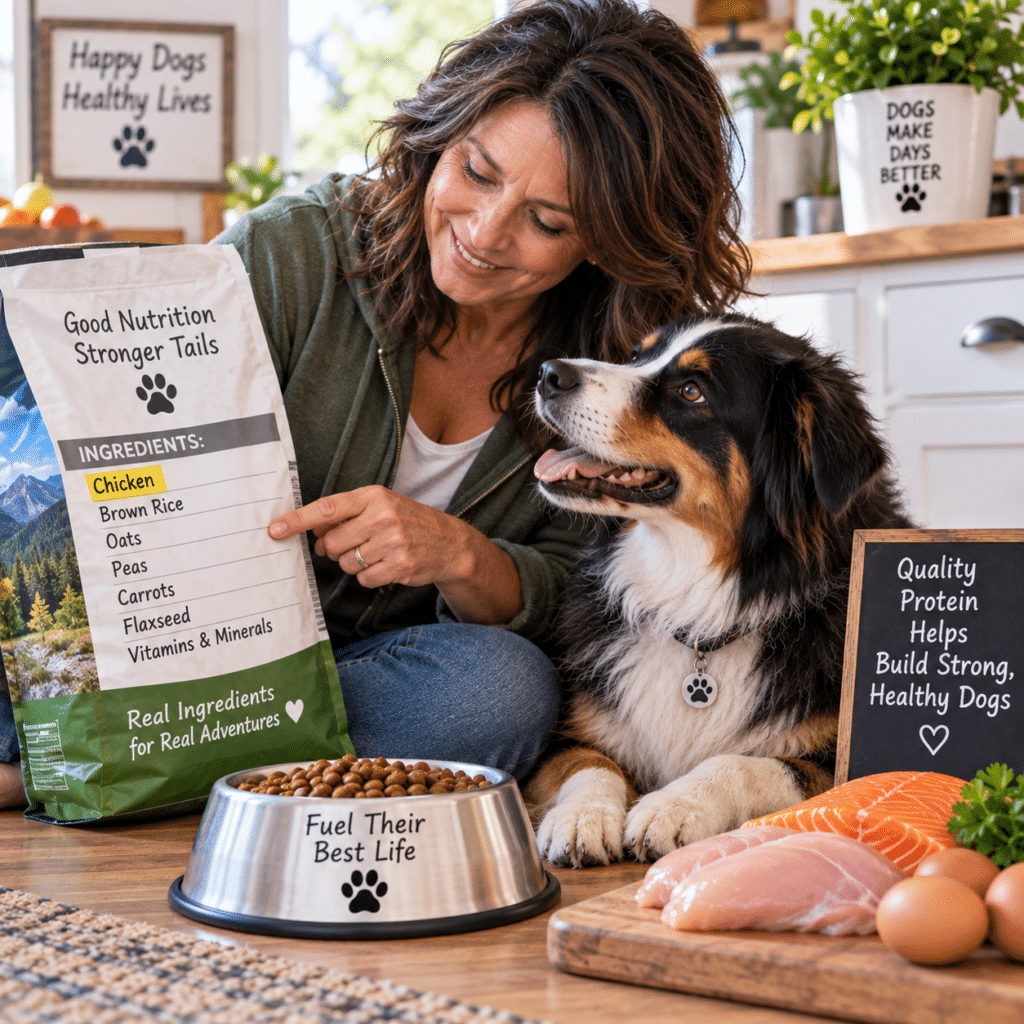
Next, turn the bag around and read the ingredient list.
Look at which animal protein sources are actually identified. You’ll commonly see ingredients such as chicken, turkey, beef, lamb, fish, eggs or meat meals.
Don’t judge a food from one ingredient alone, though.
The ingredient list is useful, but it doesn’t tell the entire nutritional story. Two foods can contain some of the same ingredients while providing very different amounts of protein, fat, calories and other nutrients.
That’s why it’s worth reading the ingredient list along with the guaranteed analysis and nutritional adequacy information.
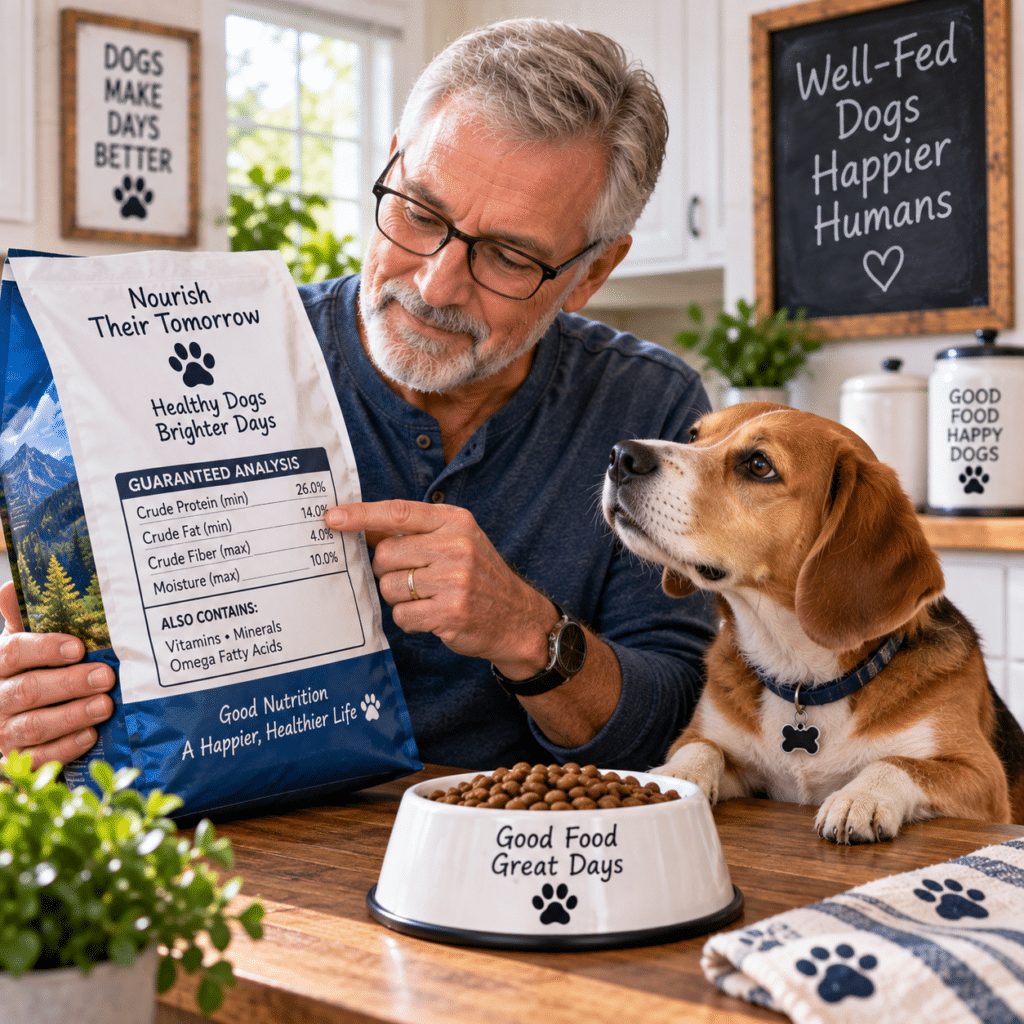
Those little numbers on the bag are worth a look.
The guaranteed analysis generally provides minimum or maximum amounts for nutrients such as:
This makes it easier to compare foods than relying on colorful claims on the front of the package.
More isn’t automatically better, either.
A highly active young dog may have different nutritional needs than a quiet older dog who spends most afternoons asleep beside you. Your dog’s age, size, activity level, body condition and health all matter.
If you’re uncertain about what those numbers should look like for your particular dog, that’s a good question for your veterinarian.
A food can look wonderful on paper and still not agree with the dog eating it.
Pay attention to what happens in the food bowl and afterward.
Is your dog eager to eat? Are stools generally normal and consistent? Is your dog maintaining an appropriate weight? Does the food seem to agree with their digestive system?
Some dog foods also contain ingredients specifically associated with digestive support, including prebiotics and probiotics.
They’re worth noticing, but don’t let one trendy ingredient determine your entire decision. The overall nutritional formulation is more important than a single ingredient highlighted on the package.
It’s very easy to equate price with quality.
Premium foods sometimes contain ingredients or formulations that help explain their higher price, but a more expensive bag isn’t automatically the right food for every dog.
Instead, look at the complete picture.
What are you actually getting? How much does your dog need to eat each day? How many servings are in the bag? Does the formula meet your dog’s needs? Can you afford to feed it consistently?
The “best” food isn’t much help if it doesn’t suit your dog or your household budget.
Consistency matters too.

This may be the most important point of all.
The perfect food for your neighbor’s Labrador isn’t necessarily the perfect food for your 12-pound Shih Tzu.
A puppy, active adult, sedentary dog and senior dog can have very different needs. Medical conditions, allergies or suspected food sensitivities can make the decision more complicated.
Be especially careful about diagnosing a food allergy yourself simply because your dog is itchy or having digestive problems. Those symptoms can have many causes.
If your dog has an ongoing medical or digestive issue, talk with your veterinarian before making significant dietary changes.

Once you’ve narrowed down your choices, spend a few minutes researching the manufacturer.
Can you easily find complete ingredient lists and guaranteed analyses? Does the company explain what its formulas are intended for? Is feeding information readily available?
Transparency makes comparison much easier.
One company we recently came across is Brothers Dog Food, which takes what the company describes as a “gut-first” approach to its recipes.
Brothers currently offers four primary dry-food recipes: Turkey & Egg, Chicken & Egg, Lamb & Egg and Venison & Egg. Its recipes include prebiotics, encapsulated probiotics and digestive enzymes.
For example, its current Turkey & Egg formula lists turkey meal and dried whole eggs at the beginning of its ingredient list and has 36% minimum crude protein and 15% minimum crude fat. Brothers states that this formula is complete and balanced and formulated to meet AAFCO Dog Food Nutrient Profiles for all life stages.
Affiliate disclosure: This article contains an affiliate link. If you make a purchase through our link, Dogs Make Days Better may earn a commission at no additional cost to you.
👉 Interested in learning more? Take a look at Brothers Dog Food and its current recipes
After you’ve selected a new food, there’s one more step that’s easy to overlook.
Don’t necessarily fill tomorrow morning’s bowl with an entirely different food.
A gradual transition gives your dog’s digestive system time to adjust. Brothers, for example, recommends gradually mixing its food with the dog’s existing food rather than making an abrupt change; its current feeding guide suggests transitioning over approximately 7–10 days.
Some dogs may need a different transition schedule, particularly if they have digestive or medical issues, so follow your veterinarian’s guidance when appropriate.
And keep an eye on your dog during any food change.
Appetite, stool quality, weight and general behavior can tell you far more about how a food is working for your dog than the advertising on the bag ever will.

Dog owners can get surprisingly passionate about food.
One person swears by one brand. Someone else insists they’d never feed it. Then you go online and find thousands of opinions telling you completely different things.
Your dog doesn’t need you to win the dog-food debate.
They need you to pay attention to them.
Read the label. Look beyond the marketing claims. Consider your dog’s age, activity level and individual needs. Ask your veterinarian when you’re unsure.
And once you find a nutritionally appropriate food that your dog enjoys, digests well and does well on?
You don’t need to keep chasing the next exciting bag on the shelf.
Sometimes the best sign you’ve made a good choice is wonderfully uneventful:
An empty bowl, a happy dog, and a tail wagging beside you. 🐶❤️