Newsletter Subscribe
Enter your email address below and subscribe to our newsletter

 ByDiana
There comes a point with some older dogs when mealtime isn’t quite as simple as it used to be.
A dog who once appeared in the kitchen the second a food bag rustled may suddenly sniff breakfast, look at you and walk away.
Naturally, we worry.
Sometimes an older dog simply needs a little encouragement. Their sense of smell may not be as sharp as it once was, crunchy kibble may be less appealing, or they may have simply become pickier about what deserves their attention.
A simple topper can make regular dog food smell and taste more interesting without completely changing your dog’s diet.
Here are eight easy options worth trying.
A quick note about senior dogs: A new or persistent loss of appetite shouldn’t automatically be blamed on age or pickiness. Dental pain, medications, nausea and a number of health conditions can affect appetite. If your senior dog’s eating habits suddenly change, they’re losing weight, having trouble chewing, vomiting, experiencing diarrhea or repeatedly refusing meals, contact your veterinarian.
Sometimes the simplest option works best.
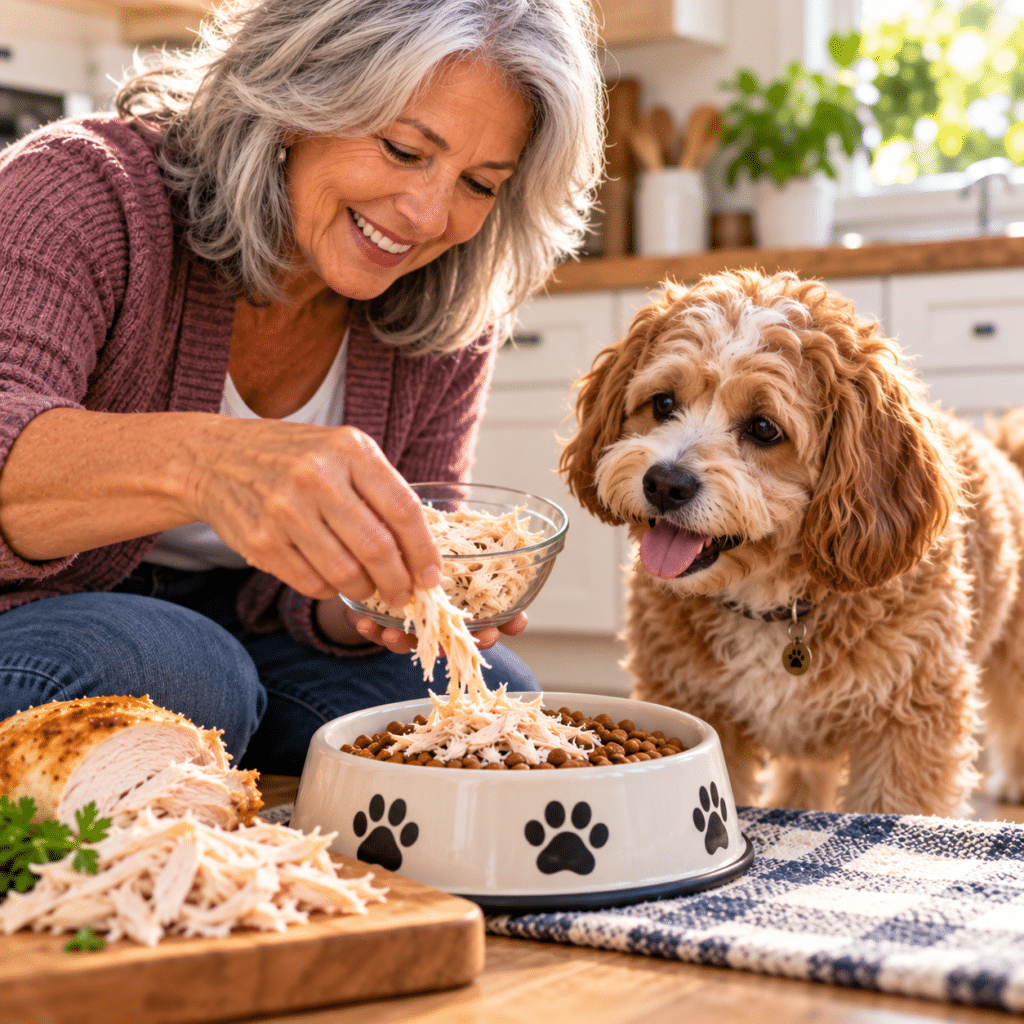
A small amount of plain cooked chicken or turkey can turn an ordinary bowl of kibble into something much more interesting.
The key word here is plain.
Skip the butter, gravy, sauces and seasonings. Onion and garlic in particular aren’t safe additions for dogs.
Cook the meat thoroughly, remove the skin and bones, and shred or chop a small amount over your dog’s regular food.
You don’t need much.
In fact, mixing a little throughout the meal instead of placing a big pile on top can prevent a clever dog from eating all the chicken and leaving the kibble behind.
And yes, some dogs become remarkably skilled at doing exactly that.
Smell is a big part of what makes food appealing.
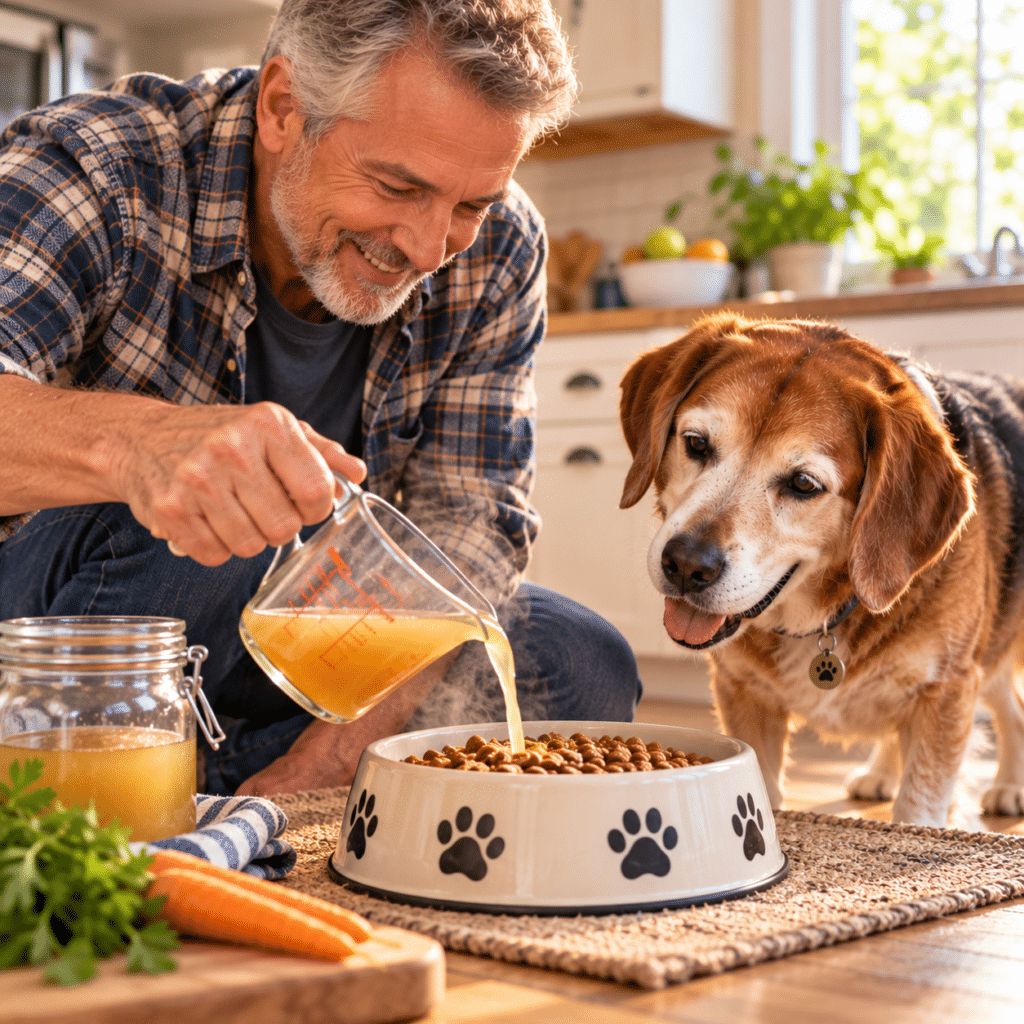
That’s one reason adding a little warm broth can help make a senior dog’s regular dinner more tempting.
Pour a small amount over dry food and let it soak for a few minutes. This adds aroma while also making hard kibble softer and easier to eat.
Choose an unseasoned or dog-safe broth without onion or garlic, and watch the sodium content. Many broths made for people contain ingredients or amounts of salt that aren’t ideal for dogs.
You can also make a very simple broth at home using plain meat and water.
Serve it warm rather than hot.
Sometimes that extra aroma is all it takes to get a hesitant nose back into the bowl.
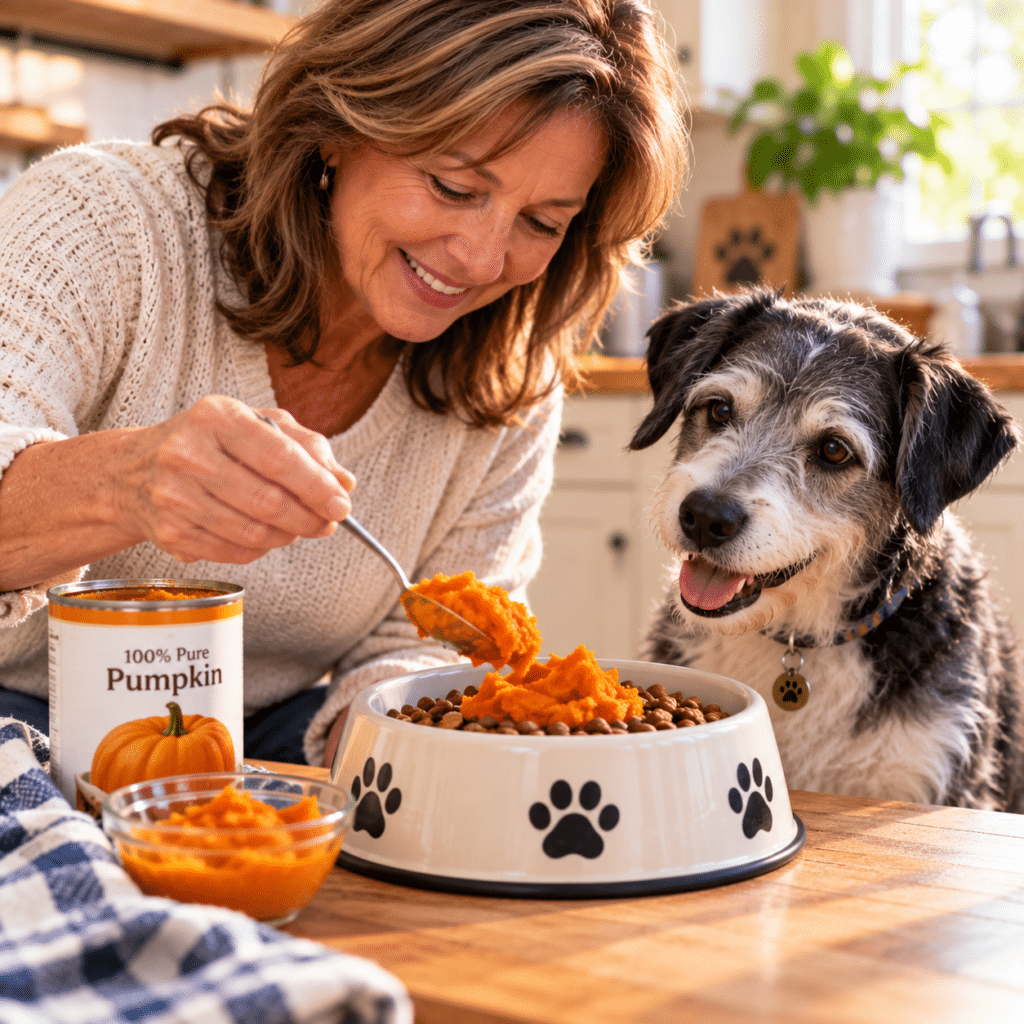
A spoonful of plain pumpkin is another easy topper many dogs enjoy.
We’re talking about 100% plain pumpkin, not pumpkin pie filling.
Pumpkin pie filling may contain sugar, spices and other ingredients your dog doesn’t need.
Plain pumpkin has a soft texture and mixes easily into wet or dry food. It also contains fiber, so you don’t need to use a large amount.
Start small, particularly if your dog hasn’t eaten pumpkin before. Suddenly adding too much of any high-fiber food can have the opposite effect you’re hoping for when it comes to your dog’s digestive system.
A little mixed through dinner is usually plenty to make the bowl more interesting.
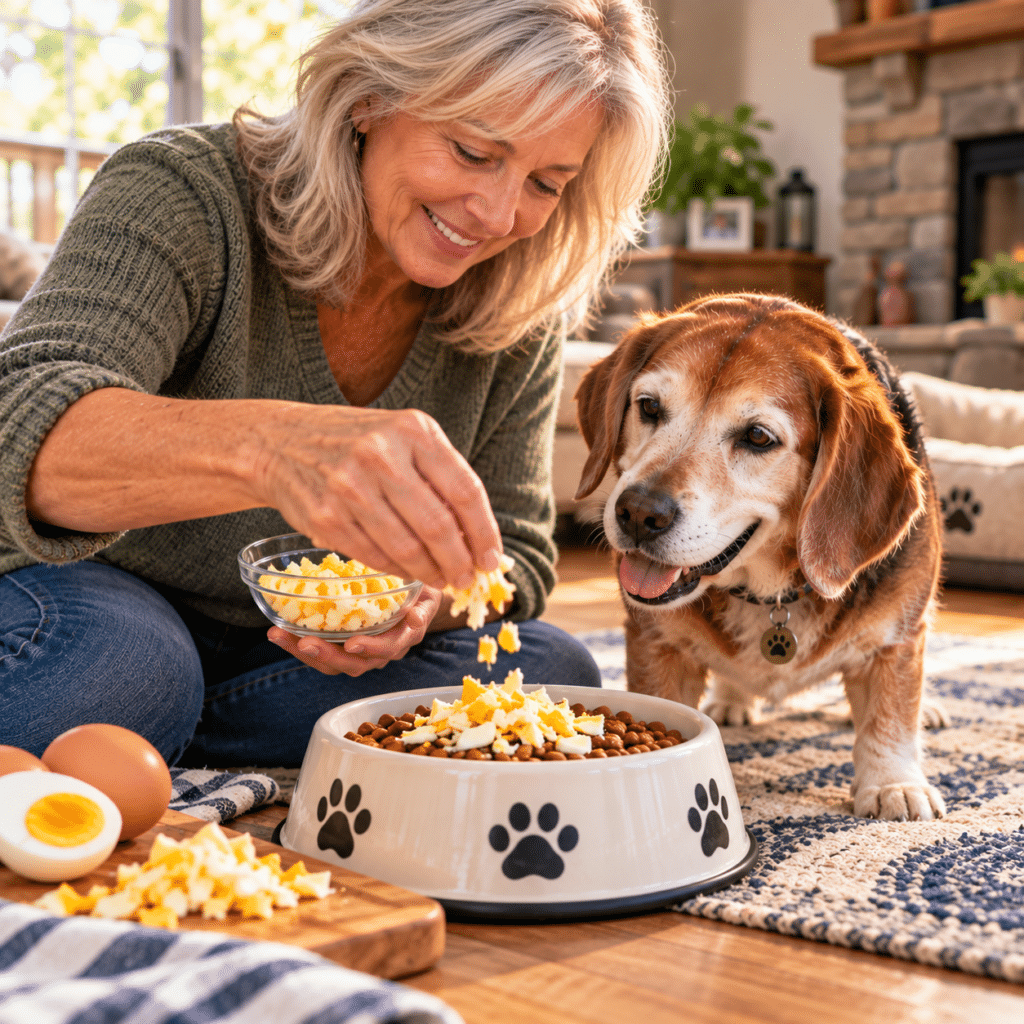
The smell of an egg cooking has a way of bringing dogs into the kitchen.
Fortunately, a little plain cooked egg can also make a tasty occasional food topper.
Scrambled egg is fine as long as it’s prepared without butter, salt or seasoning. A chopped hard-boiled egg works too.
You can sprinkle a small amount over your dog’s regular meal or mix it into the food.
Eggs provide protein and other nutrients, but remember that we’re using them as a topper—not replacing your dog’s nutritionally complete food with a bowl full of eggs.
For smaller dogs especially, even part of an egg may be plenty.
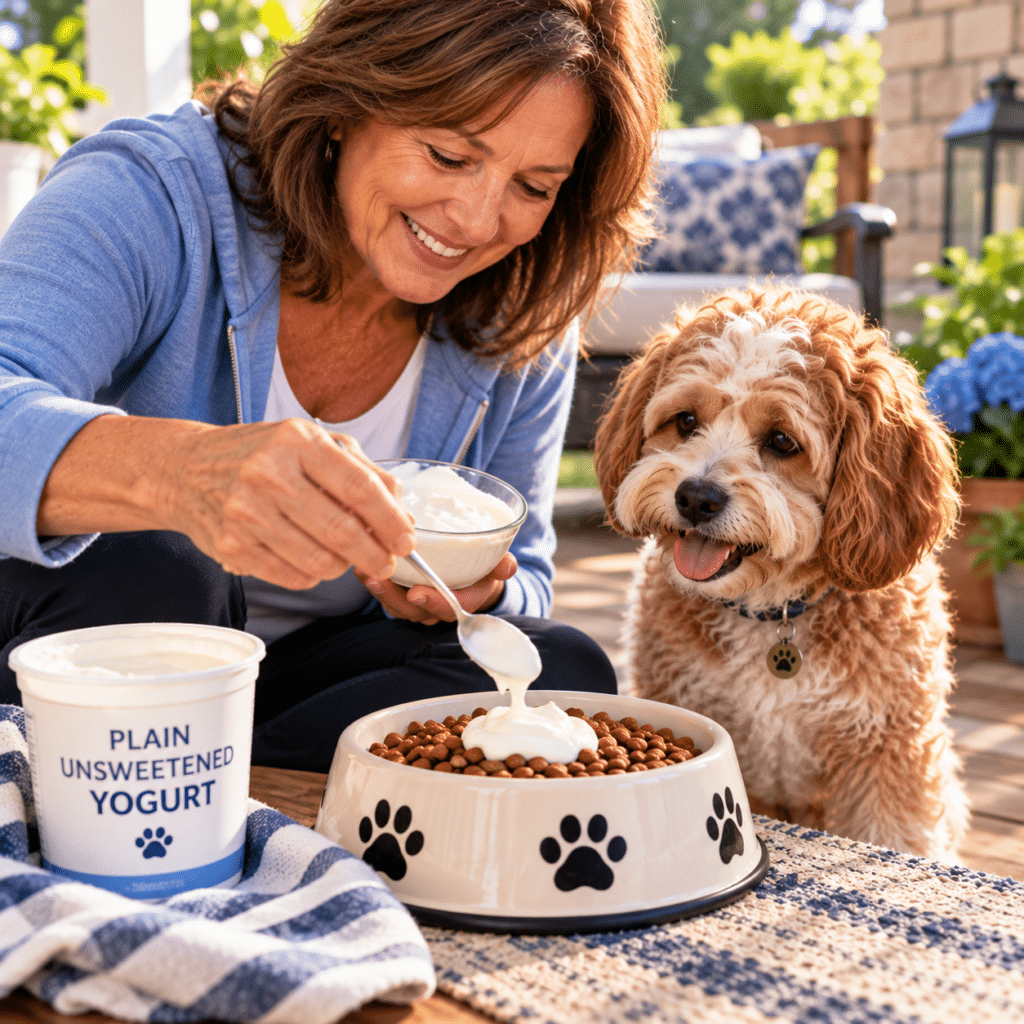
Some dogs absolutely love a little yogurt mixed into their dinner.
If your dog tolerates dairy, a spoonful of plain, unsweetened yogurt can add a creamy texture and interesting flavor to regular food.
Read the ingredient label carefully.
Avoid flavored yogurts, products loaded with added sugar and anything containing xylitol, a sweetener that is dangerous to dogs.
It’s also worth remembering that not every dog handles dairy well. If yogurt leads to gas, loose stools or stomach upset, this isn’t the topper for your dog.
There are plenty of other choices on this list.
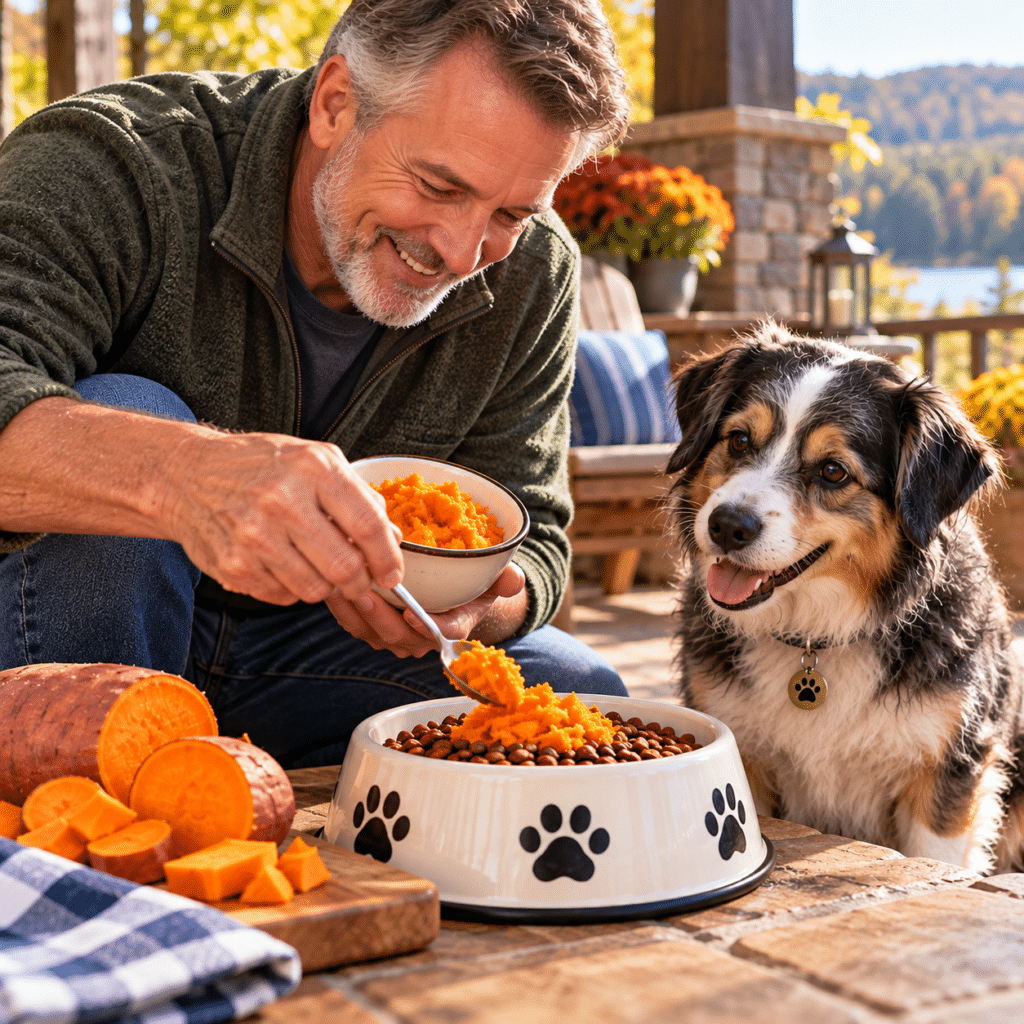
Soft cooked sweet potato can be particularly nice for an older dog who isn’t enthusiastic about crunchy food.
Cook it thoroughly until soft, remove the skin and mash a small amount into your dog’s regular meal.
Don’t add butter, brown sugar, marshmallows, salt or seasoning.
Your dog doesn’t need Thanksgiving dinner.
Just the sweet potato.
Because sweet potato contains fiber and calories, think small spoonful, not half the bowl.
It can add a little sweetness, moisture and a different texture without overpowering the regular meal.
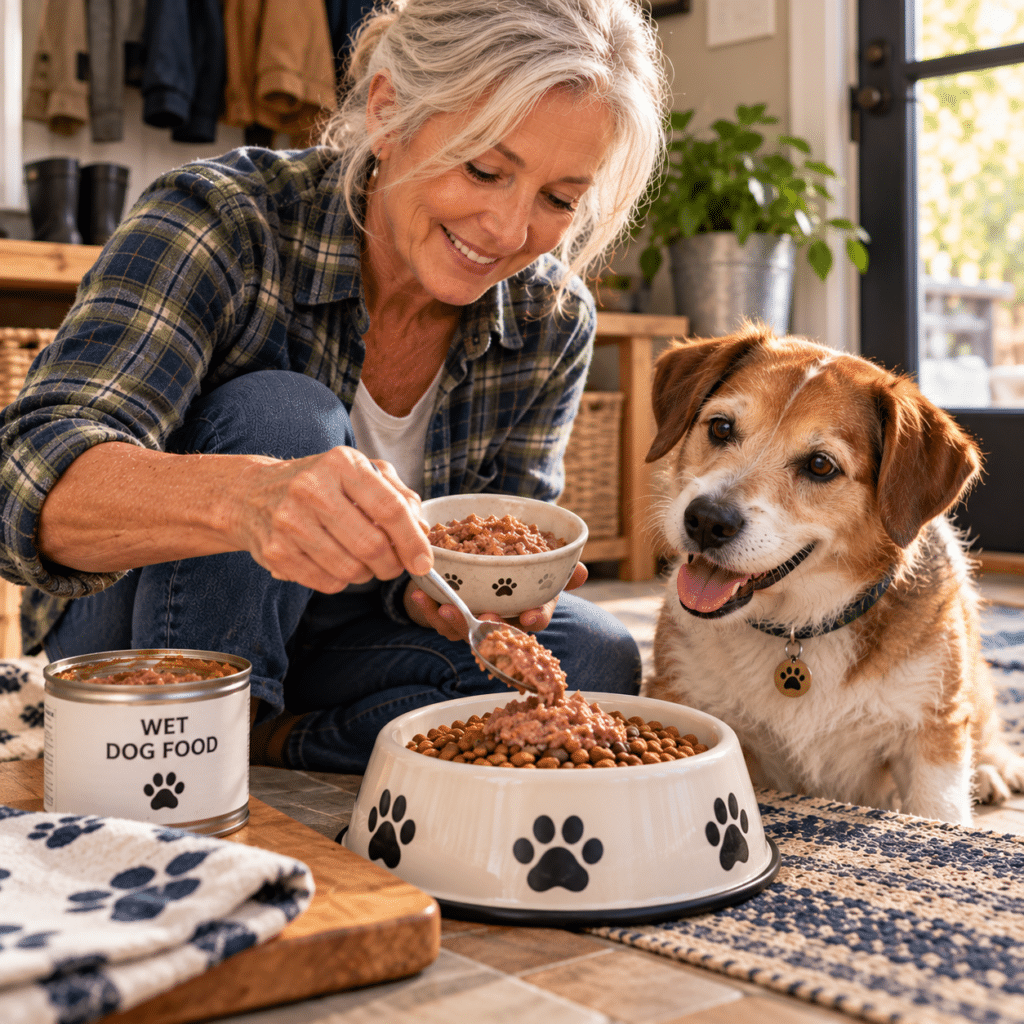
This may be one of the easiest tricks of all.
If your senior dog normally eats dry food, try mixing in a spoonful of wet dog food.
Wet food generally has a stronger aroma than kibble, and that extra smell may be enough to get a picky dog interested.
You don’t necessarily have to switch completely from dry to wet food.
Try thoroughly mixing a small spoonful into the kibble so that the flavor coats everything.
You can also warm the wet food slightly before mixing it in. Just make sure it isn’t hot before giving it to your dog.
This is also a convenient option because you can choose a wet food that fits your dog’s existing dietary needs rather than introducing a completely different type of human food.
This sounds almost too simple to count as a topper.
But don’t overlook it.
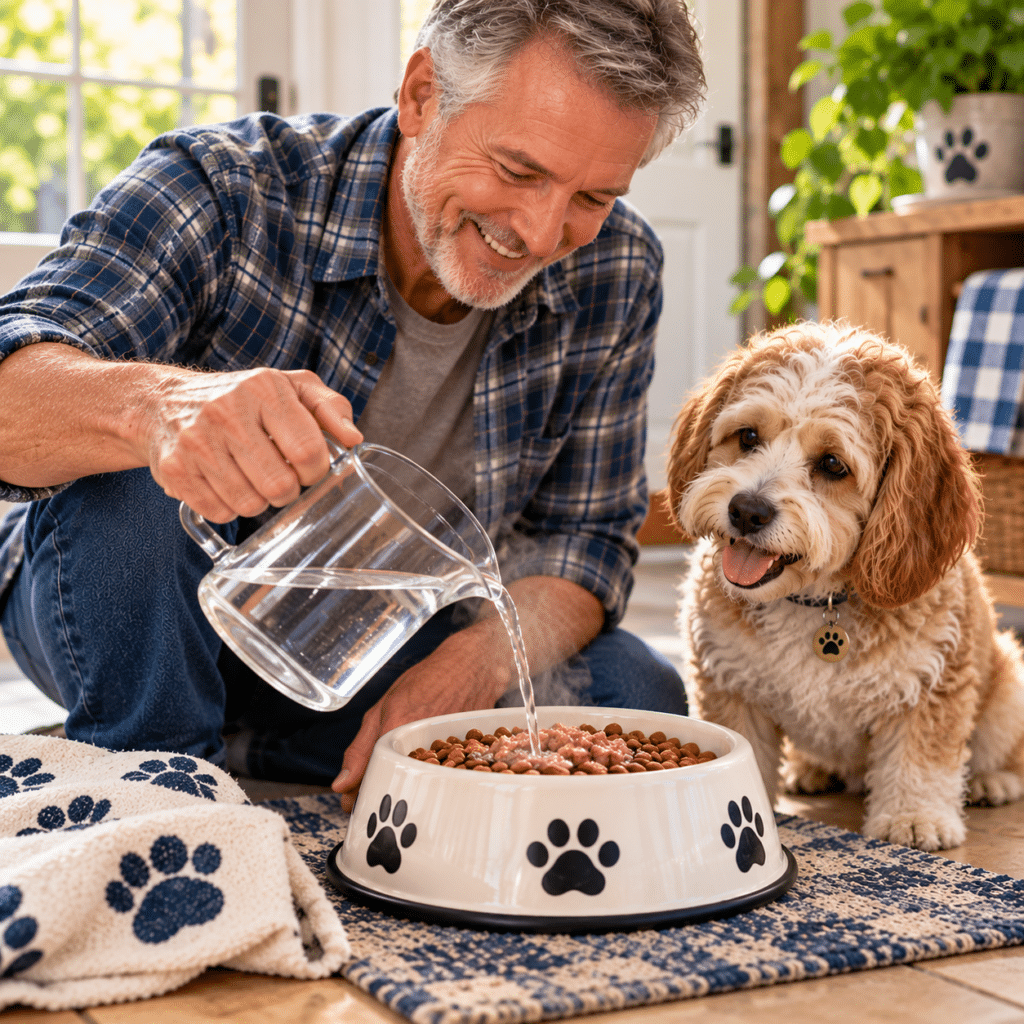
Adding a little warm water to dry kibble can release more of the food’s aroma while softening its texture.
For some older dogs, that’s enough.
Pour a small amount over the kibble, stir it and let it sit for several minutes.
You can experiment with the consistency. Some dogs like slightly softened kibble, while others prefer something closer to a soft mash.
This is especially worth trying before assuming your dog suddenly dislikes their food.
Sometimes it’s not the flavor that’s causing the problem.
The food may simply be harder or less comfortable to chew than it used to be.
Here’s one bonus option for the dog who remains thoroughly unimpressed.
Sardines smell.
That’s bad news for your kitchen and potentially very good news for a finicky dog.
A small amount of plain sardine can make an otherwise boring dinner considerably more exciting.
Look for sardines packed in water without added salt, rather than heavily salted, seasoned or sauced varieties.
You don’t need an entire fish for every meal. Depending on your dog’s size and diet, a small amount mixed thoroughly through the food may provide plenty of aroma and flavor.
Because sardines add calories and fat, they’re better treated as an occasional topper rather than something you automatically pile onto every meal.
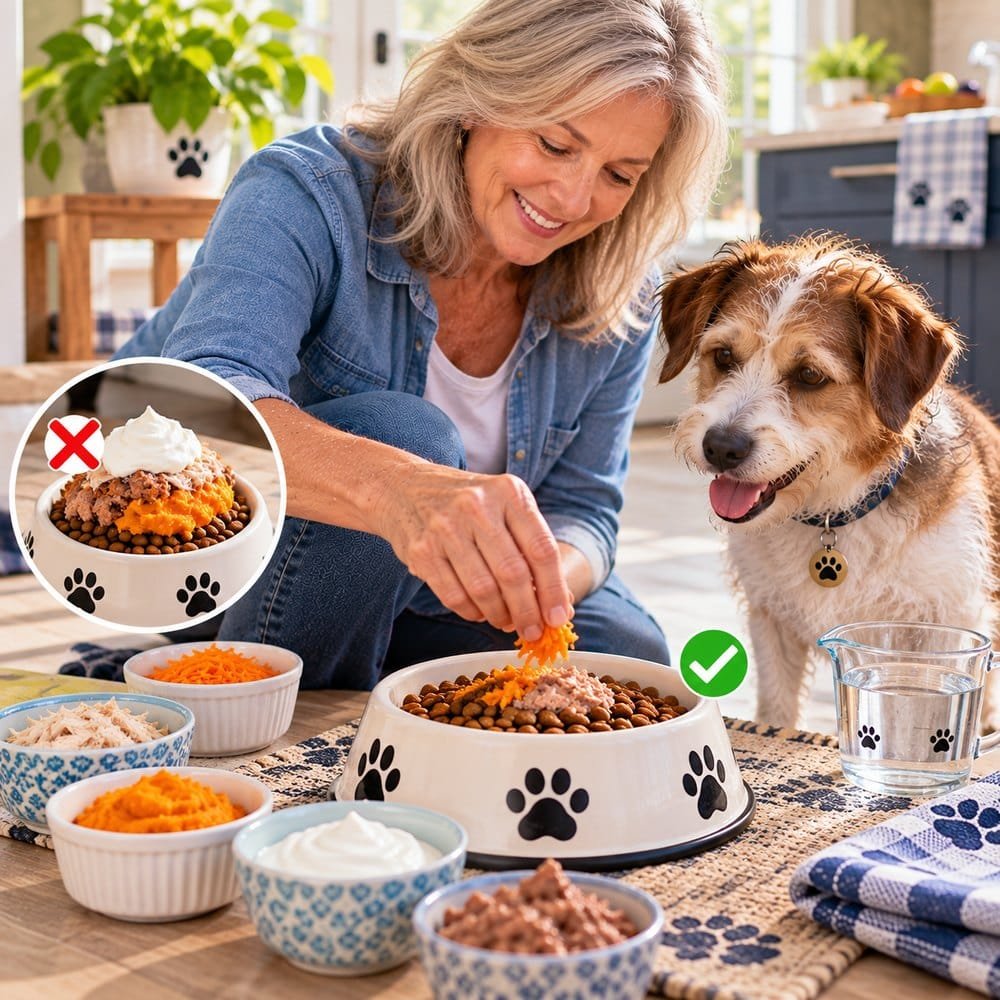
This is probably the easiest mistake to make.
Your dog won’t eat.
You add chicken.
Tomorrow they want more chicken.
Then chicken apparently isn’t impressive enough, so you add egg.
A week later, you’re standing in the kitchen preparing a custom buffet while your dog waits to see what tonight’s specials are.
Dogs can train us remarkably quickly.
Toppers should generally remain just that—toppers.
Your dog’s regular nutritionally complete food should still make up the majority of the meal unless your veterinarian has recommended a different diet.
Keeping portions modest also matters because all those little extras contain calories.
For senior dogs who aren’t as active as they once were, those calories can add up surprisingly quickly.
Before giving up on your dog’s regular food entirely, try changing how you serve it.
Add warm water.
Warm a little wet food.
Mix in a spoonful of something appealing.
You can also try offering smaller meals more frequently rather than expecting an older dog to finish one large serving.
And take a look at the bowl itself.
Some senior dogs with neck, back or mobility problems may find certain eating positions uncomfortable. Others may dislike a bowl that slides around while they’re trying to eat.
Little things can matter more as dogs get older.
This is the part I’d pay the most attention to with a senior dog.
A dog who has always been selective about food is different from a dog who suddenly stops wanting to eat.
Watch for other changes, including:
Those aren’t problems to solve with increasingly delicious toppings.
They’re reasons to call your veterinarian.
Older dogs can develop dental problems and medical conditions that affect appetite, and catching a change early is much more important than winning the battle over tonight’s dinner.
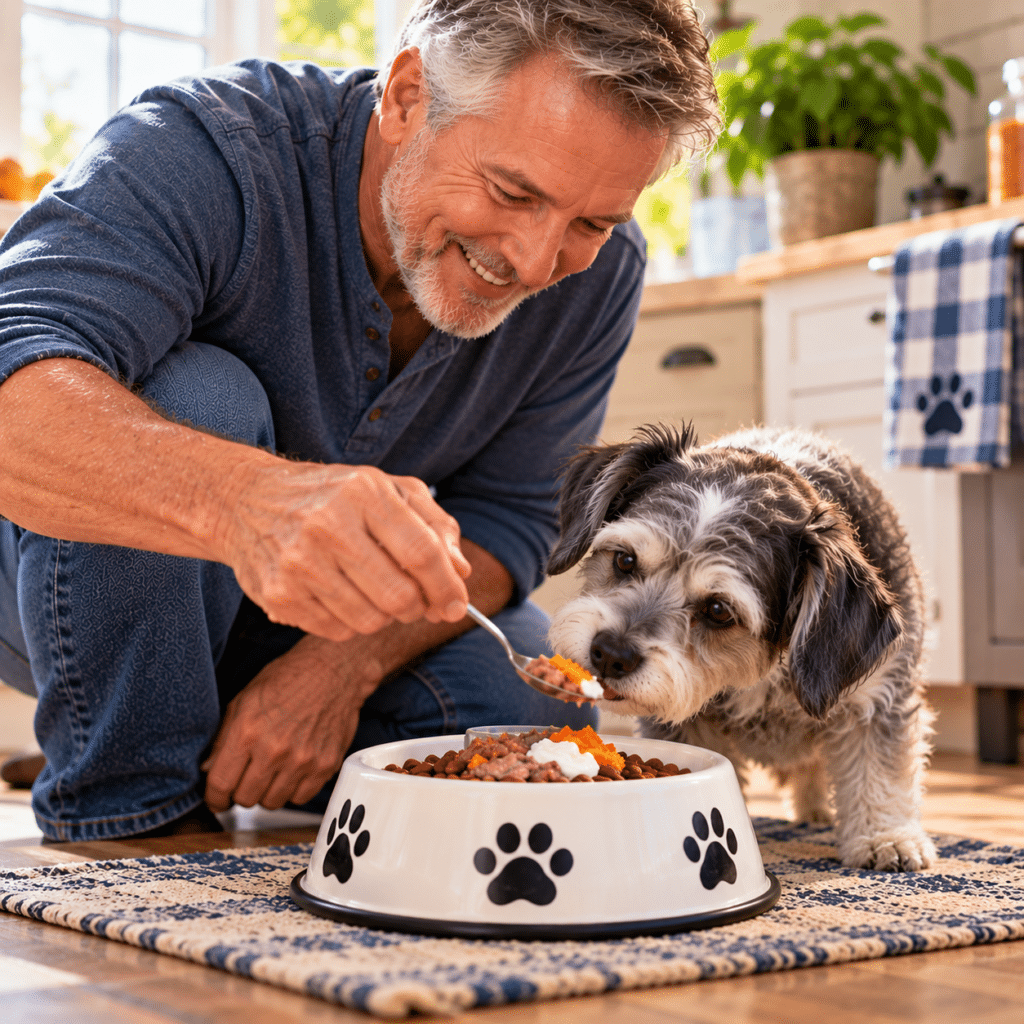
Senior dogs have spent years figuring us out.
They know where the treats are kept.
They know which family member is most likely to share.
And they definitely know how long they need to stare at us before we start worrying about what’s in their bowl.
If your older dog is healthy but simply becoming a little more particular about dinner, you don’t necessarily need to reinvent their entire diet.
A splash of warm water, a spoonful of pumpkin or a few pieces of shredded chicken may be enough to make an ordinary meal interesting again.
Keep the extras simple, introduce new foods gradually and pay attention to what your dog is telling you.
Because when an old friend starts enjoying dinner again, even an empty dog bowl can feel like a pretty good sight.