Newsletter Subscribe
Enter your email address below and subscribe to our newsletter

 ByDiana
Your senior dog might not chase a ball for an hour anymore, but that doesn’t mean they’ve lost their curiosity about the world.
In fact, some of the things older dogs enjoy most have very little to do with running, jumping or keeping up with younger dogs.
A familiar scent. A treat hidden beneath a towel. A little game with their favorite person.
Those small activities can give an older dog something interesting to look forward to without asking more of their body than they’re comfortable giving.
Mental enrichment doesn’t need to be complicated, expensive or exhausting. And you certainly don’t need to turn your living room into a dog-training obstacle course.
Here are 12 simple ways to keep your senior dog’s mind engaged while letting them enjoy life at their own pace.
Affiliate Disclosure: This article contains affiliate links. If you purchase through these links, we may earn a small commission at no additional cost to you. We only recommend products we believe may be helpful to dogs and their people
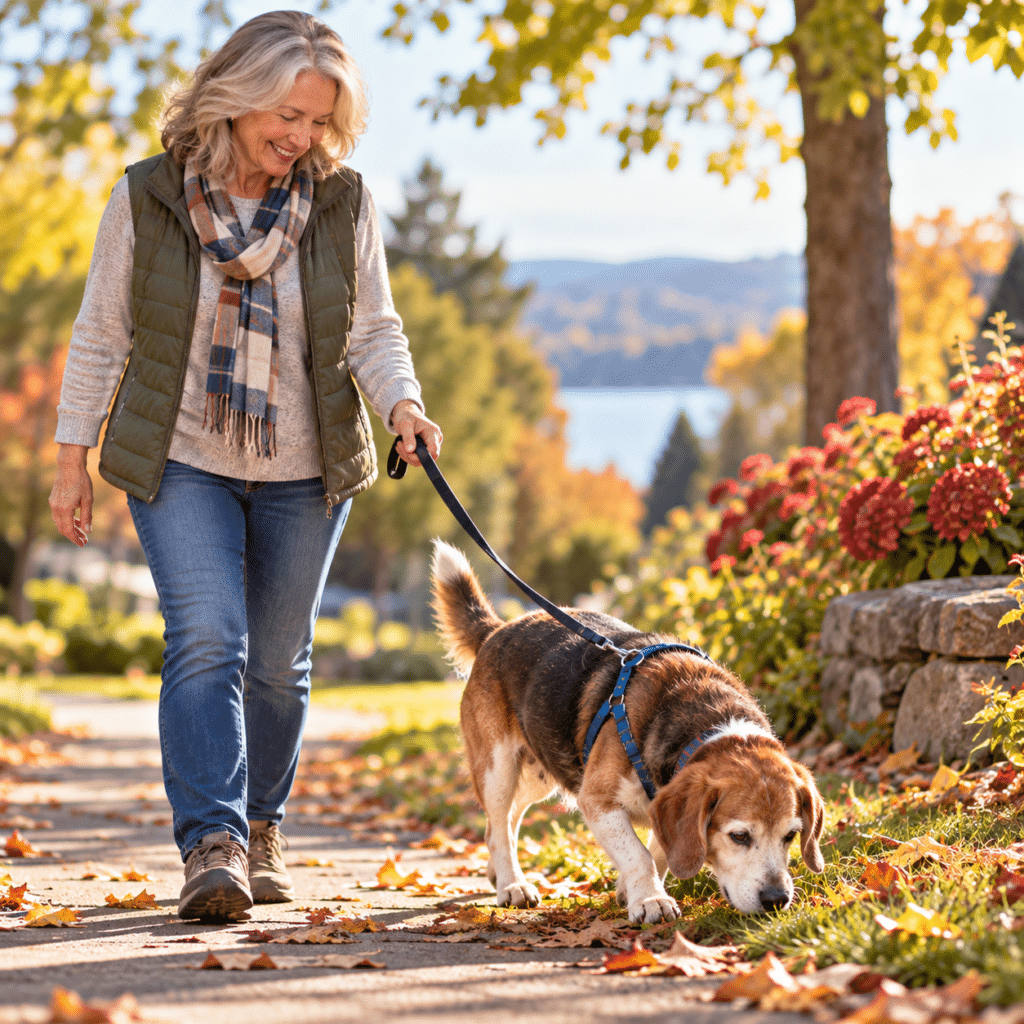
Remember when walks were about getting somewhere?
Your senior dog may have a different opinion.
These days, they might prefer spending three minutes investigating one particularly interesting patch of grass.
Let them.
Dogs experience much of their world through scent, and a leisurely sniffing walk gives them opportunities to explore and gather information.
You don’t have to cover much distance. A slow walk around the yard or down the driveway can still provide plenty of interesting smells.
Let your dog choose the pace, allow extra time for sniffing, and avoid rushing them along just because you haven’t made it very far.
Sometimes the best walk is the one where you barely leave home.
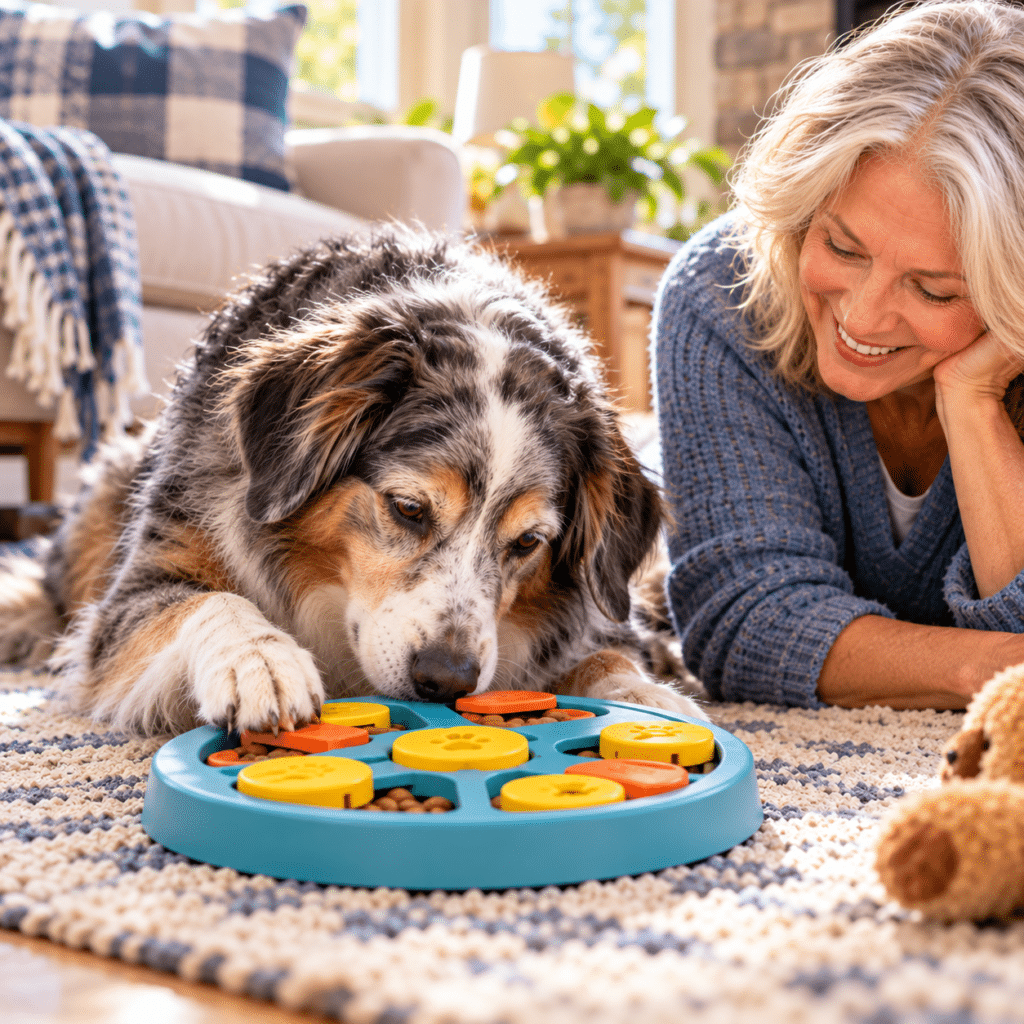
A food puzzle gives your dog a little problem to solve before enjoying their reward.
For older dogs, start with something easy.
A puzzle with sliding compartments or simple treat-hiding spaces can be a good introduction. Avoid anything that requires forceful pawing, uncomfortable movements or a lot of frustration.
You can use a few pieces of their regular kibble instead of adding extra treats.
And don’t worry if your dog needs a little help.
The point isn’t to test their intelligence. It’s to give them something enjoyable to figure out.
A helpful option: Beginner-level dog treat puzzle toys are available through Chewy. Look for one with larger, easy-to-move pieces and a difficulty level suited to your dog’s abilities.
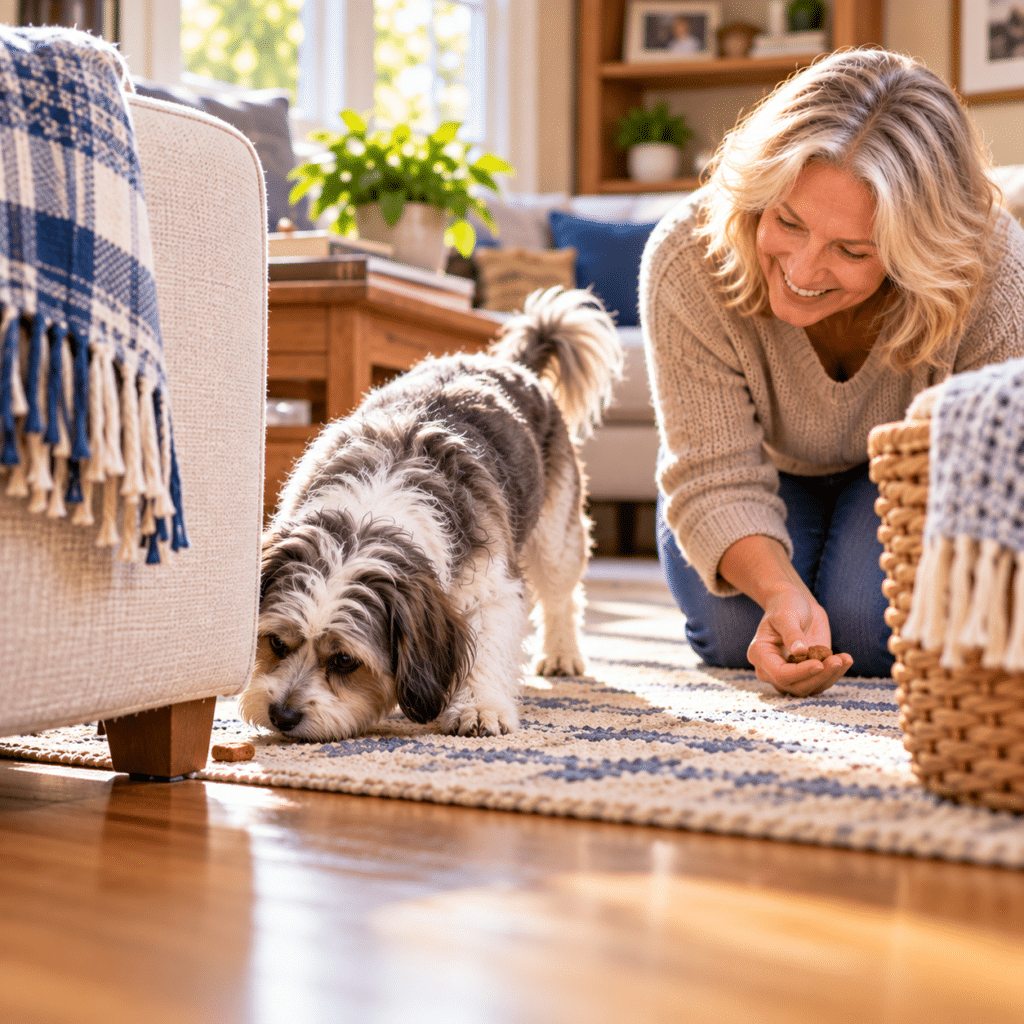
This might be the easiest enrichment game you’ll ever set up.
Ask your dog to wait while you place a few small treats around the room.
At first, make them ridiculously easy to find.
Put one beside a chair leg, another near their bed and another somewhere along the baseboard.
Then encourage your dog to find them.
Once they understand the game, you can make the hiding places a little more interesting.
Keep everything accessible, particularly if your dog has arthritis or mobility problems. There’s no need to hide treats beneath heavy furniture or anywhere that requires climbing.
For a senior dog, the fun is in using their nose and discovering something good.
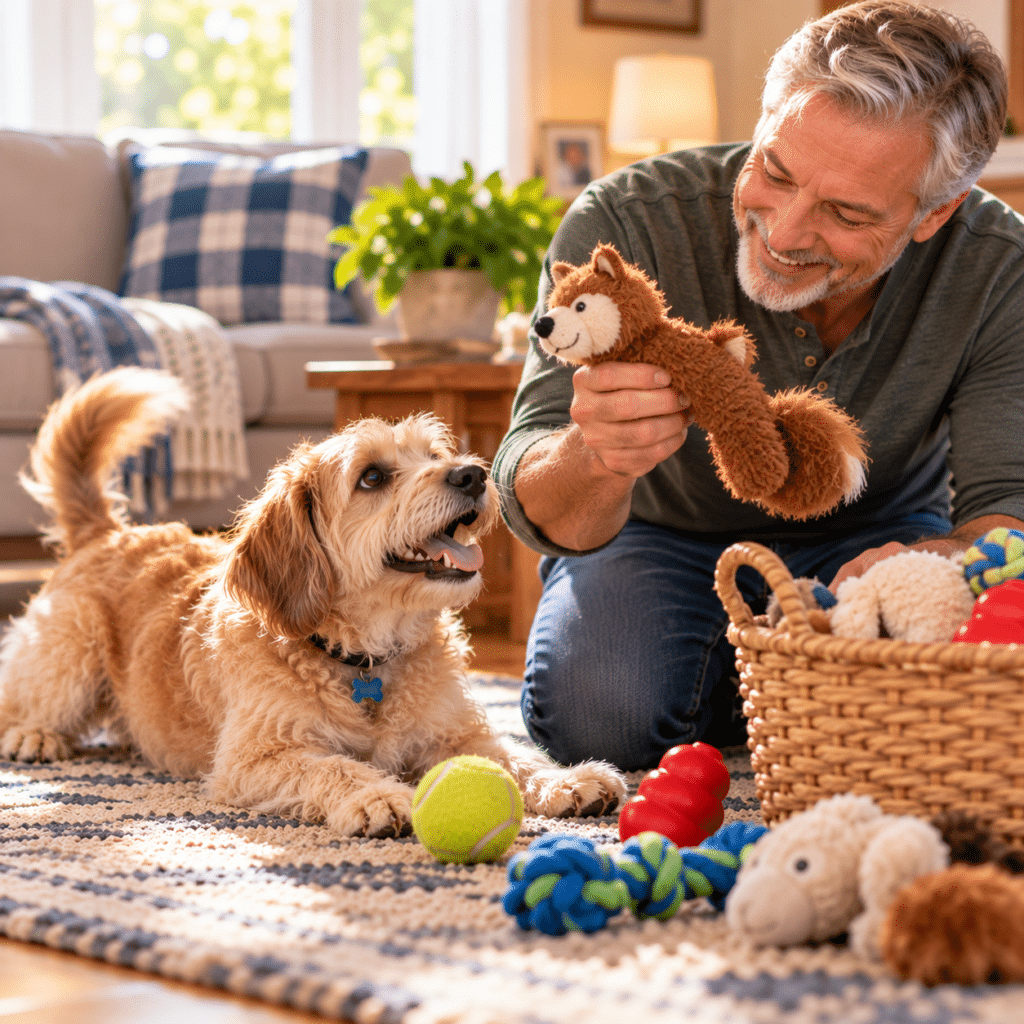
You know how you can put something away for a while and suddenly it seems interesting again?
Dogs can be a little like that.
Instead of leaving every toy scattered across the living room, try keeping a few out and putting the others away.
After several days, swap them.
An old stuffed animal or familiar squeaky toy may suddenly become exciting again.
Of course, some dogs have one particular toy that must remain available at all times.
I wouldn’t dream of interfering with that arrangement.
Let your dog keep their special favorite and rotate the others.
It’s a simple way to introduce a little variety without constantly buying new things.
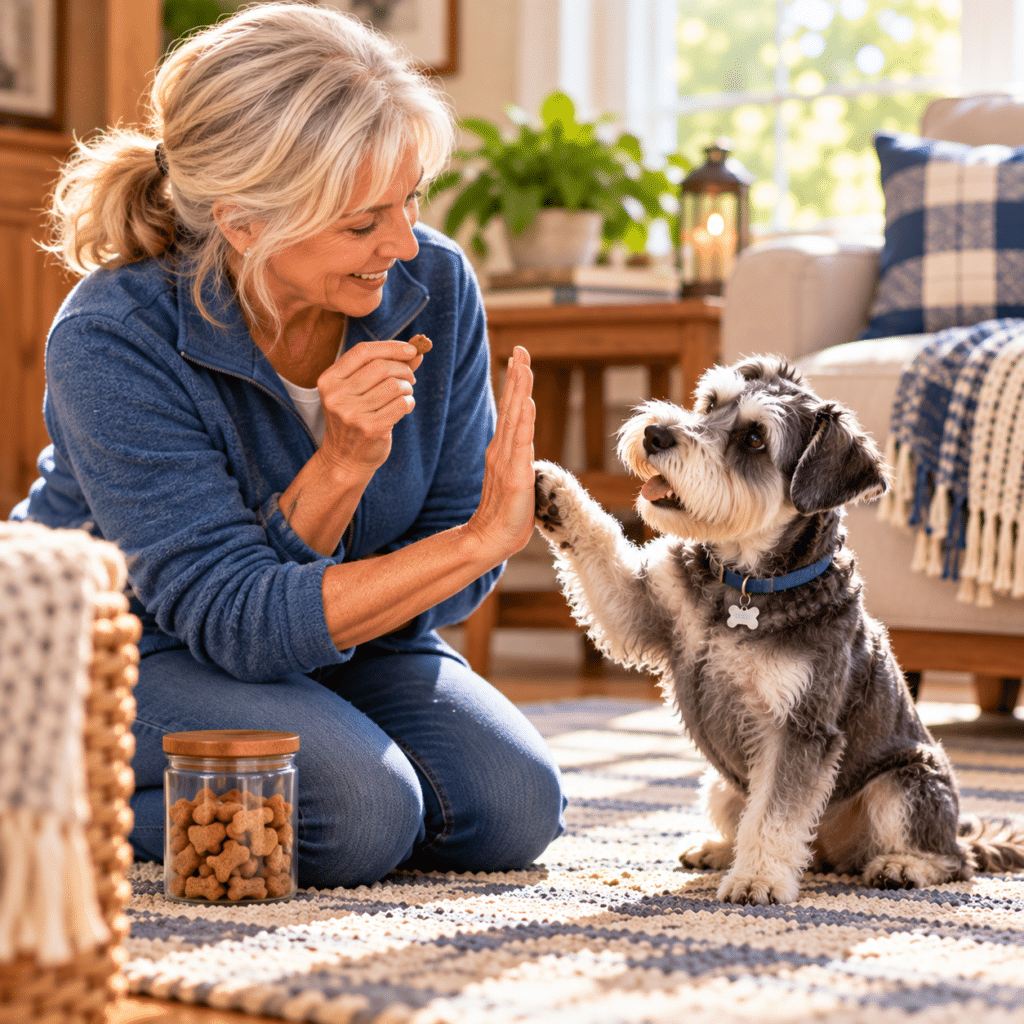
Whoever decided old dogs can’t learn new tricks clearly didn’t consult the dogs.
Many senior dogs still enjoy learning, especially when the activity involves praise, treats and spending time with their favorite person.
Choose something gentle.
You might teach your dog to touch your hand with their nose, look toward you when you say a particular word or identify a familiar toy by name.
Keep sessions short and positive.
Five minutes can be plenty.
Avoid asking your dog to perform movements that may be uncomfortable, such as repeated sitting, jumping or spinning.
And remember that learning something new doesn’t need to look impressive.
A senior dog happily touching your hand on cue is an accomplishment worth celebrating.
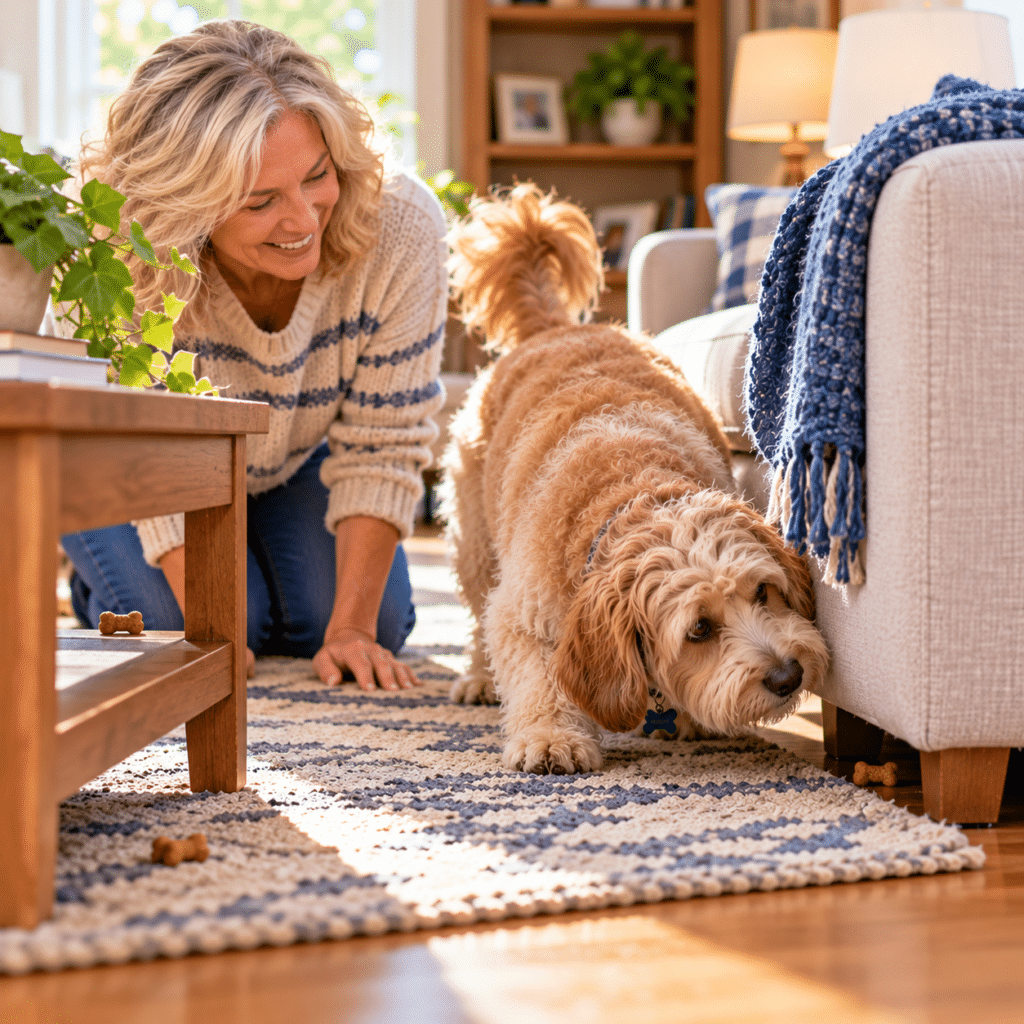
This is similar to hiding treats, but you can turn it into a slightly bigger adventure.
Place a few familiar toys or small food rewards around an accessible area of your home.
Let your dog explore and discover them.
You might put a favorite toy beside the sofa, a treat near the doorway and another little surprise beside their bed.
You can even guide them from one discovery to the next.
For a dog who doesn’t move around easily, make the treasure hunt smaller. A few interesting items arranged around one room can be just as enjoyable.
The goal is curiosity, not exercise.
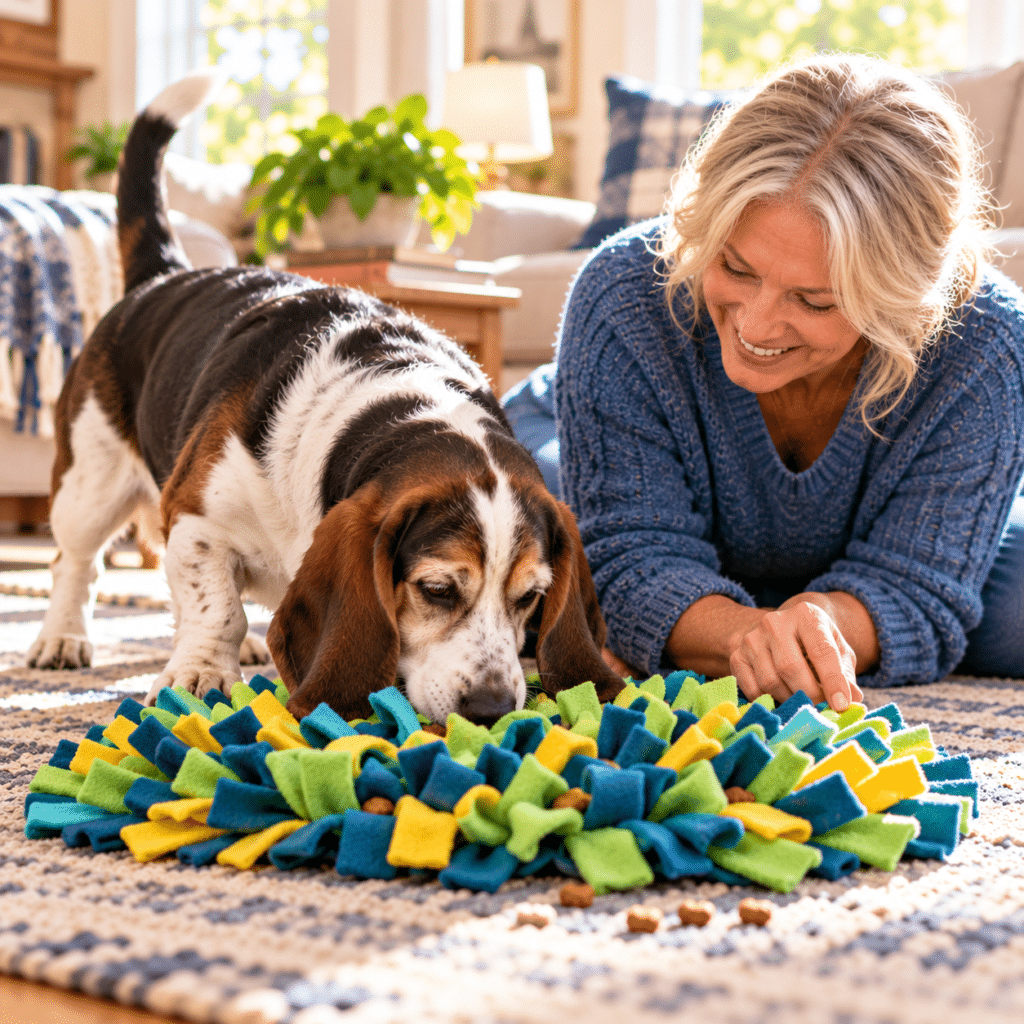
A snuffle mat is designed with fabric strips or folds where you can hide small pieces of food.
Instead of eating everything directly from a bowl, your dog gets to use their nose to search for each piece.
For some older dogs, this can turn an ordinary portion of kibble into a much more interesting activity.
Start by scattering a few pieces where they’re easy to find. Once your dog understands the idea, tuck them a little farther into the fabric.
Choose a mat that stays reasonably flat and doesn’t require your dog to struggle or bend uncomfortably.
Always supervise, particularly if your dog likes chewing or swallowing fabric.
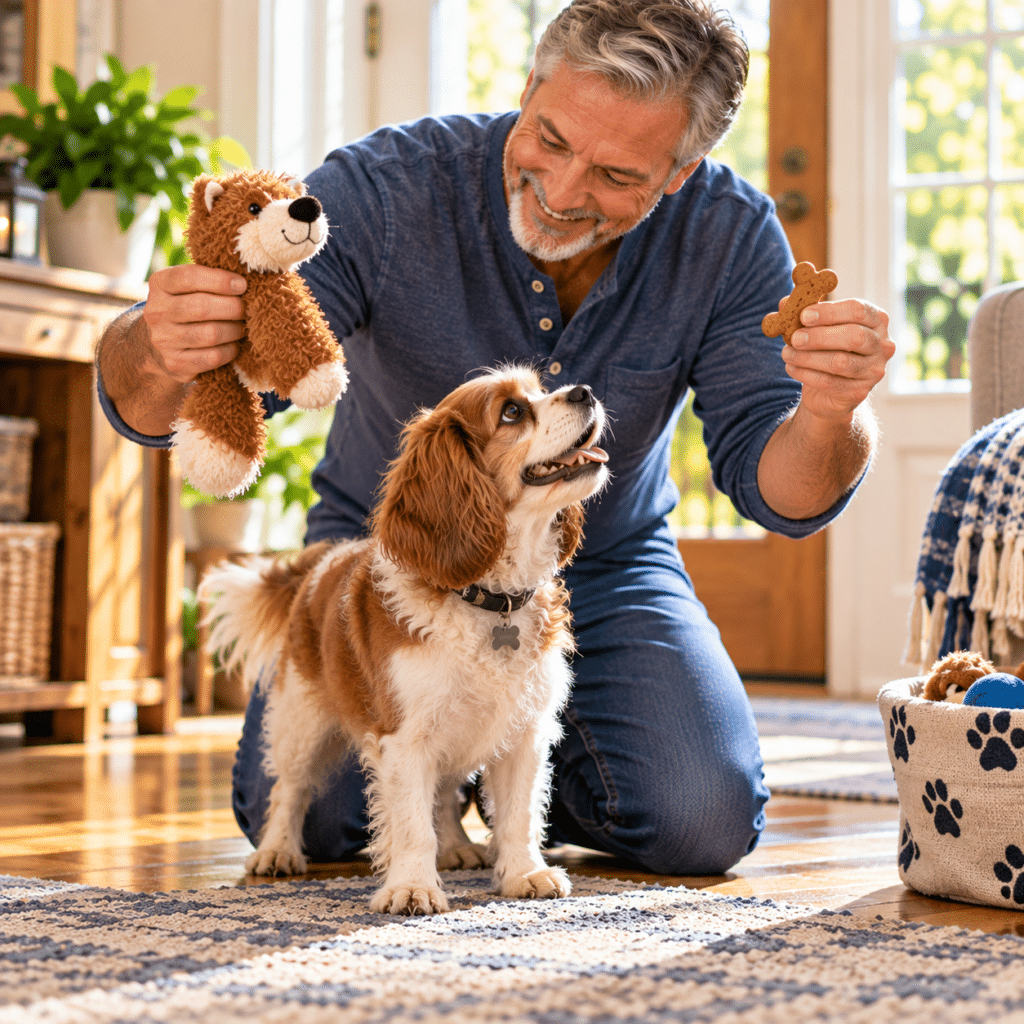
Dogs spend much of their lives following our routines.
We decide when to go outside, which direction to walk, when to eat and when it’s bedtime.
Giving your senior dog a few simple choices can make their day more interesting.
Hold out two suitable toys and see which one they approach.
Let them choose between two comfortable resting spots.
On a safe walk, allow them to decide which direction they’d like to explore.
You can even offer two familiar activities and watch which one gets their attention.
These don’t need to be elaborate decisions.
Sometimes letting your dog have a little say in the afternoon is enough to make an ordinary day more enjoyable.
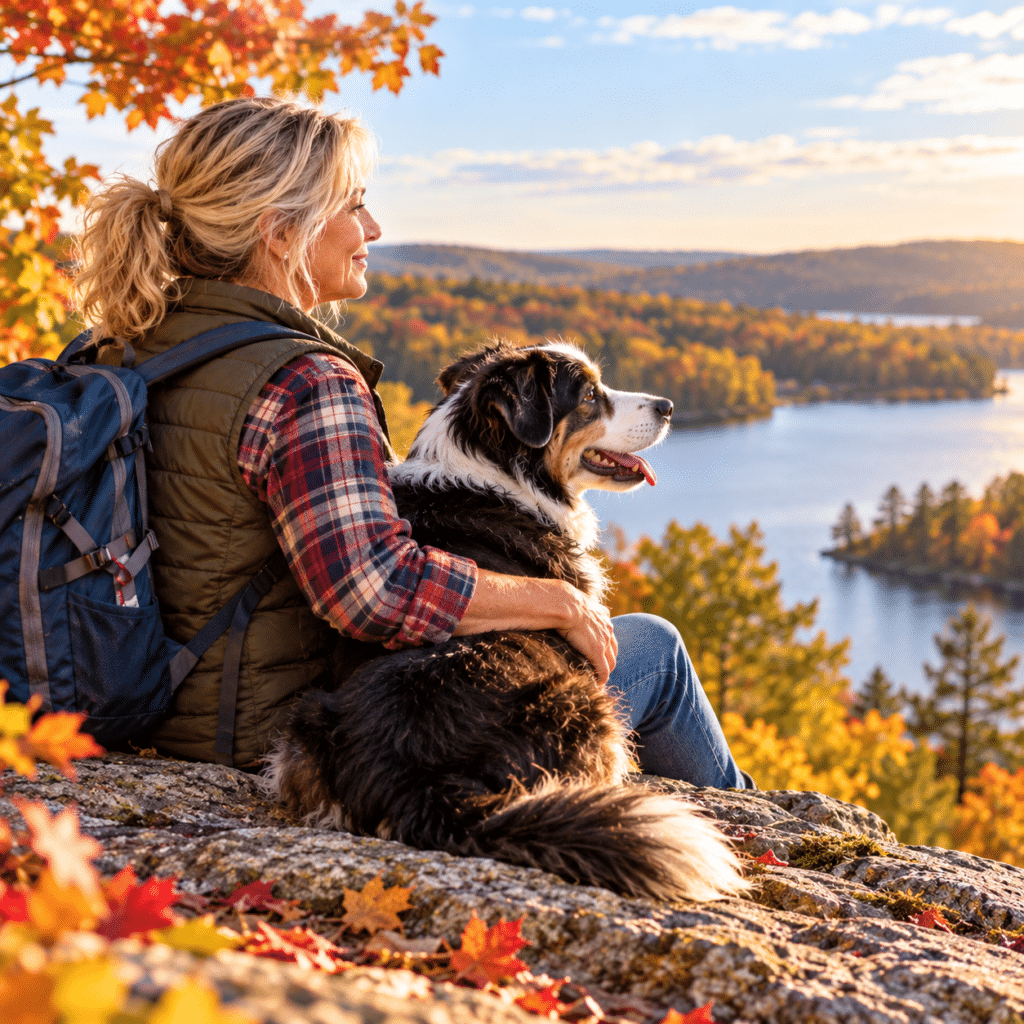
Your older dog might not be ready for a long hiking trail, but they may still enjoy visiting somewhere they remember.
Maybe it’s a quiet park.
Maybe it’s the yard of a family member they love.
Maybe it’s the little grassy area where they always insist on stopping during car rides.
Familiar places can offer interesting sights, sounds and smells without the pressure of an entirely new environment.
Keep visits short and comfortable.
Bring water, pay attention to the weather and be prepared to head home whenever your dog has had enough.
The outing doesn’t have to be exciting by our standards.
Sometimes just getting out and smelling somewhere different is the whole adventure.
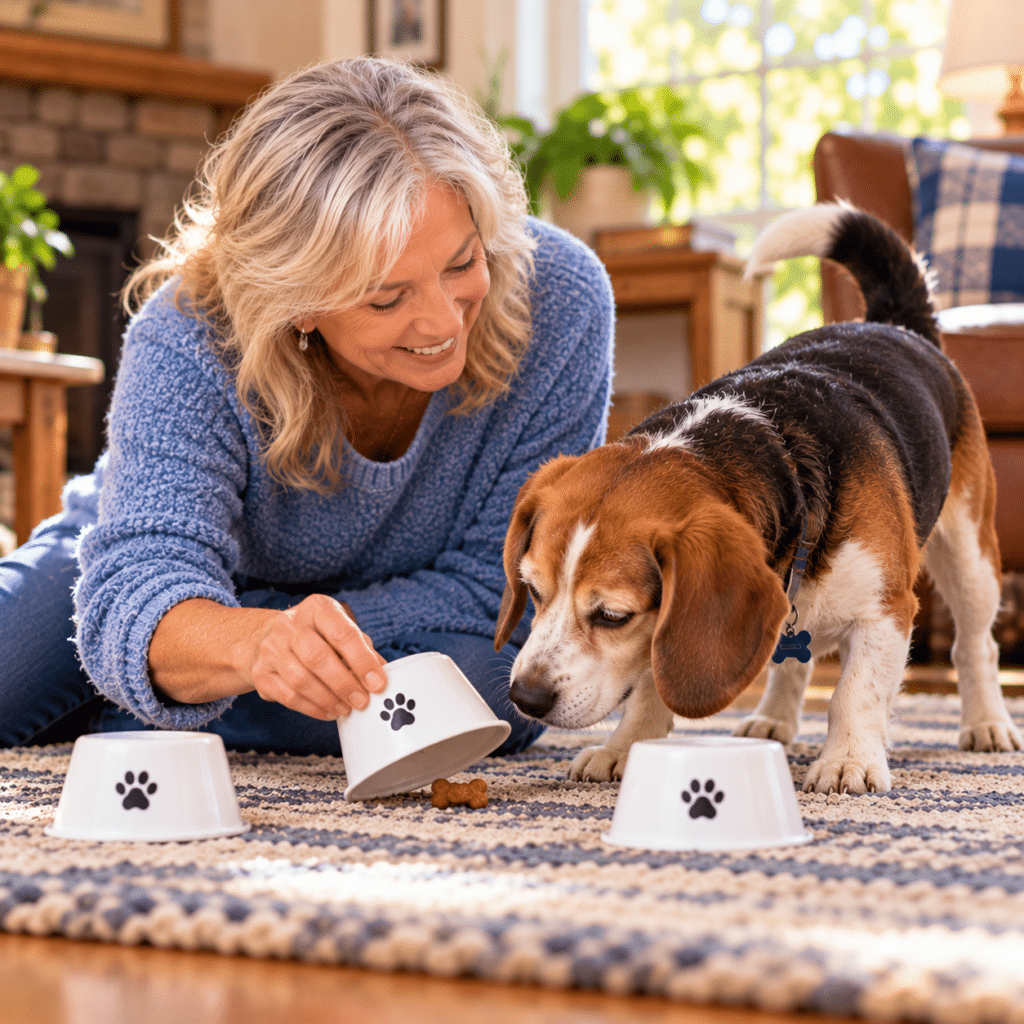
You don’t need professional training equipment to let your dog enjoy a little nose work.
Start with three small, lightweight containers or cups.
Place a treat beneath one while your dog watches, then encourage them to find it.
Once they understand the game, you can gradually make it a little more challenging.
You can also hide a familiar toy nearby and encourage them to search for it.
Use lightweight items that can’t trap or injure your dog’s nose or paws, and avoid making the game so difficult that they become frustrated.
Some senior dogs will approach this like a serious investigation.
Others will knock over every cup and collect their reward.
Both approaches are perfectly acceptable.
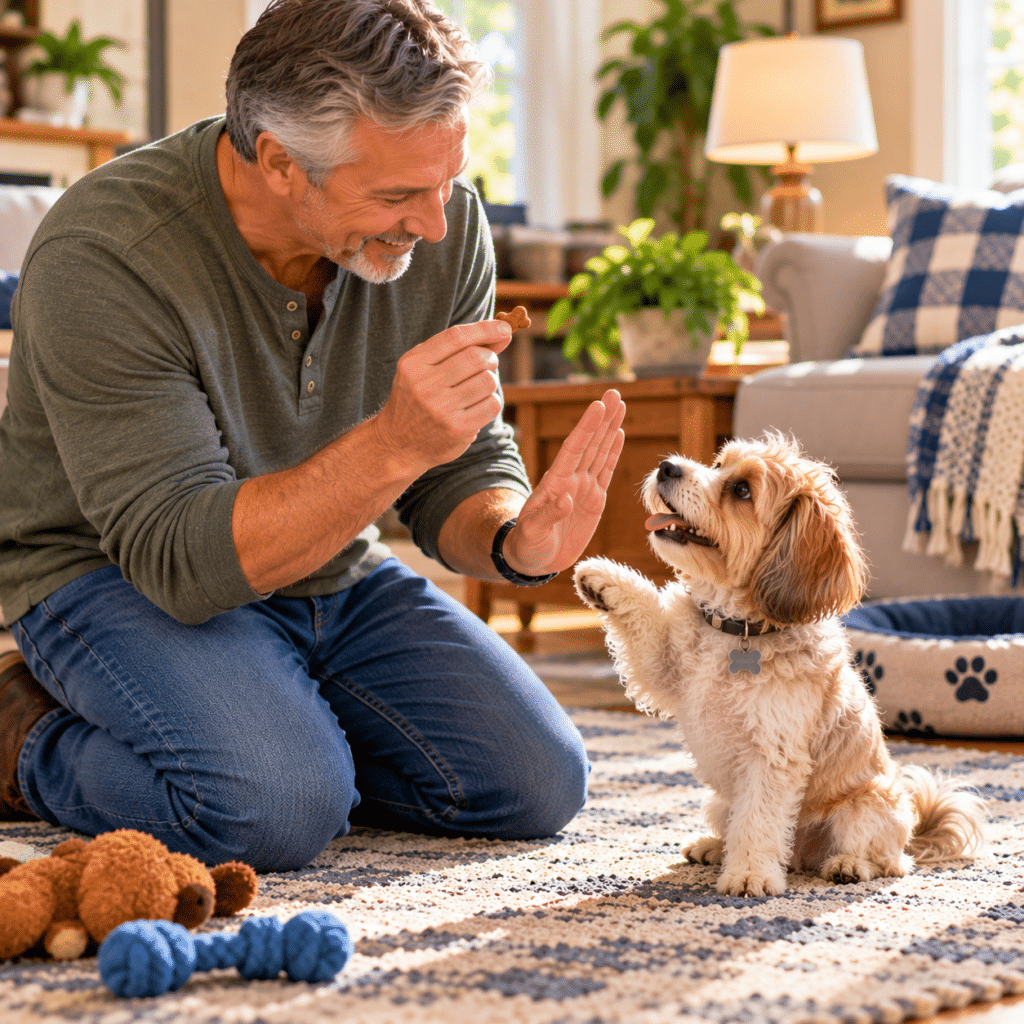
Sometimes an old favorite is better than something new.
Your senior dog may still enjoy practicing the little things you’ve worked on together for years.
Try a few gentle repetitions of familiar cues such as:
Choose activities that are comfortable for your dog and reward their efforts generously.
This isn’t about demanding perfect obedience.
It’s about having a little conversation using words and signals you both already understand.
For an older dog, that familiar interaction can be a lovely way to spend time together.
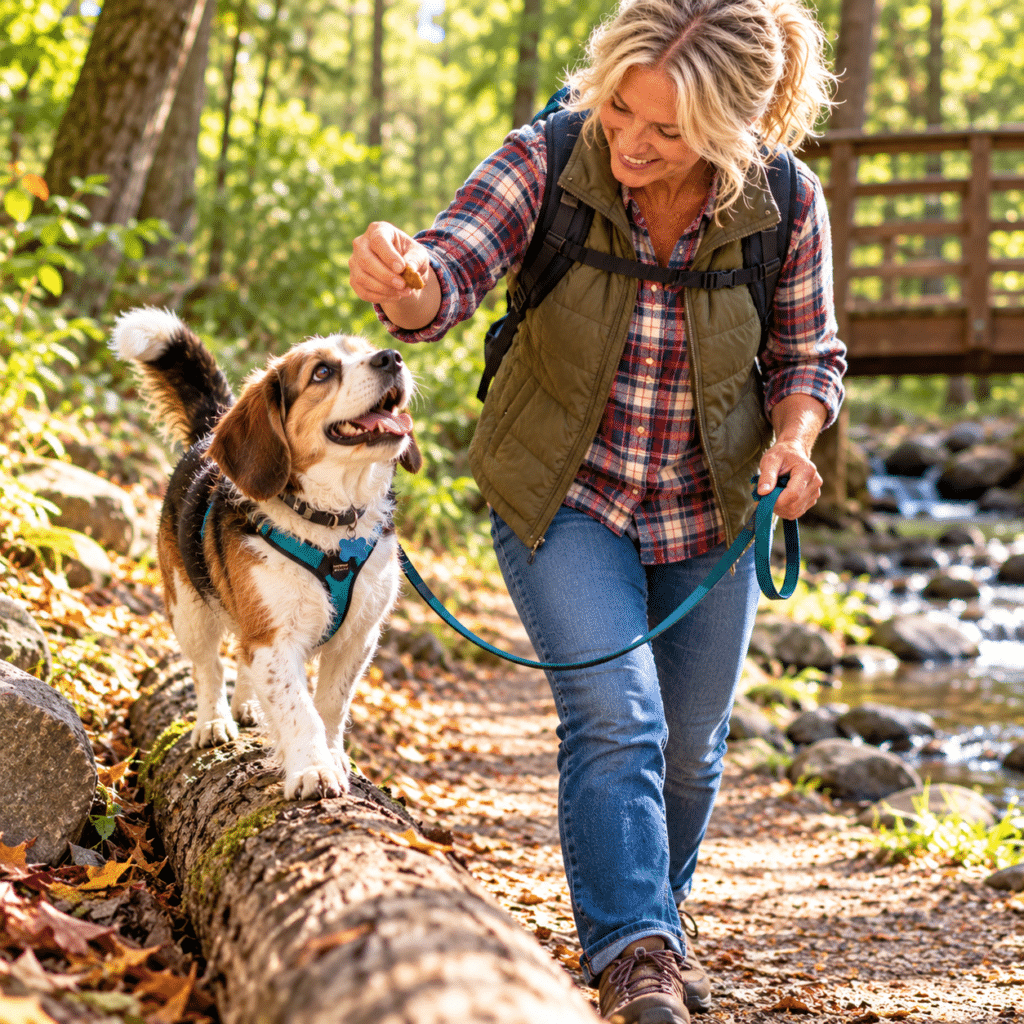
You don’t necessarily need to schedule a separate enrichment session every day.
Sometimes you can make the things you’re already doing a little more engaging.
Scatter part of breakfast across a snuffle mat.
Let your dog sniff around the garden while you’re watering flowers.
Invite them to accompany you while you put away laundry.
Offer a familiar toy while you settle down to watch television.
Or spend a few minutes sitting beside them and letting them investigate a new, dog-safe object.
Senior dogs often enjoy being included in everyday life, even when they’re no longer able to participate in quite the same way they once did.
And sometimes being part of the activity matters more than the activity itself.
Older dogs aren’t all alike.
One senior may still be enthusiastic about learning new tricks, while another would rather enjoy a quiet sniffing game from the comfort of their favorite rug.
Adjust activities to your dog’s health, mobility, vision, hearing and energy level.
Start slowly, supervise food puzzles and toys, and keep extra treats within your dog’s normal daily food allowance.
If your dog seems uncomfortable, confused, unusually tired or frustrated, simplify the activity or stop.
Also, don’t assume that significant new confusion, changes in sleep patterns or unusual behavior are simply part of getting older. Discuss those changes with your veterinarian.
The best enrichment activity is one your dog can enjoy comfortably.
You don’t need to make every game harder or every outing longer.
A happy five-minute activity is far more valuable than a complicated one your dog doesn’t enjoy.
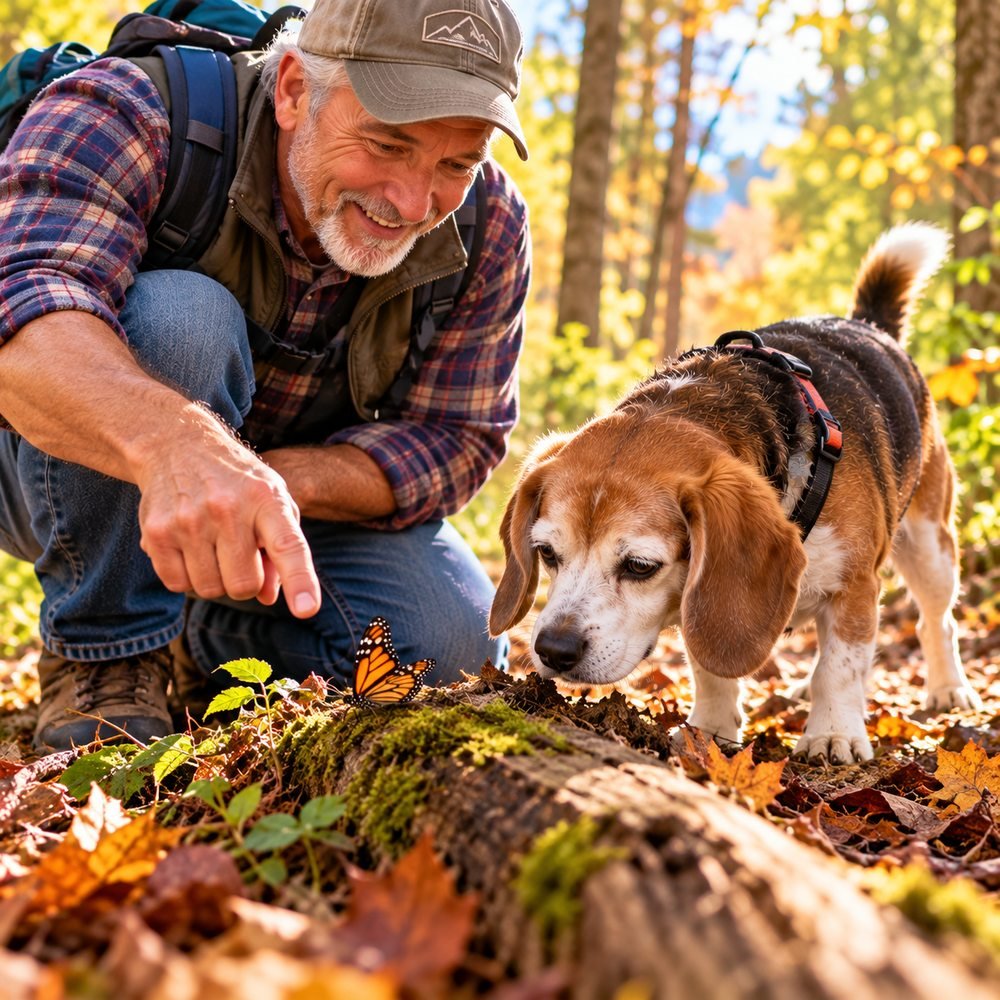
One of the sweetest things about living with an older dog is discovering that so much of their personality is still right there.
They may move a little slower.
They may need extra time getting comfortable.
And they may no longer have any interest in chasing a ball across the yard.
But watch what happens when you bring out a familiar toy, hide a treat beneath a towel or ask if they’d like to go outside and investigate the garden.
That little spark is often still there.
Our senior dogs don’t need every day to be an adventure.
They just need opportunities to enjoy the world in ways that work for them.
And if that means spending ten minutes sniffing one corner of the backyard while you stand nearby holding the leash?
Well, apparently that’s today’s big outing.
And that’s perfectly fine.