Newsletter Subscribe
Enter your email address below and subscribe to our newsletter

 ByDiana
Dogs can be surprisingly predictable.
They know when breakfast should happen. They recognize the sound of the leash coming off the hook. They seem to know when it’s almost time for you to sit down in the evening—and they’re usually ready to claim their spot beside you before you get there.
But have you ever paid attention to your dog’s entire day?
How much do they actually sleep? When are they most active? Do they wander around while you’re gone or curl up and snooze? Are they restless at night? Have their habits changed over the past few months?
A dog’s everyday routine can tell you quite a bit about how they’re spending their time. And sometimes, small changes are easier to notice when you know what’s normal for your particular dog.
Disclosure: This article may contain affiliate links. If you make a purchase through one of these links, we may earn a commission at no additional cost to you.

Some dogs seem capable of turning napping into a full-time job.
They snooze after breakfast, nap again in the afternoon and somehow still manage to fall asleep beside you that evening.
A lot of sleep isn’t necessarily unusual for a dog. Age, activity level, personality and even what happened the day before can affect how much time a dog spends resting.
What’s more useful is knowing what’s typical for your dog.
If your dog has always been a champion napper, that’s one thing. If a normally busy dog suddenly starts spending much more of the day asleep, that’s something you may want to pay closer attention to.
We tend to think of dog exercise in terms of walks.
But dogs don’t have to be marching down the sidewalk to be active.
Following you around the house counts as movement. So does exploring the backyard, playing with another dog, carrying toys from room to room and repeatedly getting off the couch to investigate what’s happening in the kitchen.
For some dogs, all those little bits of activity add up.
For others, a day that seems busy to us may actually involve a surprising amount of lying around.
That’s one reason activity trackers for dogs have become interesting. Instead of estimating how active a dog is, they can provide a clearer picture of activity throughout the day.
I’ve actually been familiar with FitBark for quite a while. Years ago, I wrote an article for the company that they published on their website.
Today’s FitBark technology can track things such as a dog’s activity and sleep patterns, while its GPS model also offers location-related features. For owners who enjoy seeing actual data, it can be an interesting way to learn more about what a dog’s typical day really looks like.

Dogs have their own daily rhythms.
One might wake up ready to conquer the neighborhood at 6 a.m. Another barely wants to leave the bed until breakfast is served.
You may notice your dog gets a burst of energy after dinner, becomes playful every afternoon or starts following you around at roughly the same time each evening.
Knowing these patterns can help you plan walks, playtime and other activities when your dog is most interested in them.
It can also make changes easier to spot.
If the dog who normally races to the door every morning suddenly isn’t interested in the walk, you’ll probably notice.
This becomes especially interesting as dogs get older.
Maybe your dog used to jump up every time you walked into another room.
Now they occasionally look up as if to say, I’ll catch up with you later.
Some slowing down is expected as dogs age, but knowing your dog’s usual activity level gives you something to compare against.
Instead of wondering, “Is she sleeping more lately?” you have a better sense of what her normal day looks like.
And that can be useful information to share with your veterinarian if you notice a meaningful change.
Here’s something many of us would probably like to know:
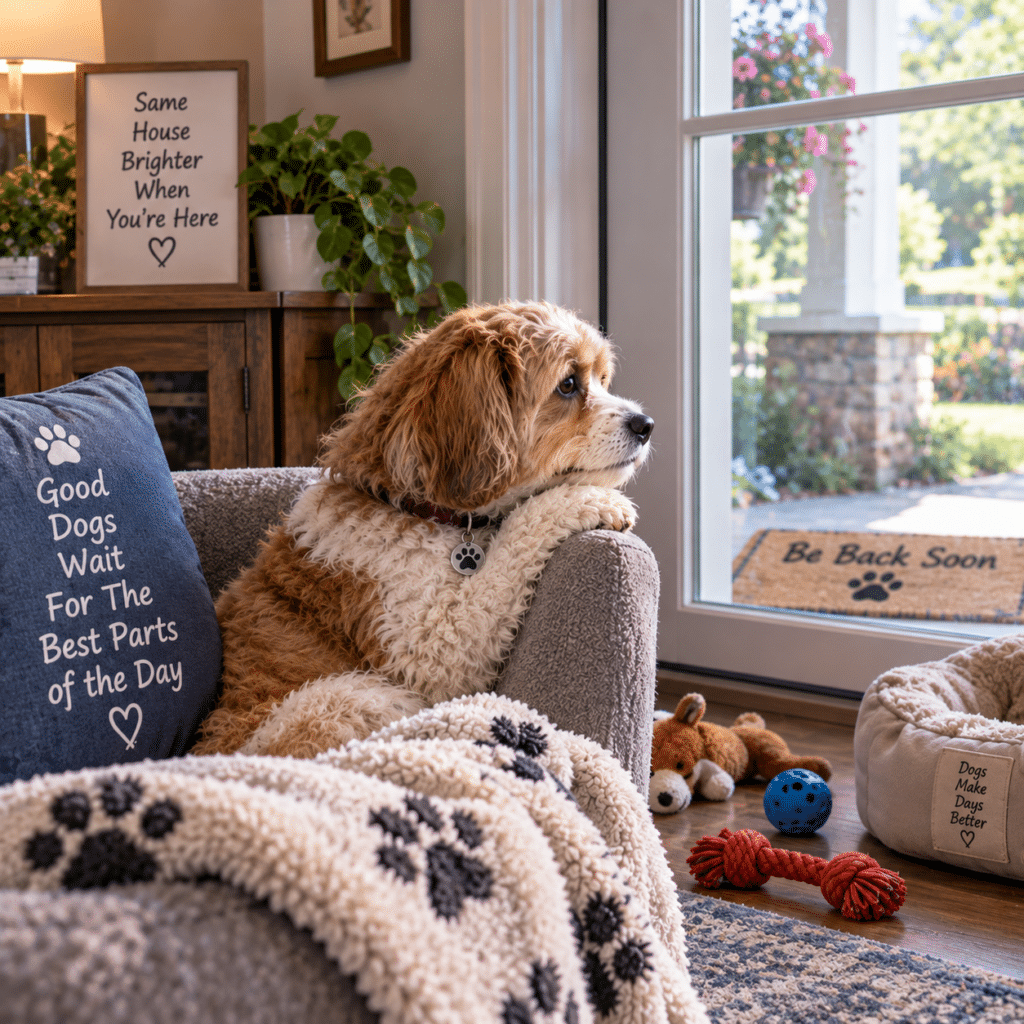
What exactly does the dog do after we leave?
Some dogs may settle down almost immediately.
Others move from window to window, patrol the house, play with toys or wait near the door.
And then there are dogs who probably spend five minutes wondering where we went before taking advantage of the suddenly available couch.
A camera can show you some of this behavior, while activity information can provide another clue about whether your dog is mostly resting or moving around.
You don’t necessarily need technology, though. Simply noticing where toys have moved, which sleeping spots are warm when you return, or whether your dog appears relaxed can give you clues about how they spend their alone time.
A tired dog isn’t always a dog who needs another mile-long walk.
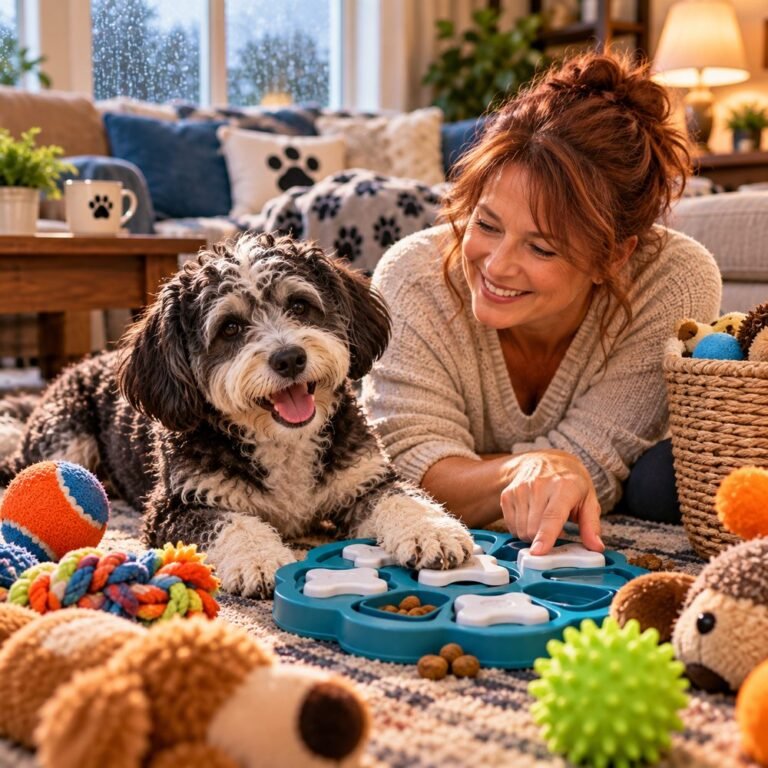
Sometimes they need something interesting to do.
Sniffing around the yard, searching for hidden treats, working on a puzzle toy, learning something new or spending a few minutes playing with you can provide mental stimulation.
Watch what your dog does during the quieter parts of the day.
A content dog may settle comfortably after some activity. A dog who seems unable to find anything to do might wander, repeatedly bring you toys, get into things or invent activities you probably wouldn’t have chosen for them.
Sometimes ten minutes of focused play or sniffing is exactly what they were looking for.
We usually know when we haven’t slept well.
It isn’t always as obvious with our dogs.
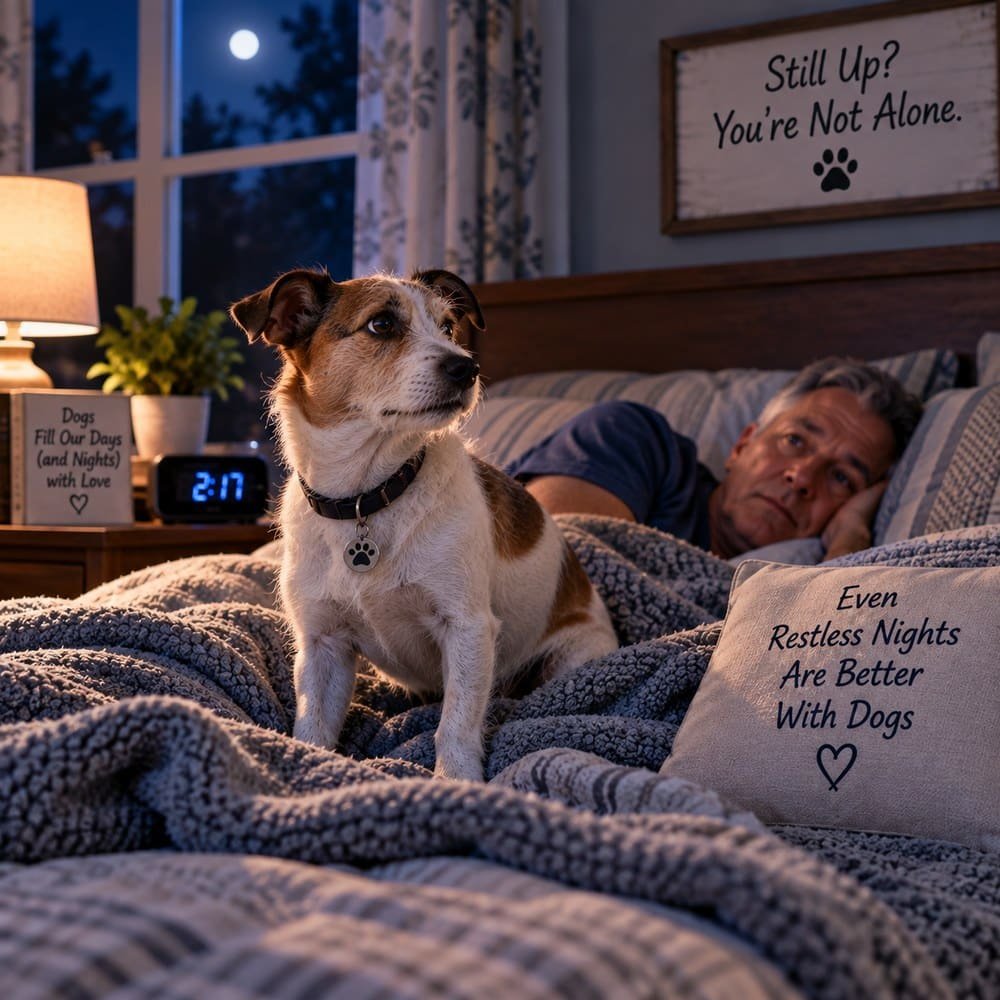
A dog might change sleeping positions frequently, get up and wander, move from one bed to another or wake during the night.
Occasional restless nights happen. Maybe there was a thunderstorm, an unfamiliar noise outside or simply an unusually exciting day.
But repeated changes in nighttime behavior are worth noticing.
Sleep and rest tracking is one of the things devices such as FitBark can help owners observe over time. The goal isn’t to diagnose anything from an app. It’s simply another way of recognizing when your dog’s normal pattern has changed.
If nighttime restlessness is new, persistent or accompanied by other changes, a conversation with your veterinarian makes sense.
This one can be funny once you start noticing it.
Dogs are remarkably good at learning our schedules.
They know when the coffee maker means morning has officially started.
They know which shoes mean you’re going somewhere.
They know when dinner should be served.
And many seem to know when bedtime is approaching before we’ve even gotten off the couch.
Their routines often become intertwined with ours.
If you’re home more than usual, working different hours or suddenly taking fewer walks because of bad weather, your dog’s day changes too.
Sometimes what looks like a change in the dog’s routine is actually a reflection of a change in ours.
One of the most useful things you can learn about your dog isn’t how their activity compares with every other dog.
It’s how your dog compares with themselves.
A young Border Collie and a senior Shih Tzu shouldn’t be expected to have identical activity levels.
Even two dogs of the same breed and age can have completely different personalities and routines.
That’s why establishing a normal pattern can be helpful.
Maybe your dog typically has an active morning followed by several long naps.
Maybe they’re quiet all morning but come alive around 4 p.m.
Maybe they sleep soundly almost every night.
Once you know the pattern, unusual changes stand out more clearly.
That’s also where something like a dog activity tracker such as Fitbark can be most useful—not as a contest to see whether your dog reaches a certain number every day, but as another way of following their individual patterns over time.

You can collect activity numbers, watch sleep patterns and keep track of walks.
But there’s one part of your dog’s routine that doesn’t need an app.
Watch what happens when you sit down.
Or when you walk through the door.
Or when you say, “Want to go outside?”
For many dogs, the best parts of the day are remarkably simple.
It’s the morning walk.
The few minutes spent sniffing around the yard with you.
The afternoon nap while you’re nearby.
The evening treat.
The familiar sound of your voice.
And, of course, following you from one room to another for absolutely no apparent reason.
Dogs don’t need every day to be exciting.
Often, what they seem to love most is knowing that they’re included in whatever ordinary thing we’re doing.
You certainly don’t need a gadget to understand your dog.
Simply paying attention can tell you a tremendous amount.
Notice when your dog sleeps. Notice when they want to play. Pay attention to how enthusiastically they approach their usual activities and whether those habits change.
For people who enjoy data—or who simply wonder what their dog is doing throughout the day—a dog activity tracker such as FitBark can add another layer of information.
But whether you use technology or just your own eyes, the important part is learning what’s normal for your dog.
Because once you know their routine, you may start noticing something else.
Your dog’s day probably isn’t nearly as complicated as yours.
A little food. A little exercise. Several good naps. Something interesting to sniff.
And plenty of time with their favorite person.
That’s a pretty good day.