Newsletter Subscribe
Enter your email address below and subscribe to our newsletter

 ByDiana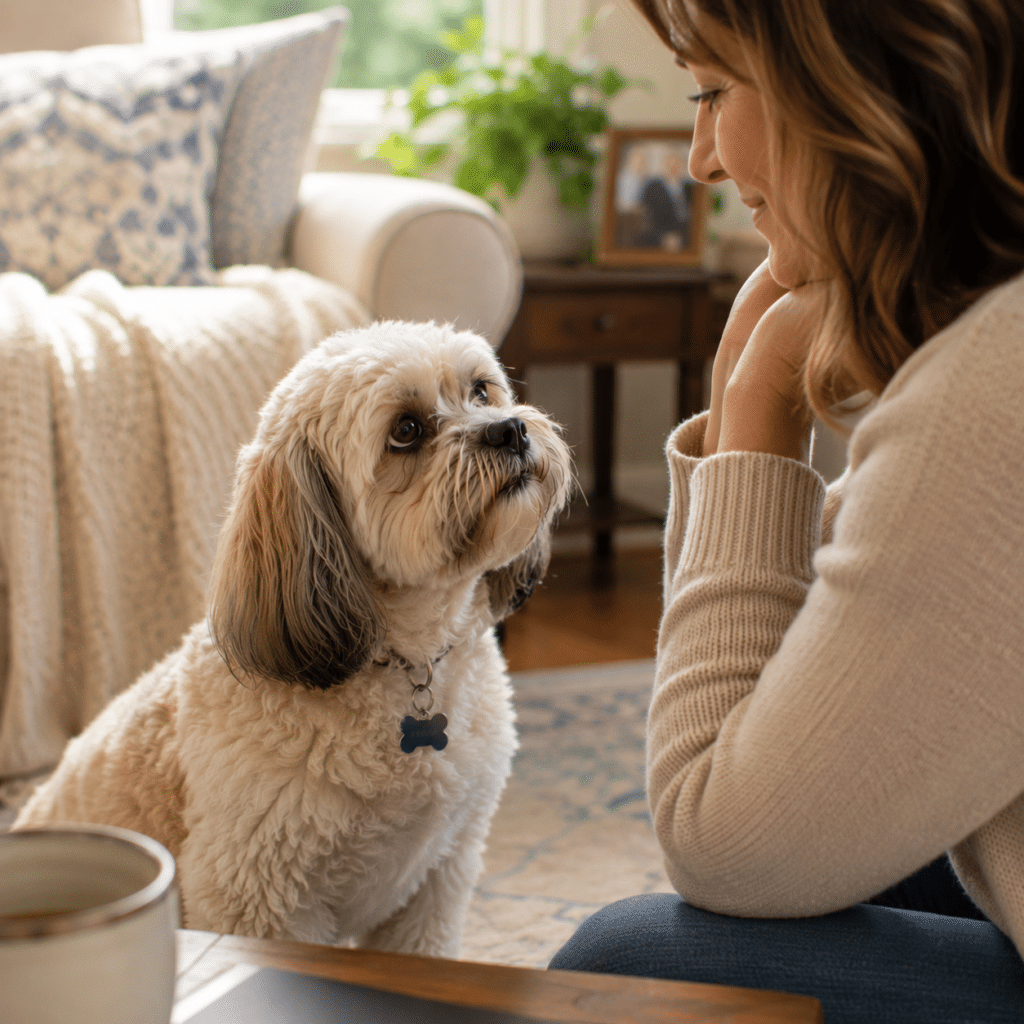
You’re sitting on the couch watching television when you suddenly feel it.
Someone is watching you.
You look across the room and there sits your dog, staring directly at you.
Not blinking.
Not moving.
Just staring.
Naturally, you start asking questions.
“Do you need to go outside?”
“Are you hungry?”
“Did I forget something?”
“Why are you looking at me like that?”
Sometimes you eventually figure it out. Other times, the dog continues staring as though you’re supposed to understand a message that should be perfectly obvious.
If this happens at your house, you’re certainly not alone.
Dogs stare at their people for many reasons. They may be asking for something, watching for clues about what’s going to happen next, seeking attention, or simply enjoying being near someone they trust.
The trick is looking at what else your dog is doing at the same time.
Here are 10 things that stare may be trying to tell you.
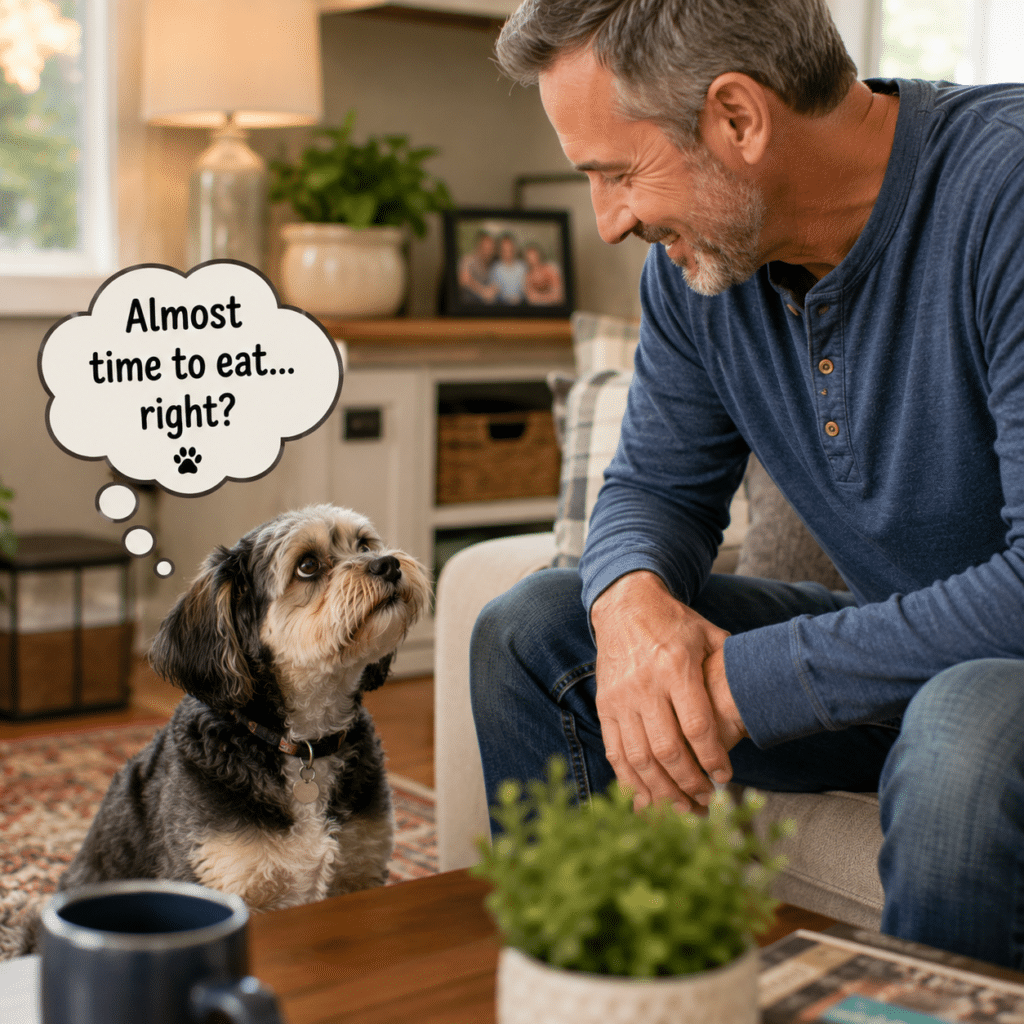
Dogs may not understand clocks, but some of them seem to have an astonishing understanding of dinner time.
You can be five minutes late and suddenly there’s a dog sitting three feet away, staring into your soul.
No barking required.
Just the stare.
Dogs learn routines remarkably well. If breakfast normally happens after you make coffee or dinner follows a particular evening activity, your dog can learn those patterns.
Sometimes they even anticipate them.
So if the staring begins at approximately the same time every day, you may not have a mysterious behavior problem.
You may simply be late for dinner.
At least according to your dog.
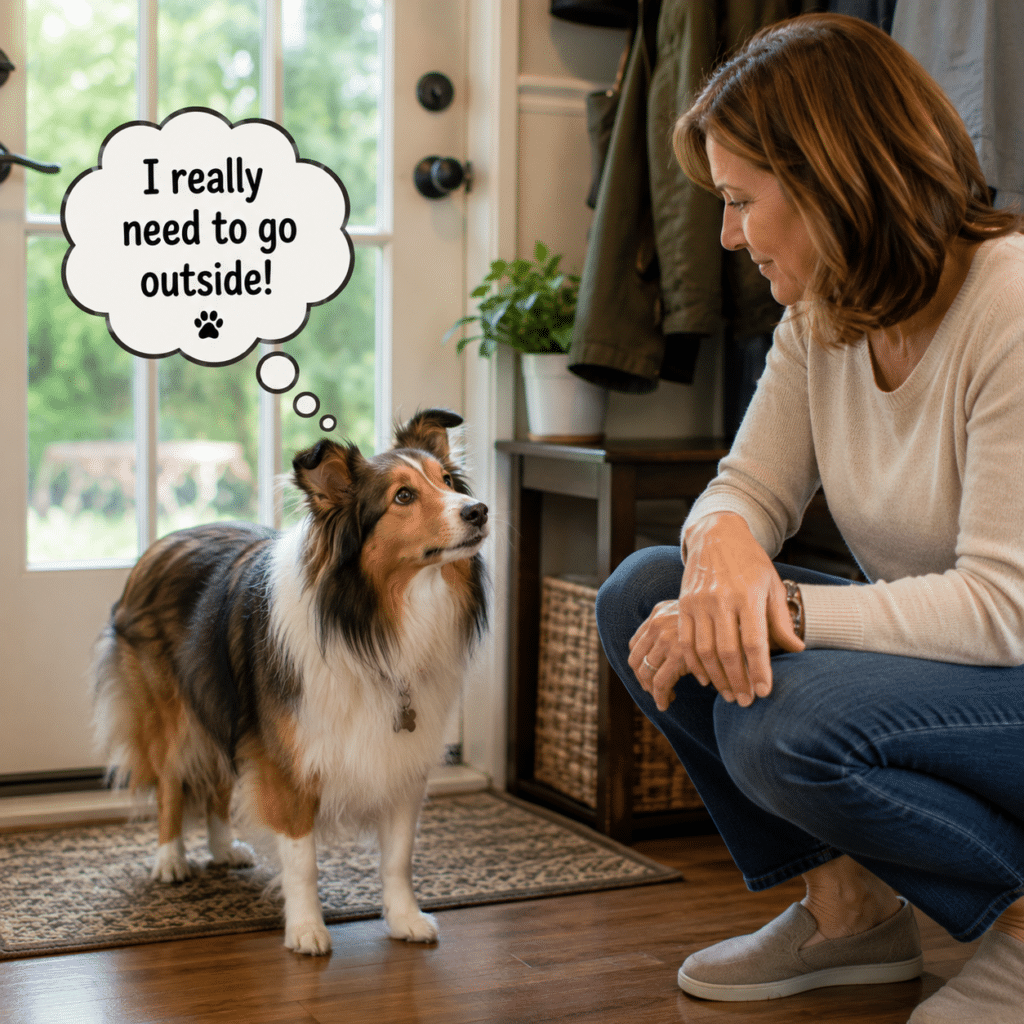
Some dogs stand at the door when they need a bathroom break.
Others bark.
Some pace.
And then there are the dogs who apparently believe telepathy should be sufficient.
They stare at you.
Maybe they glance toward the door and then back at you.
Perhaps they walk a few steps away, realize you haven’t followed, and return for another stare.
This is why context matters so much when interpreting dog behavior.
A stare by itself doesn’t tell you much. A stare followed by a meaningful glance toward the back door gives you considerably more information.
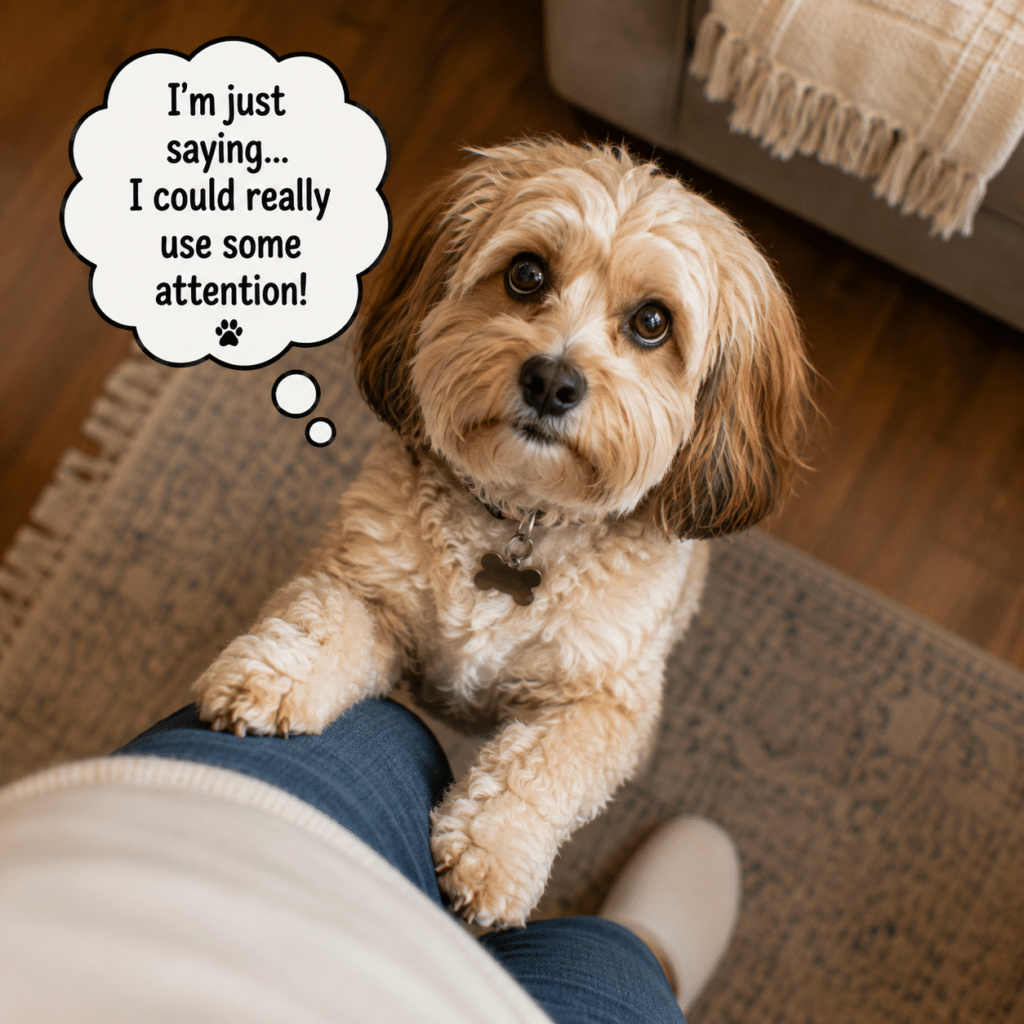
Imagine trying to get someone’s attention without being able to say their name.
Dogs find their own ways.
A paw on your leg works.
Dropping a toy in your lap works.
And sometimes simply sitting directly in your line of sight and staring works beautifully.
Why?
Because eventually you notice.
Then you might talk to them, scratch their ears, throw a toy, or get up and do something together.
Your dog learns from what happens next.
If staring at you regularly produces attention, staring becomes a pretty effective strategy.
You may think your dog has trained you.
Your dog probably agrees.
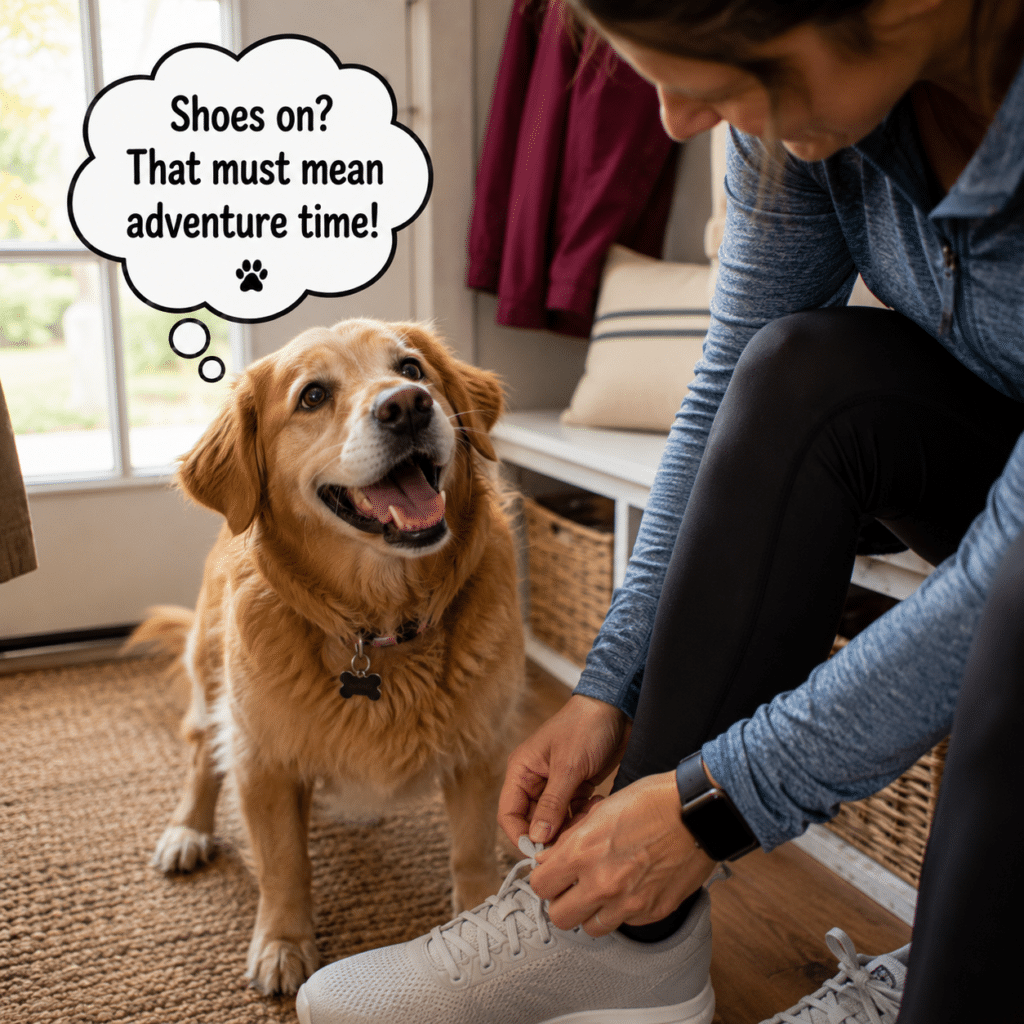
Dogs spend an enormous amount of time watching us.
Think about it from their perspective.
We control many of the interesting things that happen during the day.
We open doors.
We serve meals.
We grab leashes.
We throw toys.
We get into cars.
We hand out treats.
Watching us closely can help a dog predict what might happen next.
That’s why your dog may stare while you’re putting on shoes, walking toward the kitchen, or getting ready to leave the house.
They’re collecting clues.
Pick up the leash and suddenly the mystery has been solved.
We’re going for a walk!
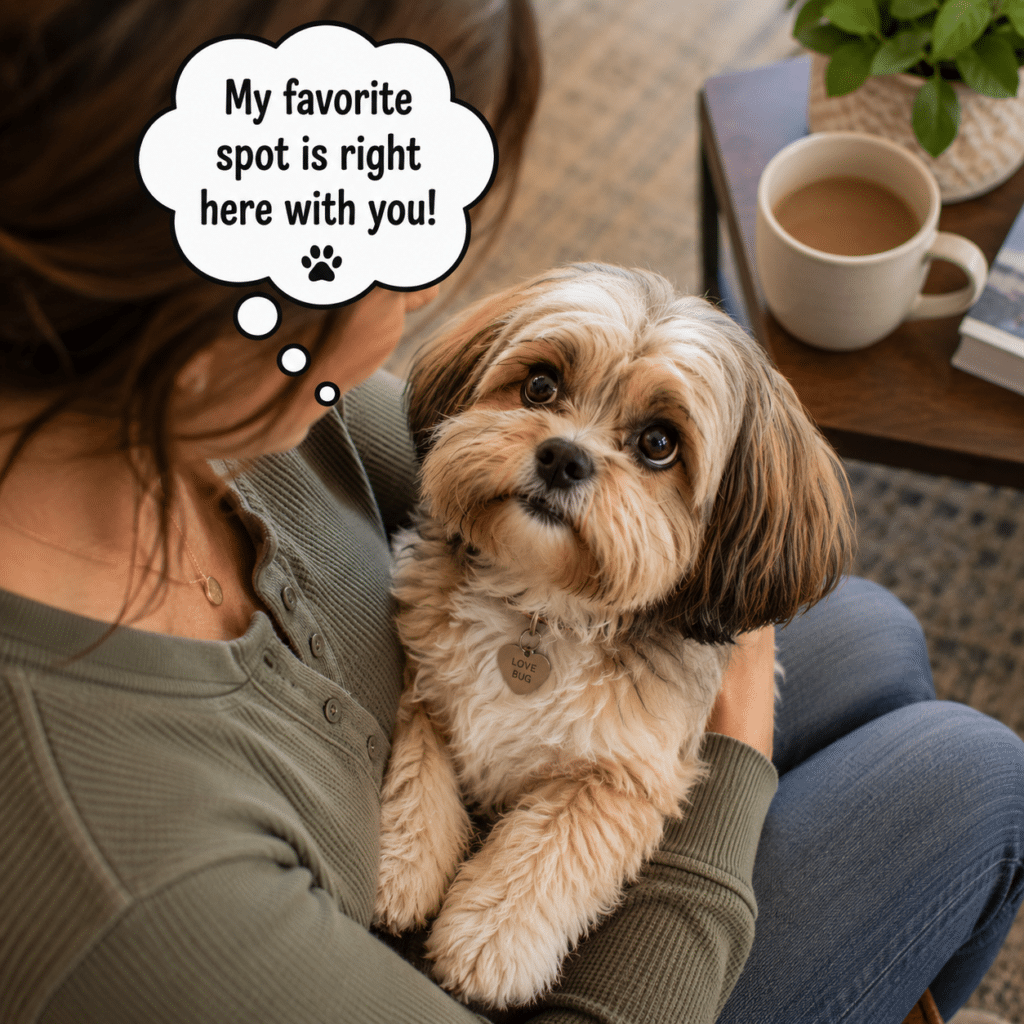
Not every stare is a request.
Sometimes your dog may simply be looking at someone they feel comfortable around.
A relaxed dog resting nearby with soft eyes and a loose body is very different from a dog whose entire body looks stiff or tense.
Dogs form strong social bonds with their people, and looking at us can be part of that relationship.
You probably watch your dog sometimes too.
They’re asleep on the couch and you look over at them.
They’re wandering around the yard and you watch what they’re doing.
They’re sitting beside you and you find yourself looking at that familiar little face.
Sometimes dogs may be doing something just as simple.
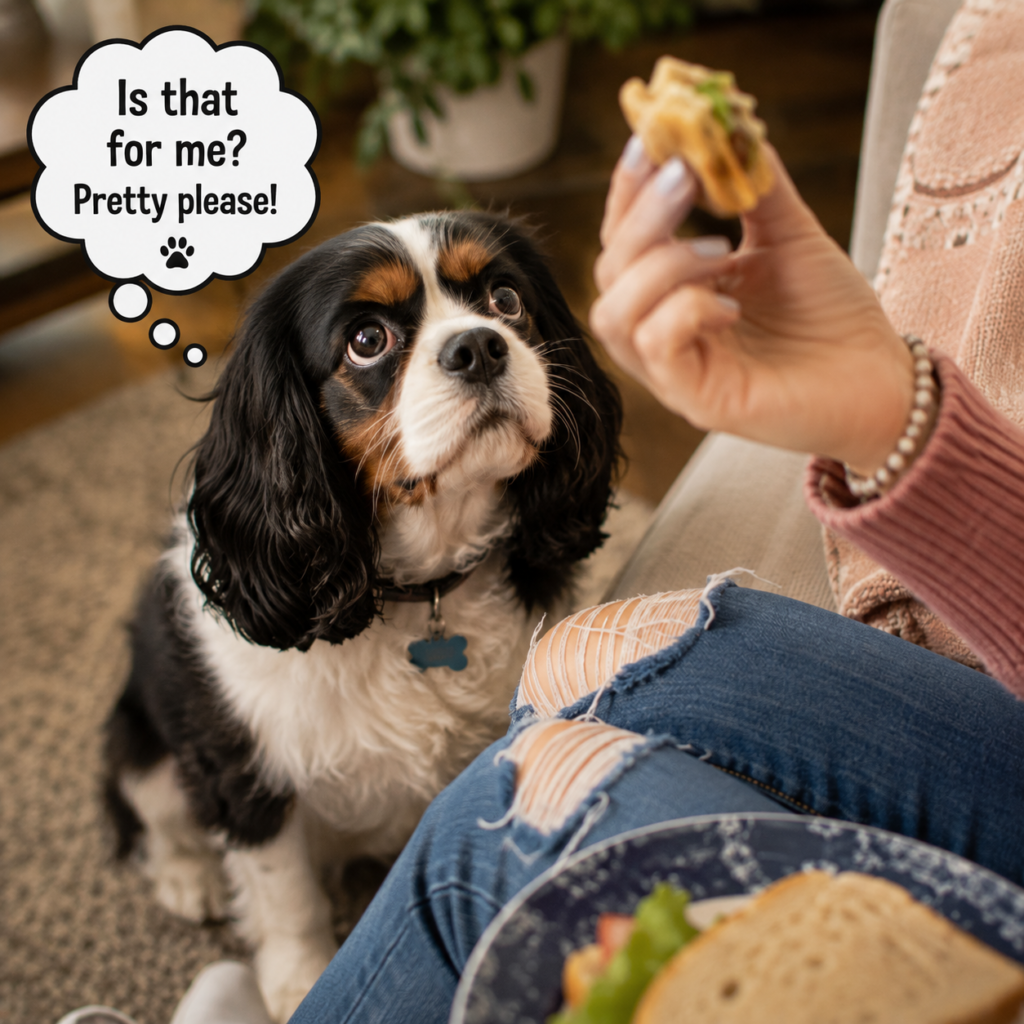
This particular stare requires very little interpretation.
You’re eating.
Your dog is watching.
Closely.
Every movement of the fork is being monitored.
You look at the dog.
The dog looks at your plate.
Then back at you.
The message isn’t particularly subtle.
Dogs can quickly learn that hanging around while people eat occasionally pays off.
One little piece falls.
Someone slips them a bite.
Suddenly, monitoring humans during meals becomes a worthwhile hobby.
If you don’t want begging at the table, consistency matters. Feeding from the table sometimes while expecting your dog not to beg at other times can be confusing.
Of course, convincing everyone in the household to follow the same rule may be the harder part.

Sometimes staring is part of asking for assistance.
A toy rolled underneath the couch.
The water bowl is empty.
A favorite ball is behind a door.
Something interesting is sitting on a counter that is tragically out of reach.
Your dog may look at the problem and then look at you.
Back to the problem.
Back to you.
At that point, even we humans can usually solve the puzzle.
Dogs learn that we’re useful.
We have hands.
We open things.
We retrieve things.
And apparently we exist partly to recover toys from underneath furniture.
It’s an important position.
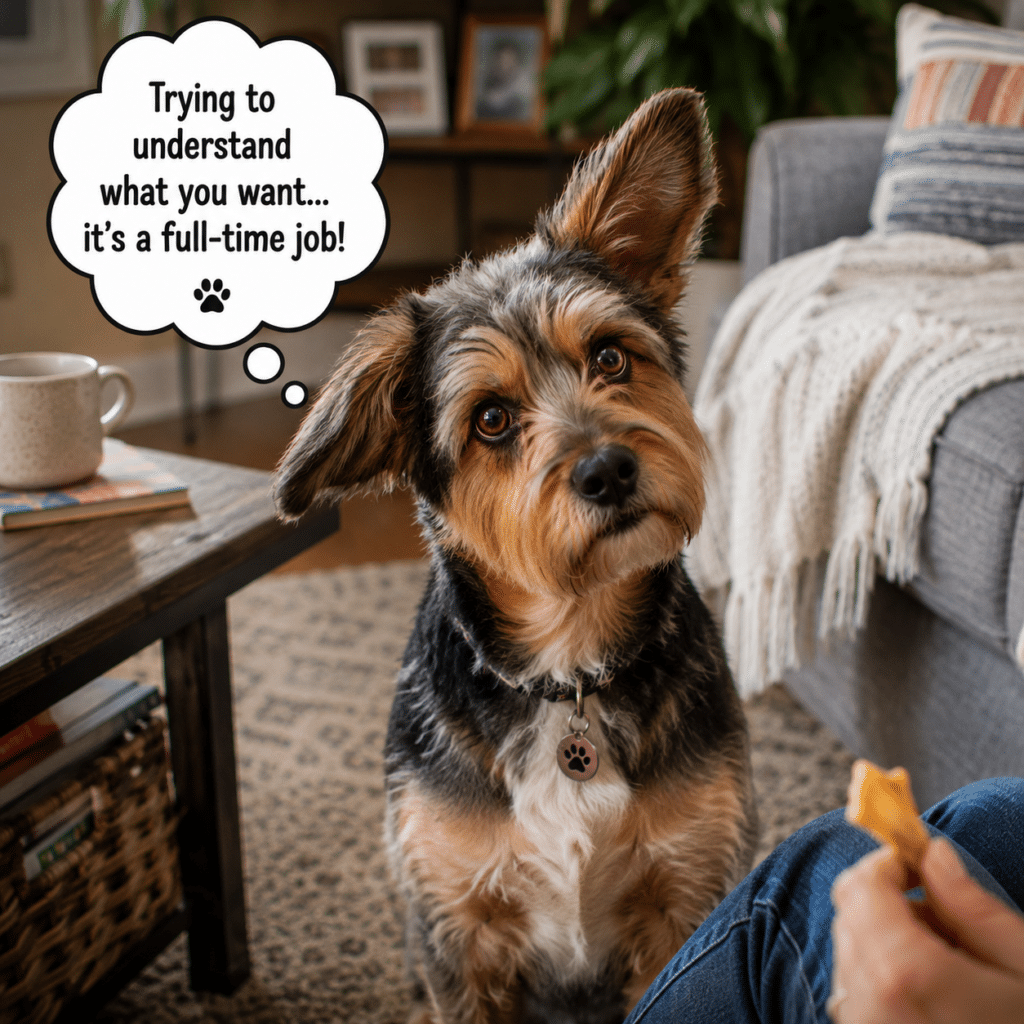
Staring can also happen during training.
Your dog may be watching your face and body for information.
What are you asking them to do?
Is a reward coming?
What’s the next cue?
Dogs become very good at noticing small movements we don’t even realize we’re making.
You might think your dog responds only when you say “sit,” for example, when they’re also noticing the way you move your hand or position your body.
That attention can be extremely useful during training.
A dog who’s comfortably focused on you is often ready to receive information.
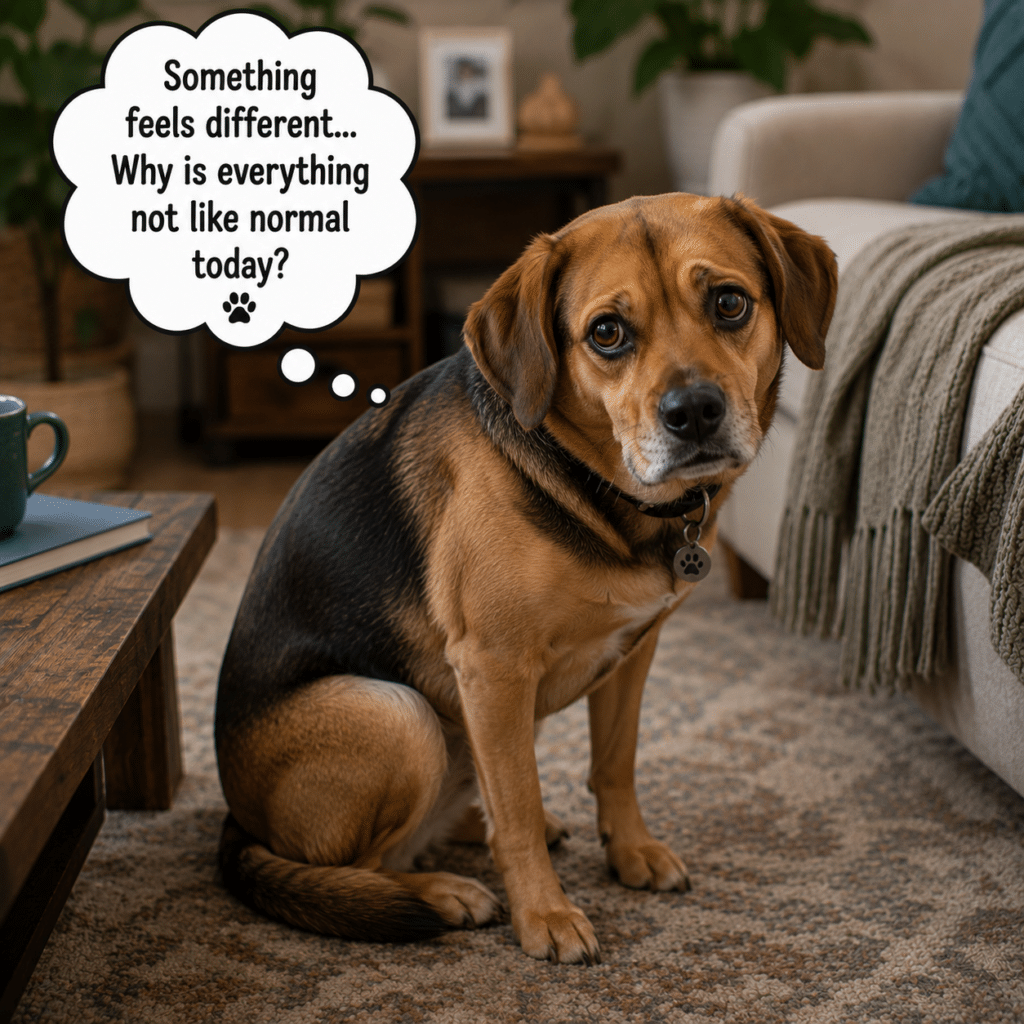
This one deserves a little more attention.
A dog who suddenly begins staring unusually, especially when accompanied by other changes, may be telling you something isn’t normal.
Perhaps your dog seems confused.
Maybe they’re restless, pacing, whining, panting unexpectedly, hiding, trembling, acting unusually clingy, or simply behaving differently from normal.
A stare alone doesn’t mean your dog is sick.
But a noticeable change from your dog’s normal behavior is worth paying attention to.
This is especially important with older dogs, where changes in vision, hearing, comfort, sleep, or cognitive function can sometimes affect behavior.
If the staring is new, persistent, or accompanied by other concerning symptoms or behavior changes, contact your veterinarian.
You know what “normal” looks like for your dog.
That makes you one of the first people likely to notice when something isn’t quite right.
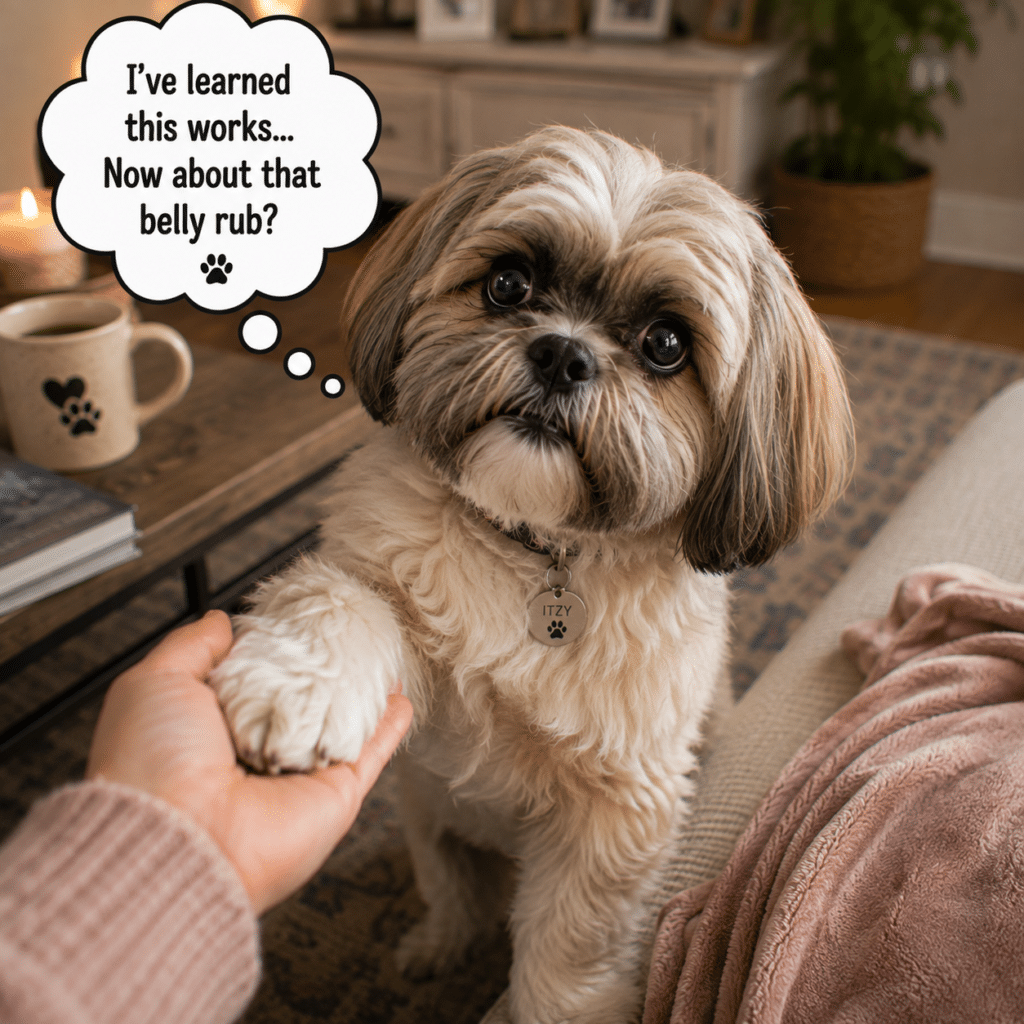
This may explain more dog behavior than we realize.
Dogs repeat behaviors that get results.
Suppose your dog stares at you.
You get up and give them a treat.
Interesting.
Tomorrow, they stare again.
Another treat appears.
Very interesting.
Soon you have a dog who has apparently developed the supernatural ability to summon snacks simply by looking at a human.
Except nothing supernatural happened.
The dog learned.
This doesn’t mean you should ignore your dog whenever they look at you. It simply helps to recognize when you may accidentally be rewarding a behavior.
If staring always results in food, play, petting, or opening a door, your dog has a pretty good reason to keep doing it.
From their point of view, they’ve discovered an excellent communication system.
When you’re trying to understand why your dog is staring, don’t focus only on the stare.
Look at the rest of the body.
Is your dog relaxed?
Is the tail loose?
Are the ears in their normal position?
Is your dog holding a toy?
Standing near the door?
Looking toward the kitchen?
Pacing?
Whining?
Stiffening?
The situation matters too.
A soft stare from a relaxed dog lying beside you is very different from a hard stare from a stiff dog guarding food, a toy, or another valued object.
If a dog becomes rigid, growls, shows teeth, guards something, or otherwise appears uncomfortable, don’t punish or challenge the dog for staring. Give them space and consider getting help from your veterinarian or a qualified behavior professional, particularly if the behavior is new or escalating.
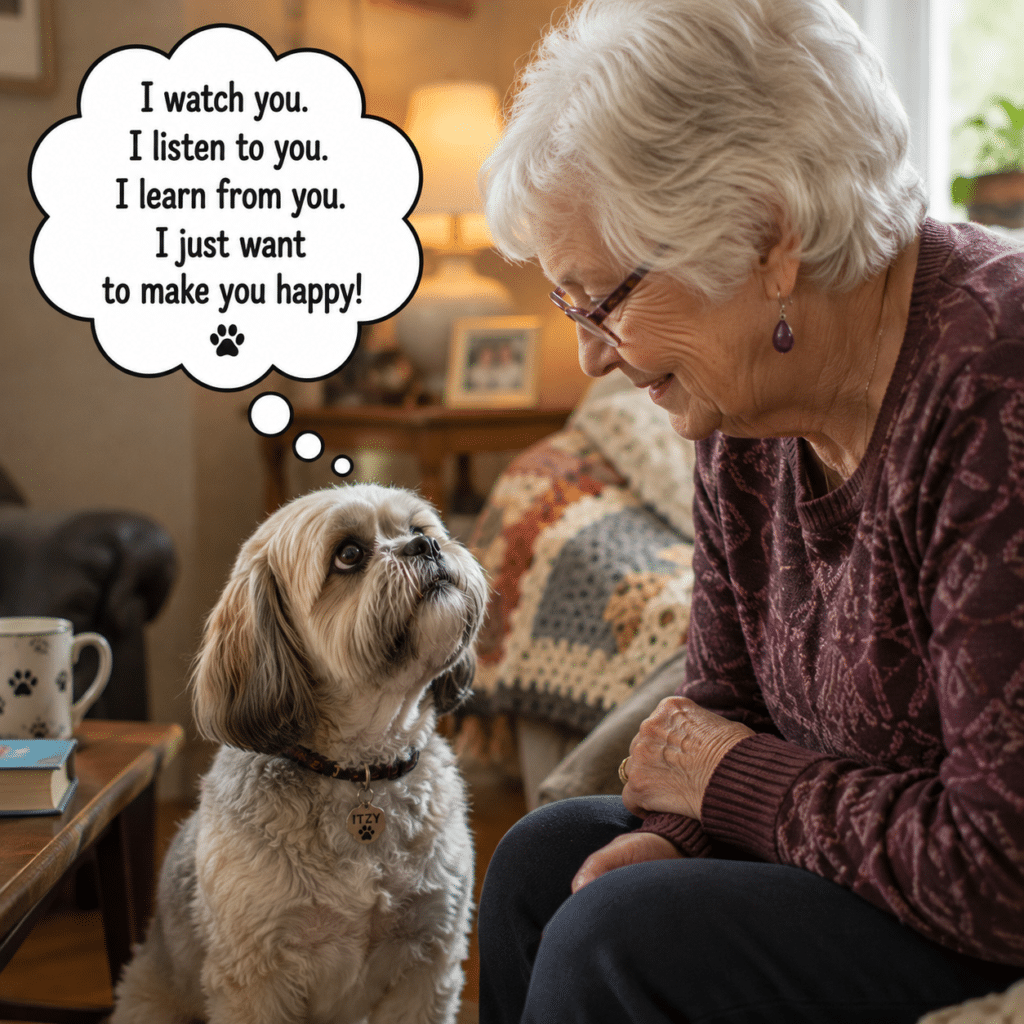
After living with a dog for a while, something interesting happens.
You start understanding them.
Not perfectly, of course.
But you learn the little signals.
There’s the I need to go outside look.
The somebody is in the driveway look.
The my toy went under the couch and this is now your emergency look.
And, naturally, the unmistakable I haven’t eaten in at least 14 minutes and may not survive look.
Every dog develops their own ways of communicating.
The more time you spend together, the easier those little signals become to recognize.
Most of the time, the answer is probably much simpler than it seems.
Your dog may want something.
They may be watching for clues.
They may have learned that staring gets your attention.
Or they may simply enjoy looking at the person who means so much to them.
Instead of immediately asking, “Why is my dog staring at me?”, look at what’s happening around you.
Check the clock.
Look at the door.
Look at the food bowl.
Check beneath the couch for a missing toy.
And then look at the rest of your dog’s body.
There’s a good chance the answer is sitting right in front of you.
Because dogs may not speak our language, but that certainly doesn’t stop them from trying to tell us things.
And once you’ve lived together long enough, sometimes one look really is all it takes.