Newsletter Subscribe
Enter your email address below and subscribe to our newsletter

 ByDiana
Most of us like to think we’re the ones doing the training.
We teach our dogs to sit. Stay. Come. Wait at the door. Maybe even drop that disgusting thing they just found in the yard.
But somewhere along the way, something interesting happens.
They start training us.
Not with commands, of course. Dogs are much more subtle than that.
They use a carefully developed combination of staring, pacing, sighing, pawing and simply standing in exactly the right place until we eventually figure out what they want.
And we’re surprisingly good students.
If you’ve lived with dogs long enough, there’s a good chance you’ve already been trained in at least a few of these behaviors.
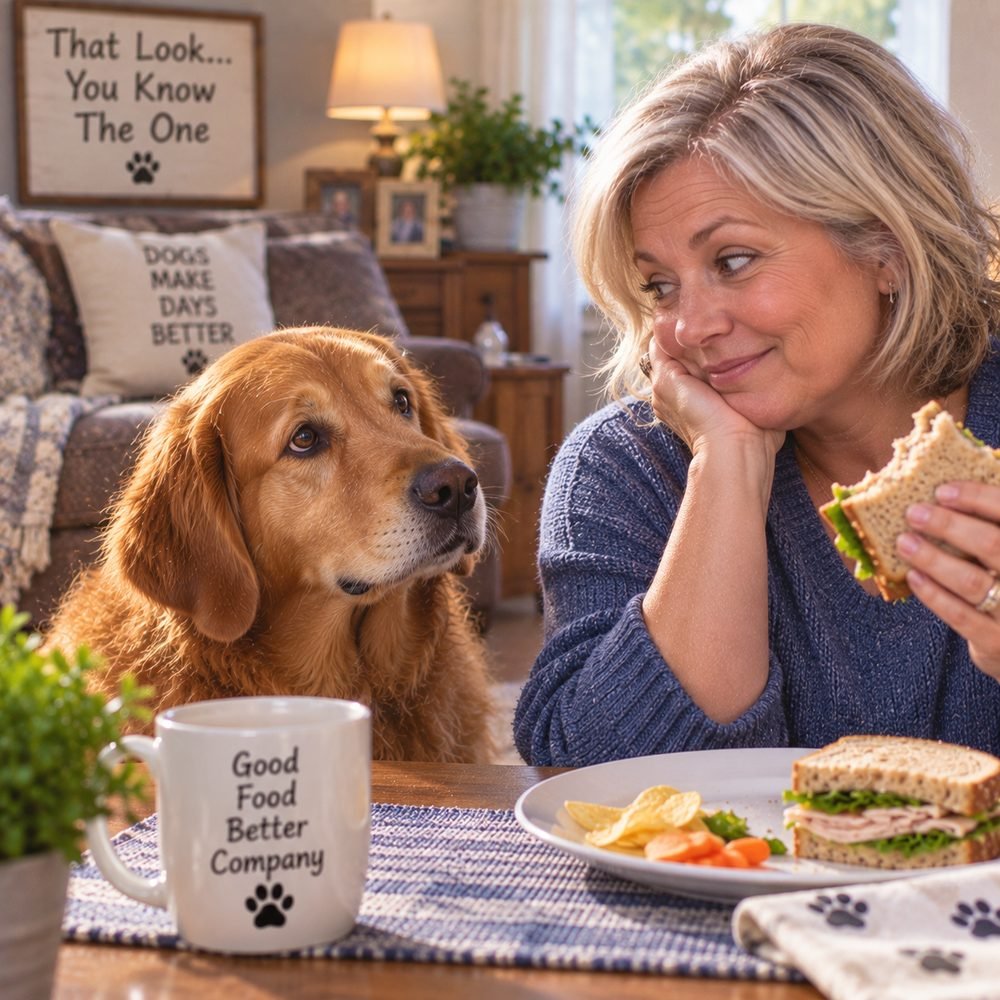
Every dog owner knows the look.
Your dog stands across the room and stares at you.
No barking.
No whining.
Just staring.
And somehow you know.
Sometimes it means, I need to go outside.
Sometimes it’s, You forgot dinner.
And occasionally it’s simply, I would like whatever you’re eating.
You may not speak dog, but apparently you’ve become remarkably fluent in staring.
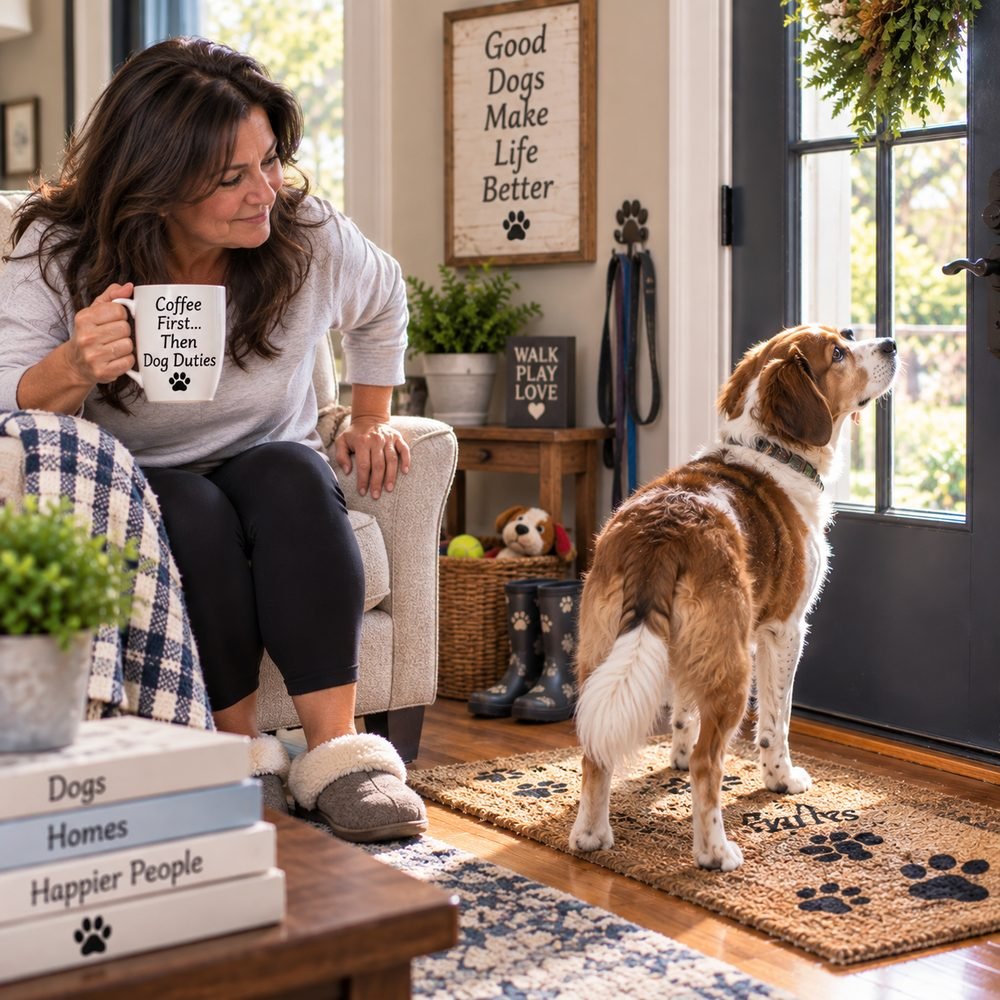
Your dog walks toward the door.
You immediately stop what you’re doing.
Maybe you’re watching television.
Maybe you’re eating dinner.
Maybe you just sat down for the first time in an hour.
Doesn’t matter.
The dog has approached the door.
You have received your instructions.
The funny part is when you open it and your dog just stands there looking outside.
Apparently going through the door was never part of the agreement.
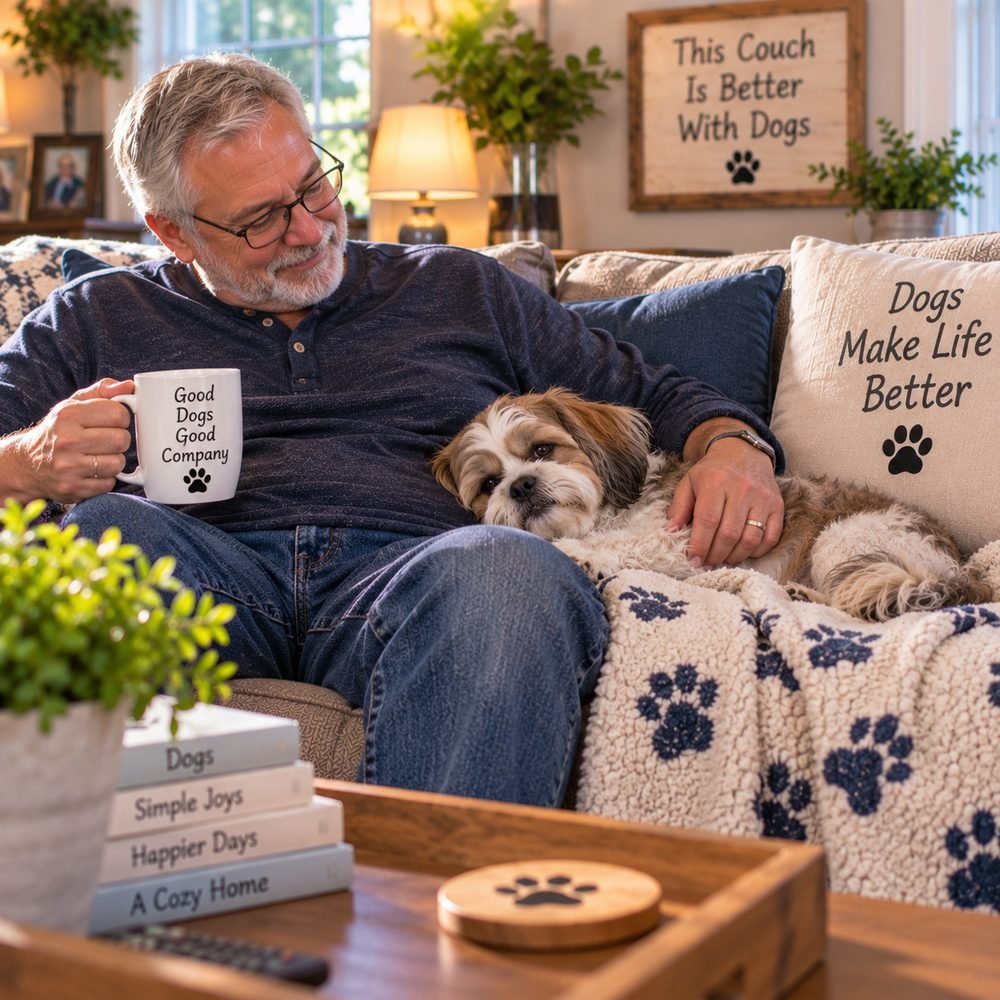
Remember when that couch belonged to you?
Neither does your dog.
At first, you probably invited them up beside you.
Then they stretched out a little.
Then a little more.
Eventually you’re sitting sideways on the last 14 inches of cushion while your dog occupies an area roughly the size of a small country.
And instead of moving the dog, you think:
“Well, they look comfortable.”
Training complete.
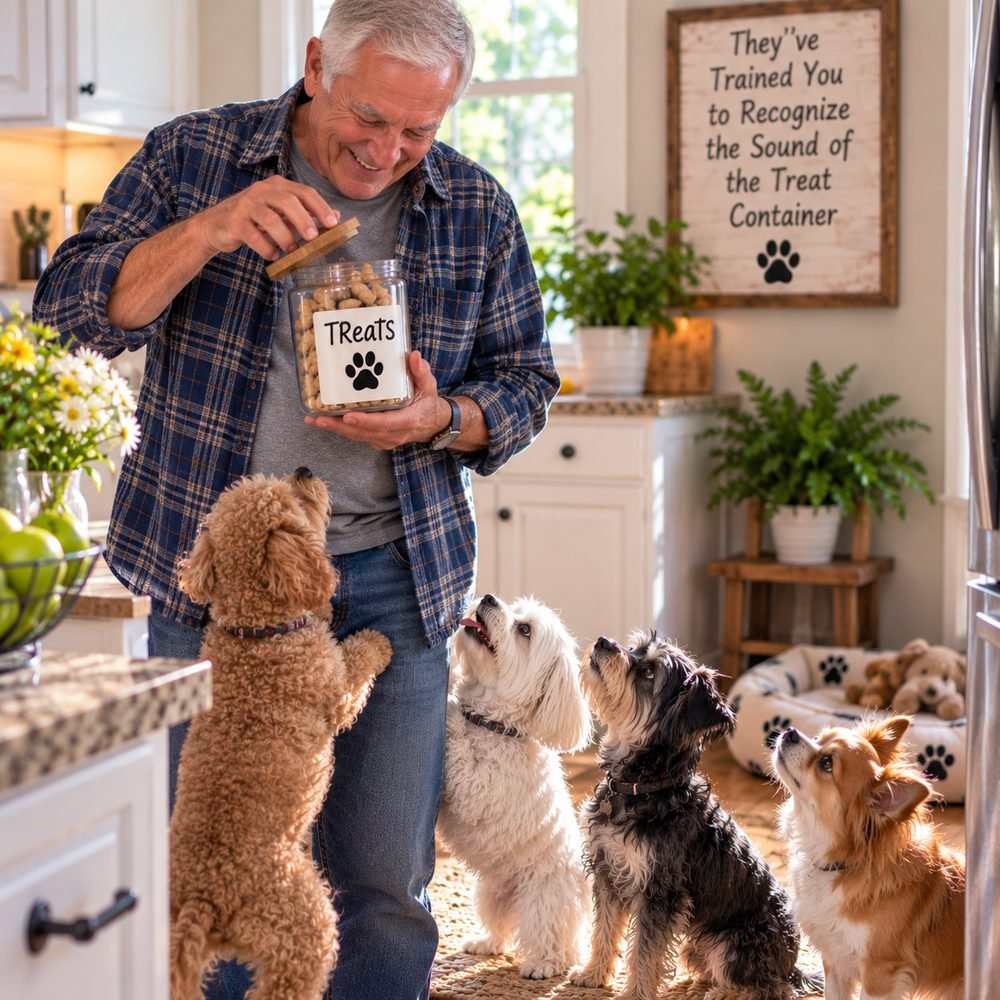
You don’t even need to look at your dog anymore.
You accidentally bump the treat container in the kitchen and hear:
tap tap tap tap tap
Those paws are coming.
Your dog can apparently sleep through the television, thunder and you calling their name three times.
But touch the treat bag from two rooms away?
Instant consciousness.
Eventually, you learn to open it very, very quietly.
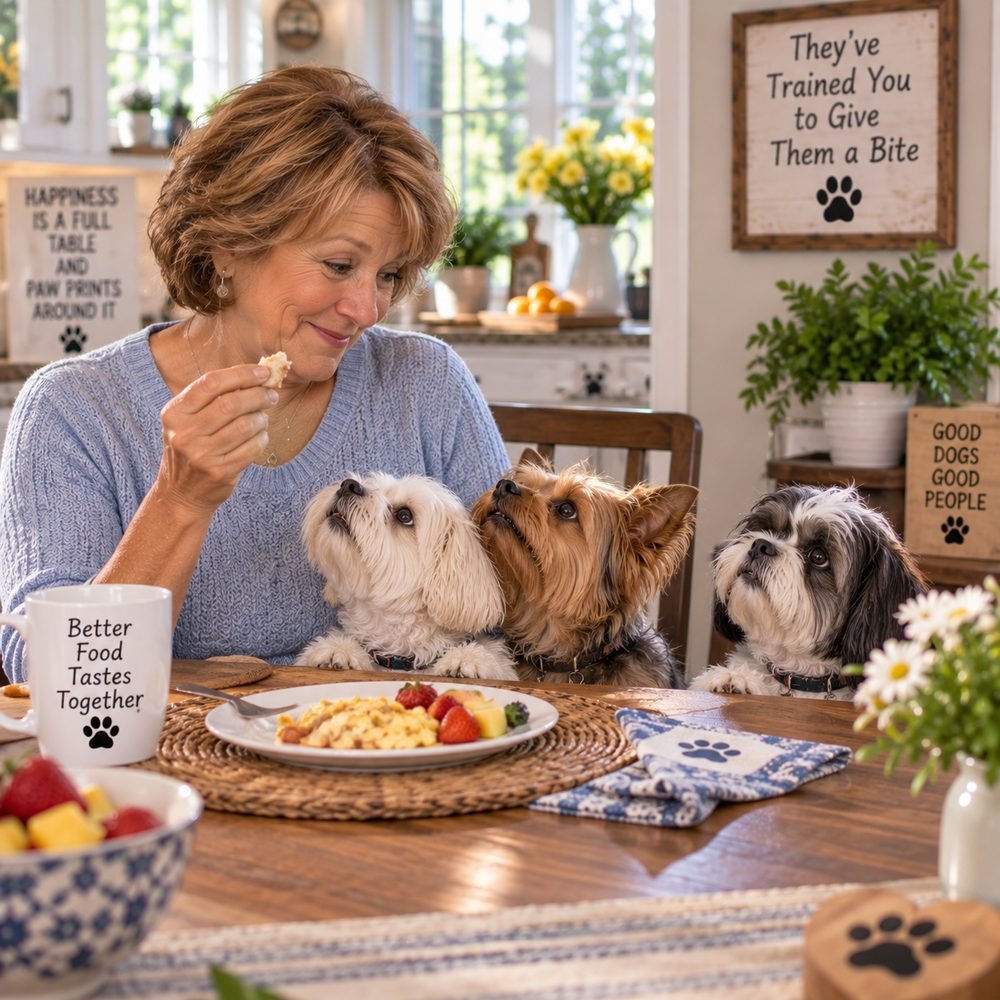
You promised yourself you weren’t going to do it.
No food from the table.
Then the dog sat beside you.
They looked at your sandwich.
Then at you.
Then back at the sandwich.
Perhaps there was a tiny sigh.
Five minutes later, you’re carefully breaking off an appropriate little piece.
Your dog didn’t steal your lunch.
They convinced you to voluntarily hand it over.
That’s advanced training.
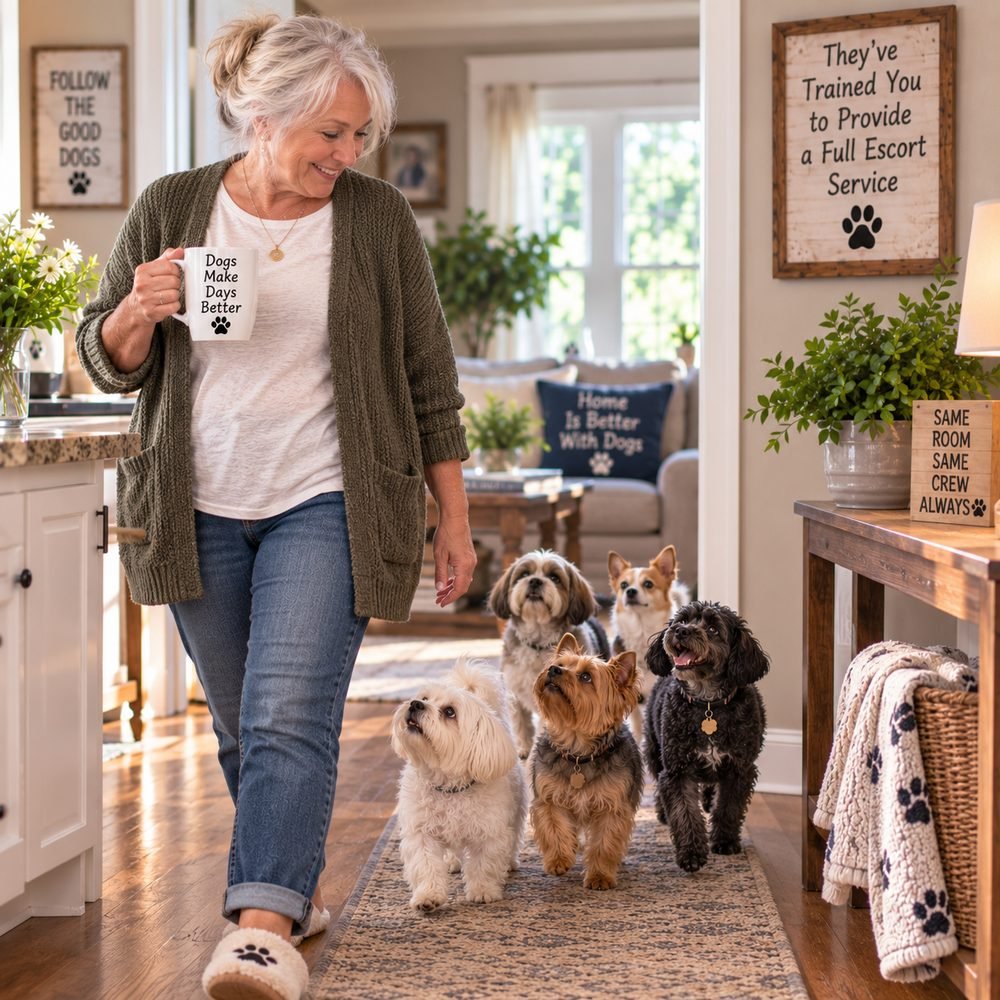
You get up to refill your coffee.
The dog gets up.
You walk to the laundry room.
The dog follows.
You go to the bathroom.
Apparently this trip requires supervision too.
Living with dogs means you rarely travel from one room to another alone.
And when you have more than one dog, getting up can look less like walking across the house and more like leading a small parade.
Eventually you stop noticing.
You simply assume you have an entourage.
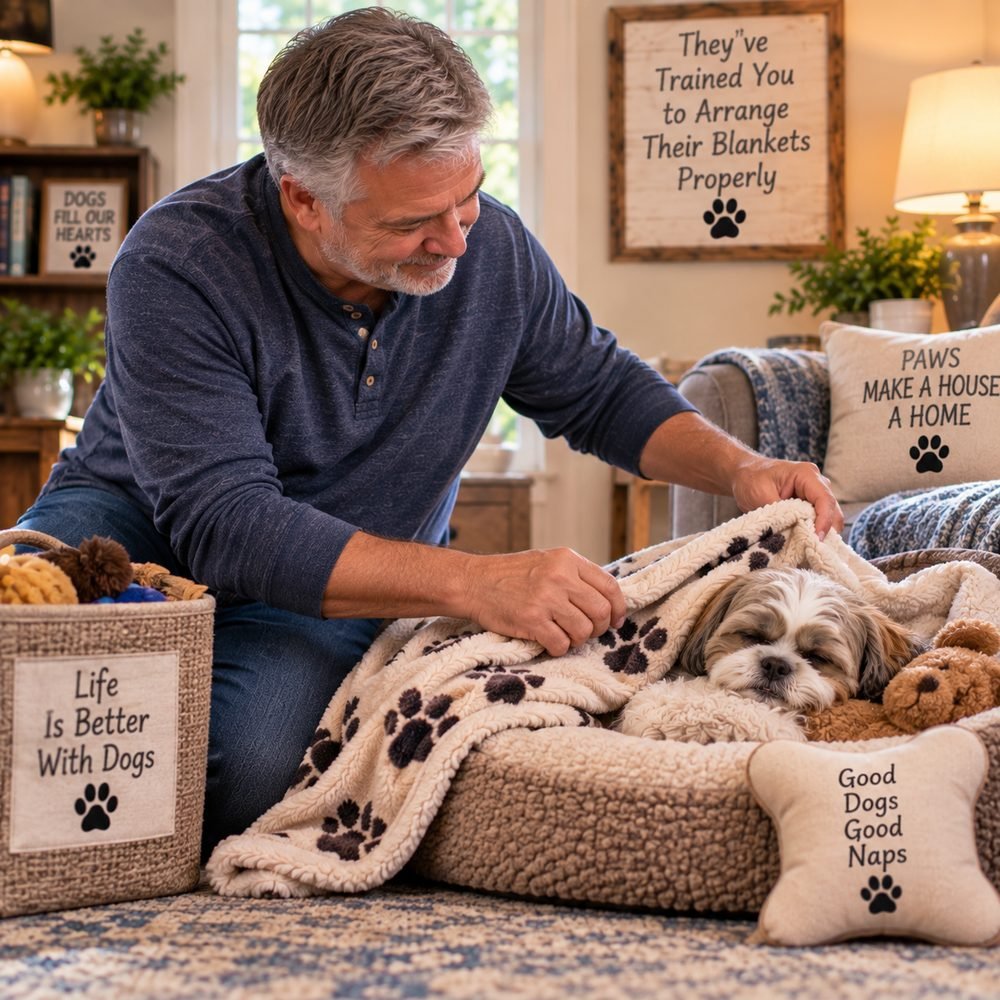
There was probably a time when you tossed a blanket onto the couch and considered the job finished.
Not anymore.
Now you spread it out.
Maybe fold one corner.
Fluff it slightly.
Then your dog circles three times, paws at everything you just arranged and creates an entirely different sleeping spot.
Naturally, if the blanket falls off later, you’ll put it back.
You’re very well trained.
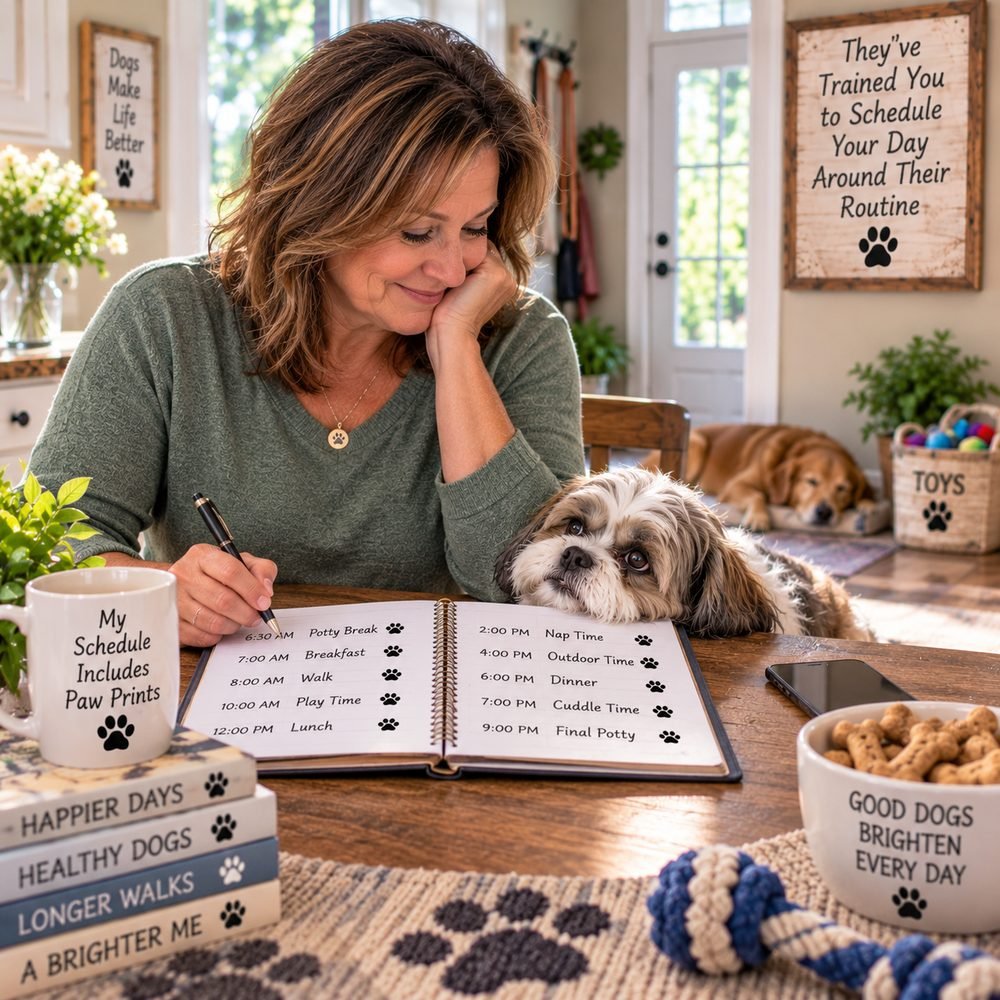
Dogs love routines.
Unfortunately for us, they’re also excellent at enforcing them.
Breakfast happens at a certain time.
The walk happens at a certain time.
Dinner definitely happens at a certain time.
And bedtime may come with its own unmistakable reminder.
Try sleeping late on a Saturday when your dog believes breakfast happens at 6:30.
Dogs don’t understand weekends.
They understand schedules.
And apparently we’re expected to follow them.
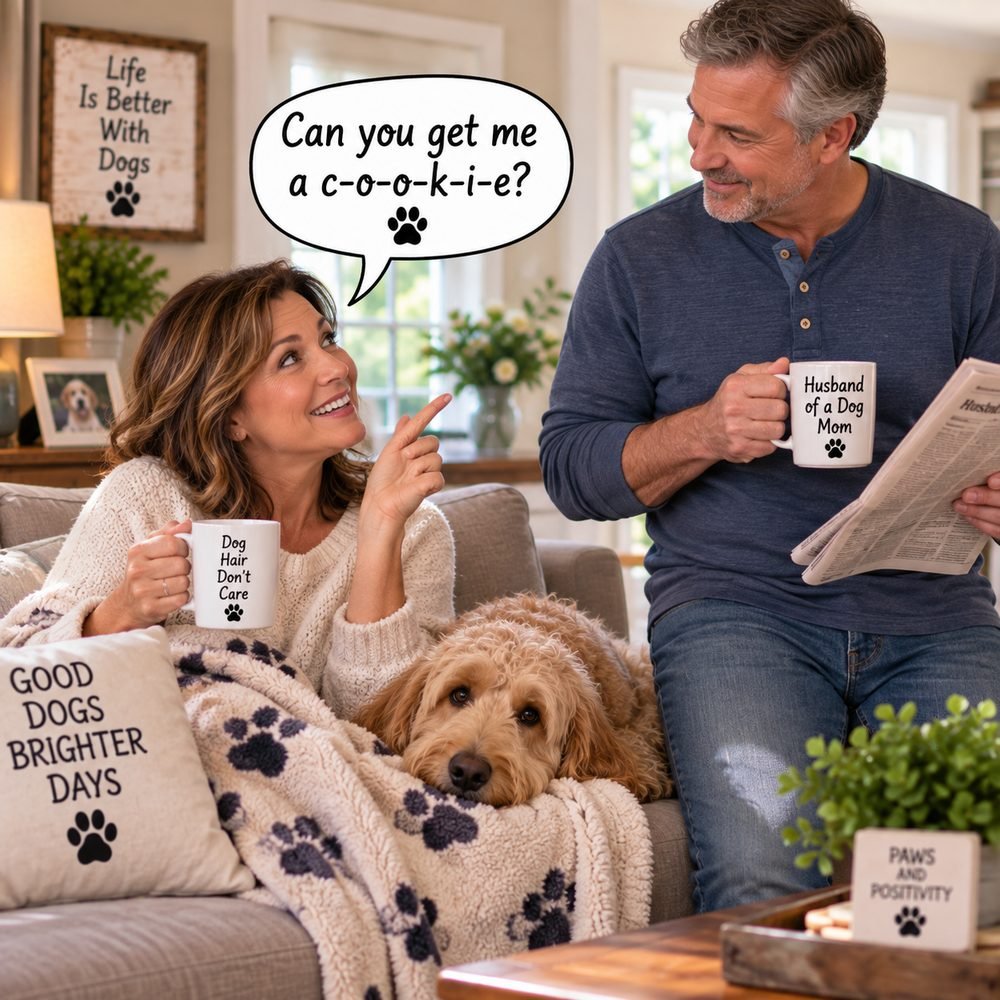
At some point, you realized saying certain words out loud caused immediate chaos.
So you adapted.
“Do you want to take them for a W-A-L-K?”
“Did you buy T-R-E-A-T-S?”
“Maybe we should go for a R-I-D-E.”
For a while, this works beautifully.
Then one day you spell W-A-L-K and your dog’s ears pop up.
That’s when you realize the student has surpassed the teacher.
You’re going to need a new code.
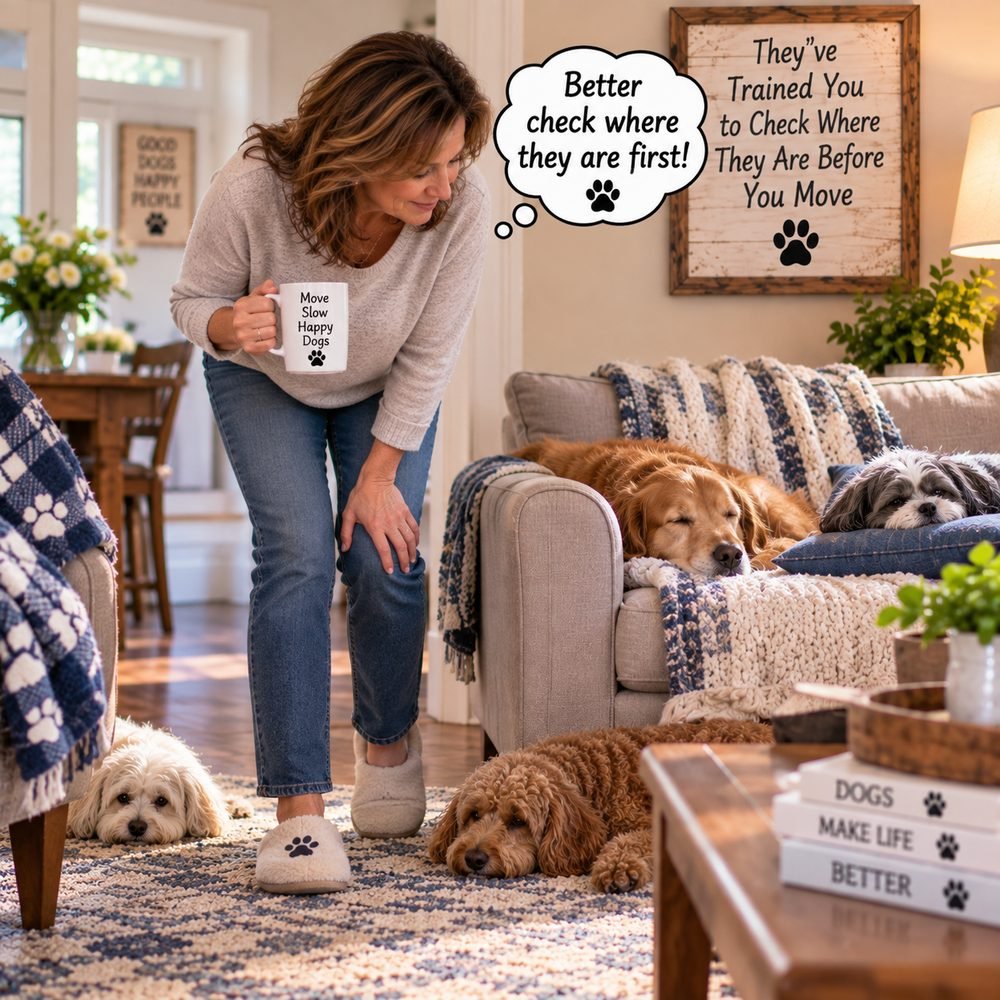
You used to simply stand up.
Now there’s a procedure.
Look beside the chair.
Check behind your feet.
Make sure nobody is lying directly in the walkway.
Then proceed carefully through the house while watching for a dog who may suddenly decide the safest place to stand is directly in front of you.
This becomes so automatic that you don’t even realize you’re doing it.
Until you visit someone without dogs and discover you can actually walk through a kitchen without looking down.
It feels strangely reckless.

Your dog finally pooped after you’ve been standing outside forever.
“GOOD DOG!”
They brought back the ball.
“Good job!”
They didn’t bark at the delivery driver.
You react as though they just graduated from college.
Living with dogs turns adults into enthusiastic cheerleaders for accomplishments we would never discuss in polite company otherwise.
And somehow, we’re completely fine with that.

This may be their greatest accomplishment.
You start thinking about them automatically.
Going somewhere?
Can the dog come?
Buying a new couch?
Will the fabric survive the dog?
Planning your afternoon?
Better make sure you’re home in time for dinner.
Getting comfortable for the evening?
Make room beside you.
At some point, they stopped being something you had to remember to include.
They simply became part of how you live.
And perhaps that’s why we don’t notice how thoroughly they’ve trained us.
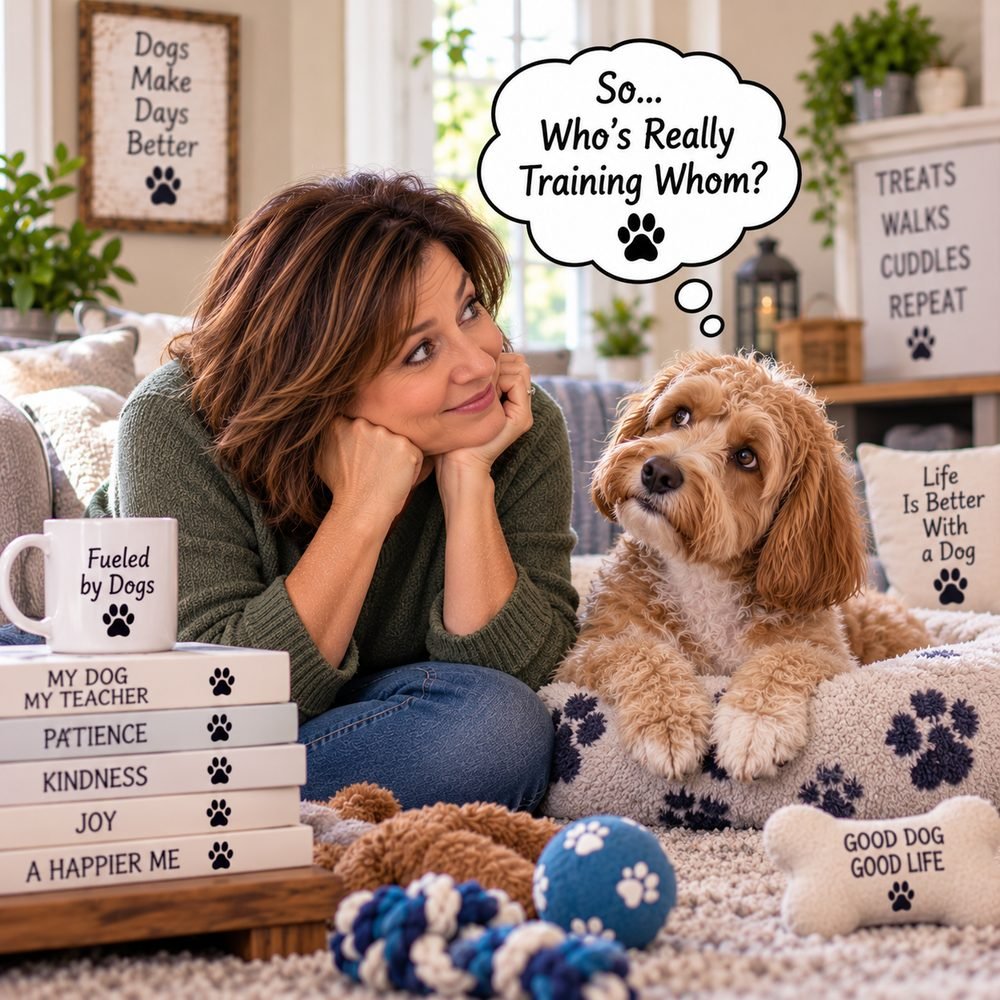
Technically, we’re supposed to be training our dogs.
And yes, teaching dogs good manners, boundaries and basic commands is important.
But anyone who has shared a home with a dog for years knows the relationship goes both ways.
Dogs learn our habits.
We learn theirs.
They figure out which behaviors get our attention, and we become remarkably good at interpreting what they want.
Before long, an entire conversation can happen without a single word.
A look toward the door.
A paw on your leg.
A head resting beside you.
A hopeful glance toward the kitchen.
And there you go again.
Getting up.
Opening the door.
Moving over on the couch.
Or reaching for the treats.
Maybe our dogs really have trained us.
But considering what we get in return—the companionship, laughter, loyalty and unconditional love—it seems like a pretty good deal.
So tell us: What’s something your dog has trained YOU to do?