Newsletter Subscribe
Enter your email address below and subscribe to our newsletter

 ByDiana
Most of us spend at least a few minutes every day petting our dogs.
They climb onto the couch beside us. They roll over for a belly rub. They lean against our legs while we’re standing in the kitchen. Some practically shove their heads underneath our hands if we stop petting them too soon.
That everyday affection can also be one of the simplest ways to keep an eye on your dog’s well-being.
You don’t need special equipment, and you don’t need to turn it into a stressful examination.
Just spend about five minutes paying a little more attention while you’re already petting, brushing, or cuddling your dog.
Look at their eyes. Check their ears. Run your hands through their coat. Take a quick look at their paws. Notice how they’re moving.
The goal isn’t to diagnose anything.
It’s simply to know your dog well enough that when something changes, you’re more likely to notice.
Your dog’s face is probably something you look at dozens of times every day.
For this quick check, look a little closer.
Their eyes should generally look like they normally do. Pay attention to new redness, cloudiness, swelling, squinting, excessive tearing, or discharge that wasn’t there before.
Then take a quick look around the nose and muzzle.
Again, you’re mostly looking for changes.
If your dog’s face normally looks a certain way and suddenly something appears different, that’s worth noticing.
This only takes a few seconds.
And your dog will probably assume you’re simply admiring how handsome or beautiful they are.
There’s no reason to tell them otherwise.
Some dogs make this very easy.
Others act as though you’ve asked to inspect classified documents.
You don’t need to poke around deep inside your dog’s ears. Simply lift or move the ear flap enough to look at the visible area.
Notice whether you see unusual redness, swelling, excessive debris, or discharge.
Smell can matter too.
Once you’re familiar with what’s normal for your dog’s ears, a new strong or unpleasant odor can be easier to recognize.
Also pay attention to behavior.
Is your dog suddenly scratching an ear frequently?
Shaking their head much more than usual?
Holding one ear differently?
Those little changes can be just as useful as what you see.
Dogs with floppy ears, heavy ear hair, or a history of ear problems may need more regular attention based on their veterinarian’s or groomer’s recommendations.
You don’t need to give your dog a complete dental examination every afternoon.
But the mouth deserves a quick look now and then.
If your dog is comfortable with it, gently lift the lip and look at the visible teeth and gums.
You may notice tartar buildup, irritated-looking gums, a damaged tooth, or something else that wasn’t obvious from the outside.
And then there’s the breath.
Dog breath isn’t exactly famous for smelling like fresh mint.
But if your dog’s breath suddenly becomes noticeably worse than usual, don’t automatically dismiss it as normal dog breath.
Dental health is an important part of overall care, and regular veterinary dental checks are still important even if you’re brushing your dog’s teeth at home.
The five-minute routine isn’t a replacement for dental care.
It’s simply another opportunity to notice changes.
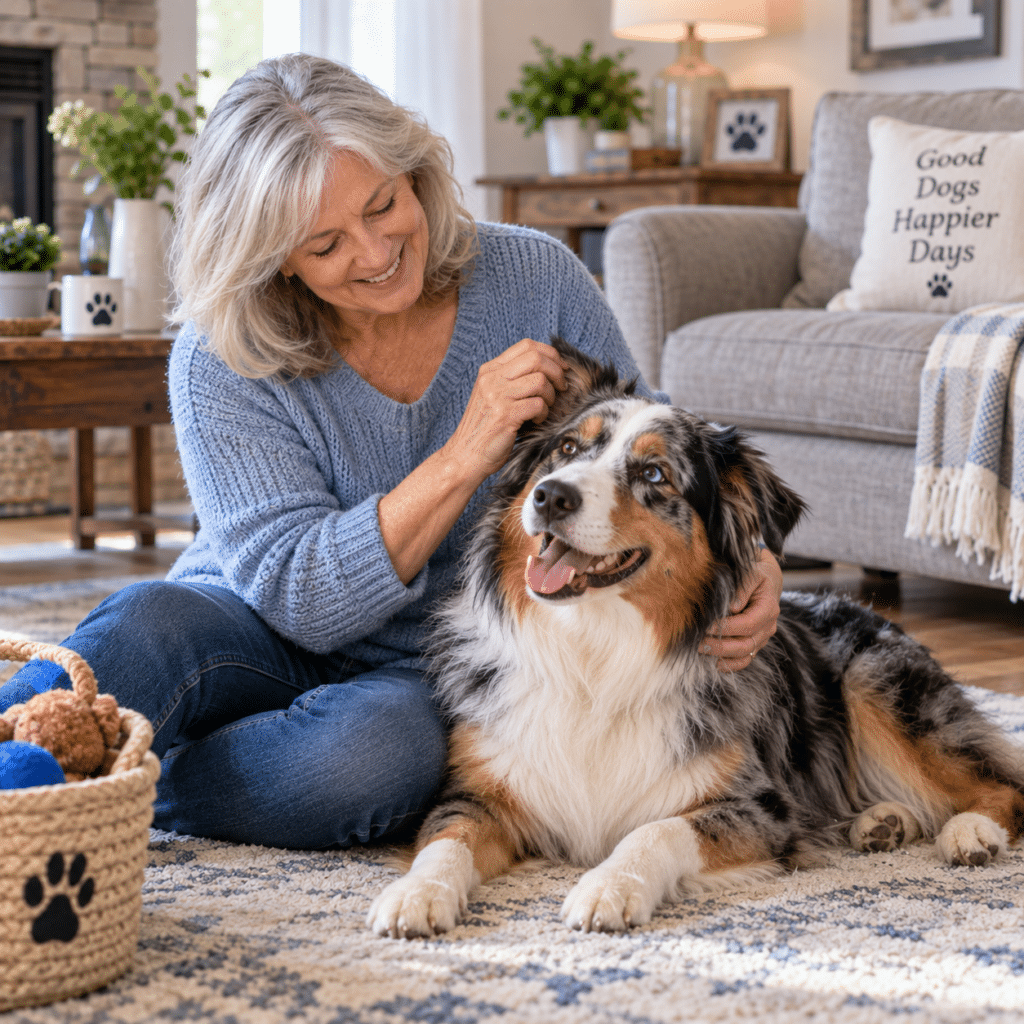
This may be the easiest part because it feels exactly like petting your dog.
Slowly run your hands over their body.
Along the neck.
Across the shoulders.
Down the back and sides.
Around the chest and belly if your dog enjoys being touched there.
You’re becoming familiar with how your dog normally feels.
Over time, that makes it easier to notice something new—a bump, tender area, irritated patch of skin, mat hidden under longer fur, scab, swelling, or other change.
Not every lump or bump means something serious. Dogs can develop harmless skin growths and fatty lumps, particularly as they age.
But you can’t point out a new change to your veterinarian if you never noticed it was there.
If you find something new, growing, painful, bleeding, irritated, or otherwise concerning, let your veterinarian take a look.
A beautiful coat can hide quite a lot.
That’s particularly true with thick, curly, or long-haired dogs.
While you’re running your hands through the coat, separate the fur in a few places and look at the skin underneath.
You’re looking for anything that seems different from your dog’s normal skin.
Redness.
Flaking.
Irritated areas.
Mats close to the skin.
Bumps.
Parasites such as ticks.
Pay a little extra attention to places that are easy to overlook, including underneath collars and harnesses.
A collar can look perfectly fine from the outside while the skin underneath tells a different story.
This is also a good opportunity to make sure collars and harnesses still fit comfortably.
Dogs gain and lose weight just like people do, so something that fit perfectly months ago may not fit exactly the same today.
Dog paws go through a lot.
Sidewalks.
Grass.
Mud.
Gravel.
Hot pavement.
Cold ground.
And whatever mysterious substance your dog somehow manages to step in five minutes after you’ve cleaned the floor.
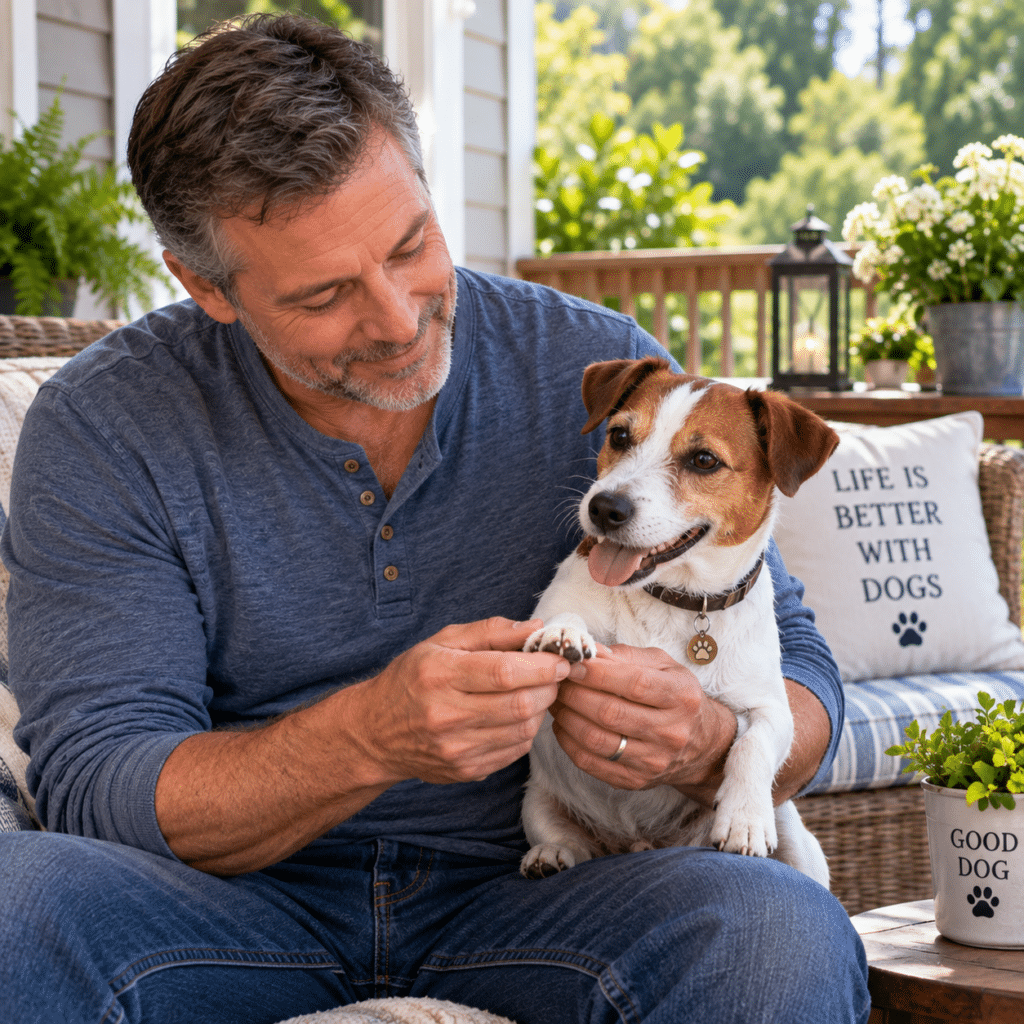
Pick up each paw if your dog is comfortable with having their feet handled.
Look at the pads and between the toes for obvious irritation, small objects, cracks, swelling, or anything stuck in the fur.
Check the nails too.
Overgrown nails can affect comfort and movement, so regular trimming matters. Some dogs naturally wear their nails down more than others, which means there isn’t one perfect trimming schedule for every dog.
Don’t forget the dewclaws if your dog has them. Because they may not contact the ground, they can be especially easy to overlook.
A quick paw check is particularly useful after walks or outdoor adventures.
This part doesn’t even require touching your dog.
When they get up and walk away, watch them for a moment.
Are they moving the way they normally do?
Are they putting weight evenly on all four legs?
Do they seem reluctant to get up?
Are they suddenly hesitating before using stairs or jumping somewhere they normally go?
Does their movement look stiff?
One awkward step doesn’t necessarily mean something is wrong.
What matters is noticing changes that persist, appear suddenly, worsen, or seem to be causing discomfort.
Because we see our dogs every day, gradual changes can sometimes be surprisingly easy to miss.
Taking a moment to intentionally watch them move can help.
Some of the most important changes aren’t things you can see during a physical check.
Think about your dog’s normal day.
Are they eating normally?
Drinking about their usual amount?
Sleeping normally?
Interested in walks, toys, treats, and family activities?
Using the bathroom normally?
Acting like themselves?
Every dog has a different normal.
One dog may sleep half the afternoon while another thinks naps are a terrible waste of potential playtime.
That’s why knowing your dog matters more than comparing them with somebody else’s.
A noticeable change from their normal behavior can sometimes be the first clue that something isn’t right.
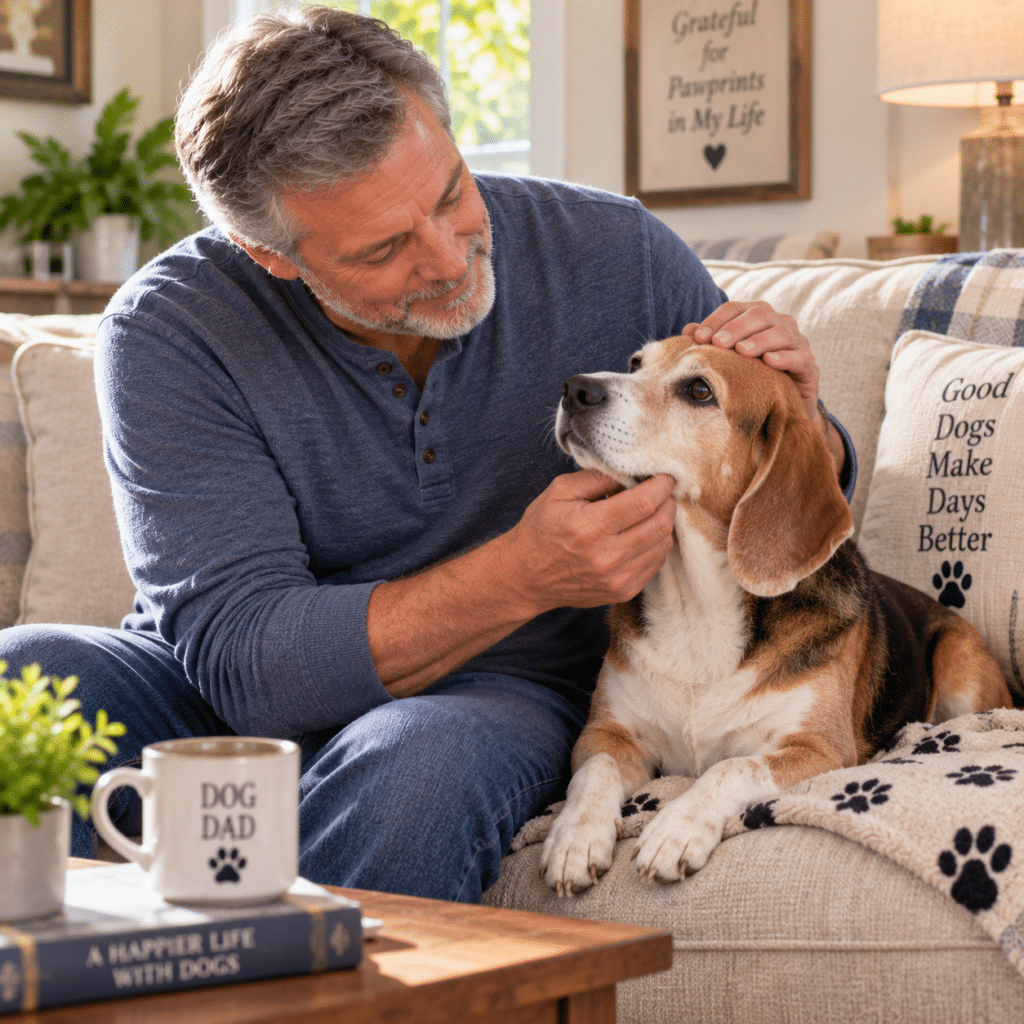
There’s no need to put your dog on a table every evening and work through a formal checklist.
In fact, I’d rather make this part of normal life.
Check the paws when you come back from a walk.
Look at the ears during a cuddle.
Feel along the body while giving a belly rub.
Notice the teeth when you’re brushing them.
Watch your dog walk across the yard.
It doesn’t even have to happen in exactly five minutes or in exactly the same order.
The important part is paying attention regularly.
For many dogs, this can actually become enjoyable because most of the routine consists of something they already love—having your hands and attention all over them.
If your dog dislikes having a particular area touched, don’t force it. Handling can be introduced gradually and positively, and your veterinarian or a qualified trainer can help if your dog becomes fearful or defensive about being touched.
You aren’t trying to become your dog’s veterinarian.
That’s an important distinction.
A home check can’t replace regular veterinary examinations, vaccinations, dental care, parasite prevention, or professional treatment when your dog is sick or injured.
What you can become is an expert on your own dog’s normal.
You know how eagerly they usually eat breakfast.
You know how quickly they normally get off the couch.
You know how much they usually drink.
You know what their coat feels like.
You know how their ears normally look.
You know whether they’re the kind of dog who races toward the door when the leash appears or needs to be convinced that leaving the couch is worthwhile.
Those everyday details create a baseline.
When something changes, you’re more likely to recognize it.
Dog care doesn’t always have to involve something complicated.
Sometimes it’s filling a clean water bowl.
Sometimes it’s brushing teeth.
Sometimes it’s taking a walk.
And sometimes it’s simply sitting beside your dog for a few minutes and paying attention.
Look at those eyes.
Check those ears.
Run your hands through that coat.
Look at the paws.
Watch them walk.
Notice how they’re behaving.
Then finish with the belly rub they were expecting all along.
It may take only five minutes.
But those five minutes can help you become more familiar with your dog from nose to tail—and make it a little easier to notice when they need something more from you.