Newsletter Subscribe
Enter your email address below and subscribe to our newsletter

 ByDiana
Some people love a dog who announces every visitor, squirrel, delivery truck and suspicious-looking leaf that blows across the yard.
Other people would prefer a little more peace and quiet.
If you live close to neighbors, have a smaller home or simply don’t enjoy constant barking, the amount of noise a dog tends to make can be an important part of choosing the right companion.
Fortunately, not every dog feels the need to provide a running commentary on the neighborhood.
Some breeds are naturally less inclined toward frequent barking. And many of them are smaller or medium-sized dogs that can be easier to manage than the giant breeds that often appear on “quiet dog” lists.
Of course, there’s no completely silent breed. Every dog can bark, and boredom, anxiety, lack of exercise, training and individual personality all make a difference.
But if a peaceful home sounds pretty wonderful to you, these 13 breeds are worth knowing.

The Cavalier King Charles Spaniel checks a lot of boxes for someone looking for a gentle companion.
They’re small enough to be manageable without feeling especially fragile, and they were bred primarily to be companion dogs.
Cavaliers tend to be affectionate, adaptable and happiest when they’re close to their people. While they’ll certainly bark occasionally, they aren’t generally known for spending the day sounding the alarm.
They also adapt well to different lifestyles. One Cavalier may happily accompany an active owner on daily walks, while another is perfectly content spending much of the afternoon curled up beside someone in a favorite chair.
Size: Small
Activity level: Moderate
Why we like them for a peaceful home: Affectionate, adaptable and generally not excessively vocal.

The Japanese Chin is a little dog with a surprisingly quiet personality.
Unlike some toy breeds that seem determined to notify you about everything happening within a three-block radius, the Japanese Chin tends to be more reserved.
These dogs were bred as companions and usually enjoy staying close to their people. They’re small, graceful and well suited to apartment or smaller-home living.
They don’t need enormous amounts of exercise either, although regular walks and playtime are still important.
If you’re looking for a lap-sized companion without necessarily wanting a lap-sized alarm system, the Japanese Chin deserves consideration.
Size: Toy
Activity level: Low to moderate
Why we like them for a peaceful home: Small, generally quiet and comfortable with a more relaxed lifestyle.

The Havanese is cheerful, affectionate and highly people-oriented.
AKC even describes the breed as a quiet little dog, which makes the Havanese particularly interesting for someone who wants a smaller companion without constant barking.
They’re playful enough to keep life interesting but don’t require miles of exercise every day. A few walks, some play and plenty of time with their people can suit them nicely.
There is one consideration: that beautiful coat requires regular grooming.
Many owners keep it clipped shorter to make everyday maintenance easier.
Size: Small
Activity level: Moderate
Why we like them for a peaceful home: Friendly, manageable and generally quieter than many small breeds.

The Whippet is the largest dog I’d strongly emphasize on this particular list.
They’re medium-sized rather than tiny, but their behavior indoors can surprise people.
Whippets love an opportunity to run, yet mature dogs are often wonderfully calm once they’re back inside. They’re also not generally known for excessive barking.
Their short coat is easy to maintain, and they’re affectionate without necessarily needing to be involved in every bit of household excitement.
You’ll still need to provide regular exercise and remember that they’re sighthounds with an instinct to chase.
But after the walk?
Don’t be surprised if your Whippet heads straight for the softest blanket in the house.
Size: Medium
Activity level: Moderate, with opportunities to run
Why we like them for a peaceful home: Calm indoors, minimal grooming and generally quiet.

Take some of the qualities people love about Greyhounds and Whippets, put them into a much smaller package, and you have the Italian Greyhound.
These elegant little dogs tend to be affectionate and strongly attached to their people.
They’re playful and do need regular exercise, but their size makes them easier to handle than their larger sighthound relatives.
Italian Greyhounds have very little body fat, so don’t be surprised if yours believes every blanket in the house belongs to them.
Cold weather may also require a dog sweater or coat.
They’re sensitive dogs, so a calm household and gentle training methods suit them well.
Size: Small
Activity level: Moderate
Why we like them for a peaceful home: Small, affectionate and generally happier snuggling than patrolling the neighborhood.

The Bolognese isn’t nearly as familiar to most Americans as a Maltese or Shih Tzu.
But this little white companion dog deserves more attention.
Bolognese dogs tend to be devoted to their families and relatively calm around the house. They’re generally not known as excessive barkers when their needs are being met.
And that’s an important qualification.
These dogs love their people. If left alone for long periods, some can become anxious, and anxiety can turn even a normally quiet dog into a noisy one.
For someone who spends a good deal of time at home and wants a close companion, that strong attachment may be exactly what they’re looking for.
Size: Small
Activity level: Low to moderate
Why we like them for a peaceful home: Companion-oriented, relatively calm and manageable in size.

French Bulldogs aren’t completely silent.
In fact, they may produce an interesting assortment of snorts, snores and other little noises.
But barking constantly isn’t generally what they’re known for.
Frenchies are compact, affectionate and don’t require the amount of exercise many larger or more energetic breeds need.
That can make them appealing for apartments and quieter households.
There is a significant consideration, though. Their flat-faced structure is associated with important health concerns, particularly breathing and heat tolerance.
Anyone considering a French Bulldog should research those issues carefully rather than choosing one simply because it’s cute and relatively quiet.
Size: Small
Activity level: Low to moderate
Why we like them for a peaceful home: Compact, adaptable and generally not a heavy barker.

The Shih Tzu has spent centuries doing exactly what many people want a dog to do today:
Keeping someone company.
They’re small, affectionate and generally don’t need tremendous amounts of exercise. A couple of comfortable walks and some indoor play may be plenty for many adult Shih Tzus.
They can certainly bark when someone arrives at the door, and individual dogs vary, but they’re usually more interested in being with their people than guarding the entire neighborhood.
Their long coat requires considerable grooming if kept in full coat, although many pet owners choose an easier-to-maintain shorter trim.
Size: Small
Activity level: Low to moderate
Why we like them for a peaceful home: Companion-oriented, manageable and happy with a relatively relaxed routine.

Pugs were bred to be companions, and many take that job very seriously.
They generally want to know where their person is, what they’re doing and whether there might be room beside them on the couch.
Pugs aren’t typically known as nonstop barkers. They’re playful and entertaining without requiring an enormous amount of exercise.
Like French Bulldogs, however, Pugs are flat-faced dogs.
That means prospective owners need to understand potential breathing problems, sensitivity to heat and other health concerns associated with their body structure.
They’re easy to fall in love with, but health should be part of the decision from the beginning.
Size: Small
Activity level: Low to moderate
Why we like them for a peaceful home: Affectionate, companionable and usually happier being involved with the family than barking at everything outside.

The Coton de Tulear is another small companion breed that can fit nicely into a quieter lifestyle.
Cotons are cheerful, affectionate and adaptable. They enjoy walks and playtime but don’t require the exercise schedule of a highly active working breed.
They’re also small enough for many people to handle comfortably.
That fluffy cotton-like coat does require maintenance, so anyone considering one should factor regular brushing and grooming into the equation.
What you get in return is a sociable little dog that tends to be happiest simply being part of everyday life.
Size: Small
Activity level: Moderate
Why we like them for a peaceful home: Adaptable, affectionate and comfortable living closely with their people.
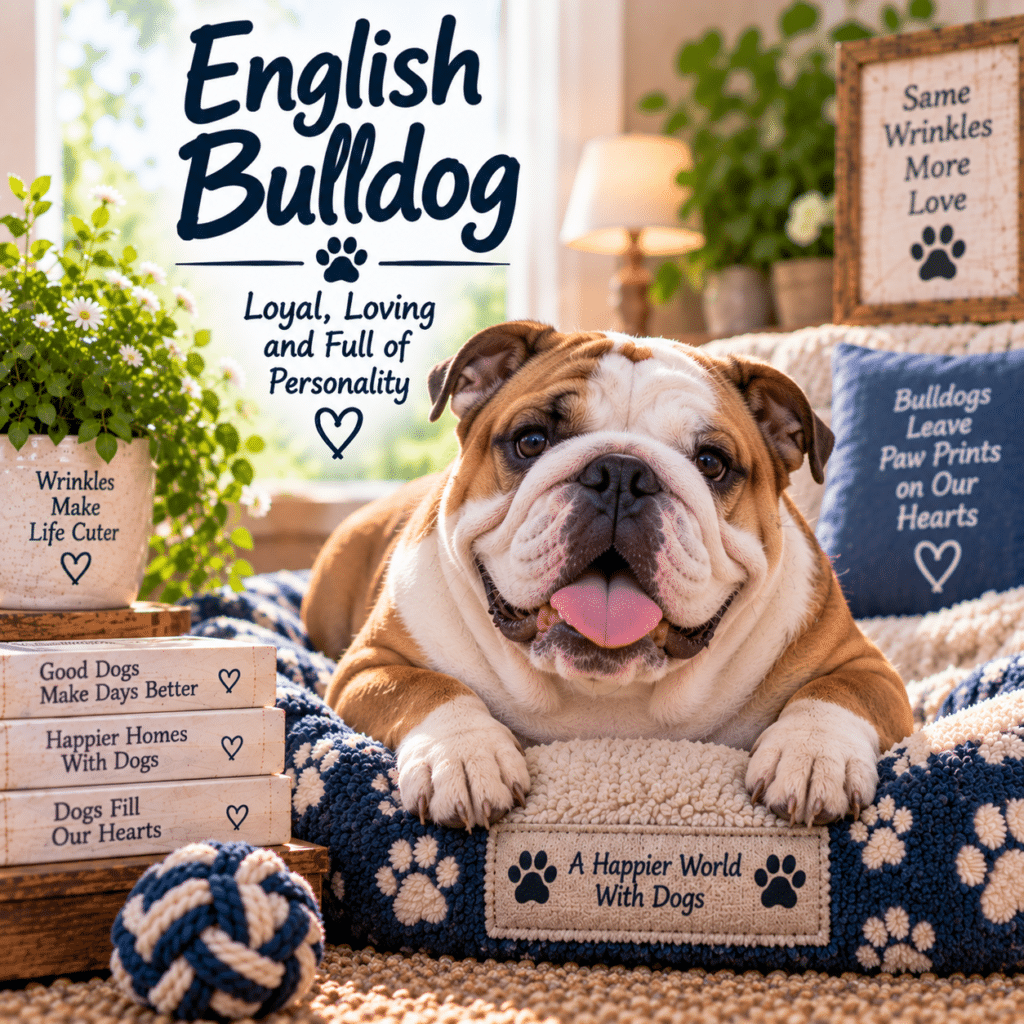
The Bulldog brings us back to a somewhat sturdier dog without moving into giant-breed territory.
Adult Bulldogs often enjoy a fairly relaxed lifestyle and aren’t generally known for constant barking.
There may be plenty of other Bulldog sound effects—snoring and snuffling included—but many aren’t interested in spending the day barking out the window.
Their stocky build can make them feel heavier than their height suggests, so that’s something to consider if lifting or handling a dog could be difficult.
Bulldogs also have significant health considerations related to their body structure and short muzzle.
Quiet temperament alone should never outweigh those factors.
Size: Medium and stocky
Activity level: Low to moderate
Why we like them for a peaceful home: Usually laid-back and not particularly interested in barking all day.

The Basenji is famous as the “barkless dog.”
But don’t mistake that nickname for “silent dog.”
Basenjis have a unique larynx and can produce an unusual yodel-like sound along with whines, chortles and other noises.
They’re also quite different temperamentally from many of the cuddly companion breeds on this list.
Basenjis are intelligent, athletic and independent. They need exercise and mental stimulation, and their independent streak can make training interesting.
So why include one?
Because for an active person who wants a smaller, clean, athletic dog without conventional barking, the Basenji can be fascinating.
Size: Small to medium
Activity level: High
Why we like them for a peaceful home: Very little traditional barking—but definitely not a low-maintenance couch dog.

I’m keeping one genuinely large dog on the list.
The Greyhound earns the spot because size and energy level aren’t always the same thing.
Adult Greyhounds can be remarkably calm around the house and are generally not known for excessive barking. Many enjoy their daily walks and opportunities to stretch their legs, then happily settle down for a long nap.
The obvious consideration is their size.
If you’re uncomfortable handling a larger dog, need to lift your dog regularly or simply prefer something that takes up less space, one of the smaller breeds above will make more sense.
But an active older adult who has experience with larger dogs shouldn’t automatically rule a Greyhound out because of age alone.
Size: Large
Activity level: Moderate
Why we like them for a peaceful home: Typically calm indoors and relatively quiet despite their size.
There’s one important thing to remember before choosing any dog on this list.
A dog can be quiet and still be completely wrong for your lifestyle.
The Basenji doesn’t bark normally, but it’s considerably more independent and energetic than a Cavalier.
An Italian Greyhound is small, but it still needs exercise.
A Greyhound may be calm indoors, but it’s a large dog.
A Shih Tzu doesn’t need hours of exercise, but its coat requires regular attention.
That’s why barking should be just one piece of the puzzle.
Think about:
Sometimes an adult dog can be an especially good choice because more of their personality is already apparent.
A rescue or foster family may be able to tell you whether a particular dog spends afternoons quietly napping or considers itself head of neighborhood security.

Even breeds known for being relatively quiet can become noisy when something isn’t right.
A bored dog may bark.
A lonely dog may bark.
A frightened or anxious dog may bark.
And a dog who isn’t getting enough physical exercise or mental stimulation may find its own way to stay entertained.
Training, routine, exercise and companionship all matter.
It’s also worth paying attention when a normally quiet dog suddenly becomes much more vocal. A significant behavior change can sometimes signal stress, discomfort or another problem worth discussing with your veterinarian.
So don’t look for a dog that promises never to make a sound.
Look for a dog whose size, personality, activity level and needs fit comfortably into your life.
Maybe that’s a tiny Japanese Chin curled beside you.
Maybe it’s a Cavalier following you from room to room.
Maybe it’s a Whippet occupying considerably more of your couch than you anticipated.
Or maybe you’re one of those people who wouldn’t mind a big Greyhound stretched across the living-room rug.
The quietest home isn’t necessarily the one with the quietest dog.
It’s the one where the dog and the person simply fit.