Newsletter Subscribe
Enter your email address below and subscribe to our newsletter

 ByDiana
There comes a point in life with a dog when you begin to wonder whether words are even necessary anymore.
You get up from your chair, and your dog already knows whether you’re headed toward the kitchen, the front door or bed.
You reach for a particular pair of shoes, and they know a walk is coming.
You’re having a difficult day, and somehow the dog who normally wants to play is content to quietly lie beside you.
After enough years together, it can feel as though your dog has learned to read your mind.
They haven’t, of course.
But what dogs can do is pretty remarkable. Research shows that dogs pay close attention to human faces, bodies, voices, gaze and emotional cues. They can use some of that information to adjust their own behavior.
And when we spend years sharing our lives with them, something else happens.
We learn them, too.
Maybe that’s why the relationship between dogs and people can feel especially meaningful as we get older. We’re not necessarily having more conversations.
We’re just getting better at listening to each other.
Think about your relationship with a dog you’ve had for years.
In the beginning, you’re learning everything.
What does that bark mean?
Why is the dog standing by the door?
Does that look mean “I need to go outside” or “I’d like one of those cookies you’re eating”?
Eventually, you stop wondering.
You know.
And your dog is doing much the same thing with you.
Dogs are unusually attentive to humans. Research suggests they can distinguish and respond to some human emotional expressions, and familiarity and experience with people can influence how dogs process human faces.
But they aren’t just staring at our faces.
One eye-tracking study found that dogs paid more attention to bodies than heads when viewing emotional expressions—quite different from the human tendency to focus heavily on faces.
That means your dog may be noticing things you’re barely aware you’re doing.
How quickly you’re moving.
How you’re standing.
Where you’re looking.
Whether your movements are relaxed or hurried.
The things we don’t say may be telling our dogs quite a lot.
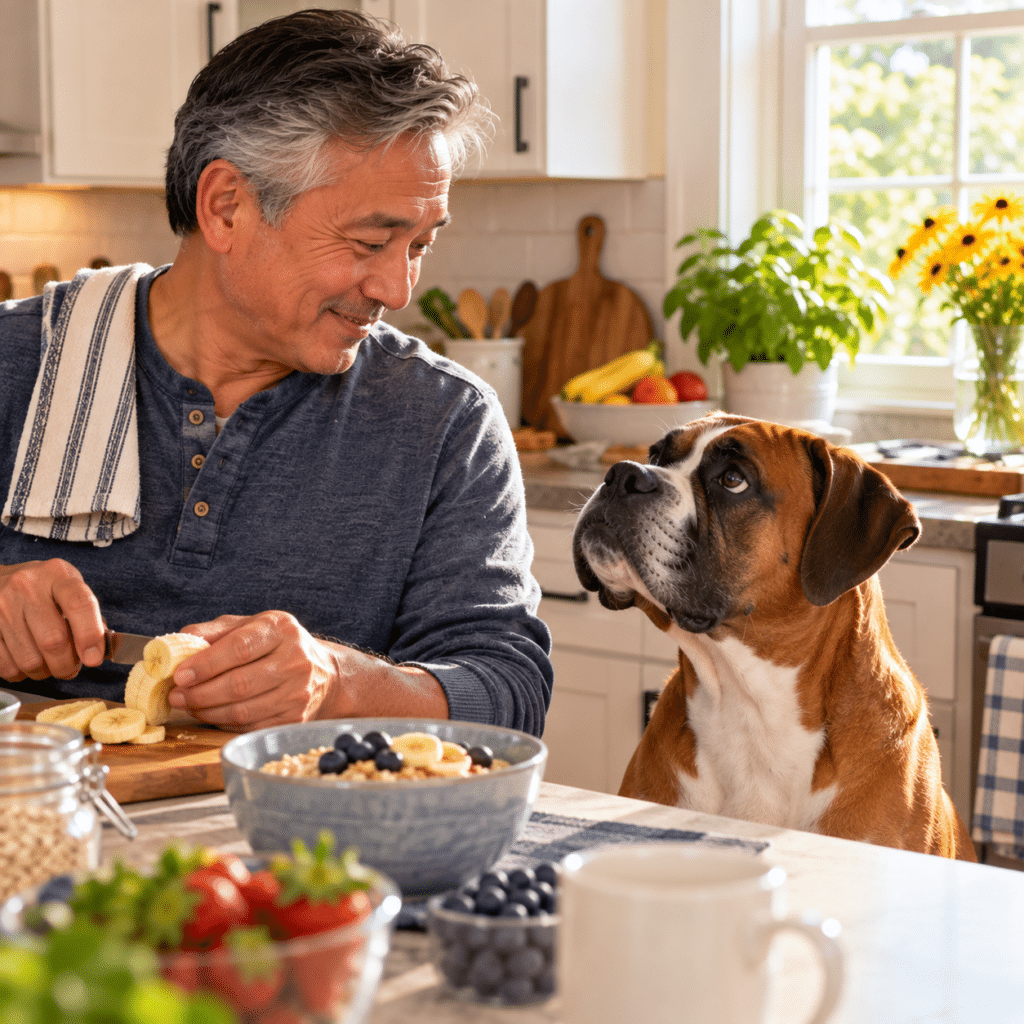
Dogs are excellent students of routine.
You may never announce, “It’s 7:30, so I’ll make coffee and then we’ll go outside.”
You don’t have to.
Your dog has watched this happen hundreds of times.
The alarm goes off.
Your feet hit the floor.
You put on your robe.
The coffee maker starts.
And somewhere along the way, the leash comes out.
To your dog, these aren’t random events. They’re clues.
That’s why dogs sometimes seem to know what we’re about to do before we’ve done it.
They’ve learned what usually comes next.
And as we get older, many of us begin to appreciate routine more ourselves.
We may spend more time at home than we once did. Mornings may become less rushed. Evenings may become quieter. A walk around the neighborhood or a cup of coffee on the porch can become one of the best parts of the day.
Dogs fit beautifully into those ordinary rhythms.
They don’t need every Tuesday to be different from Monday.
In fact, your dog may be perfectly delighted that Tuesday looks almost exactly the same.
Breakfast arrived.
You were there.
The sun came through the window.
There were interesting things to sniff outside.
It was a very successful day.
Dogs and humans have become remarkably good at communicating without sharing a spoken language.
Gaze is one important part of that relationship. Researchers studying dog-human communication have found that looking behavior can play a role not only in communication but also in the social bond between dogs and people.
Anyone who has lived with dogs for long probably doesn’t need a laboratory to tell them that a look can carry a surprising amount of information.
There’s the look toward the door.
The look toward the empty water bowl.
The look toward the treat cabinet.
And, of course, the unmistakable look that says:
“I saw you give the other dog something.”
But there are quieter conversations, too.
You pat the couch without saying anything.
Your dog jumps up.
Your dog places a head on your knee.
Your hand automatically reaches down.
You stand up and glance toward the hallway.
Your dog gets up and follows.
Nothing was said.
Nothing needed to be.
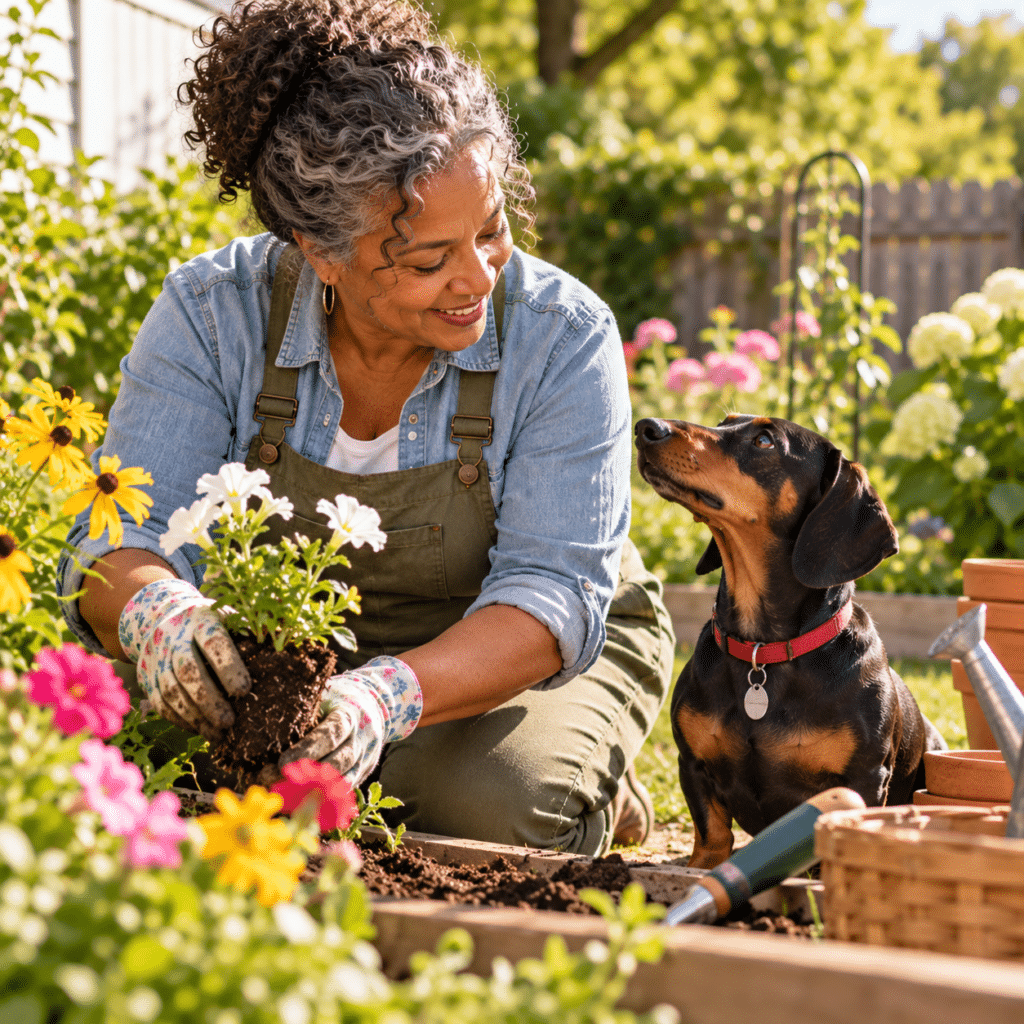
One reason dogs sometimes seem so tuned in to us is that they know our normal patterns.
When something changes, they may notice.
Maybe you normally move quickly through the kitchen in the morning, but today you’re moving slowly.
Maybe you usually chatter to the dog while making breakfast, but this morning you’re unusually quiet.
Maybe you sit down in the middle of the afternoon when you normally wouldn’t.
Your dog doesn’t need to understand why something is different to recognize that it is.
Studies suggest dogs can distinguish some human emotional cues and use emotional information from people when deciding how to behave in certain situations.
We should be careful not to turn that into something magical.
Your dog probably isn’t diagnosing your mood or thinking about your problems the way another person might.
But they may recognize changes in your voice, expression, posture, movements and routine.
And sometimes their response is exactly what we need.
They stay close.
There’s another side to this relationship that doesn’t get talked about nearly enough.
Perhaps dogs don’t simply become better at understanding us.
Maybe we become better at understanding them.
When life was busier, we may not have noticed every small thing.
There were jobs to get to.
Children to raise.
Bills to pay.
Appointments.
Errands.
Phones ringing.
Places we had to be.
Then life changes.
And some of the things that once seemed small begin to feel important.
The sound of a dog snoring beside the chair.
The little dance at breakfast.
The familiar footsteps following us down the hallway.
The way they stop and look back during a walk to make sure we’re still there.
Maybe those things were always happening.
We just have more time to notice them now.
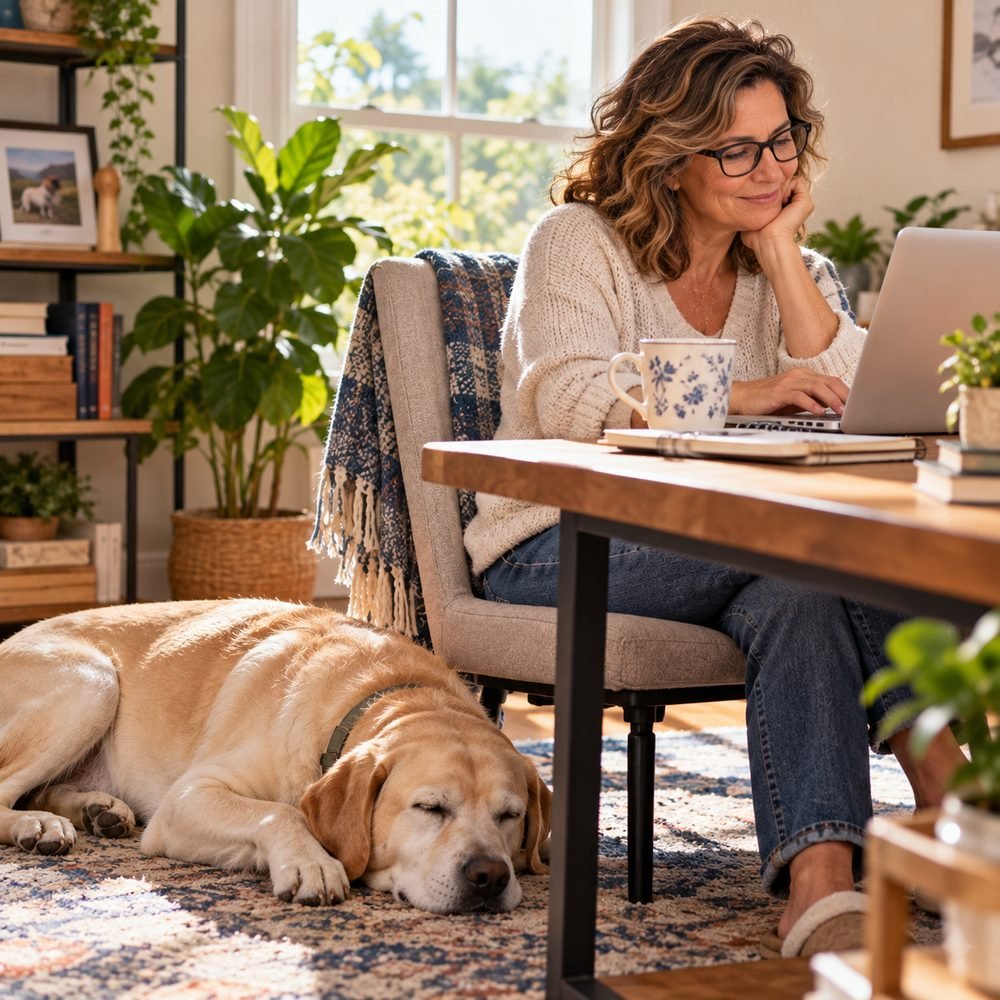
One of the nicest things about dogs is how uninterested they are in many of the things humans worry about.
They don’t care that you aren’t 35 anymore.
They don’t care about gray hair.
They don’t care whether you’ve gained a few pounds.
They don’t know what you used to earn, what job title you had or whether you still fit into the clothes hanging in the back of the closet.
Their world is much more immediate.
Are you here?
Are we together?
Is dinner happening?
Can we go outside?
Would you mind scratching this particular spot behind my ear?
That’s one of the reasons companionship with a dog can feel different as we get older.
The relationship isn’t built around who we used to be.
It’s happening right now.
When we’re younger, we often measure a good day by what happened.
Where did we go?
What did we accomplish?
What did we see?
Dogs have a different standard.
A good day can be wonderfully ordinary.
A walk.
A meal.
A nap in a patch of sunshine.
A few minutes in the backyard.
Sitting beside someone they love.
That’s about it.
And perhaps with age, we begin to understand that a little better.
An afternoon doesn’t have to be exciting to be meaningful.
You can sit on the porch with a dog at your feet and watch absolutely nothing happen.
Twenty years ago, you might have thought you were wasting an afternoon.
Now you may realize you were enjoying one.
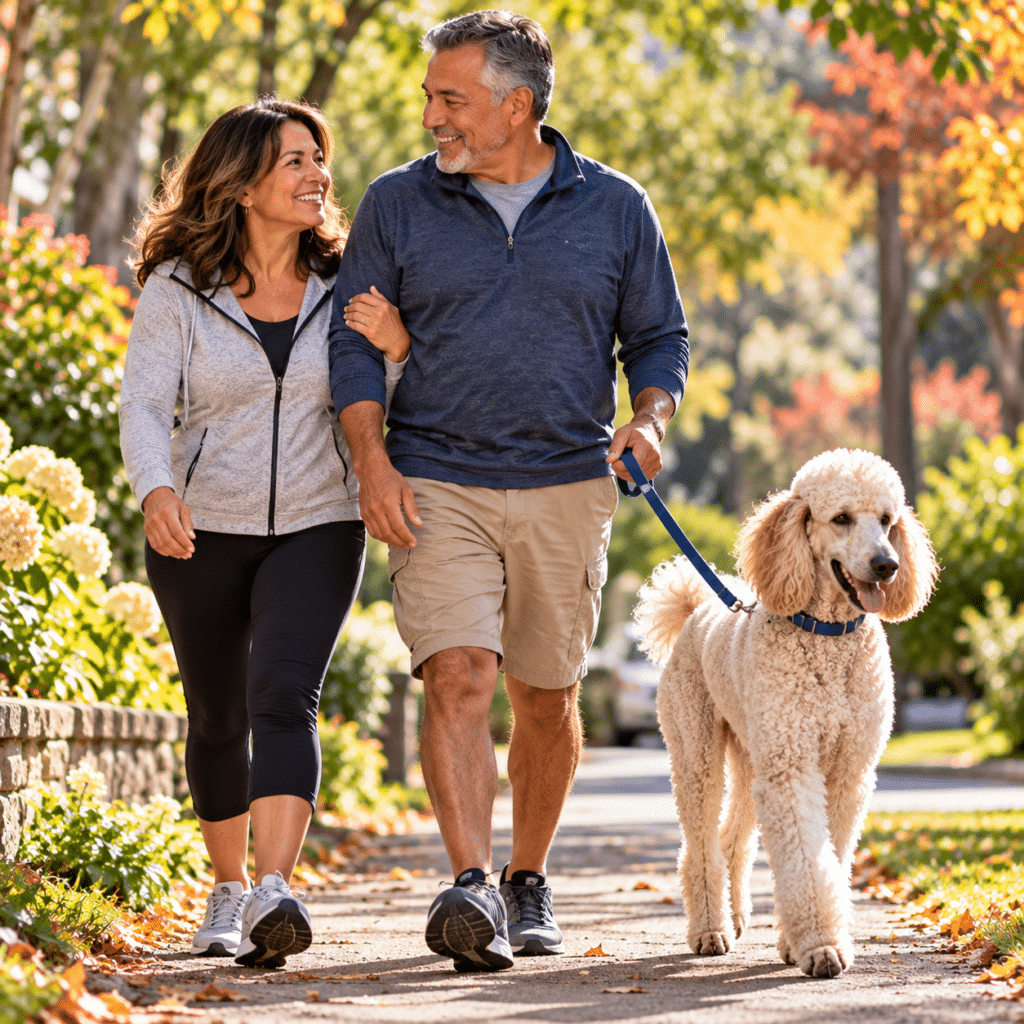
Science can tell us quite a bit about what dogs as a species are capable of perceiving.
But your relationship with your own dog is also built from thousands of tiny repetitions that no research study could completely capture.
Your footsteps.
Your voice.
Your morning routine.
The chair you always choose.
The cupboard where you keep the treats.
The sound you make before getting out of your recliner.
Even the difference between putting on shoes because you’re going outside with them and putting on shoes because you’re leaving without them.
Your dog has had a lot of time to study you.
And you’ve had a lot of time to study your dog.
That’s what makes a long relationship with a dog so special.
Eventually, you’re not simply a person and a pet trying to understand one another.
You’re two old friends who know the routine.
We often talk about everything we teach our dogs.
Sit.
Stay.
Come.
Leave it.
Wait.
But somewhere along the way, they may teach us something, too.
They teach us that routines can be comforting.
That going outside for ten minutes can improve the afternoon.
That naps are underrated.
That it’s worth getting excited when someone you love comes home.
That you don’t need a special occasion to enjoy yourself.
And that sometimes the best thing you can do for someone is simply stay close.
Maybe dogs don’t suddenly understand us better because we’re getting older.
Maybe they’ve been paying attention all along.
And somewhere along the way, we finally slowed down enough to start paying attention, too.